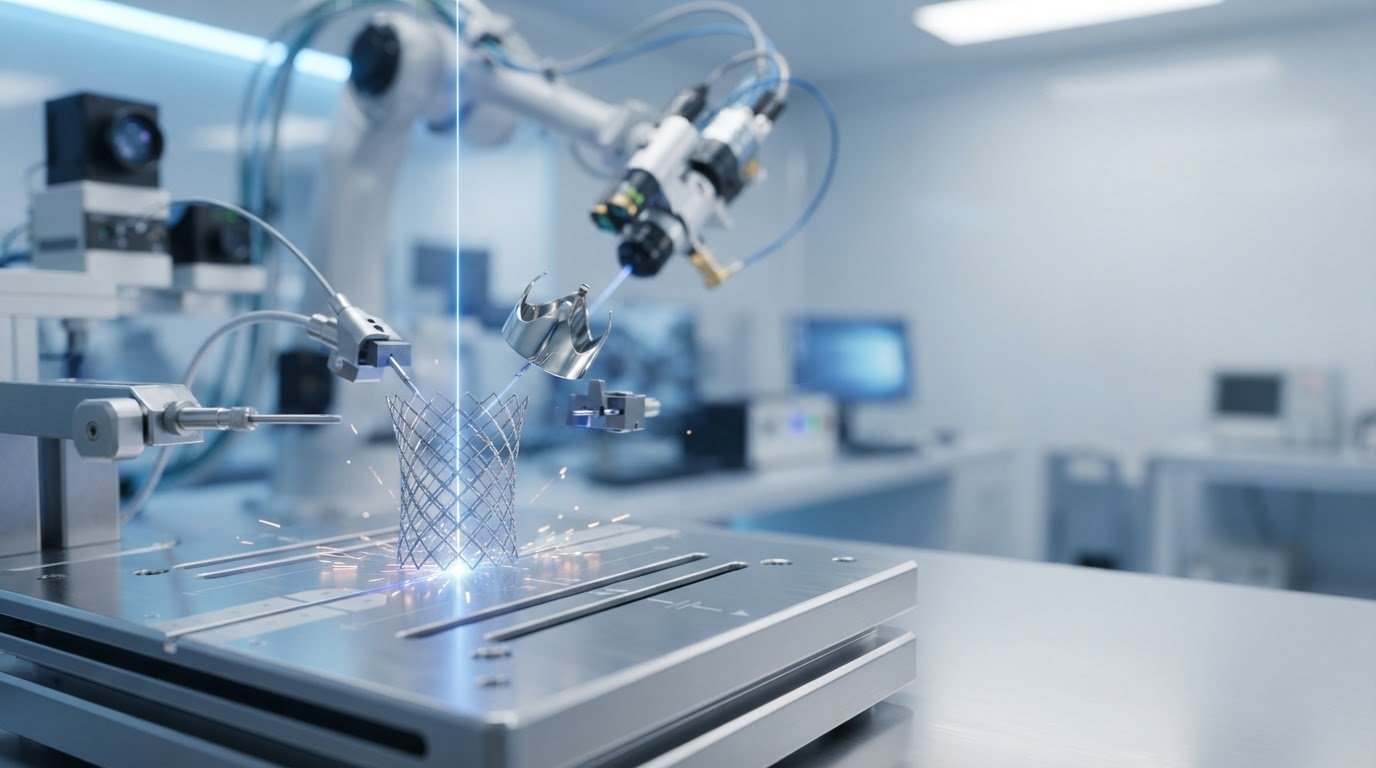

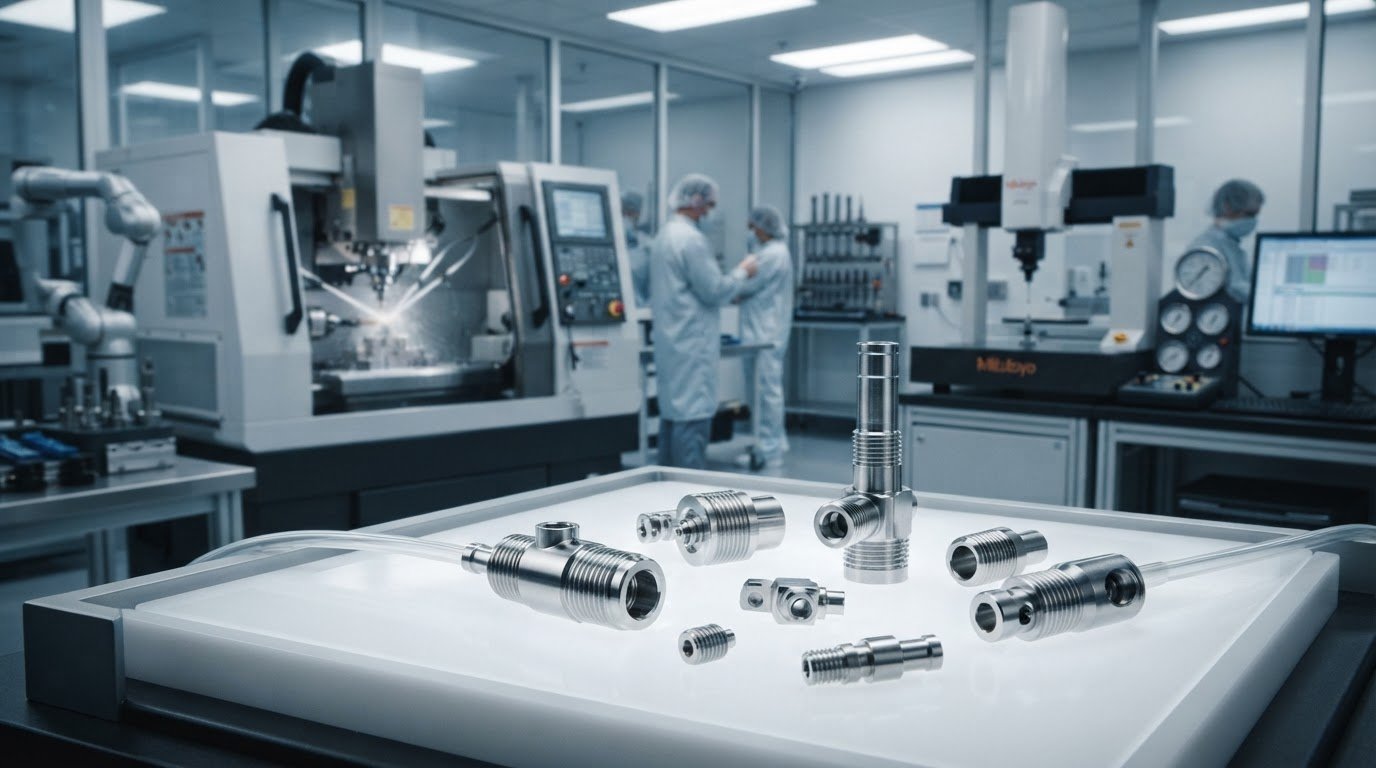
What if a catheter component meets its drawing but still isn’t ready for production? Dimensional accuracy matters, but so do repeatable process controls, inspection evidence, and a clear path into assembly. That’s why precision CNC machining for medical devices should be evaluated as part of the full manufacturing system, not as an isolated operation.
Supplier claims can be difficult to compare when machining capability, validation, and downstream support are described separately. Start with your device requirements: component geometry, material, critical features, planned production volume, and the quality records needed to demonstrate control. Then assess whether a supplier can support the component through the next manufacturing steps.
This guide offers a practical framework for assessing CNC capabilities and quality evidence for medical-device components, including catheter-related applications. You’ll learn how CNC milling, auto-lathe, and turn-mill may suit different part requirements, what to examine in inspection and IQ/OQ/PQ validation, and how to assess assembly support. The goal is to make a supplier decision based on your device and production program.
Key Takeaways
- Match the machining process to component geometry, material, critical features, and intended production volume.
- Evaluate precision CNC machining for medical devices alongside inspection evidence, process controls, and validation frameworks.
- Use a structured RFQ to clarify drawing revisions, material specifications, critical requirements, and quantities.
- Compare component-only machining with suppliers that can coordinate relevant assembly and testing support.
- Check how a supplier’s equipment and quality systems align with the specific requirements of your catheter-related components and program.
What precision CNC machining contributes to medical-device and catheter manufacturing
Precision CNC machining for medical devices uses programmed tool movements to remove material from a workpiece according to defined component requirements. The resulting features may help parts fit together, move relative to one another, create a sealing surface, or connect with an instrument. A dimension matters because of what it enables in the finished assembly, not simply because it appears on a drawing.
A catheter is a medical instrument with a range of forms and uses. For a foundational overview of What is a Catheter?, see the reference description. Catheter systems can include flexible tubing, molded features, and assembled subcomponents. CNC machining may suit selected rigid or precision features, but it should not be treated as the manufacturing method for every catheter structure.
Which catheter-related components may involve precision machining?
Hypotubes and marker bands are examples of catheter-related components that may require precision manufacturing. They are not universal CNC applications. Intervention guide wires are another listed product category, but their manufacturing route must be confirmed for the specific design. Component geometry, design intent, material, and required features determine whether machining or another process is appropriate.
For a specific program, confirm which operations apply to each part and whether the supplier’s equipment and process scope match its requirements. A product category alone doesn’t establish that a component is CNC-machined or that a supplier supports its full manufacturing and assembly scope.
Why component interfaces matter as much as standalone dimensions
A part can meet its individual dimensions and still create problems at an interface. Mating features affect alignment, fit, movement, sealing, and the sequence of downstream assembly. Reviewing the component in its assembly context helps clarify which characteristics are critical and how they should be controlled.
Start with current drawings and design requirements. Link critical features to an inspection plan that explains how conformance will be assessed, taking intended use and the device’s risk assessment into account. Don’t apply a generic tolerance to a catheter component without that context. Requirements should come from the device specification and engineering review.
This connection between design intent, manufacturing process, and inspection helps teams choose a suitable machining approach. It also distinguishes a part that is merely machinable from one that can be produced and verified for its role in the device.
How CNC processes and quality controls shape medical-device component performance
Process selection starts with the component drawing, not a machine list. For precision CNC machining for medical devices, geometry, material, tool access, surface requirements, and intended production volume all influence the route. A process that creates a feature efficiently may not be the best choice if it complicates inspection or the component’s next assembly step.
Matching CNC processes to component geometry
Each process suits different feature types. Milling supports prismatic features and, with multiple axes, can reach more complex geometry when the drawing calls for it. Auto-lathe machining suits rotational features, while turn-mill can combine turning and milling for parts with both rotational and off-axis features. Wire-cut EDM and centreless grinding can suit specific geometries and requirements, subject to engineering review.
Material and production quantity also matter. Ask the supplier to explain why the proposed process fits the part, how it will control critical features, and whether the route suits the planned scale. Fong’s documented capabilities include 2-axis and 5-axis CNC milling, auto-lathe, turn-mill, wire-cut EDM, and centreless grinding. Confirm the specific process and material suitability for each component.
What quality evidence should buyers request?
Quality evidence should connect requirements to measurement and disposition. Ask how each critical drawing characteristic is inspected, which measurement method is used, and what documented acceptance criteria apply. CMM measurements may help verify geometric characteristics, while in-process checks can provide feedback during production. The inspection plan should state what is checked, when it is checked, and how out-of-specification results are controlled.
Process validation is documented evidence that a defined process can consistently produce results meeting specified requirements; routine inspection checks whether particular outputs meet their acceptance criteria. Validation doesn’t replace inspection, and inspection alone doesn’t demonstrate that a process will remain controlled. Ask which validation records apply, including IQ/OQ/PQ documentation where relevant, alongside inspection procedures and nonconformance controls.
Confirm the quality-system documents and controls that apply to the proposed production scope and target market. The FDA’s QMSR is in effect; the eCFR provides the current FDA’s Quality System Regulation (21 CFR Part 820) reference. Verify applicable requirements with your regulatory and quality teams rather than assuming one supplier document covers every program.
A supplier discussion is more productive when it starts with the drawing, critical features, and intended production scope. To discuss whether documented machining capabilities align with a component program, share your manufacturing requirements.
How to compare CNC suppliers for catheter components and assembly needs
Compare suppliers against the requirements of the part and production program, not equipment lists alone. For precision CNC machining for medical devices, a useful evaluation connects process fit and relevant component experience with inspection evidence, production controls, and the ability to manage handoffs. A supplier may be well suited to machining a component without being equipped to coordinate its next manufacturing steps, so define the scope you need before comparing proposals.
Questions to ask during a supplier evaluation
Ask for clear answers about what the proposed scope includes. Request details on relevant processes, materials, and geometries, and how the supplier will verify critical characteristics. Establish how design changes and production issues will be handled, including responsibilities for validation and change control.
- Which processes, materials, and component geometries are included in the proposed scope?
- How are critical characteristics measured, recorded, and reviewed against acceptance criteria?
- How are drawing revisions, nonconformances, traceability, and process changes documented and communicated?
- Which validation activities and records are the supplier’s responsibility, and which remain with the device manufacturer?
Ask how the supplier’s quality-system scope relates to the work being proposed. The official ISO 13485:2016 reference can help frame discussions about a medical-device quality management system. Verify the supplier’s applicable documents, status, and controls rather than inferring them from a general capability statement.
Assessing the handoff from machined part to assembled device
Map the component’s route beyond machining. Identify interfaces between machining, any required cleaning, assembly, testing, and packaging. Then clarify who owns each activity, its acceptance criteria, and the records passed to the next step. Confirm whether cleanroom assembly or product testing is relevant to the device and included in the proposed scope. These details can expose gaps that a component-only quotation won’t show.
For broader context on coordinated manufacturing support, review the medical device contract manufacturing overview. For specific handoff and integration considerations, see the medical device assembly guide. Together, these perspectives help teams assess whether a supplier can support the transition from machined component to assembled device. Confirm project-specific scope directly.
What to include in an RFQ for precision CNC machining of medical devices
A clear request for quotation (RFQ) gives suppliers a consistent basis for assessing feasibility, quality requirements, and production scope. For precision CNC machining for medical devices, organize the information from design definition through inspection, validation, and planned quantities. If an input is not finalized, identify it as open rather than allowing suppliers to make different assumptions.
Technical and quality documents to prepare
Begin with the current controlled drawing and revision. Include 3D files where applicable, material specifications, surface or finish requirements, and details that affect how the part will be produced or handled. Identify the intended quantities and whether the request covers development parts, production, or both.
A useful RFQ links every critical feature to a method of verification. Mark critical dimensions and characteristics, define acceptance criteria, and state what measurement records or inspection documentation you expect. Specify the quality-system, traceability, and process-validation expectations that apply to the program. Clarify assembly interfaces, required testing, packaging requirements, and regulatory responsibilities without assuming the machining supplier owns activities outside the agreed scope.
- Design: Current drawings, revision level, 3D files where relevant, material, and finish requirements.
- Production: Intended quantities, production stages, and any known demand assumptions.
- Quality: Critical features, acceptance criteria, inspection methods, required records, traceability, and validation expectations.
- Handoffs: Assembly interfaces, testing and packaging scope, and responsibility for relevant regulatory documentation.
How to evaluate a supplier response
Check whether the quotation addresses the RFQ requirements point by point. It should identify the proposed manufacturing route, inspection approach, deliverables, assumptions, exclusions, and unresolved technical questions. A response that lists machines without explaining their relevance to the part leaves important feasibility and quality questions unanswered.
Compare proposals against geometry, material, critical features, acceptance criteria, and planned volume, not equipment counts alone. Check that the proposed verification method addresses each critical characteristic and that responsibility for validation, revisions, nonconformances, and production changes is clear. Resolve gaps before placing an order so both parties work to the same scope and acceptance basis.
For a discussion based on your drawings, quality requirements, and production scope, discuss your medical-device machining requirements.
Fong’s precision machining and manufacturing support for medical-device programs
Fong’s Engineering & Manufacturing Private Limited combines medical-device machining capabilities with broader manufacturing and assembly support. Its documented processes include 2-axis and 5-axis CNC milling, auto-lathe, turn-mill, wire-cut EDM, and centreless grinding. For precision CNC machining for medical devices, assess how a process fits the component’s geometry, material, inspection needs, and production scope. Confirm that fit for each project rather than assuming every process applies to every part.
Listed component categories include hypotubes, marker bands, and intervention guide wires. These examples provide context for evaluating a potential program, but don’t establish that every design or manufacturing step falls within a particular scope. Engineering review can clarify which operations are suitable and what support is required downstream.
A broader manufacturing platform beyond machined components
Fong’s documented broader capabilities include Class 8 cleanroom assembly, QA labs, product testing, and IQ/OQ/PQ process validation frameworks. Its smart manufacturing lines include real-time monitoring and unmanned CMM inspection. These capabilities may be relevant when a program needs coordinated manufacturing beyond a machined part, but their applicability depends on the device, component, and agreed scope.
For suitable programs, full device assembly and product testing may support a more integrated handoff from component production. Confirm which activities are included, what evidence is available, and how responsibilities are divided between the supplier and device manufacturer.
Move from supplier assessment to a technical discussion
A focused engineering review can clarify process fit before assumptions become production risks. Prepare current drawings and revision levels, material details, critical characteristics, intended quantities, and quality requirements. Include relevant device context and describe any assembly or testing needs. These inputs help identify open technical questions and determine which capabilities may apply.
For additional context on quality and regulatory considerations across manufacturing programs, review the medical device manufacturing compliance guide. Then contact Fong’s to discuss your project scope, including component requirements, target volumes, and manufacturing support under consideration.
Make your next supplier decision with confidence
Choosing a partner for precision CNC machining for medical devices means looking beyond the machine list. Match the proposed process to component geometry and device requirements, then confirm that critical features connect to clear inspection criteria, documented validation, and defined production responsibilities. A well-structured RFQ makes those expectations visible before manufacturing begins.
Fong’s documented capabilities include 2-axis and 5-axis CNC milling, auto-lathe, turn-mill, wire-cut EDM, and centreless grinding, supported by an ISO 13485-certified quality system and IQ/OQ/PQ validation frameworks. Broader capabilities include Class 8 assembly, product testing, and unmanned CMM inspection. Which capabilities are relevant depends on your component and agreed project scope.
Bring your drawings, target volumes, device context, and quality requirements to the first discussion. Discuss your medical-device machining and assembly requirements with Fong’s to clarify potential process fit and support needs. Contact the team to start a technical discussion about your manufacturing plan.
Frequently Asked Questions
What is precision CNC machining for medical devices?
Precision CNC machining for medical devices uses computer-controlled cutting processes to make components to defined engineering specifications. Evaluation should consider more than dimensions: material requirements, inspection methods, documented process controls, and interfaces with later manufacturing operations also matter. The appropriate process and evidence depend on the component design and applicable quality requirements. Ask the supplier to confirm its proposed scope against current, controlled specifications.
Which CNC processes are used to manufacture catheter-related components?
The suitable process depends on the component’s geometry, material, features, and production requirements. Milling may suit some features, while turning or turn-mill may suit appropriate rotational geometries. Wire-cut EDM or grinding may also be considered for specific part requirements. Catheter systems can include components made through different processes, so don’t assume an entire catheter is CNC-machined. Have engineering review the design to confirm process suitability.
How do I choose a CNC machining supplier for medical devices?
Compare suppliers on process fit, relevant component experience, inspection capability, quality-system controls, validation evidence, and communication practices. Ask how critical characteristics are measured and how production records are maintained. For catheter programs, assess how the proposed scope interfaces with assembly, testing, and packaging. Request a clear statement of deliverables, assumptions, exclusions, and responsibilities. Equipment lists and broad capability claims alone don’t demonstrate suitability for your project.
What information should I provide for a medical-device CNC machining RFQ?
Provide current controlled drawings and revision levels, material and finish specifications, critical dimensions, intended quantities, and available 3D files. Specify inspection and documentation expectations, including traceability and any relevant validation evidence. Describe assembly interfaces, testing, and packaging requirements if they are part of the request. State applicable quality and regulatory expectations, while identifying project-specific questions for review. A structured RFQ helps suppliers define scope and flag technical gaps.
Why do inspection and process validation matter in medical-device machining?
Inspection determines whether particular parts meet defined acceptance criteria; process validation documents whether a process can consistently achieve intended results under specified conditions. They address related but distinct needs. The appropriate controls depend on the process and device requirements. Clarify which characteristics are critical, how they will be measured, and which validation records apply to the proposed scope. This helps align evidence with the component specification and manufacturing plan.
Can a medical-device CNC supplier also support assembly?
Some medical-device manufacturers support machining alongside device assembly and product testing, but buyers should confirm the exact scope available for their program. Ask whether the supplier can meet the required assembly environment, test methods, validation activities, and documentation needs. For catheter-related work, define which components are included and how interfaces with flexible tubing, other subassemblies, and final testing will be managed. Don’t assume assembly is included in a machining quotation.
What should I verify before approving a supplier’s regulatory claims?
Verify which quality system, process controls, and product-specific regulatory evidence apply to the proposed work. A supplier’s general credentials don’t establish that every product or facility has the same clearance or marking. Request current documentation and clarify responsibilities for validation, change control, and any regulatory submissions. Review applicability against the device, intended market, and agreed project scope with your regulatory and quality teams before relying on a claim.