
What if an instrument with the lowest purchase price carries the highest cost per use? Purchase price is easy to compare, but it does not capture reprocessing, repair, downtime, or replacement over an instrument’s working life. Assessing the economic value of reusable instrument repair means comparing those lifecycle costs while checking that each option meets the instrument’s documented performance requirements.
A sound decision depends on consistent assumptions and reliable records. Without them, repair savings are difficult to demonstrate, and an apparently lower-cost option may not reflect the full operational picture. Cost comparisons must also remain aligned with quality and performance requirements.
This guide explains how to compare repair, replacement, and single-use options using a lifecycle cost framework. It covers which cost and performance evidence to record, how reprocessing and downtime fit into the analysis, and why purchase price alone is incomplete. It also explains how specialist repair and refurbishment, supported by testing and validation, can fit into a controlled instrument lifecycle.
Key Takeaways
- Assess the economic value of reusable instrument repair across its lifecycle, not by acquisition price alone.
- Compare repair, replacement, and single-use options using consistent assumptions for use, workflow, downtime, and disposal.
- Build a repeatable cost-per-usable-procedure analysis from locally documented inputs rather than assumed values.
- Record performance requirements and supporting evidence so cost decisions remain aligned with documented quality needs.
- Fong’s provides repair and refurbishment for reusable endoscopes and surgical tools, including specialized testing and validation.
Why the Economic Value of Reusable Instrument Repair Depends on More Than Purchase Price
The economic value of reusable instrument repair is case-specific. It depends on the full cost of keeping an instrument in service, how much usable life remains, and whether the instrument can meet the performance requirements for its intended use. An instrument with a low acquisition price may still carry substantial costs over repeated use, while a higher-priced instrument may have a different lifecycle profile. Purchase price alone cannot show which option is preferable.
Start with the instrument’s condition and documented requirements. The same repair decision may not make sense for every instrument or application. Consider whether repair can restore the required performance, how the instrument fits the clinical workflow, and what evidence is needed to support its return to service.
What counts as economic value in reusable instrument repair?
Separate the repair service expense from other costs that affect the lifecycle. Cleaning, disinfection, sterilization, and reprocessing are not repair activities; each has its own role and workflow. Handling and transport, time out of service, reprocessing after return, and the timing of replacement can all change the comparison.
- Repair: the documented expense of assessing and restoring the instrument.
- Workflow: handling, logistics, and downtime while the instrument is unavailable.
- Repeated use: reprocessing requirements and the number of acceptable uses supported by records.
- Replacement: acquisition and transition considerations if repair is unsuitable or performance requirements are not met.
An avoided replacement counts only if the repaired instrument returns to acceptable performance for its intended use. Treat that outcome as something to substantiate, not assume. Compare repair with a defined baseline, such as the current replacement pathway, and use consistent records of service events, use, downtime, and performance evidence. Reuse can offer economic and environmental benefits, as described in this overview of the economic and environmental benefits of reuse, but those general benefits do not establish the value of repairing a specific medical instrument.
Why reusable and single-use comparisons need context
Reusable and single-use instruments may support different workflows and have different cost drivers. A reusable option may require repeated reprocessing and repair assessment; a single-use option may avoid those steps but involve recurring procurement and disposal. Compare the actual instrument and use case rather than assuming devices with similar functions are interchangeable.
Lifecycle value is the case-specific balance of total costs, usable life, and documented performance for an instrument’s intended use. Clinical suitability and applicable use and reprocessing instructions set limits on any financial comparison. If an option cannot meet those requirements, a lower modeled cost does not make it equivalent. The useful question is not simply which option costs less, but which suitable option best meets documented requirements across its lifecycle.
How Repair Changes the Lifecycle Economics of Reusable Instruments
Repair affects more than a service line in a budget. It changes the path an instrument follows between acquisition and retirement, and can influence how long the instrument remains suitable for its intended use. Track each stage in the lifecycle record instead of treating repair as an isolated event.
- Acquisition and use: Record the instrument, its intended application, utilization, and available performance requirements.
- Reprocessing and handling: Track routine cleaning, disinfection, sterilization, and other applicable reprocessing steps separately from repair. Record related handling and workflow inputs consistently.
- Repair assessment: Document the instrument’s condition, the decision to repair or retire it, and the assessment and service details.
- Return to service: Retain relevant testing and validation evidence, then follow applicable instructions for reprocessing before use.
- Retirement or replacement: Record why the instrument leaves service and any replacement or transition effects.
This sequence separates the repair event from the instrument’s wider operating costs. It also builds a history that can help teams understand how condition, utilization, and prior service relate to usable life. Do not generalize results across an instrument group without accounting for differences in these factors.
Which costs belong in a repair-versus-replacement assessment?
Use the same boundaries and time period for each option. Include applicable assessment and repair expenses, transport, handling, reprocessing, downtime, and replacement effects. If the instrument is unavailable during assessment or repair, use facility records to describe the workflow consequences rather than assigning an assumed monetary value.
A fair repair comparison accounts for service, transport, assessment, reprocessing, handling, downtime, and replacement effects using consistent, locally documented inputs. Not every category applies in the same way to every instrument. Record the relevant categories, identify the source of each input, and distinguish observed data from estimates. This makes the economic value of reusable instrument repair more transparent without presuming that repair reduces total cost.
How repair, reprocessing, and validation relate
Repair is technical work intended to restore an instrument toward its original performance specifications. It is distinct from routine cleaning, disinfection, sterilization, and reprocessing, which remain separate parts of the instrument’s use cycle. Repair does not replace those processes or the applicable instructions for them. Similarly, across broader manufacturing and refurbishment operations where parts cleaning is an essential precursor to maintenance, industrial solutions like those featured on theglobal1group.com help streamline component washing workflows.
Return-to-use decisions should be supported by relevant testing and validation evidence and assessed against documented performance requirements. The evidence needed depends on the instrument and the requirements governing its use; a repair record alone is not proof of suitability. Fong’s provides precision repair and refurbishment for reusable endoscopes and surgical tools, with specialized testing and validation. Fong’s guide, Endoscope Repair and Refurbishment: Precision Engineering for Surgical Excellence, provides further context on its approach. For teams evaluating reusable endoscope or surgical tool repair, discuss repair and refurbishment requirements as part of a documented lifecycle assessment.
Repair, Replacement, or Single-Use: Compare the Options on Equal Terms
A side-by-side comparison is useful only when each option is assessed against the same intended use, time period, and performance requirements. Repair and replacement may concern the same reusable instrument, while a single-use alternative may differ in design, workflow, or capabilities. Treat the options as candidates to assess, not automatically equivalent substitutes.
Use the table as a common set of questions. Populate it with facility records and documented requirements, and mark evidence gaps rather than filling them with assumptions.
| Comparison factor | Repair and continued use | Replacement with reusable | Suitable single-use alternative |
|---|---|---|---|
| Use and service life | Expected use after repair, informed by condition and service history | Expected use of the replacement over the comparison period | Use per device and procurement frequency for the same period |
| Cost categories | Assessment, repair, transport, handling, reprocessing, and applicable replacement effects | Acquisition, handling, reprocessing, and eventual replacement | Recurring acquisition, handling, and disposal |
| Workflow and downtime | Documented time out of service and effect on instrument availability | Transition and availability effects during replacement | Procurement, preparation, and disposal workflow |
| Performance evidence | Repair and validation records assessed against requirements | Relevant documentation for the replacement and its intended use | Relevant documentation for the alternative and its intended use |
| End of use | Retirement criteria and disposal route | Retirement criteria and disposal route | Disposal after use, consistent with applicable procedures |
When repair may offer stronger economic value
Evaluate repair when the instrument’s condition allows restoration, its documented post-repair performance supports the intended use, and expected utilization makes continued service relevant to the facility. Review repair history alongside the cost and timing of an equivalent replacement. A favorable result depends on local inputs and decision thresholds, not a universal number of prior repairs or uses.
When replacement or single-use may be the better comparison
Check assumptions that can change the outcome: expected utilization, usable life after repair, downtime, reprocessing inputs, and whether the replacement is genuinely comparable. If a factor lacks facility-specific evidence, flag it and test how plausible alternatives affect the conclusion. The economic value of reusable instrument repair is a case-specific finding supported by performance evidence and transparent inputs. A systematic-review result should inform a decision only when its population, instruments, methods, and limitations match the case being assessed.
A Practical Framework for Evaluating Instrument Repair Economics
A repeatable assessment makes repair decisions easier to explain and review. Procurement and clinical engineering teams can use the same framework for an individual instrument or a defined group, provided the use case, comparison period, and performance criteria remain consistent. Show both the calculation and the evidence behind it.
Five steps to build a defensible repair comparison
- Define the scope. Identify the instrument or group, intended use, comparison period, and documented performance requirements. Set boundaries before collecting costs so each option is assessed on the same basis.
- Assemble local records. Collect available acquisition, repair, assessment, transport, reprocessing, handling, downtime, replacement, and utilization data. Note the source and period for each input. Flag missing or inconsistent records rather than presenting estimates as facts.
- Set the denominator. Count only procedures in which the instrument met applicable requirements and was available for its intended use. Do not substitute total procedures or theoretical capacity if those measures include unavailable or unsuitable instruments.
- Calculate comparable scenarios. Use a consistent structure: cost per usable procedure = documented lifecycle costs during the comparison period ÷ documented procedures completed with acceptable instrument performance. Include applicable cost categories, and state exclusions, assumptions, and evidence sources alongside each scenario.
- Review before acting. Share the analysis with procurement, clinical engineering, and relevant quality and clinical stakeholders before changing purchasing or repair policy. Their review helps distinguish a cost result from a decision about suitability.
For quality-system context, teams can also refer to the medical-device manufacturing compliance guide when considering how controlled processes and records support documented decisions. A quality system supports disciplined documentation, but does not by itself establish that a particular instrument meets its performance requirements.
What performance and cost measures should teams track?
Track repair frequency, repeat findings, turnaround, downtime, utilization, return-to-use evidence, and reasons for retirement. Compare observed lifecycle costs with a baseline selected for the same use case, such as replacement or a clinically suitable single-use alternative. Keep performance records linked to the relevant instrument or group so teams can interpret cost trends alongside changes in condition and service history.
Test how sensitive the conclusion is to assumptions about repair frequency, instrument utilization, downtime, and replacement timing. For example, lower utilization may produce a different cost per usable procedure than higher utilization. Show which inputs change and retain the original scenario for comparison. Trends can inform future assessments, but a cost decrease that occurs alongside repair does not, by itself, prove that repair caused the change. This approach makes the economic value of reusable instrument repair measurable without treating a modeled result as guaranteed.
Fong’s provides precision repair and refurbishment of reusable endoscopes and surgical tools. For support with these services, discuss your instrument repair requirements.
How Fong’s Repair and Refurbishment Supports a Lifecycle-Based Decision
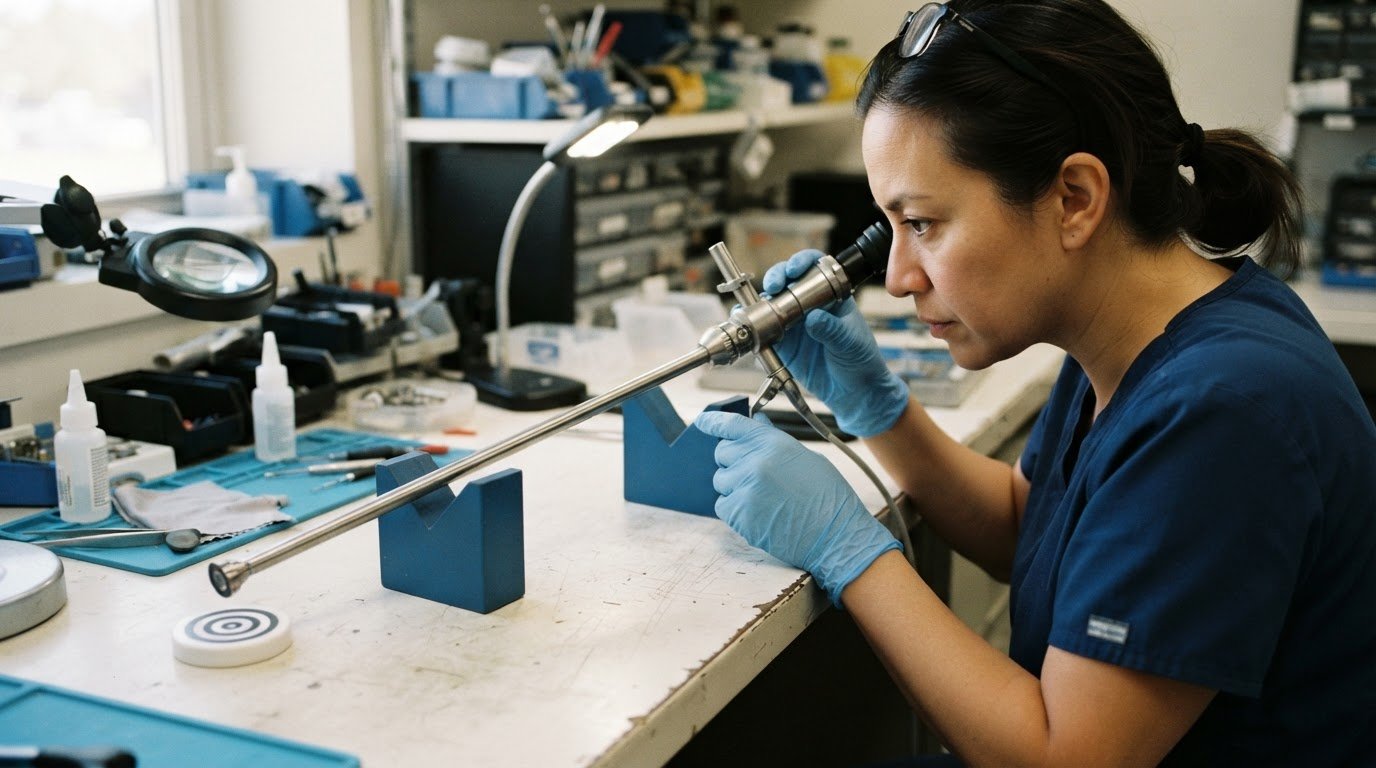
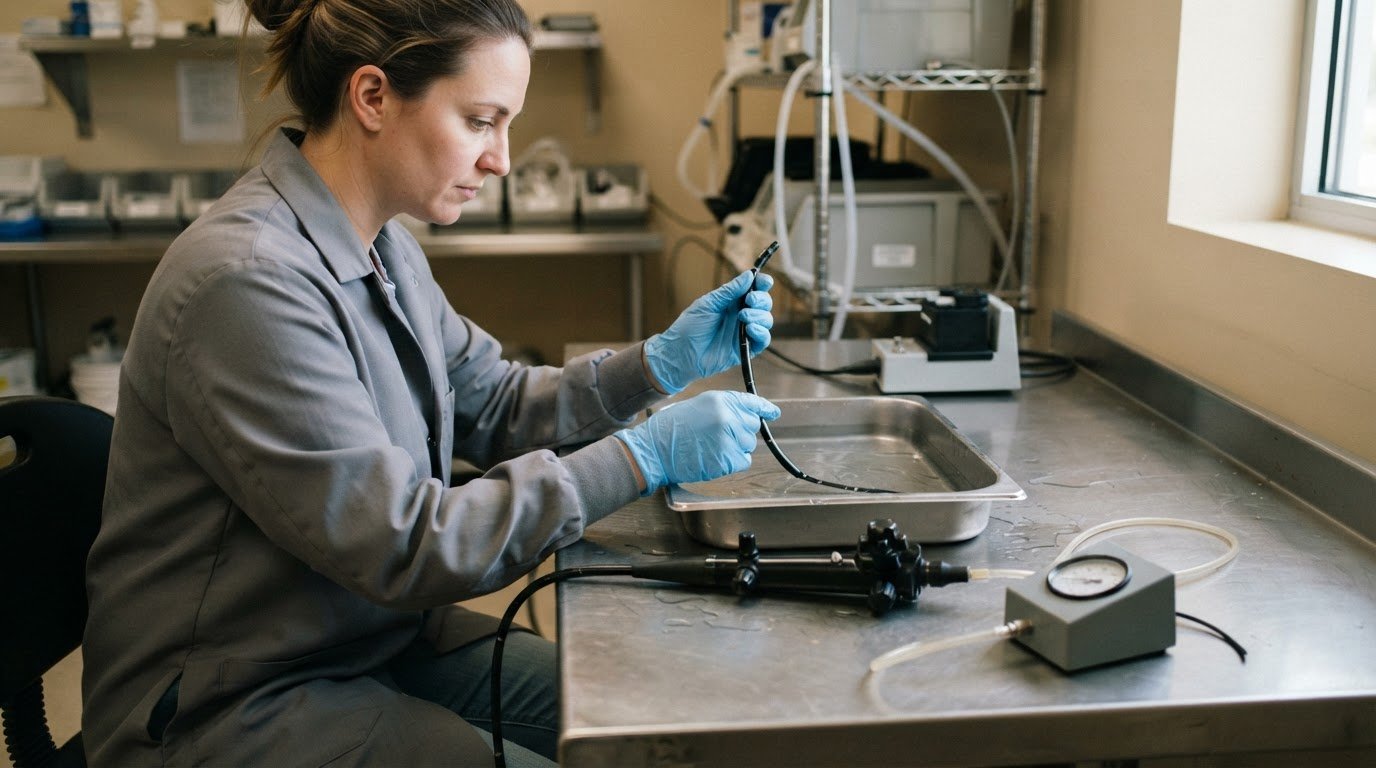
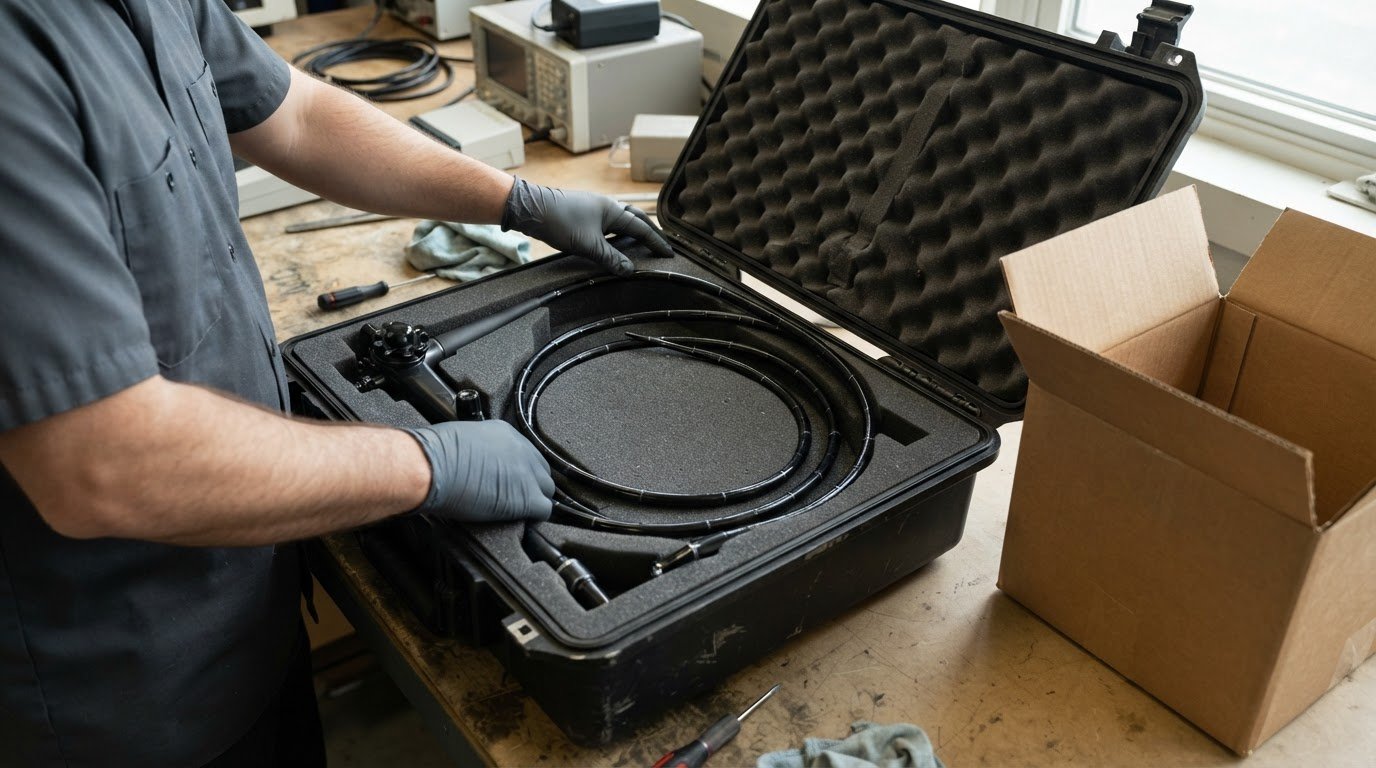
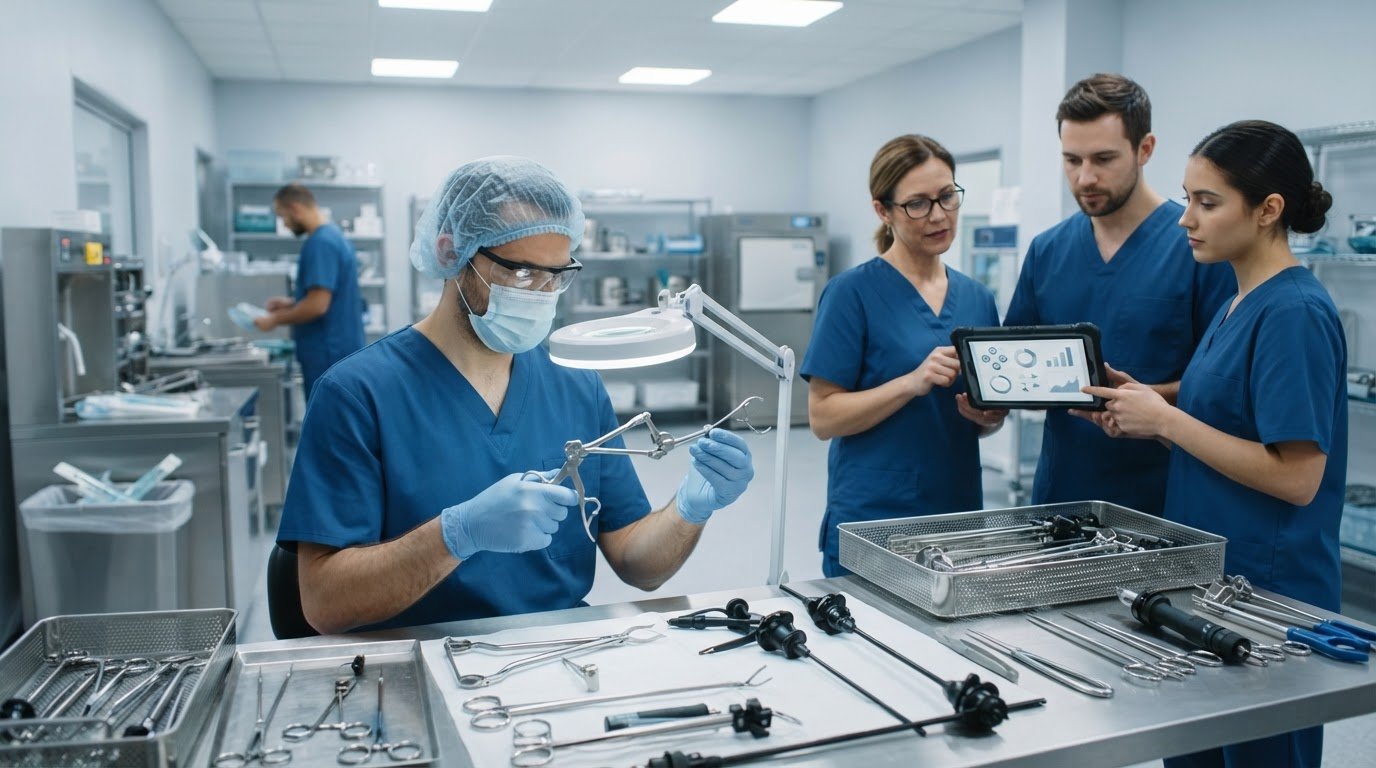
A lifecycle comparison needs service evidence as well as cost records. Fong’s Engineering & Manufacturing provides precision repair and refurbishment for reusable endoscopes and surgical tools. The service is intended to restore instruments toward their original performance specifications, with specialized testing and validation to support safety and compliance.
This information helps procurement, clinical engineering, and quality teams assess whether repair is viable for a particular instrument. It contributes to the evidence behind a lifecycle decision; it does not, by itself, establish that repair will reduce costs or that an instrument is suitable for return to use. Those conclusions depend on the instrument’s condition, documented requirements, and applicable processes.
What a specialist repair and refurbishment service contributes
Technical restoration connects the instrument’s observed condition with the performance requirements that matter for its intended use. Testing and validation evidence can support a controlled review of whether the repaired instrument meets relevant criteria. Teams can consider that evidence alongside service history, utilization, downtime, and replacement assumptions in their lifecycle analysis.
Repair and refurbishment remain distinct from routine cleaning, disinfection, sterilization, and reprocessing. Applicable reprocessing instructions and processes still need to be followed separately. Fong’s endoscope repair and refurbishment guide offers additional context on the service approach and how precision restoration fits into instrument lifecycle management.
Prepare for a productive repair economics discussion
Organize the information that will make an assessment specific to your instruments and workflow. Useful records include:
- Instrument types and intended uses, with the relevant documented performance requirements.
- Available service history, including prior repair events and recurring findings.
- Utilization patterns and the period used for the lifecycle comparison.
- Workflow concerns such as transport, handling, downtime, and reprocessing.
- Existing testing, validation, and return-to-use records, where applicable.
These details help distinguish a repair decision for one instrument from a broader portfolio assumption. They also provide a clearer basis for comparing repair with replacement or a suitable single-use alternative. Consistent cost records and performance evidence make the economic value of reusable instrument repair easier to assess, without treating potential savings as guaranteed.
Fong’s can discuss repair and refurbishment requirements using project-specific information. Discuss your reusable instrument repair requirements to begin a focused conversation about instrument condition, service history, and documented performance needs.
Turn Your Lifecycle Analysis Into a Confident Next Step
A cost model is more useful when its assumptions remain visible as purchasing needs and instrument use change. Assign ownership for maintaining the underlying records and revisit the comparison when utilization, service history, or performance requirements shift. This keeps future decisions grounded in current evidence rather than an outdated estimate.
Fong’s brings more than 40 years of company experience to medical-device engineering and manufacturing. A focused discussion can help frame instrument-specific requirements and identify relevant information for an evaluation, without presuming the financial or technical outcome.
Bring your instrument details, available service history, and intended-use requirements to the conversation. Start a discussion about your reusable instrument repair requirements and consider how the economic value of reusable instrument repair can be assessed for your application. A clear next step can turn lifecycle questions into a structured, evidence-led decision.
Frequently Asked Questions
Is repairing a reusable surgical instrument always more economical than replacing it?
No, repair is not always the lower-cost option. The economic value of reusable instrument repair depends on the instrument’s condition, service history, utilization, downtime, reprocessing needs, and the cost of a suitable replacement. For example, an instrument with recurring issues may compare differently from one with a single repair event. Assess options over the same period, and measure savings rather than assuming them from the original purchase price.
Can every reusable instrument be repaired?
No, repair suitability depends on the instrument’s condition, design, history, and required performance. An instrument may be unsuitable if its condition prevents restoration or if it cannot meet the requirements for its intended use. For example, repeated service findings may warrant closer technical review before including the instrument in a repair scenario. Document the assessment and why the team chose repair, replacement, or retirement.
Does instrument repair replace cleaning or sterilization?
No, repair does not replace cleaning or sterilization. Repair is a technical service; cleaning and sterilization are separate processes within reprocessing. After repair, the instrument must still follow applicable instructions and facility procedures before clinical use. Keep these records distinct: a service report describes repair work and related evidence, while reprocessing records document the procedures performed for reuse. Neither record substitutes for the other.
How should a facility account for uncertain repair frequency?
Use available service history and model several plausible repair-frequency scenarios rather than relying on one forecast. For instance, compare a scenario with less frequent repeat repairs against one with more frequent repairs, while keeping utilization and the analysis period clear. Record assumptions about downtime and retirement, then revisit them as service data accumulates. This makes uncertainty visible and shows which assumptions most influence the decision.
Can repair affect an instrument’s manufacturer warranty?
It depends on the specific instrument and its warranty documentation, so do not assume repair preserves, extends, or voids coverage. Review the terms that apply to the instrument and record relevant conditions or limits in the analysis. For example, note whether warranty coverage changes the replacement comparison during the period being assessed. Consider warranty separately from technical suitability and from the evidence used to evaluate performance after repair.
Does repairing reusable instruments automatically reduce environmental impact?
No, an environmental benefit is not automatic. The result depends on the instrument, repair and reprocessing requirements, transport, replacement frequency, and the alternative being compared. Define the assessment boundaries, such as the lifecycle stages and transport activities included, and use relevant evidence for each option. Consider environmental effects separately from financial costs, then evaluate both alongside performance, workflow, and applicable instructions.