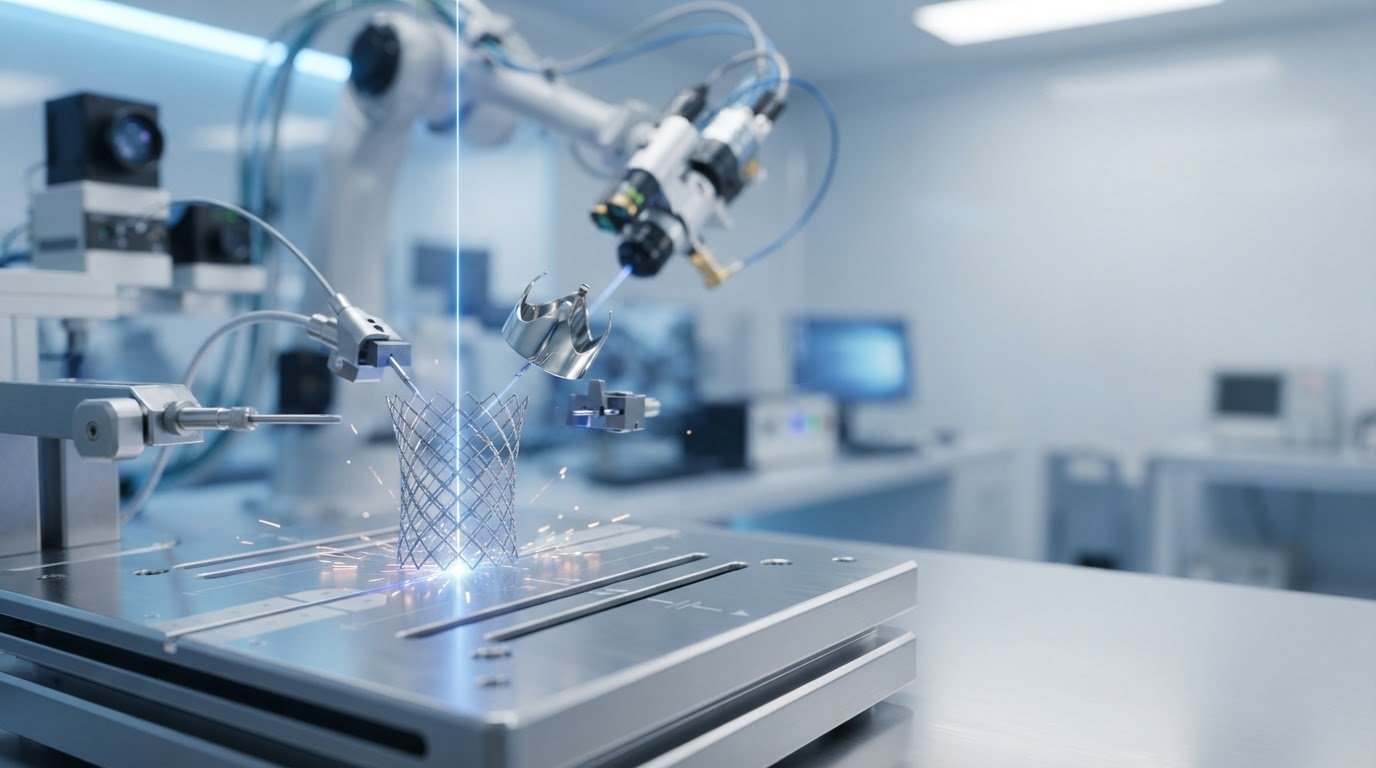


The process that creates the smallest feature isn’t automatically the right choice for a part. Micromachining for medical device components should be selected around what the component does, its geometry and material, and the requirements for repeatable production. A prototype that performs well is only a starting point. The manufacturing process and its controls must also support consistent results at scale.
That’s why process selection and supplier assessment belong together. The right route may involve CNC machining, laser processing, wire-cut EDM, grinding, or a combination of capabilities, depending on the component. Engineers and buyers also need evidence that a supplier can manage inspection, risk, and process validation, not simply produce a promising first article.
This guide compares manufacturing routes by component requirements and explains what to look for in supplier quality systems, including ISO 13485 and documented IQ/OQ/PQ validation capabilities. It also considers components such as guide wires, hypotubes, marker bands, and surgical adapters, while recognizing that their functions and production needs differ. Use these criteria to reduce handoff risk from prototype development through validated production.
Key Takeaways
- Choose micromachining for medical device components by weighing part function, geometry, material, inspection needs, and production goals together.
- Compare manufacturing routes by the features they can produce and the secondary operations or inspections a component may require.
- Ask suppliers how drawing characteristics connect to acceptance criteria, inspection records, traceability, and change control.
- Use a structured selection workflow to move from documented component requirements to sample review, process validation, and production planning.
- Assess whether a supplier’s documented quality and manufacturing capabilities can support the component’s needs and any required transition to device assembly.
What Micromachining Means for Medical Device Components
Micromachining is precision manufacturing used to create small or intricate component features. The appropriate process depends on the part’s design and requirements, not on a universal size threshold. For medical parts, geometry, material, function, and inspection requirements need to be considered together. A feature that is manufacturable in isolation may still affect assembly, performance, or how the finished component can be inspected.
The term covers different approaches, not one machine or technique. Microfabrication provides a broader overview of processes used to make small-scale structures, including those relevant to medical technologies. For component sourcing, the practical question is which manufacturing route can create the required features and produce evidence that they meet defined acceptance criteria.
Which medical device components may need micromachining?
Micromachining for medical device components may be considered when a design includes small passages, thin sections, slots, complex profiles, or precise joining interfaces. These features can appear in components such as hypotubes, marker bands, guide wires, and surgical adapters. Their presence alone doesn’t dictate a process. The feature’s purpose and its relationship to the rest of the device matter.
For example, a passage may support a fluid path, while a slot or profile may contribute to positioning or assembly. A guide wire’s flexibility requirements differ from those of a joining interface. Material properties and intended function influence whether machining, laser processing, or another route is appropriate, so assess process suitability part by part.
Why does component function matter as much as feature size?
Dimensions describe a component, but they don’t fully establish whether it will perform as intended. Assembly interfaces may need to mate reliably with adjacent parts; fluid paths must be assessed in relation to their role in the device; and features in flexible or load-bearing components may affect strength or movement. Those functional needs shape manufacturing and inspection requirements.
Dimensional inspection can show whether specified characteristics meet drawing criteria. It doesn’t, by itself, establish device-level performance or verify every functional requirement. Before specifying a process, connect critical features to their intended function, suitable measurement methods, and clear acceptance criteria. That review gives buyers and suppliers a shared basis for evaluating samples and planning subsequent verification.
How Machining and Laser Micromachining Differ for Medical Parts
Mechanical machining and laser processing create features in different ways, so the best route depends on the drawing, material, intended function, and evidence that the process can repeatedly meet requirements. CNC milling, auto-lathe, turn-mill, wire-cut EDM, centreless grinding, and laser operations are documented capabilities at Fong’s. However, capability alone doesn’t establish that a particular part is suitable for a process.
Process capability describes what a manufacturing route can produce. Inspection and validation evidence show whether a finished component meets its defined requirements. Use the comparison below to guide a technical discussion, not as a substitute for reviewing the part specification.
When should buyers assess CNC, turning, EDM, or grinding?
Consider 2-axis or 5-axis CNC milling in relation to feature access and part geometry; neither configuration is universally superior. Auto-lathe and turn-mill are options to assess for rotational features, while wire-cut EDM and centreless grinding may suit other design needs. For each candidate route, confirm material suitability, achievable characteristics, and inspection methods with the supplier.
| Route | Geometry to assess | Material compatibility | Secondary operations | Inspection and design considerations |
|---|---|---|---|---|
| CNC milling | Milled faces, slots, profiles, and access to features | Confirm for the specified material and process setup | Assess deburring or additional finishing needs | Define critical features and how they’ll be measured |
| Auto-lathe or turn-mill | Rotational features and combinations of turned and milled geometry | Review against material and component design | Check whether separate operations are required | Consider datum strategy, feature relationships, and inspection access |
| Wire-cut EDM or centreless grinding | Assess the drawing for features suited to each route | Verify part-specific suitability with the supplier | Identify any required follow-on operations | Agree on acceptance criteria and suitable measurement methods |
| Laser processing | Cut features, welds, solder joints, or markings | Confirm the material and intended result for each operation | Assess cleaning, joining, or finishing requirements | Review feature access, heat effects, and verification needs |
When might laser cutting, welding, or marking fit the design?
Laser processing is a family of distinct operations, not one interchangeable method. Cutting, welding, soldering, and marking each serve different design purposes. Buyers may assess corrosion-resistant, autoclave-stable markings or hermetic welds as potential outcomes, but should verify applicability for the material, component, and intended use rather than assume those results.
For micromachining for medical device components, ask how the proposed route addresses the drawing’s critical characteristics and what records will demonstrate conformance. A focused component process review can help clarify which manufacturing questions need resolution before selecting a route.
How to Compare Micromachining Suppliers Beyond Their Equipment
An equipment list shows what a supplier may be able to do. It doesn’t establish whether the proposed process is controlled, repeatable, or appropriate for your component. For micromachining for medical device components, assess how engineering decisions, inspection, traceability, and process changes are managed from initial samples through production.
Don’t select a supplier solely because it quotes the tightest tolerance. A tolerance is meaningful only when it reflects the part’s functional needs and the supplier can produce and verify it consistently. Ask how the inspection plan translates drawing characteristics into acceptance criteria, measurement methods, and retained records. The answers should make clear who reviews results, how nonconformances are handled, and how changes are assessed and documented.
What quality and validation evidence should a buyer request?
Review the supplier’s quality system and confirm that its scope applies to the work under consideration. Where relevant, ask for evidence of an ISO 13485 quality system and clarify how it governs the proposed component process. Request a project-specific explanation of IQ/OQ/PQ: which equipment or process is covered, what parameters are evaluated, and how approval is recorded.
Discuss how risk management, including PFMEA, identifies and controls process risks, and how CAPA addresses recurring or significant issues. Ask how proposed changes to equipment, methods, or process parameters are reviewed for impact. Supplier credentials don’t establish regulatory status for a particular device or component. Verify any product-specific clearance or marking independently, and don’t infer it from a supplier’s general quality credentials.
How should inspection and production readiness be assessed?
Ask the supplier to connect each critical drawing characteristic to a measurement method and acceptance record. This might include appropriate dimensional inspection equipment, in-process checks, and a defined response when a result falls outside the criteria. If unmanned CMM inspection or real-time process monitoring is proposed, ask what is monitored, how the measurement or data is verified, and how exceptions are recorded. Automation is useful only when its controls and outputs are understood.
Production readiness also depends on carrying learning from prototypes into production. Review how sample results, inspection data, identified risks, and approved process settings become part of the production plan. Confirm that responsibilities, document revisions, traceability, and change-control expectations are clear before release. Fong’s documents ISO 13485 quality systems, IQ/OQ/PQ process validation, inspection, CAPA, PFMEA risk management, and smart manufacturing capabilities. Buyers should still confirm how each applies to the specific project.
A Practical Checklist for Selecting a Medical Micromachining Route
A disciplined selection process gives engineering, quality, and sourcing teams a shared basis for evaluating a route before moving toward production. Use these steps to turn a component requirement into a reviewable manufacturing plan.
- 1. Define the component requirements. Gather current drawings and material specifications. Document geometry, critical-to-quality features, assembly interfaces, intended use, and relevant use conditions. Identify whether the design is at prototype stage or already established, and outline anticipated production volumes.
- 2. Review design and process options. Assess whether the proposed geometry, material, and function align with the candidate manufacturing route. Include inspection access and any finishing or joining operations in the review. A medical device design for manufacturability guide can help frame design discussions around production feasibility and handoffs.
- 3. Resolve downstream requirements. Identify whether the component needs secondary finishing, inspection beyond routine dimensional checks, or integration with other parts. Flag project requirements for testing, sterilization, cleanroom assembly, or packaging, and establish which party is responsible for each.
- 4. Agree on sample evaluation. Before reviewing samples, document acceptance criteria, critical features, measurement methods, and required records. Compare results against the drawing and intended function, then record any design or process issues that need resolution.
- 5. Plan qualification and production transfer. Work with the supplier’s quality team to identify applicable validation activities, risk controls, documentation, and approval responsibilities. Confirm how approved process settings, inspection plans, and changes will be controlled as the work moves into production.
What information should be ready before requesting a supplier review?
Prepare one controlled set of drawings, material specifications, critical characteristics, and use conditions so suppliers assess the same requirements. Add expected volumes and clarify whether the request concerns prototypes or a mature design. Note assembly, testing, sterilization, and packaging needs early, since each may influence process selection, inspection planning, or supplier responsibilities.
How can buyers reduce risk during process qualification?
Set sample acceptance criteria and measurement methods before authorizing production tooling or process changes. Define what evidence quality teams need to review and how deviations or revisions will be assessed. For broader context, consult this resource on medical device manufacturing compliance. For a project-specific discussion of micromachining for medical device components, contact Fong’s about your component requirements.
How Fong’s Connects Micromachining with Medical Device Manufacturing
Component production is one part of a medical device programme. Fong’s Engineering & Manufacturing Private Limited documents medical device manufacturing capabilities spanning precision machining, laser processing, inspection, and assembly. This range can support a discussion about how a component’s manufacturing route fits wider device requirements, with any additional scope confirmed for the specific project.
Fong’s documents more than 40 years of medical device manufacturing experience, an ISO 13485 quality system, process validation, and smart manufacturing capabilities. These are useful points to assess, but they don’t replace project-specific review. Buyers should confirm which processes, quality controls, and deliverables apply to their component and how requirements for testing, cleanroom assembly, or packaging will be addressed within the agreed scope.
Which documented capabilities may support a component project?
Documented machining capabilities include 2-axis and 5-axis CNC milling, auto-lathe, turn-mill, wire-cut EDM, and centreless grinding. Laser processing capabilities include cutting, welding, soldering, and marking. Which, if any, fits a particular component depends on its drawing, material, function, and inspection requirements. For additional technical context, see the micro-precision medical components engineering guide.
When component work connects to a larger device programme, buyers can also establish how assembly interfaces and quality documentation will be managed. Fong’s documents Class 8 cleanroom facilities supporting disposable and reusable device assembly. Whether cleanroom assembly or other downstream requirements are relevant depends on the device and project scope; confirm applicability rather than assume a particular component requires them.
How can buyers begin a technical discussion with Fong’s?
Start with the information needed for a focused feasibility review: current drawings, material details, critical features, intended function, and project stage. Include anticipated volumes and identify any connections to assembly, testing, or packaging. These details help clarify what needs engineering review and what evidence may be required to assess process selection, validation, and production readiness.
Feasibility, process suitability, applicable quality or regulatory requirements, and production capacity must be reviewed for the specific project. That discussion can establish which documented capabilities are relevant and identify questions to resolve before proceeding. To begin, discuss your medical component requirements with Fong’s.
Move from Process Selection to Production Readiness
Choosing micromachining for medical device components means more than matching a feature to a machine. The route should fit the part’s geometry, material, function, and inspection needs, while supplier evidence should show how the process is controlled and how requirements will be verified.
Before advancing, align engineering and quality teams on critical features, sample acceptance criteria, validation planning, and production controls. Fong’s documents precision machining, laser processing, inspection, ISO 13485 quality systems, and IQ/OQ/PQ process validation frameworks. Cleanroom assembly is also documented. Discuss project-specific needs such as testing or packaging directly rather than assuming they fall within the proposed scope.
A clear technical review can help identify what is feasible, which records are relevant, and what needs confirmation before production planning. Discuss your medical device component requirements with Fong’s by sharing your drawings, material details, critical features, and project stage. With those requirements established, your team can take the next step toward a well-supported manufacturing approach.
Frequently Asked Questions
What is micromachining for medical device components?
Micromachining for medical device components refers to precision manufacturing methods used to create small or intricate component features. The suitable route depends on geometry, material, intended function, assembly interfaces, and inspection requirements. Options may include CNC machining, turning, wire-cut EDM, grinding, or laser processing. There’s no universal feature-size threshold that determines the process. A supplier should review the design and confirm feasibility for the specific component.
Which micromachining process is best for medical device components?
There’s no single best process for every medical device component. CNC milling, turning, EDM, grinding, and laser operations address different design needs. Compare options against the component’s geometry, material, functional requirements, and production plans. Ask suppliers to explain their process evidence, measurement methods, quality controls, and validation approach. A project-specific engineering review can help determine whether a proposed route fits the design before process requirements are finalized.
Can laser micromachining be used for medical device parts?
Laser processing can be suitable for selected medical device applications, including cutting, welding, soldering, and marking. The appropriate operation depends on the material, feature geometry, intended function, and how the resulting characteristics will be verified. Ask the manufacturer to identify the proposed laser process and explain its inspection plan. Don’t assume an operation or performance claim applies to every part; assess it against the component design and applicable quality requirements.
How do I choose a micromachining supplier for medical components?
Start with controlled drawings, material details, critical features, intended use, and production expectations. Then assess relevant process capability, engineering support, measurement methods, traceability, quality-system scope, and validation support. Ask how prototype findings will carry into production and how process changes are reviewed and documented. Verify regulatory or certification claims for the specific work involved. A strong supplier fit is supported by evidence that aligns with your component’s defined requirements.
Does micromachining require ISO 13485 certification?
Whether ISO 13485 certification is required depends on the device, customer obligations, regulatory strategy, and work performed. Buyers commonly assess a supplier’s medical device quality system, including whether its scope covers the proposed activities. Confirm the supplier’s certification status and scope directly, then ask how its quality processes apply to your component. Certification alone doesn’t demonstrate that a specific part or process meets all design, validation, or regulatory requirements.
What information should I provide for a micromachining feasibility review?
Provide current drawings, material specifications, critical-to-quality features, intended function, and assembly interfaces. Include inspection or cleanliness requirements, project stage, and production volumes where known. Flag any testing, sterilization, or packaging needs that could affect the manufacturing scope. Identify unresolved design questions, too. With this information, a manufacturer can assess potential process routes, risks, and what additional details are needed to develop a controlled production plan.
Can a micromachined prototype move directly into mass production?
Not automatically. A prototype can inform design and process feasibility, but production readiness also depends on defined specifications, repeatable process controls, suitable inspection, and appropriate validation. Review any differences between prototype and production equipment, material supply, documentation, and acceptance criteria. Engineering and quality teams should agree on how sample results transfer into production controls and confirm that the proposed manufacturing process meets the device requirements before authorizing routine production.