

In 2026, the most secure vault for your MedTech innovation isn’t a legal filing cabinet; it’s the digital architecture of your partner’s smart factory floor. As global supply chains become more interconnected, the stakes for intellectual property protection medical device manufacturing have never been higher. You’ve likely felt the persistent anxiety that comes with a complex tech transfer. It’s a valid concern because your proprietary methods of manufacture are often more valuable than the patents themselves. Entrusting these secrets to a manufacturing site requires more than just a signed non-disclosure agreement; it requires a partner in a stable jurisdiction like Singapore.
This guide provides the strategic framework you need to audit CDMO security and ensure your innovations remain yours. You’ll learn how sophisticated technical moats, unmanned robotic systems, and rigorous ISO 13485 compliance work together to safeguard your proprietary MedTech innovations. We’ll examine how a partner with a proven FDA-compliant track record maintains data integrity through real-time smart dashboards and digital silos, ensuring that your technical excellence remains a private competitive advantage.
Key Takeaways
- Distinguish between design patents and proprietary manufacturing methods to prioritize the protection of your most valuable technical trade secrets.
- Explore how smart manufacturing lines and unmanned systems shift security from human-centric to system-centric, significantly reducing the risk of internal data leaks.
- Implement a multi-layered framework for intellectual property protection medical device manufacturing that extends beyond standard legal agreements to include restricted-access cleanroom environments.
- Utilize a professional framework for auditing a potential partner’s cybersecurity infrastructure and verifying their ISO 13485 and FDA-compliant track record.
- Evaluate the strategic security advantages of choosing a global partner with a stable jurisdiction and a culture rooted in rigorous precision engineering.
The Critical Role of IP Security in MedTech Contract Manufacturing
The definition of Intellectual Property within the MedTech sector extends far beyond the physical geometry of a device. While patents often focus on the unique design or clinical application of a product, the actual “method of manufacture” represents a distinct and often more vulnerable category of trade secrets. For many original equipment manufacturers (OEMs), the proprietary sequences, tolerances, and specialized assembly techniques used to produce components like Ultrasonic Scalpel Couplers are what truly define their market advantage. If these methods are exposed, the competitive barrier collapses, regardless of the strength of the underlying patent.
Comprehensive intellectual property protection medical device manufacturing requires a strategic understanding of these two pillars. In the competitive landscape of robotic surgery and minimally invasive surgery (MIS) tools, global competitors are constantly seeking to replicate high-precision performance. For MedTech startups, an IP leak doesn’t just invite competition; it directly erodes long-term valuation and delays speed-to-market. Investors prioritize companies that can prove their manufacturing processes are siloed and secure.
The Vulnerability of the Technology Transfer Phase
The transition from prototyping to mass production is the most critical window for IP exposure. During this phase, sensitive CAD files and engineering specifications move from the OEM’s internal servers to the CDMO’s environment. Insecure documentation sharing or lack of encryption can lead to unauthorized access to proprietary blueprints. A structured Master Validation Plan (MVP) serves as a vital security document here. It ensures that every step of the manufacturing process is documented, validated, and locked down, preventing process drift where proprietary methods might be inadvertently altered or exposed to unauthorized personnel.
Regulatory Compliance as an IP Safeguard
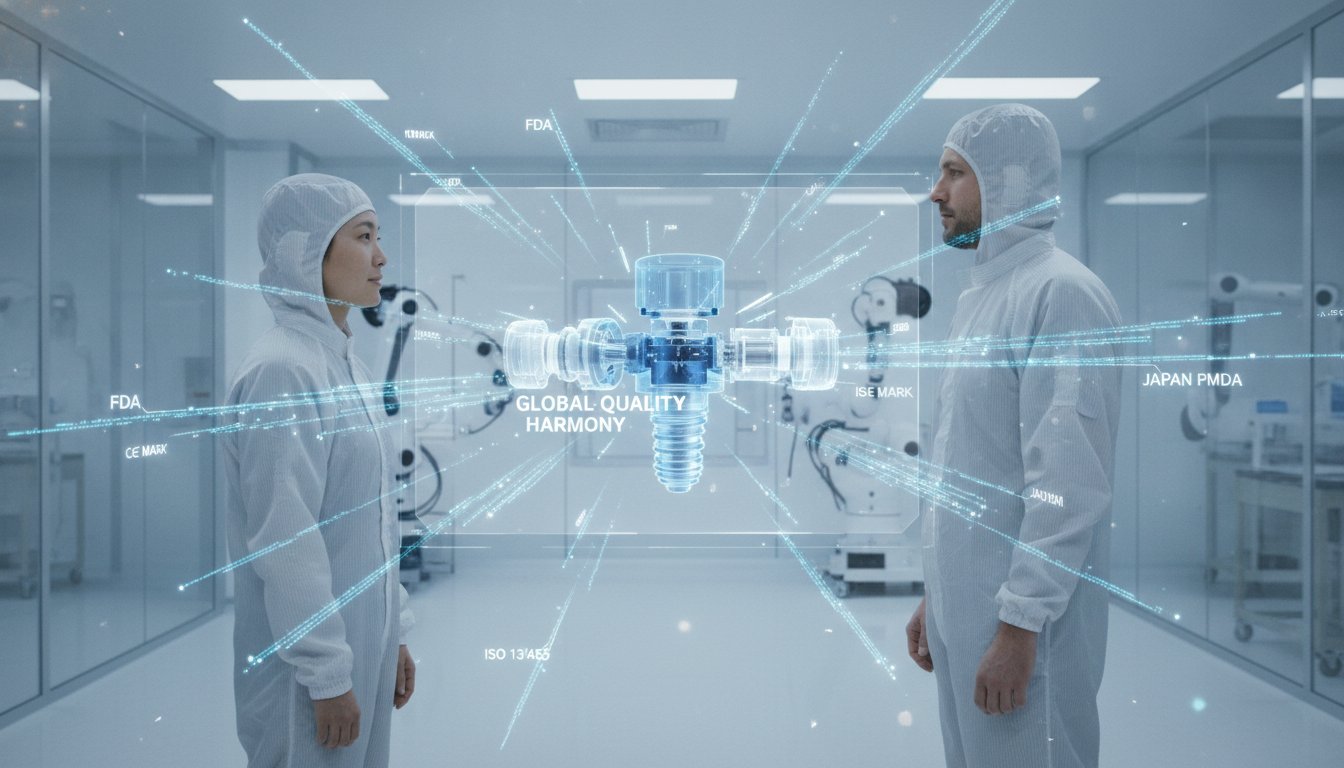
Rigorous regulatory adherence acts as a natural deterrent against data breaches. ISO 13485 quality management systems aren’t just for safety; they mandate a level of documentation and traceability that inherently protects data. This framework ensures that only authorized personnel have access to specific technical files. The documentation required for FDA 510(k) submissions or CE Marking creates a clear, traceable trail of IP ownership. A robust Quality Culture within a CDMO ensures that every technician understands the high-stakes nature of the data they handle. When security is woven into the quality management system, it becomes a permanent operational feature rather than a temporary legal requirement. This systematic approach is the foundation of intellectual property protection medical device manufacturing in high-precision environments.
Technical Moats: How Smart Manufacturing Protects Proprietary Data
While legal frameworks provide a foundation, the true front line of intellectual property protection medical device manufacturing is the factory floor. We’re seeing a shift from human-centric to system-centric security. In a system-centric model, access to sensitive data is governed by automated protocols rather than individual discretion. This significantly reduces the surface area for potential leaks by removing the human element from data management during the most sensitive stages of production.
Smart manufacturing utilizes digital silos to segment internal networks. This ensures that an engineer in the precision machining department can’t access assembly files for Robotic Surgical Adapters unless specifically authorized. It’s a proactive approach to data containment. Real-time dashboards monitor data usage patterns across the entire facility, providing a transparent view of who is accessing what and when. If an anomaly occurs, such as an unauthorized file transfer or unusual access time, the system flags it instantly. Understanding the power of intellectual property in medical technology helps organizations realize that digital security is as vital as physical locks. These systems don’t just record data; they actively defend it, creating a persistent audit trail that satisfies both legal and regulatory requirements.
Automation and Robotics as Security Assets
Automation does more than improve throughput; it acts as a physical security barrier. By utilizing 24-hour smart manufacturing lines with unmanned robotic loading, the number of human touchpoints is minimized. Fewer people interacting with the hardware means fewer opportunities for proprietary designs to be compromised. Unmanned CMM inspection further strengthens this moat. These systems perform high-precision quality checks without human intervention, ensuring that sensitive dimensional data remains within a closed digital loop. This level of discipline is essential for maintaining the integrity of complex components like Robotic Surgical Adapters.
Advanced Laser Processing and Data Integrity
Technical moats also exist in the specific “how” of manufacturing. Advanced laser processing, such as 5-axis laser welding and fiber-laser cutting, allows for the creation of intricate geometries that are difficult to reverse-engineer. Ultrashort-pulse marking provides autoclave-stable, corrosion-resistant traceability directly on the device. By keeping secondary processes like electropolishing and DLC coating in-house, a CDMO prevents the “fragmentation” of IP across multiple sub-vendors. This end-to-end control is a hallmark of a secure manufacturing partner. It ensures that the most sensitive stages of production never leave a controlled, audited environment.
Beyond the NDA: Multi-Layered Protection Strategies for Complex Devices
Non-disclosure agreements represent the baseline of a professional partnership. While they define legal boundaries, they lack the operational force to prevent a data breach in real time. Effective intellectual property protection medical device manufacturing integrates physical security directly into the production environment. Within Class 8 cleanrooms, access is strictly controlled through card-based systems, ensuring only authorized technicians handle sensitive surgical instrument assembly. This physical silo prevents accidental exposure of proprietary designs to unauthorized personnel or visiting vendors.
A CDMO’s integrity is built on its people. Continuous employee training transforms security from a checklist into a core value. This culture of discipline ensures every individual understands the power of intellectual property in medical technology and their personal role in defending it. Beyond the internal team, rigorous supply chain management is required. Vetting sub-vendors for micro-precision components involves auditing their own data security protocols. This ensures no weak links exist in the broader production cycle that could compromise your competitive advantage.
Protecting IP in the Repair and Refurbishment Cycle
Endoscope repair and refurbishment present unique risks. These processes often require access to proprietary OEM specifications to ensure the device is restored to its original functional state. Secure reprocessing protocols prevent technical restoration from becoming a source of specification leakage. Our US repair center in Irvine, CA, follows the same global security standards as our primary manufacturing sites. This consistency ensures that whether a device is being built or refurbished, the underlying technical data remains shielded from unauthorized eyes.
Geographic and Jurisdictional Security
Jurisdiction is a critical, often overlooked, layer of security. Singapore remains a global hub for MedTech because of its legal stability and robust enforcement of intellectual property laws. Operating across multiple sites in Singapore, China, and the upcoming Malaysia facility, which opens in Q1 2027, allows for strategic geographic redundancy without compromising standards. Strategic logistics also play a role. Proximity to major logistics hubs like Changi and Senai airports minimizes the time products and sensitive documentation are in transit. This reduced transit time naturally lowers exposure risks. By choosing a partner with a global footprint and a centralized quality culture, OEMs gain the benefit of international scale with the security of a high-trust jurisdiction.
Due Diligence Checklist: Evaluating a CDMO’s IP Safeguards
Evaluating a potential partner’s operational environment requires more than a cursory review of their certifications. A thorough technical audit is the only way to verify that intellectual property protection medical device manufacturing is an active priority rather than a passive claim. You must look for evidence of a “steady hand” approach where every digital and physical access point is strictly monitored. This process begins with a deep dive into the CDMO’s IT infrastructure and ends with a validation of their quality culture. It’s about ensuring your partner’s systems are as robust as your own designs.
During on-site or virtual facility tours, verify ISO 13485 and FDA compliance by examining how documentation flows through the shop floor. Ask for specific evidence of how the CDMO has handled complex devices like Ultrasonic Scalpel Couplers or high-precision Stents in the past. Experience with these high-stakes components indicates a mature understanding of the tolerances and proprietary methods required for market success. You should also assess the “unmanned” capabilities of their smart manufacturing lines. Unmanned CMM inspection and robotic loading aren’t just efficiency metrics; they’re indicators of a system-centric security model that limits human exposure to your sensitive designs.
Infrastructure and Physical Security Questions
A secure facility must demonstrate multi-layered physical barriers. Inquire if the CDMO utilizes biometric access controls for their Class 8 cleanrooms to ensure that only designated assembly personnel enter sensitive zones. You should also investigate the lifecycle of your technical data. Ask how CAD/CAM files are stored, encrypted, and who specifically holds the authorization to export them. Finally, confirm that real-time manufacturing dashboards are isolated from the public internet. If these dashboards are accessible outside the local network without a secure VPN, your production data is unnecessarily exposed.
Process and People Validation
The human element remains a critical variable in any security strategy. Review the partner’s IQ/OQ/PQ process validation framework to ensure that IP-sensitive steps are locked down during the equipment and process qualification phases. High employee turnover can be a red flag for IP security; instead, look for established teams with rigorous IP training programs. It’s also vital to check for medical device design for manufacturability protocols. These protocols ensure that design intent is preserved while optimizing for a secure, automated production environment. If you’re ready to begin a technical audit of your own supply chain, you can request a facility overview from our engineering team to see these safeguards in action.
Fong’s Engineering: Your Global Partner in Secure MedTech Innovation
Fong’s Engineering & Manufacturing Private Limited has served as a reliable anchor for the global MedTech industry for over 40 years. Our organization’s “Steady Hand” philosophy ensures that technical excellence and operational stability remain constant throughout the most demanding developmental cycles. This deep institutional expertise provides a superior level of intellectual property protection medical device manufacturing, where precision engineering is coupled with a culture of absolute discretion. We engage as peers with high-level engineering and executive teams, delivering the meticulous attention to detail required for micro-precision components and complex device assembly.
Our global operations provide the scalability and security necessary for market leaders to innovate with confidence. From initial concept design to the upcoming opening of our Malaysia facility in Q1 2027, we offer end-to-end support that keeps your proprietary methods within a single, audited environment. This continuity is essential for maintaining the integrity of sensitive technical data as a product moves from pilot production to high-volume manufacturing, preventing the fragmentation of trade secrets across multiple sub-vendors.
A Global Platform for Patient Care
Leveraging 500,000 sq ft of world-class facilities, we provide a secure platform to scale MedTech innovation globally. Fong’s Engineering & Manufacturing Private Limited is dedicated to advancing patient care through a relentless focus on quality and precision. To discuss the specific security requirements for your next project, contact Sam Lim at Sam.lim@fongspl.com.sg.
Comprehensive CDMO Capabilities
Our specialized expertise encompasses a full suite of medical device contract manufacturing services, supporting everything from robotic surgical adapters to ultrasonic couplers. This technical mastery extends to specialized endoscope repair and refurbishment, where proprietary OEM specifications are handled within secure reprocessing frameworks. By centralizing our quality management systems, we ensure total medical device manufacturing compliance across our entire global footprint, providing you with the stability of a partner that values your intellectual assets as much as you do.
Securing the Future of MedTech Innovation
The strategic landscape of 2026 demands a shift from reactive legal strategies to proactive technical barriers. As we’ve explored throughout this guide, effective intellectual property protection medical device manufacturing relies on a combination of smart manufacturing lines, digital silos, and jurisdictional stability. By integrating these elements, MedTech innovators can ensure their proprietary methods remain shielded from global competition while maintaining the high standards required for complex device assembly.
Fong’s Engineering & Manufacturing Private Limited offers the quiet confidence that comes from over 40 years of precision engineering expertise. Our ISO 13485 certification and proven FDA 510(k) and CE Mark experience reflect a steady hand capable of navigating the most rigorous regulatory environments. We’re committed to being your global partner of choice, ensuring your innovations are scaled with the highest level of integrity and technical mastery.
Partner with a Secure CDMO: Contact Fong’s Engineering & Manufacturing Private Limited Today to discuss your IP security requirements and begin a collaborative partnership built on trust.
Frequently Asked Questions
How does a CDMO typically protect medical device trade secrets?
A CDMO protects trade secrets by implementing multi-layered security protocols that go beyond standard legal agreements. This includes restricted access to Class 8 cleanrooms and digital silos that segment sensitive CAD or CAM data. By utilizing system-centric security, the manufacturer ensures that only authorized engineers access specific technical files. This approach minimizes human exposure to proprietary blueprints, ensuring that the critical method of manufacture remains confidential throughout the production lifecycle.
What is the difference between a patent and a trade secret in MedTech manufacturing?
In MedTech, a patent protects the functional design and clinical application of a device through public disclosure and legal exclusivity. Conversely, a trade secret covers the proprietary manufacturing processes and specialized techniques that aren’t publicly disclosed. While patents prevent direct copying of the device, trade secrets protect the specific sequence of production. Maintaining robust intellectual property protection medical device manufacturing requires safeguarding these manufacturing secrets, as they often provide the most significant competitive advantage.
Is Singapore a safe jurisdiction for medical device intellectual property?
Singapore is recognized as one of the safest jurisdictions globally for intellectual property due to its legal stability and robust enforcement. The country maintains a sophisticated legal framework that prioritizes the protection of high-tech innovations. For global MedTech firms, basing intellectual property protection medical device manufacturing operations in Singapore provides a reliable foundation. This jurisdictional security is a key reason why many OEMs choose to centralize their regional manufacturing and assembly in this stable environment.
How does smart manufacturing improve IP security compared to traditional methods?
Smart manufacturing improves security by shifting from human-centric to system-centric data management. Automated production lines and unmanned CMM inspection systems significantly reduce the number of human touchpoints with sensitive design data. Real-time dashboards and digital monitoring allow for the instant detection of unauthorized data access. This technological moat creates a more secure environment than traditional methods, where manual handling and paper-based documentation often lead to higher risks of accidental data exposure.
Can I audit my contract manufacturer’s cybersecurity protocols?
Yes, OEMs can and should perform technical audits of a CDMO’s IT infrastructure and cybersecurity protocols. A professional audit examines data encryption methods, biometric access controls, and network segmentation. It’s essential to verify if manufacturing dashboards are isolated from the public internet and how technical files are authorized for export. These audits ensure that the partner’s digital defenses are capable of protecting sensitive proprietary information against both internal and external threats.
What happens to my IP during the endoscope refurbishment process?
During refurbishment, your IP is protected through secure reprocessing protocols that treat repair data with the same rigour as new manufacturing. Technicians must access proprietary OEM specifications to restore devices to their original state, making data containment critical. A secure partner ensures that these technical specifications don’t leak outside the controlled repair environment. By centralizing refurbishment in specialized facilities, the CDMO maintains a consistent security standard across the entire device lifecycle.
How do you prevent IP leakage when manufacturing in multiple countries?
Preventing leakage across multiple sites requires a centralized quality culture and standardized security protocols across all locations. Whether manufacturing in Singapore, China, or the upcoming Malaysia site opening in Q1 2027, the same digital silos and access controls apply. This consistency ensures that technical data is managed within a single, audited ecosystem. By maintaining a global footprint under a unified management structure, the CDMO prevents the fragmentation of IP that often occurs when using multiple sub-vendors.
What certifications should I look for in a secure MedTech manufacturing partner?
A secure partner must maintain ISO 13485 certification, which mandates rigorous documentation and traceability for medical device quality management. You should also look for a proven track record with FDA 510(k) submissions and CE Mark experience. These certifications indicate that the CDMO’s operational processes meet global regulatory standards for data integrity and safety. Evaluating these credentials ensures that the manufacturer possesses the discipline required to handle high-stakes MedTech innovations without compromising proprietary information.