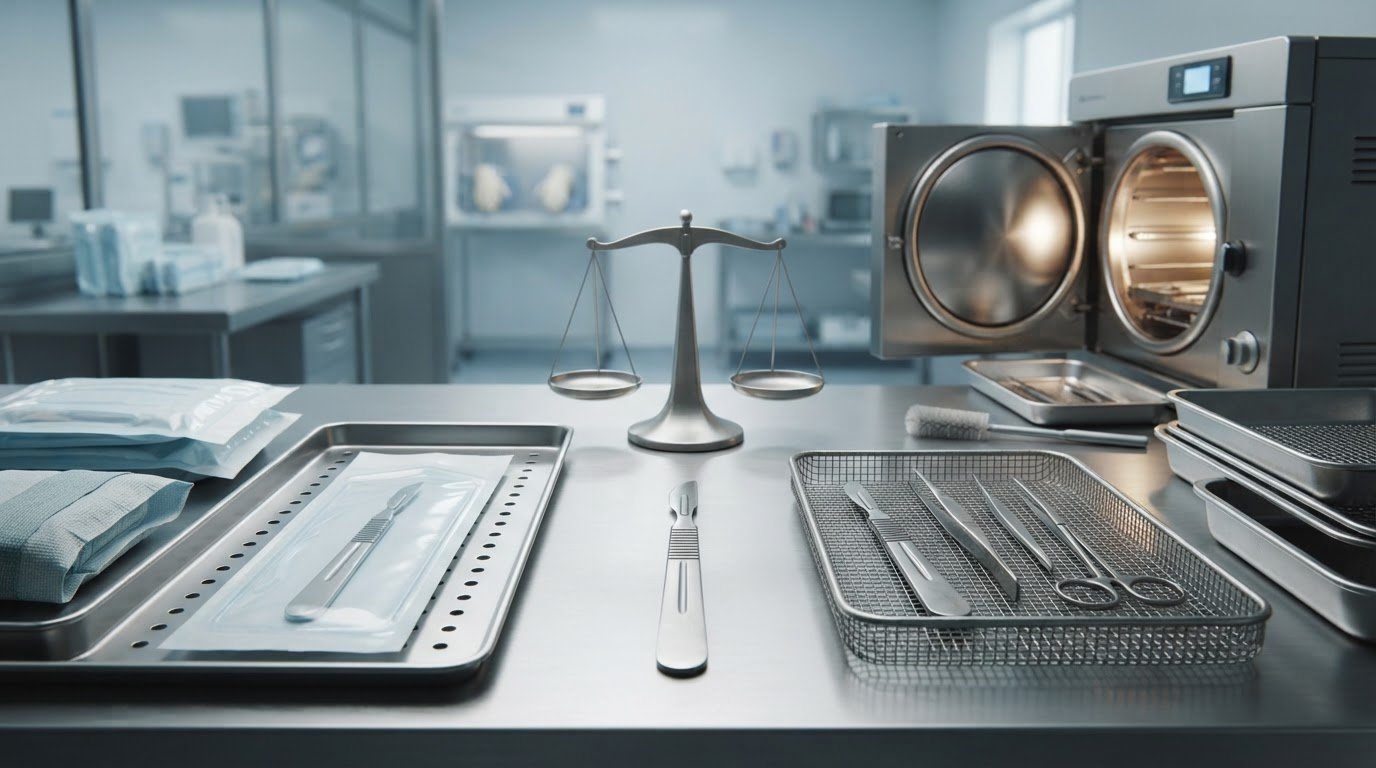

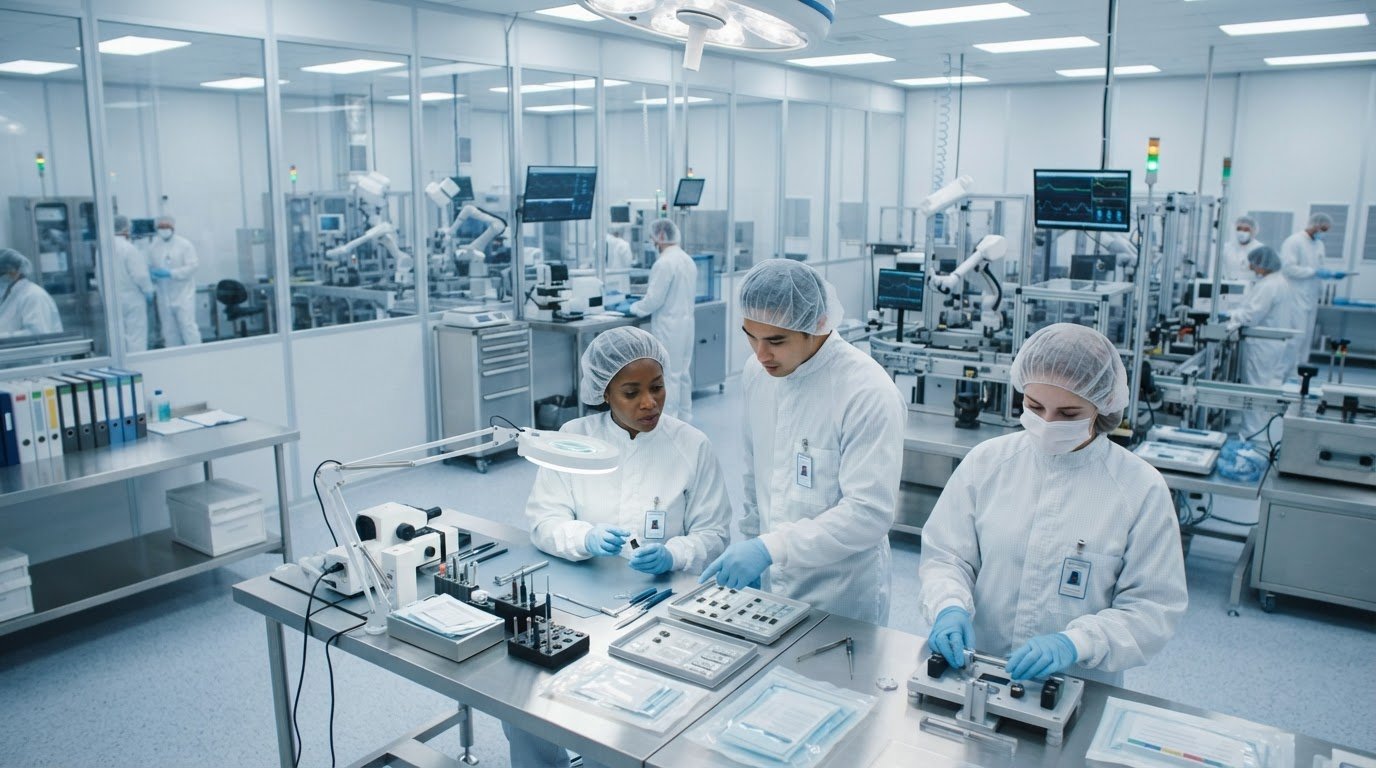
A cleanroom controls the production environment; disciplined manufacturing systems control what happens within it. Diagnostic device manufacturing services connect cleanroom production with validated processes, testing, quality records, and traceability. In the United States, the FDA Quality Management System Regulation became effective on February 2, 2026, and incorporates ISO 13485:2016 into U.S. medical device current good manufacturing practice requirements, according to the U.S. Food and Drug Administration.
For device teams, a controlled room is only one part of production readiness. Product requirements, process validation, inspection, and records must work together so every manufacturing step is defined and its results can be traced.
This article explains how cleanroom manufacturing fits into a medical device quality system, what validation and testing contribute, and how traceability supports consistent production. It also covers practical considerations when selecting a manufacturing partner, from regulatory alignment to the transition from development to scaled production.
Key Takeaways
- Assess whether a manufacturer’s quality system connects documented procedures, corrective actions, and production records across the device lifecycle.
- Clarify how manufacturing responsibilities support disposable and point-of-care devices while the OEM retains product architecture and regulatory submissions.
- Map validation and testing to defined process steps, acceptance criteria, and records that support traceability.
- Evaluate cleanroom controls in relation to the product, materials, personnel practices, and the manufacturing processes performed inside the controlled environment.
- Use certification scope and practical quality-system implementation to assess how well a manufacturing partner can support production requirements.
Quality systems, FDA registration, and ISO 13485 certification
Outsourcing diagnostic device manufacturing services can expose teams to documentation gaps, process drift, and unclear ownership of critical controls. Reduce these risks by defining responsibilities, reviewing quality records, and agreeing on change-control steps before production transfers.
Partner Qualification and Process Control
Qualification should connect the partner’s quality system to the device’s actual manufacturing processes. Review a process map from incoming materials through assembly, inspection, and release, then identify who approves each record and change. For example, a revised test method needs controlled approval, updated operator instructions, and evidence that the change preserves the required acceptance criteria. This review can reveal gaps before they affect routine production.
Facility Inspection and Personnel Qualifications
A facility assessment should examine the rooms, equipment, and records used for the specific device. Follow a representative production route, such as material receipt, component preparation, assembly, and final inspection, and compare each step with its documented procedure. Check how personnel qualifications match assigned tasks, including training records for equipment operation and inspection methods. Confirm that the relevant site and process fall within the quality system’s scope.
Quality Management and Regulatory Compliance
ISO 13485 certification provides a useful basis for assessing a medical device quality management system, but review its scope alongside the product and manufacturing site. The FDA Quality Management System Regulation incorporates ISO 13485:2016 into U.S. medical device current good manufacturing practice requirements, according to the U.S. Food and Drug Administration. The regulation became effective in the United States on February 2, 2026. For U.S. production, assess the partner’s understanding of FDA 21 CFR Part 820 and how its procedures translate into controlled work.
FDA registration and quality-system assessment are related, but they address different qualification questions. Map regulatory responsibilities between the device company and manufacturing partner, then document who maintains each submission, record, and production control. A responsibility matrix can assign ownership for supplier oversight, nonconforming product, corrective action, and approved process changes. This makes handoffs clear during development and after manufacturing begins.
Use a structured qualification sequence to turn the assessment into production controls:
- Define the device requirements, intended manufacturing site, and critical process steps.
- Review certification scope, procedures, training evidence, and equipment controls.
- Trace sample production records from incoming materials to final release.
- Document gaps, assign corrective actions, and approve transfer only after closure.
These steps help teams determine whether a quality system works in practice, not merely whether a certificate exists. During development, connect each risk or design change to the process instructions, inspection criteria, and records used by production personnel. For complex device assembly, this link makes responsibilities easier to track across engineering, quality, and manufacturing teams.
Contract manufacturing for disposable and point-of-care diagnostic devices
Disposable and point-of-care products need manufacturing plans that connect device requirements with components, assembly, testing, and supply continuity. A contract arrangement should define responsibilities from design transfer through production release.
Prototype, Pilot, and Mass Production
Prototype work tests whether the design, materials, and assembly sequence can produce a functional device. Pilot production exercises the intended instructions, equipment, inspection steps, and supplier flow under representative conditions. Mass production transfers those controls into repeatable operations, with capacity planning and change management aligned to demand. Compare each phase by its outputs, records, and unresolved process risks, not volume alone.
How do manufacturing services compare across these stages? Prototype work focuses on design refinement; pilot runs expose production issues; mass production applies established processes at planned scale. Each transfer should preserve approved specifications and identify the evidence supporting the next stage.
Contract Manufacturing Services
Diagnostic device manufacturers may support component sourcing, production planning, assembly, inspection, testing, packaging, and manufacturing documentation. The scope depends on the device: a disposable test cartridge may require precise component handling and assembly, while a point-of-care instrument may involve integrating electronic and mechanical components. Define which activities the manufacturer controls and which remain with the device company.
Which companies provide this work in the United States? Specialized medical-device contract manufacturers offer these services, with capabilities varying by device, process, and production scope. Compare their experience with the device category and ability to manage the required transfer, supply coordination, and production controls.
Order Quantities and Lead Times
What are typical minimum order quantities and lead times? There is no universal quantity or schedule: both depend on component availability, tooling needs, process readiness, testing requirements, and production capacity. A new component or incomplete transfer can require work before a production order; an established process with available supply follows a different path.
For a useful estimate, define the bill of materials, target order profile, inspection requirements, packaging needs, and delivery milestones. Clarify how changes in component supply or test results affect the production plan. These inputs make comparisons meaningful without treating an isolated quantity or timeline as a standard for every product.
Before production begins, align the transfer package with the intended order profile: approved drawings, component specifications, assembly instructions, acceptance criteria, and records. This gives engineering, quality, and manufacturing teams a shared basis for resolving deviations and controlling revisions. For teams preparing a complex manufacturing transfer, discuss manufacturing transfer requirements as part of defining the project scope.
Broader market figures can provide context when assessing long-term supplier capacity. The global electronic manufacturing services market for healthcare and medical devices was valued at USD 71.9 billion in 2025 and is projected to be USD 76.5 billion in 2026. The absolute opportunity in the global electronic manufacturing services market for healthcare and medical devices is expected to be USD 66.3 billion between 2026 and 2036. Regional forecasts also differ: Germany’s market is forecast to grow at a 7.0% CAGR from 2026 to 2036, Japan’s at a 6.7% CAGR from 2026 to 2036, and the United Kingdom’s at a 6.1% CAGR from 2026 to 2036. These figures describe the wider sector, not a specific device or supplier.
Process validation, testing, and traceability
Validation connects engineering requirements to repeatable production evidence. For an in vitro diagnostic device, teams define intended performance, select controlled manufacturing processes, test representative outputs, and retain records linking materials and results.
The manufacturing sequence typically moves from design and component selection to process development, assembly, inspection, packaging, and release. Testing plans and regulatory documentation develop alongside these steps, linking production controls to device specifications.
Can manufacturers provide design, testing, packaging, and regulatory support? Yes, contract manufacturers may support these activities within an agreed project scope. The device company and manufacturer should assign responsibility for each deliverable and approval.
Process Validation and Testing
Process validation establishes documented evidence that a defined process can produce output meeting its requirements. Identify process steps that can affect performance, such as reagent dispensing, bonding, instrument calibration, or cartridge sealing. Define acceptance criteria, test methods, equipment, operator instructions, and records before routine production starts.
Testing should reflect product specifications and process risks. A test cartridge may need checks of fluid movement, seal integrity, or assay performance, while an instrument may need assembly and functional checks. Record the method, result, equipment identification, and disposition for each tested lot. If a result falls outside its acceptance criteria, document the investigation and link corrective action to the affected process.
Traceability Across Production
Traceability connects a finished device to records showing how it was made. Structure records to link component and supplier identifiers with work instructions, equipment status, inspection results, deviations, and release approval. This connection supports investigations when a component changes or a test result prompts a review of affected production.
Control engineering changes through a documented sequence: assess the effect, approve the revision, update affected instructions, and preserve earlier records. For a micro-precision component, a revised specification should link to receiving inspection and the assembly steps that use it. This keeps manufacturing records aligned with the approved design and relevant supply-chain inputs.
U.S. Regulatory Pathways and Manufacturing Records
FDA 510(k) and PMA are possible regulatory pathways for diagnostic devices. The applicable pathway informs the regulatory documentation and product evidence needed for the device. Keep regulatory records connected to the specifications, test methods, and manufacturing revisions that support the product’s intended pathway.
Organize the validation package around the device and its production route. Include approved specifications, process instructions, test methods, training evidence, equipment records, and release documentation. Reviewers and production teams can then trace a sample result to the relevant process and materials, while identifying which approved revision governed the work. These linked records support informed decisions when manufacturing processes or supply-chain inputs change.
Cleanroom manufacturing
A cleanroom supports production by controlling environmental conditions that could affect exposed components or device assembly. Its suitability depends on product design, materials, process steps, and the contamination risks those steps create. For example, a diagnostic cartridge with exposed fluid pathways may need different controls from a sealed electronic instrument.
Start the assessment by mapping the product route through the facility. Identify where materials arrive, where components are prepared, and where assembly or packaging occurs. Then locate open-product stages and points where personnel, tools, or packaging could introduce contamination. This process map connects room controls to actual manufacturing activities instead of treating the room as an isolated capability.
Review how people and materials move through controlled areas. Examine gowning procedures, entry points, cleaning instructions, material transfer, and separation between incoming items and finished devices. For example, a component entering an assembly area should follow a defined transfer route, with its status and handling requirements clear to the personnel involved.
Assess environmental controls through documented routines and records. Review cleaning schedules, monitoring methods, equipment maintenance, and the response when results fall outside established limits. Ask how production teams record room status before starting a work order. These steps show whether facility controls are part of daily operations.
- Trace one product from material receipt through cleanroom assembly and packaging.
- Compare gowning and handling instructions with tasks performed at each workstation.
- Review how cleaning, environmental monitoring, and equipment maintenance are recorded.
- Check how a deviation affects product status, investigation, and production decisions.
Cleanroom capabilities must also match the manufacturing equipment inside the controlled space. A production line for electronic diagnostic equipment may require organized component handling, calibrated assembly tools, and clear separation of sensitive parts. Equipment placement should support the work sequence without obstructing cleaning or material movement. Review the workstation layout alongside the instructions operators follow.
Global manufacturing programs add a coordination challenge: facility practices and production records must remain understandable across sites and teams. Compare how each facility defines room entry, material status, cleaning, and work instructions. If a process transfers between locations, identify the essential environmental controls and how the receiving site documents them. A consistent assessment framework makes differences visible before the transfer proceeds.
Finally, connect room controls to the device’s intended production process. A cleanroom alone does not establish that every operation is suitable; the assessment should show how environmental conditions, personnel practices, materials, and equipment support specific assembly steps. This focused review helps teams distinguish necessary controls from general facility features and identify where production procedures need refinement.
ISO 13485-certified medical device manufacturing
An ISO 13485 certificate applies to a quality management system, not automatically to every medical device made at a facility. For an effective assessment, match the certificate’s scope to the site, operations, and manufacturing activities involved. A certificate covering one location or process may not describe every activity in a production transfer.
Review how the documented system works across actual manufacturing tasks. For example, follow a component from supplier approval through receiving inspection, assembly, testing, and release. At each step, look for controlled instructions, assigned responsibilities, recorded results, and defined handling of nonconforming outputs. This shows whether the system connects daily work to device requirements.
Certification is one input to partner qualification, not a substitute for technical review. Examine the audit scope, current procedures, and how the organization handles changes to equipment, materials, or work instructions. A change to a diagnostic test component, for instance, can affect assembly steps and acceptance criteria. The quality system should provide a documented path to assess and approve that change before use.
For complex device assembly, examine how engineering requirements reach production personnel. Drawings, component specifications, assembly instructions, and inspection methods should have controlled revisions. Compare a production record with its governing documents to confirm operators used the correct version. This document trail helps teams investigate deviations and determine whether affected units need further review.
Testing and supplier controls also show how certification works in practice. Trace a purchased component to its supplier record and receiving result, then follow it into the finished device’s inspection history. Review how test equipment status is maintained and how an out-of-specification result is documented. These examples provide evidence of system implementation instead of relying on a certificate alone.
- Confirm the certificate covers the relevant facility and manufacturing scope.
- Trace one device record from incoming components through final release.
- Review change-control records for a material, equipment, or instruction revision.
- Check how testing results and nonconforming outputs connect to documented decisions.
Applications vary, so assess the system against the product’s assembly and testing needs. A diagnostic instrument with electronic components may require different production records from a disposable device with fewer assembly stages. The key is a clear link between product requirements, controlled operations, and retained evidence.
For complex device assembly, discuss your manufacturing requirements and how they map to the production process with Fong’s Engineering & Manufacturing Private Limited.
A diagnostic instrument with multiple components also makes the supporting regulatory documentation relevant: the United States medical device submission requires a comprehensive Device Master File, ISO 13485 certificate, Instructions for Use, packaging details, technical specifications, and internal quality manuals. These records help connect the quality system to the device, its production activities, and the information provided for use. Check that these materials agree with the controlled production and testing records.
The global electronic manufacturing services market for healthcare and medical devices is projected to reach USD 142.8 billion by 2036 and is forecast to grow at a 6.4% CAGR from 2026 through 2036. Diagnostic Devices are expected to hold 43.0% of the medical device category market in 2026, while medical device OEMs are expected to represent 42.0% of the customer category in 2026. The United States electronic manufacturing services market for healthcare and medical devices is forecast to grow at a 7.3% CAGR from 2026 to 2036, highlighting the robust demand for specialized diagnostic device manufacturing services.
Fong’s Engineering & Manufacturing Private Limited: CDMO Services
Fong’s Engineering & Manufacturing Private Limited supports medical device programs through CDMO Services, from concept design and prototyping to validation and large-scale production. Its regulatory support includes FDA and ISO 13485 compliance, connecting development activities with manufacturing needs.
Turn to Fong’s Engineering & Manufacturing Private Limited CDMO Services when a device program needs coordinated development and production support. OEM Solutions cover complete medical devices manufactured under a customer’s brand, while Micro-precision Components support component requirements within device production. These capabilities help teams align product development, manufacturing, and project responsibilities.
For a discussion about your diagnostic device manufacturing services needs and project scope, contact Fong’s Engineering & Manufacturing Private Limited.
Move from assessment to a defined manufacturing plan
The next step is to turn your production requirements into a clear project scope. Identify the device stage, manufacturing responsibilities, and technical capabilities needed to move forward. This gives your team a practical basis for discussing how diagnostic device manufacturing services can support development and production.
Fong’s Engineering & Manufacturing Private Limited offers CDMO Services and OEM Solutions for medical device programs, as well as Endoscope Repair & Refurbishment. These offerings address distinct needs, from device manufacturing partnerships to the refurbishment of reusable instruments. A focused discussion can help determine which capability aligns with your project priorities.
Contact Fong’s Engineering & Manufacturing Private Limited to discuss your manufacturing requirements and next steps. A well-defined scope is a constructive starting point for moving your program forward.
Frequently Asked Questions
How do I choose a diagnostic device manufacturing partner?
Choose a partner whose technical scope matches your device and planned production model. For example, a cartridge-based test and an electronic diagnostic instrument require different component, assembly, and testing capabilities. Compare how the partner handles design changes, supplier substitutions, production records, and communication with your engineering team. Map who owns each project decision, including specification approval and manufacturing changes, so responsibilities remain clear throughout the relationship.
What FDA requirements apply to diagnostic device manufacturing?
Applicable requirements depend on the device and its U.S. regulatory pathway. FDA 510(k) and PMA are possible pathways for diagnostic devices. The FDA Quality Management System Regulation became effective in the United States on February 2, 2026; according to the U.S. Food and Drug Administration, it incorporates ISO 13485:2016 into U.S. medical device current good manufacturing practice requirements. Assess a manufacturer’s understanding of FDA 21 CFR Part 820 alongside your device’s regulatory obligations.