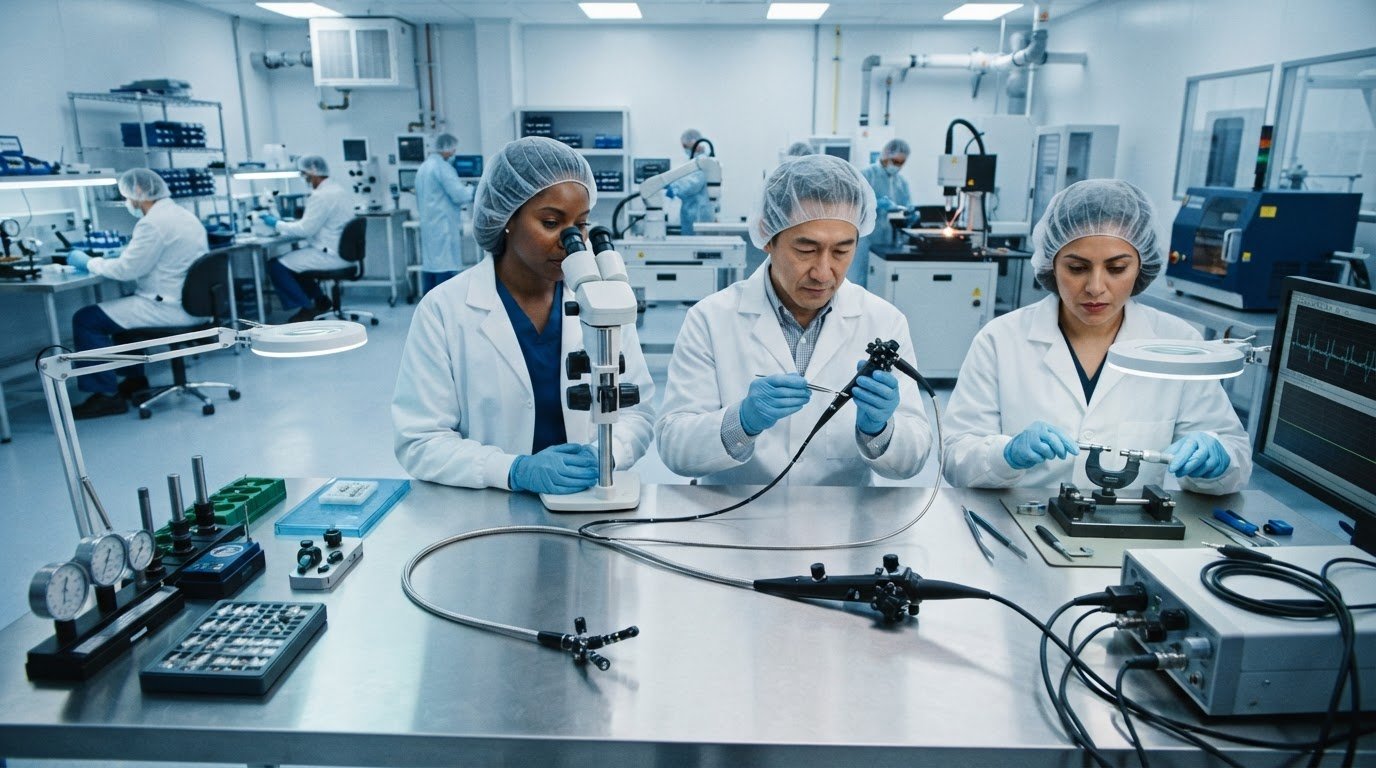

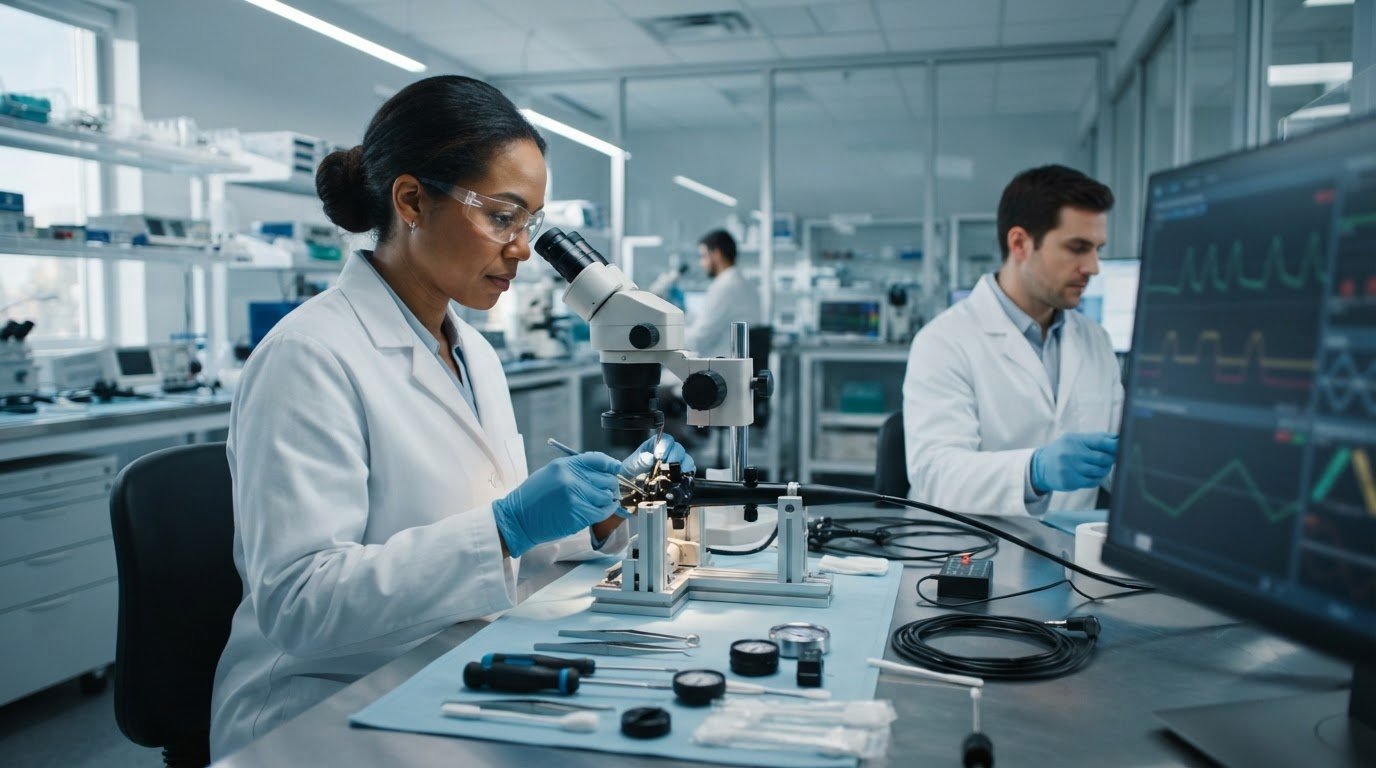
What if a restored endoscope looks sound but its performance has not been verified? Appearance can show that a device has been cleaned up or repaired, but it cannot demonstrate that the device meets defined functional requirements. That is why endoscope restoration to OEM specifications should be supported by documented inspection, repair records, and objective testing, not appearance alone.
For medical technology teams and healthcare facilities, the distinction matters: repair, refurbishment, and clinical reprocessing are related but separate activities. Restoration does not, by itself, establish that a device has been cleaned, disinfected, or sterilized for reuse. A defensible assessment starts with clear acceptance criteria and evidence that the relevant functions have been evaluated.
This guide explains what OEM specifications mean in a restoration context, which inspection and validation stages help demonstrate performance, and what documentation can support an informed decision. It also outlines Fong’s Engineering & Manufacturing’s endoscope repair and refurbishment service, which includes specialized testing and validation within an ISO 13485-certified quality system. The focus throughout is on evidence: what was assessed, what was repaired, and which test results support the device’s disposition.
Key Takeaways
- Judge endoscope restoration to OEM specifications against applicable requirements and documented acceptance criteria, not cosmetic condition alone.
- Use a structured workflow from intake and inspection through corrective work, testing, and records to understand how the restoration decision is supported.
- Compare restoration, OEM service, and replacement based on device condition, available evidence, operational needs, and decision accountability.
- Before reuse, review the inspection findings and completed work, then check that test results support the stated acceptance decision.
- Distinguish technical restoration from clinical reprocessing, and consider how specialized testing and validation contribute to a documented repair and refurbishment process.
What Does Endoscope Restoration to OEM Specifications Actually Mean?
A scope can look polished and still have an unresolved functional defect. Restoration to OEM specifications means assessing whether the device meets applicable requirements for function and condition, then supporting that assessment with evidence. Cosmetic work can improve appearance, but it cannot establish that imaging, controls, or other relevant functions perform as required.
An endoscope may be flexible or rigid and designed for different medical applications. Those differences matter because the relevant requirements depend on the device’s design and model. A restoration claim should identify the requirements used and the evidence supporting the result. It should not imply OEM authorization or certification unless that status has been independently established.
Which requirements define an endoscope’s OEM specification?
Applicable requirements may address function, image quality, mechanical condition, and safety. Exact criteria vary by model and documented requirements, so a generic visual check cannot replace device-specific assessment. For a defensible decision, separate verified requirements from assumptions: record what was evaluated, which acceptance criteria were applied, and what findings support the conclusion.
If applicable manufacturer requirements are unavailable, documented acceptance criteria can still provide a basis for evaluation. Keep the distinction clear, however: evidence against documented criteria is not automatically proof of conformity to proprietary OEM specifications.
Restoration, repair, refurbishment, and reprocessing explained
These terms describe different activities. Using them precisely helps prevent confusion about a device’s condition or readiness for clinical use:
- Repair is corrective work that addresses an identified defect or failure.
- Refurbishment describes broader restoration work; the term alone does not guarantee a particular condition or level of performance.
- Restoration is the overall effort to return a device to defined functional and condition criteria, supported by appropriate assessment and testing.
- Reprocessing is a separate clinical workflow for preparing a reusable device for use. It may include cleaning, disinfection, or sterilization according to applicable instructions and procedures.
Consider the evaluation as a traceable sequence. Start with the device’s documented requirements, compare its observed condition with those criteria, identify and complete any justified corrective work, then review test evidence against the same criteria. This helps show how the decision was reached. Restoration findings alone do not establish that clinical reprocessing or sterilization has been completed.
How Endoscope Inspection, Repair, and Validation Support Restoration
A restoration decision is only as strong as the process behind it. A controlled workflow links the device’s condition at receipt to the work performed and the evidence used to assess the result. The FDA guidance on remanufacturing and servicing helps clarify these distinct activities. The appropriate classification depends on the work performed and its effect on the device.
A five-stage, evidence-led workflow
Each stage should have a clear purpose and produce information that supports the next decision:
- Intake: Identify the received device and record reported performance concerns.
- Inspection: Assess the device’s condition before deciding whether corrective work is needed.
- Approved corrective work: Define and carry out work within the agreed repair scope.
- Testing: Evaluate relevant functions against applicable requirements and the work performed.
- Records: Preserve findings, work details, test results, and the final acceptance decision.
Inspection is a decision point, not a formality. It establishes what is known about the device before repair decisions are made. Visual and functional assessments can contribute where relevant, but the appropriate checks depend on the specific endoscope and its documented requirements. A generic checklist should not be mistaken for a universal procedure.
Connect repair scope to test evidence
Post-repair testing should address the identified issue and any functions affected by the corrective work. For example, if an assessment identifies a concern with image performance, the final evidence should relate to the applicable image requirements, rather than relying on a general statement that the device passed. The same principle applies to other repair findings: define the criterion, record the relevant result, and document how that result supports the acceptance decision.
Validation is documented evidence that specified requirements have been met. In practice, that evidence should be traceable from the initial finding through the work performed to the final test result. “Passed” on its own says little unless the record identifies what was tested and which criteria were applied.
Fong’s endoscope repair and refurbishment service includes specialized testing and validation within an ISO 13485-certified medical-device operation. Facilities assessing a restoration requirement can review the service details here: endoscope restoration requirements.
Restoration, OEM Service, or Replacement: How to Compare the Options
These pathways can address different needs, and no single option is right for every endoscope. A disciplined comparison starts with the device’s condition and applicable requirements, then weighs the evidence available, operational priorities, and who is accountable for the final decision. The key question is which pathway can support a defensible outcome for the device, not simply which pathway is preferred in general.
| Consideration | Restoration | OEM service | Replacement |
|---|---|---|---|
| Evidence | Review inspection findings, documented corrective work, and relevant test results against stated criteria. | Review service documentation and the requirements used to assess the device. | Assess the specifications and documentation for the proposed replacement device. |
| Device condition | May be considered when inspection identifies work that can be evaluated against defined acceptance criteria. | Follows the OEM service pathway for the device. | May be considered when condition or requirements make continued use of the existing device unsuitable. |
| Operational needs | Consider the repair scope and how the device’s return to service fits facility needs. | Consider the service pathway and its fit with operational requirements. | Consider the process of introducing a different device into operations. |
| Decision accountability | Base the decision on documented findings, work, and test evidence. | Review the service records and applicable requirements. | Document why replacement is appropriate and how the new device will be evaluated. |
When might restoration be appropriate?
Restoration may be an option when inspection findings identify a repair scope that can be assessed against defined acceptance criteria. Consider the device’s condition, the quality of evidence available after corrective work, and service continuity needs. Do not assume that every endoscope can be repaired or will be suitable for continued use. For more on the technical work involved, see endoscope repair and refurbishment.
How does restoration differ from OEM service or replacement?
OEM service and independent restoration are distinct service pathways. A restoration assessment should describe the work performed and the requirements used; it does not, by itself, establish OEM authorization, certification, or endorsement. Replacement is a separate decision, relevant when the device’s condition or applicable requirements cannot support an acceptable restoration decision, or when operational needs favor sourcing new equipment from established healthcare suppliers such as Novus Medical.
For endoscope restoration to OEM specifications, the comparison depends on evidence tied to the specific device, not a general claim of equivalence. Weigh the documented findings, applicable criteria, and operational impact together, then record why the selected pathway is appropriate.
Assessing Endoscope Restoration Before Equipment Reuse
Before an endoscope returns to a facility’s equipment pool, review the restoration evidence as a connected record, not as a general assurance that the device was serviced. For endoscope restoration to OEM specifications, the inspection findings, corrective work, test results, and acceptance decision should relate to the applicable documented requirements.
This review addresses the device’s technical condition. Clinical reprocessing is a separate controlled workflow, and restoration records must not be treated as evidence that cleaning, disinfection, or sterilization has occurred. Facilities should follow their applicable reprocessing procedures before reuse.
What records should support a restoration decision?
Use a device-level checklist to confirm that a reviewer can trace the decision from receipt to disposition:
- Identification: Confirm the device is identifiable in the records, including the model or other relevant identifying details.
- Reported issue: Check that the original performance concern is documented clearly enough to compare with the inspection findings.
- Inspection findings: Review the observed condition and any functional assessment relevant to that device.
- Repair scope: Confirm the documented corrective work addresses the identified issue and stays within the defined scope.
- Test results: Look for relevant post-repair results and the criteria used to interpret them.
- Disposition: Confirm that the final decision and any exceptions or unresolved findings are recorded.
Keep restoration documentation distinct from reprocessing records where the workflows differ. This makes it easier to see what the technical assessment supports and what must be established through the facility’s separate clinical preparation process.
What questions help interpret test results responsibly?
A result is meaningful when it can be connected to a defined requirement. Check whether each test corresponds to an applicable acceptance criterion, whether the result is recorded clearly, and how it supports the stated decision. A generic certificate or “passed” notation may not show which functions were assessed or whether the original concern was resolved.
Also check whether exceptions, limitations, or unresolved findings are visible in the records. If a test result does not map to a criterion, or a finding remains open, the acceptance decision needs to account for that gap. It should not be obscured. For additional context, consult the related guide on flexible endoscope repair safety and validation.
A traceable review supports sound equipment-management decisions, but it does not replace facility procedures for clinical reuse. Fong’s endoscope repair and refurbishment information is available here: endoscope assessment and restoration requirements.
Fong’s Endoscope Repair and Refurbishment: From Assessment to Next Steps
A technically grounded restoration decision depends on a clear link between the device’s condition, the work performed, and the evidence used to assess the result. Fong’s Engineering & Manufacturing provides precision repair and refurbishment for reusable endoscopes and surgical instruments, with specialized testing and validation as part of the service. This supports a documented assessment; it does not imply OEM authorization or endorsement, or guarantee a particular outcome for every device.
How Fong’s restoration capability fits the evidence-led process
Fong’s medical-device operations use an ISO 13485-certified quality system. Within that framework, repair and refurbishment can be considered against the device’s identified needs and applicable acceptance criteria. For facilities assessing endoscope restoration to OEM specifications, the important distinction is between a service claim and evidence tied to the specific device: inspection findings, the defined repair scope, and relevant test results should inform the final decision.
Specialized testing and validation help connect completed work to documented requirements. The appropriate assessment depends on the device and its requirements, so consider restoration through the available evidence rather than assuming performance from appearance or a broad description of the work. Clinical reprocessing remains a separate workflow before reuse.
What information to prepare for a restoration discussion
Relevant device and service information helps establish a practical basis for discussing the assessment and possible restoration needs. Prepare what is available, such as:
- Device identification: Model and other identifying details that distinguish the endoscope.
- Reported symptoms: A clear description of the performance concern and when it occurs, if known.
- Service history: Previous repairs, inspections, or other relevant records.
- Applicable requirements: Manufacturer requirements or documented acceptance criteria used by your facility.
- Inspection evidence: Existing findings or test records that may help describe the current condition.
These details help frame the discussion around the device, the evidence available, and the decision your facility needs to make. Fong’s Engineering & Manufacturing’s endoscope restoration service supports repair and refurbishment requirements.
Make the Next Restoration Decision Evidence-Led
Sound decisions about endoscope restoration to OEM specifications rely on more than a refurbished appearance. Review the device’s condition, the applicable documented criteria, the corrective work performed, and test evidence that supports the final acceptance decision. Keep that technical assessment distinct from clinical reprocessing, which remains a separate workflow before reuse.
Fong’s provides precision repair and refurbishment of reusable endoscopes, supported by specialized testing and validation. Its medical-device operations use an ISO 13485-certified quality system. These capabilities support a process-led assessment, while each restoration decision remains grounded in the requirements and evidence relevant to the device.
Share the device identification, reported concerns, service history, and available acceptance criteria to start a focused discussion. Discuss your endoscope repair and refurbishment requirements with Fong’s Engineering & Manufacturing.
Frequently Asked Questions
What does restoration to OEM specifications mean for an endoscope?
It means assessing whether an endoscope meets applicable manufacturer requirements or documented acceptance criteria after restoration, with evidence supporting that assessment. Depending on the device design and model, criteria may address functional performance, image quality, mechanical condition, or safety. A refurbished appearance alone is not proof of performance. A restoration claim should identify the criteria used and connect them to inspection findings, corrective work, and relevant test results.
Can an endoscope be restored to OEM specifications without OEM-authorized service?
Independent service and OEM service are distinct pathways, and restoration work does not itself establish OEM authorization or endorsement. Whether a particular restoration can be assessed against defined criteria depends on the requirements and evidence available for the device. A careful claim distinguishes documented acceptance criteria from proprietary manufacturer requirements that may not have been independently verified. Review what was assessed, what work was done, and how test results support the stated conclusion.
How is an endoscope tested after repair or refurbishment?
Post-repair testing should relate to the identified concern, the corrective work performed, and applicable acceptance criteria for that device. The relevant checks depend on the endoscope’s design and documented requirements, so one generic checklist cannot establish every function for every model. Look for recorded results that show what was evaluated and how the findings informed acceptance. A broad “passed” statement without criteria or test detail provides limited evidence.
What records should accompany a restored endoscope?
Records should make the restoration decision traceable. They typically identify the device, describe the reported issue and inspection findings, document the repair scope, and provide relevant post-repair test results and disposition. The records should show which criteria informed the acceptance decision and identify any exceptions or unresolved findings. Keep restoration documentation distinct from clinical reprocessing records where those workflows differ, so technical assessment is not mistaken for preparation for clinical use.
Is endoscope restoration the same as reprocessing or sterilization?
No. Restoration concerns the device’s technical condition and may include inspection, corrective work, testing, and validation. Clinical reprocessing is a separate controlled workflow for preparing a reusable device for use; depending on applicable instructions and procedures, it may involve cleaning, disinfection, or sterilization. Restoration records do not establish that reprocessing or sterilization has occurred. Facilities must follow their applicable reprocessing procedures before returning an endoscope to clinical use.
When should a facility consider replacing an endoscope instead of restoring it?
Consider replacement when inspection findings, device condition, or applicable requirements do not support an acceptable restoration decision, or when the facility’s operational needs favor a different device. Compare the available evidence, the feasibility of addressing identified issues, and the requirements the device must meet. Replacement is not automatically preferable, just as restoration is not appropriate for every scope. Document the rationale and ensure the decision reflects the device’s condition and intended use.
What happens if an endoscope does not meet its acceptance criteria after repair?
If test results do not meet the defined criteria, the device should not be recorded as having passed those criteria. Document the findings, including any unresolved issues, and ensure the device’s disposition reflects the evidence. Further corrective work may be considered if appropriate, followed by relevant testing and a new documented assessment. If the criteria remain unmet, the facility must make a separate decision about continued use, additional service, or replacement.