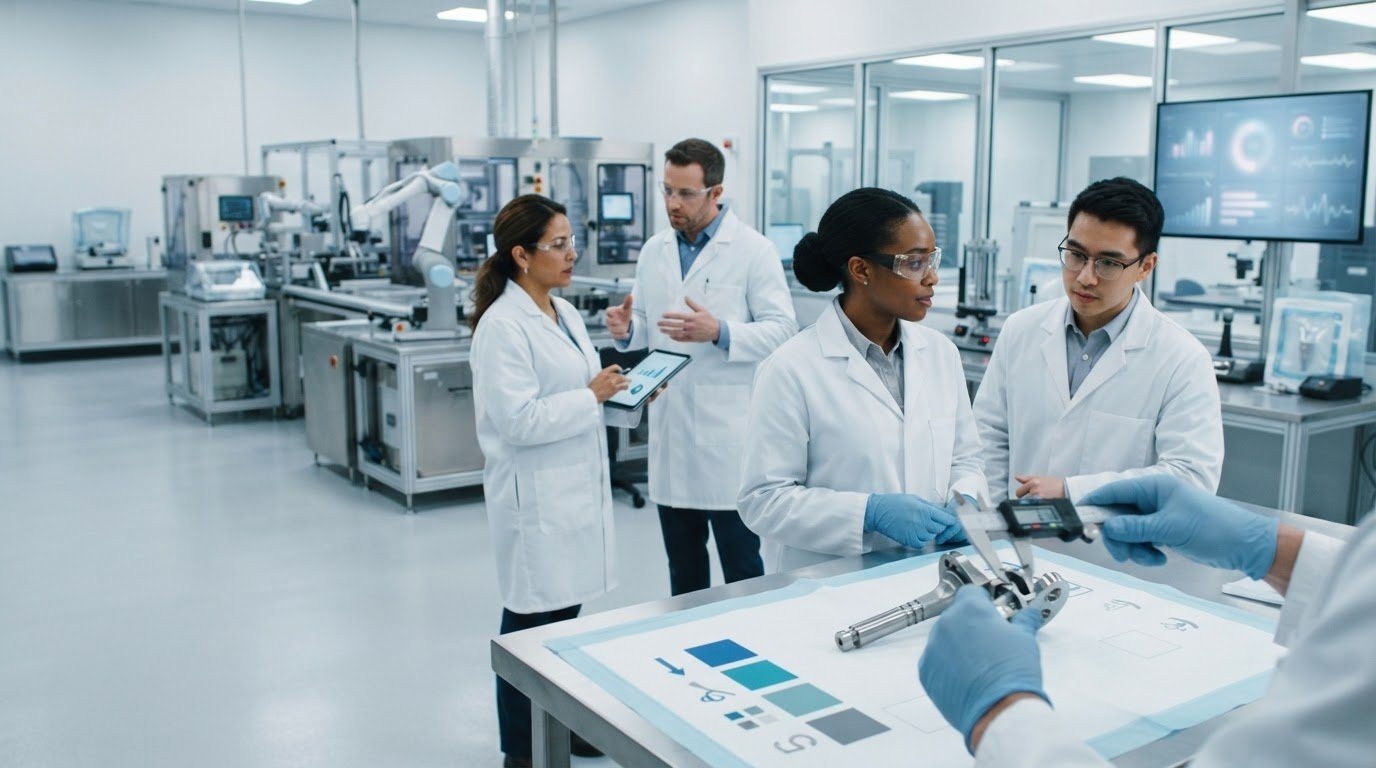


The implementation of the FDA’s Quality Management System Regulation on February 2, 2026, represents the most critical shift in medical device compliance in recent history. By aligning U.S. requirements with ISO 13485:2016, the regulatory environment now mandates a level of technical and documentation precision that eliminates the margin for assembly error. You’ve likely encountered the significant risks associated with high failure rates or validation bottlenecks when moving from a functional prototype to a commercial scale. It’s a reality where inconsistent supply chain quality can stall progress and inflate overhead costs.
Mastering these complexities requires more than a vendor; it demands specialized diagnostic equipment assembly services delivered through a certified CDMO partnership. This article outlines the essential technical and regulatory frameworks necessary to scale complex diagnostic hardware effectively. We’ll explore how integrating smart manufacturing, validated Class 8 cleanroom environments, and rigorous engineering standards ensures a seamless transition to mass production. By the end of this guide, you’ll understand how to guarantee compliance with the latest FDA and ISO standards while maintaining the precision required for next-generation medical technology.
Key Takeaways
- Distinguish the specialized requirements of diagnostic hardware integration from general electronics assembly to mitigate the risk of high-stakes failure.
- Establish rigorous environmental controls and technical standards using Class 8 cleanrooms and precision joining technologies for complex device assembly.
- Implement comprehensive Master Validation Plans (MVP) and IQ/OQ/PQ frameworks within your diagnostic equipment assembly services to satisfy harmonized global regulations.
- Optimize the hardware lifecycle by applying Design for Manufacturability (DFM) principles that facilitate a seamless shift from pilot runs to high-volume smart manufacturing.
- Reduce operational overhead and ensure continuous compliance with ISO 13485 and FDA standards through a strategic, global CDMO partnership.
The Strategic Role of Complex Medical Device Assembly in Diagnostics
Manufacturers must balance the push for miniaturization with the requirement for structural integrity. This is especially true for reusable diagnostic tools that undergo repeated sterilization cycles. Achieving this balance requires deep expertise in medical device manufacturing, where the choice of joining technology and material compatibility is fundamental to the device’s performance and longevity. When assembly precision is compromised, the risk of device failure or inaccurate readings increases, directly impacting patient safety.
Defining Complex Assembly for MedTech OEMs
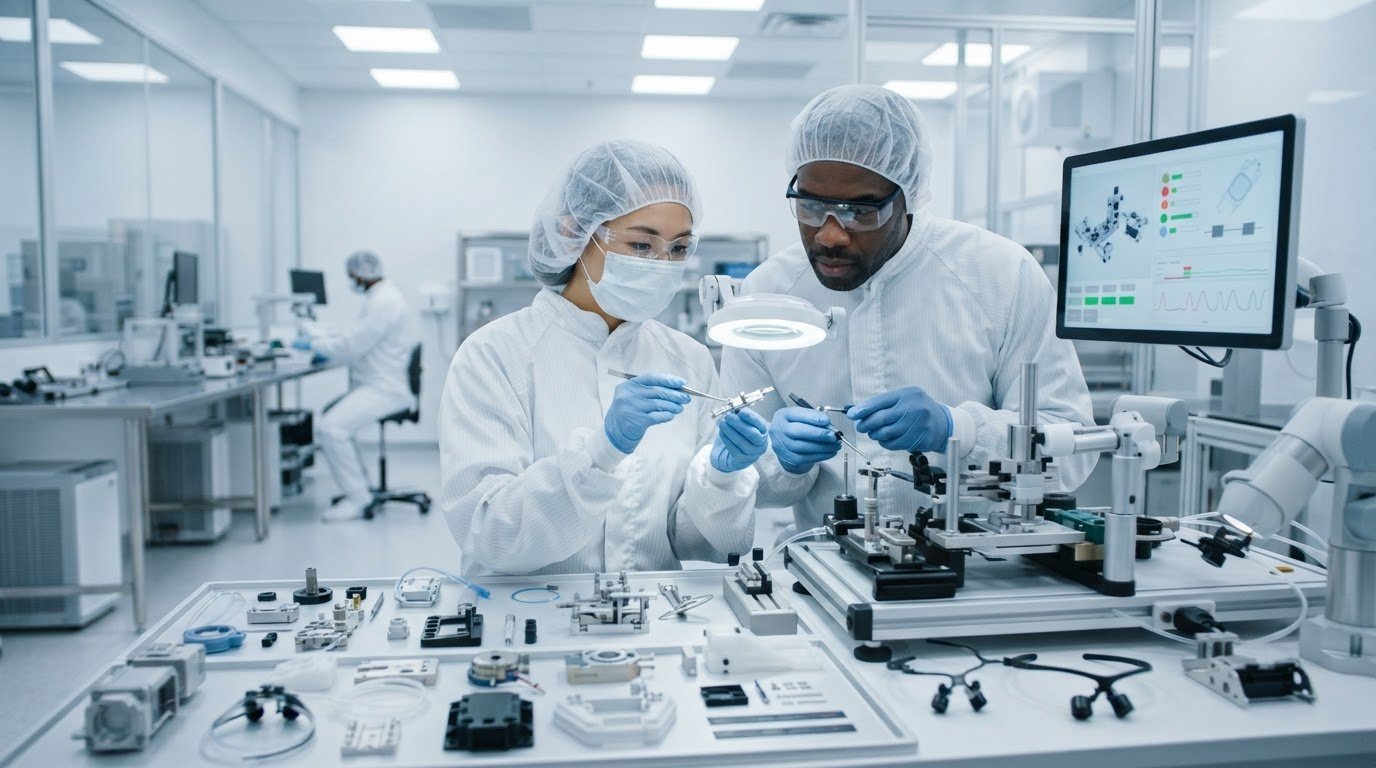
Complex assembly involves the seamless integration of micro-precision components into larger electronic subsystems. For reusable diagnostic instruments, hermetic sealing is a critical requirement. It protects sensitive internal electronics from the harsh conditions of autoclaving and chemical disinfection. Managing multi-material assemblies presents unique engineering challenges. Technicians must understand the distinct behaviors of Nitinol, MP35N, and medical-grade polymers during the bonding and welding processes. These materials are chosen for their biocompatibility and mechanical properties, but their integration requires specialized validation to prevent delamination or mechanical failure under stress.
Outsourcing vs. In-House Assembly Challenges
Establishing an in-house assembly line for complex diagnostics requires substantial capital expenditure. Maintaining Class 8 cleanrooms and investing in advanced laser processing equipment creates significant financial pressure on OEMs. Beyond the hardware, there’s a persistent shortage of specialized labor capable of executing high-precision medical engineering tasks. Finding and retaining staff with the expertise to manage complex validation cycles is a growing hurdle for many organizations.
To help mitigate the challenges of talent acquisition and retention, many MedTech firms are prioritizing the design of their corporate and administrative workspaces; to see how professional environments can be optimized, you can discover Yangs Design Associates and their expertise in commercial interior design.
Choosing to leverage medical device contract manufacturing services allows OEMs to bypass these operational bottlenecks. A strategic CDMO partnership provides immediate access to a validated supply chain and technical mastery without the overhead of facility management. This approach enables medical device companies to focus on core innovation while ensuring their diagnostic equipment assembly services meet the rigorous standards of global regulatory bodies.
Technical Requirements for Diagnostic Equipment Assembly Services
Technical excellence in diagnostic equipment assembly services requires a synthesis of environmental control and specialized joining methods. Precision isn’t merely an engineering goal; it’s a regulatory necessity for maintaining the integrity of diagnostic sensors. Every assembly step must be documented and validated to ensure the final product meets the intended clinical performance specifications. This level of technical discipline ensures that sensitive electronics remain functional throughout the device’s lifecycle.
Cleanroom Standards and Environmental Control
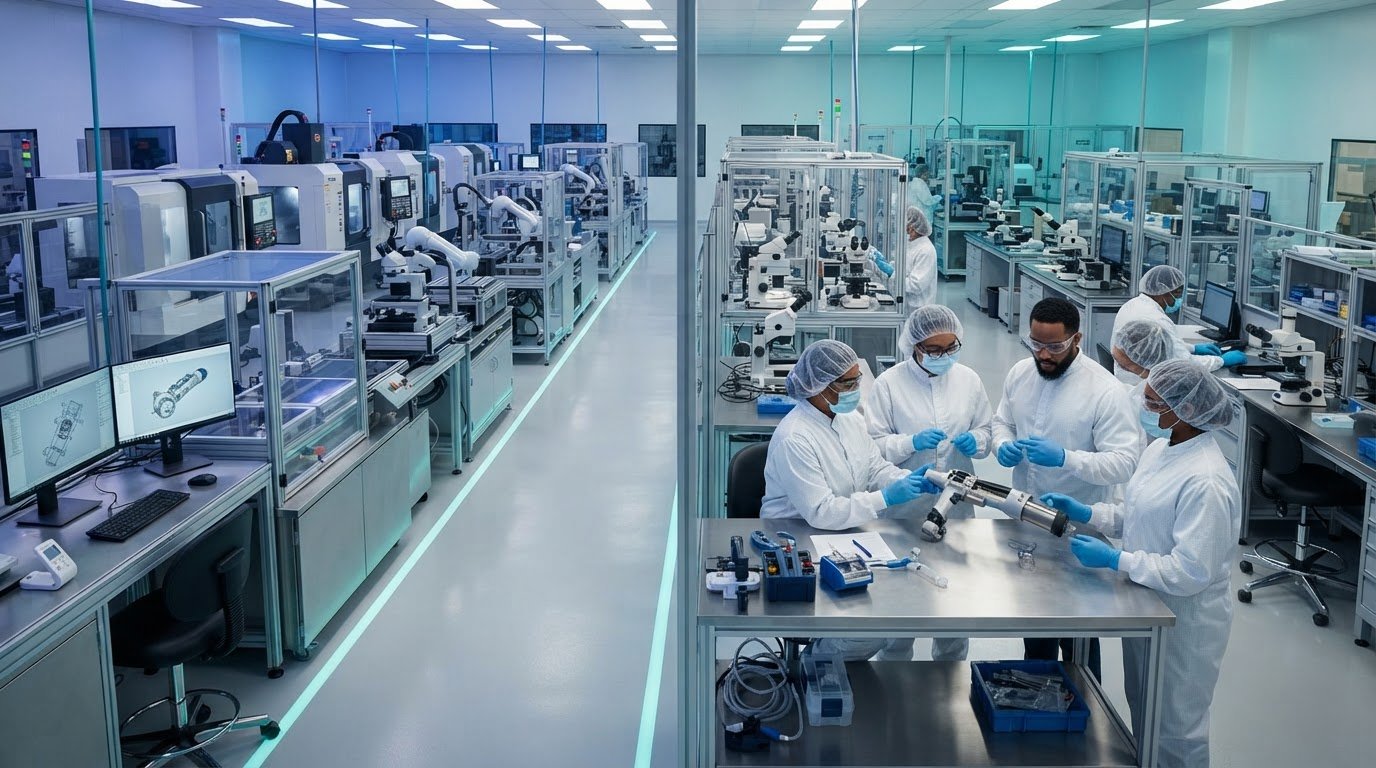
Maintaining the purity of the assembly environment is fundamental to preventing device failure. Operating within Class 8 (100k) cleanroom environments ensures that particulate matter doesn’t interfere with sensitive diagnostic optics or micro-fluidic channels. Meticulous bioburden control and continuous particulate monitoring are implemented during the integration phase to safeguard the device’s internal components. The process concludes with sterile-ready packaging within the assembly workflow, preserving the hardware’s integrity until it reaches the clinical setting. For a structured roadmap on meeting these environmental standards, our 2026 guide to cleanroom validation for medical device manufacturing outlines the precise IQ, OQ, and PQ steps required for Class 8 compliance.
Advanced Laser Processing in Assembly
The transition to complex diagnostic geometries necessitates the use of 5-axis laser welding. This technology allows for precise, repeatable joints in three-dimensional space, which is essential for compact, high-performance diagnostics. For devices requiring permanent traceability, ultrashort-pulse marking creates autoclave-stable UDI and tracking codes without compromising the material’s surface integrity. These hermetic sealing techniques are vital for protecting sensitive internal diagnostic electronics from moisture and contaminants. Technical teams looking to optimize these specific workflows may consult with our engineering specialists to discuss site-specific requirements.
When evaluating diagnostic equipment assembly services, the presence of in-process testing protocols is a key indicator of quality. These protocols are integrated directly into the assembly line to verify electrical and fluidic integrity in real time. These tests detect potential leaks or circuit discontinuities before the device moves to the next stage of production. Material handling requirements are equally rigorous, particularly for sensitive diagnostic sensors and optics. Specialized fixtures and automated handling systems are employed to prevent contamination that could lead to diagnostic inaccuracies. This methodical approach ensures that every unit produced adheres to the highest standards of technical excellence.
Validation and Compliance in Complex Assembly
The Master Validation Plan (MVP) serves as the foundational architecture for all diagnostic equipment assembly services. It’s a comprehensive document that defines the scope, schedule, and responsibilities for validating the entire manufacturing process. For complex diagnostic hardware, the MVP must account for the high degree of technical integration between micro-precision mechanics and electronic subsystems. This planning phase is where technical teams establish the criteria for success, ensuring that every assembly step is capable of producing a device that meets its clinical intent. A well-structured MVP doesn’t just satisfy auditors; it provides the engineering roadmap for a stable production lifecycle.
Executing the IQ/OQ/PQ framework on automated assembly lines is where theoretical planning meets operational reality. Installation Qualification (IQ) verifies that the equipment, such as 5-axis laser welders and smart conveyors, is installed correctly according to manufacturer specifications. Operational Qualification (OQ) tests the equipment’s performance within its defined limits, while Performance Qualification (PQ) demonstrates that the process consistently produces products meeting all requirements under actual manufacturing conditions. For a comprehensive understanding of how these qualification stages align with the 2026 regulatory landscape, our guide to medical device process validation provides a strategic roadmap for implementing IQ, OQ, and PQ under the FDA’s QMSR framework. This rigorous approach is essential for maintaining medical device manufacturing compliance across diverse global markets, especially following the FDA’s 2026 shift toward ISO 13485 harmonization.
Risk management is integrated through Process Failure Mode and Effects Analysis (PFMEA). This proactive tool identifies potential failure points in the assembly process and assigns a risk score based on severity, occurrence, and detectability. By addressing high-risk failure modes early, manufacturers can implement corrective actions before they impact the final product. It’s a methodical discipline that transforms potential vulnerabilities into validated safeguards.
Test Method Validation (TMV) Strategies
Validating the test methods themselves is as critical as validating the assembly process. Leak testing and voltage testing protocols must be rigorously validated to ensure diagnostic accuracy and patient safety. We utilize unmanned Coordinate Measuring Machine (CMM) inspections for 100% verification of critical dimensions, removing human error from the quality control loop. Data integrity is maintained through real-time manufacturing dashboards that provide a transparent, immutable record of every test performed on the line, ensuring that every data point is accurate and retrievable.
Regulatory Documentation and Submissions
A robust validation process generates the technical evidence required for FDA 510(k) and CE Mark submissions. Full traceability is mandatory; every diagnostic device must be traceable from the raw material lot numbers of its micro-precision components to the final assembly technician. Corrective and Preventive Action (CAPA) systems are deeply embedded in the assembly environment, ensuring that any deviations are investigated and resolved with meticulous documentation. This structured approach to compliance projects the steady hand required to manage complex developmental cycles for global MedTech leaders.
Optimizing the Diagnostic Hardware Lifecycle
Optimizing the hardware lifecycle begins long before the first unit enters the cleanroom. Design for Manufacturability (DFM) ensures that diagnostic equipment assembly services are executed with maximum efficiency and minimal waste. By analyzing component geometries and material interactions during the design phase, engineers prevent assembly bottlenecks that often emerge during scale-up. This proactive approach reduces the total cost of ownership by identifying potential manufacturing risks before they require expensive late-stage changes.
For reusable diagnostics, the lifecycle extends far beyond the initial point of sale. Integrating endoscope repair and refurbishment capabilities into a broader manufacturing strategy allows OEMs to maintain peak device performance over years of clinical use. This circular approach preserves the value of micro-precision components and supports long-term institutional trust. It ensures that complex diagnostic tools remain as reliable in their thousandth procedure as they were in their first.
Supply chain resilience is built through a diversified global manufacturing footprint. Operating across Singapore, China, and the USA provides the necessary redundancies to navigate shifting trade landscapes and logistics disruptions. We’re further expanding this capacity with the opening of our Malaysia site in Q1 2027. This global reach ensures that diagnostic hardware production remains stable, regardless of regional market volatility.
From Prototype to Mass Production
The transition from concept to commercialization requires a disciplined scaling strategy. Rapid prototyping allows for the validation of diagnostic functions and assembly sequences before committing to high-volume tooling. Once the process is validated, assembly scales through 24-hour unmanned smart lines. These systems utilize robotic loading to reduce headcount while significantly improving equipment utilization. It’s a methodical progression that ensures a predictable output to meet global market demand.
Secondary Processes and Finishing
A comprehensive lifecycle strategy includes specialized finishing processes that enhance device durability and safety. In-house electropolishing and anodizing are critical for surgical-grade diagnostics, providing the surface passivity required for repeated sterilization cycles. For moving diagnostic parts, Diamond-Like Carbon (DLC) coating offers superior wear resistance and low friction. Finally, we coordinate the sterilization process, including EtO, Gamma, or Autoclave methods, to deliver finished devices that are ready for immediate clinical application. To integrate these lifecycle optimizations into your manufacturing strategy, contact our technical team for a detailed consultation.
Partnering with FONG’S for Complex Assembly
Fong’s Engineering & Manufacturing Private Limited operates with a vision centered on advancing patient care through the delivery of best-in-class medical devices. This commitment is supported by over 40 years of precision engineering expertise, providing a foundation of institutional trust for global MedTech leaders. Our role as a steady hand in the industry is defined by a culture of discipline and technical mastery, ensuring that diagnostic equipment assembly services are executed with uncompromising accuracy. We value rigorous standards above all else, positioning ourselves as a sophisticated problem-solver for organizations managing high-stakes developmental cycles.
The strategic advantage of partnering with Fong’s Engineering & Manufacturing Private Limited lies in our ability to balance cutting-edge innovation with the stability of long-standing manufacturing experience. Our Singapore headquarters serves as the technical and administrative anchor, while our expanding global footprint provides the necessary scale for mass production. The opening of our Malaysia site in Q1 2027 represents a significant milestone in this expansion, offering increased capacity to meet the growing demand for complex diagnostic hardware. This new facility will mirror the rigorous standards of our existing operations, ensuring consistent quality across all regional manufacturing sites.
Global Footprint and Logistics
Our manufacturing network includes strategic sites in Singapore, China, and Malaysia, allowing us to provide localized support across major medical technology hubs. These locations are chosen for their proximity to global logistics centers, facilitating the rapid distribution of finished diagnostic devices. For North American partners, our specialized repair center in Irvine, CA, provides dedicated support for diagnostic refurbishment and endoscope repair. This global infrastructure ensures that our partners benefit from a resilient supply chain and immediate access to specialized engineering talent regardless of their geographic location.
Next Steps for Your Diagnostic Project
Initiating a partnership with Fong’s Engineering & Manufacturing Private Limited begins with a comprehensive technical consultation focused on Design for Manufacturability (DFM) and assembly optimization. During this phase, our engineers work as equals with your team to refine assembly sequences and identify opportunities for smart manufacturing integration. We invite you to review our Class 8 cleanroom environments and 24-hour unmanned smart line capabilities to understand the full breadth of our operational excellence. You may consult with our engineering team to accelerate your diagnostic device to market through a validated and disciplined manufacturing framework. This collaborative approach ensures that every project benefits from our deep immersion in regulatory and engineering environments.
Scaling Diagnostic Innovation Through Technical Mastery
The successful commercialization of complex diagnostic hardware depends on the seamless integration of engineering precision and regulatory discipline. As global standards harmonize under ISO 13485 and FDA 510(k) requirements, the technical requirements for diagnostic equipment assembly services have reached a new level of complexity. Organizations must move beyond traditional manufacturing to adopt smart manufacturing lines and advanced 5-axis laser welding to ensure long-term device reliability. By leveraging a global footprint and a dedicated workforce of over 1,000 production staff, MedTech OEMs can effectively navigate the transition from functional prototype to high-volume production without compromising on clinical accuracy or compliance standards.
A strategic partnership provides the steady hand needed to manage these intricate developmental cycles and lifecycle optimizations. We invite you to consult with our engineering experts on your complex assembly requirements to explore how our validated processes can support your next diagnostic innovation. We look forward to helping you advance patient care through technical excellence and rigorous manufacturing standards.
Frequently Asked Questions
What is the importance of ISO 13485 in diagnostic equipment assembly?
ISO 13485 is the foundational quality management standard that ensures every stage of assembly meets international medical device requirements. It provides the structured framework for risk management, documentation, and process validation necessary for global market access. By adhering to this standard, we ensure that diagnostic hardware is manufactured with consistent quality and full traceability, which is essential for patient safety and regulatory compliance.
How does FONG’S manage IP protection during complex assembly?
Intellectual property protection is managed through a combination of strict physical security, segmented manufacturing zones, and rigorous non-disclosure protocols. We operate as a pure-play CDMO, which means we don’t develop our own competing diagnostic products. This structural alignment ensures that your proprietary designs and engineering processes remain confidential within our secure manufacturing environment throughout the entire assembly lifecycle.
Can you support low-volume pilot runs for new diagnostic hardware?
Yes, we specialize in supporting the transition from initial prototype to low-volume pilot runs before scaling to mass production. These pilot phases are critical for validating assembly sequences and refining Design for Manufacturability (DFM) assumptions. Our engineering team provides the technical oversight required to identify potential manufacturing risks early, ensuring a stable foundation for future high-volume smart manufacturing.
What cleanroom classifications are available for medical device assembly?
We operate Class 8 (100k) cleanrooms that are specifically designed for the integration of sensitive diagnostic components and micro-precision mechanics. These environments maintain strict particulate and bioburden controls to prevent contamination that could compromise device functionality. Every cleanroom facility is continuously monitored to ensure it meets the rigorous standards required for surgical-grade and diagnostic hardware assembly.
How do you handle the validation of automated assembly lines?
Validation is executed through a disciplined IQ/OQ/PQ framework that verifies equipment installation, operational limits, and long-term performance consistency. We utilize a Master Validation Plan (MVP) to document every testing protocol; this ensures that automated processes like 5-axis laser welding produce repeatable, high-accuracy results. This methodical approach satisfies the documentation requirements for both FDA 510(k) and CE Mark technical files.
What types of diagnostic equipment does FONG’S specialize in assembling?
Our expertise focuses on complex diagnostic equipment assembly services for high-precision instruments, including endoscopy systems and robotic surgical adapters. We manage the integration of micro-precision components with sophisticated electronic subsystems and medical-grade polymers. This specialization ensures that we provide the technical mastery needed for devices that require hermetic sealing and high structural integrity during repeated clinical use.
How does the new Malaysia site opening in 2027 impact global capacity?
The opening of our Malaysia facility in Q1 2027 significantly expands our global manufacturing capacity and provides additional supply chain redundancy. This site will mirror the technical capabilities of our Singapore headquarters, including Class 8 cleanrooms and smart manufacturing lines. It enhances our ability to provide regional support and rapid distribution for diagnostic equipment assembly services across the Asian and global markets.
Do you provide post-market repair services for diagnostic instruments?
Yes, we offer comprehensive post-market support, including endoscope repair and refurbishment through our specialized centers in Singapore and the USA. These services leverage our 40 years of precision engineering experience to restore reusable diagnostic tools to their original performance specifications. This lifecycle management approach ensures that your devices maintain clinical accuracy and structural integrity long after the initial manufacturing phase.