
A refurbished medical device is ready for use only when servicing restores its performance to the manufacturer’s specifications and documented testing supports that result. The quality standards for refurbished medical equipment therefore depend on the work performed, the checks completed, and the records provided, not just the equipment’s condition. No single formal guideline governs the entire refurbishment process, so evidence of careful, documented servicing is essential.
Look beyond a “refurbished” label: it does not show whether worn components were replaced or whether the unit was tested for function, calibration, and electrical safety. This article explains how recertification supports equipment assessment, what quality management standards apply, and how servicing that restores original specifications differs from more extensive remanufacturing. It also outlines the testing and documentation that can help establish whether a refurbished unit is ready for use.
Key Takeaways
- Assess recertification through its work records and test reports, not the refurbished label alone.
- Understand how the FDA’s QMSR incorporates ISO 13485:2016 when evaluating quality management practices.
- Learn which functional and electrical safety checks can reveal risks from inadequate servicing.
- Consider how replacing worn components and documenting performance can inform a unit’s remaining useful life.
- See why servicing against the original manufacturer’s specifications is central to evaluating refurbished equipment.
Q: How does recertification affect the lifespan of a unit?
Recertification can support continued service by identifying worn components, replacing parts near the end of their useful life, and recording the work performed. It does not set a fixed lifespan. The device’s condition and documented test results show what the process addressed.
Request the unit’s service history, inspection and test records, recertification report, and a parts record showing what was replaced. Together, these documents trace the work completed, the results measured, and any issues identified during inspection.
Inspection and Recertification Records
Inspection and recertification records document the unit’s condition, the work performed, and the results of post-service checks. Look for an inspection report, a biomedical technician’s assessment, calibration results, electrical safety test reports, and a process report. These records help show whether testing followed servicing and which findings informed the release decision.
Engineering test reports make measurements and outcomes traceable to the device. Recertification testing can assess performance, accuracy, calibration, cleanliness, safety, and conformity with the original equipment manufacturer’s specifications. Testing equipment with NIST-traceable calibration can measure the unit against those specifications. The report should link each result to the test performed, rather than rely on a general statement that the device passed inspection.
For example, a report can record calibration measurements and electrical safety results alongside inspection findings. If the device uses software, the documentation should specify which software-related functions were included in functional testing. This helps distinguish completed testing from an assumption based only on the unit powering on. A record of the work performed also helps service teams understand what was repaired or replaced.
These records inform decisions about lifespan, but they cannot establish an exact remaining service period on their own. Replacing a worn component may address a known source of failure, while the unit’s age, condition, test results, and manufacturer specifications still shape its service outlook. Labeling should support quality, safety, and effectiveness throughout the device’s anticipated useful life.
Replacement Parts and Service Traceability
Replacement-parts documentation identifies components changed during recertification and links them to the service record. A parts list helps clarify whether inspection findings led to corrective work or whether components nearing the end of their useful life remained in place.
Request a report describing replaced parts and the associated work, along with the unit’s prior service history. A clear sequence of inspections, repairs, calibration, and performance tests makes it easier to understand the unit’s current condition. This traceability also helps future servicing account for earlier repairs instead of treating the latest recertification as the device’s complete history.
Q: What standards are used during the recertification process?
Recertification draws on quality management systems, device-specific requirements, and documented work processes. In the United States, ISO 13485:2016 is part of the FDA’s quality framework.
ISO 13485 Quality Management Certification
ISO 13485:2016 is an international standard for medical device quality management systems. Certification indicates that an organization’s quality management system has been assessed against the standard; it does not certify the safety of every refurbished unit.
The U.S. Food and Drug Administration’s Quality Management System Regulation incorporates by reference ISO 13485:2016, the international standard for medical device quality management systems. The regulation became effective in the United States on February 2, 2026. This makes the standard relevant when assessing the quality management framework behind medical device activities.
In practice, quality standards for refurbished medical equipment provide a framework for controlling and documenting processes. A quality system can define how inspection findings are recorded, repairs are authorized, and completed work is reviewed. These controls support consistency and traceability from the initial service decision through the release review.
Certification alone does not establish that a specific device has been restored to its original performance. Device-level evidence is still important because it records the work and checks for that individual unit. Consider both types of information: certification relates to the organization’s quality system, while service records describe what happened to the equipment.
Quality Systems and Certification
A quality system sets controlled processes for activities such as purchasing, documentation, and review. These processes help make recertification decisions repeatable and supported by records.
For example, purchasing controls can define how components are selected and documented for repair. Work instructions specify how service activities are performed, and records capture the actions completed. Review processes assess whether required documentation is complete before the device moves to its next stage.
Certification provides evidence that an organization’s quality system has been assessed against a named standard. It does not replace device-specific records, which provide a direct account of the service work and a fuller understanding of the unit’s history.
Because no formal guideline governs the refurbishment process as a whole, the cited standard and the scope of certification matter. Applying quality standards for refurbished medical equipment means distinguishing organization-level controls from evidence about a particular device. This helps teams assess what certification establishes and what the equipment’s own records need to show.
For device programs where controlled assembly processes intersect with quality-system requirements, discuss complex device assembly with Fong’s Engineering & Manufacturing Private Limited.
Quality and safety risks from poor servicing
The U.S. Food and Drug Administration reports that poor-quality servicing may lead to poor device performance, malfunction, and adverse events. Functional and electrical safety testing can help identify problems before a refurbished device is released for patient use.
Functional and Electrical Safety Testing
Functional testing evaluates whether a medical device operates as intended, while electrical safety inspection assesses electrical safety. Both matter: a device can appear intact yet perform incorrectly or present an electrical hazard.
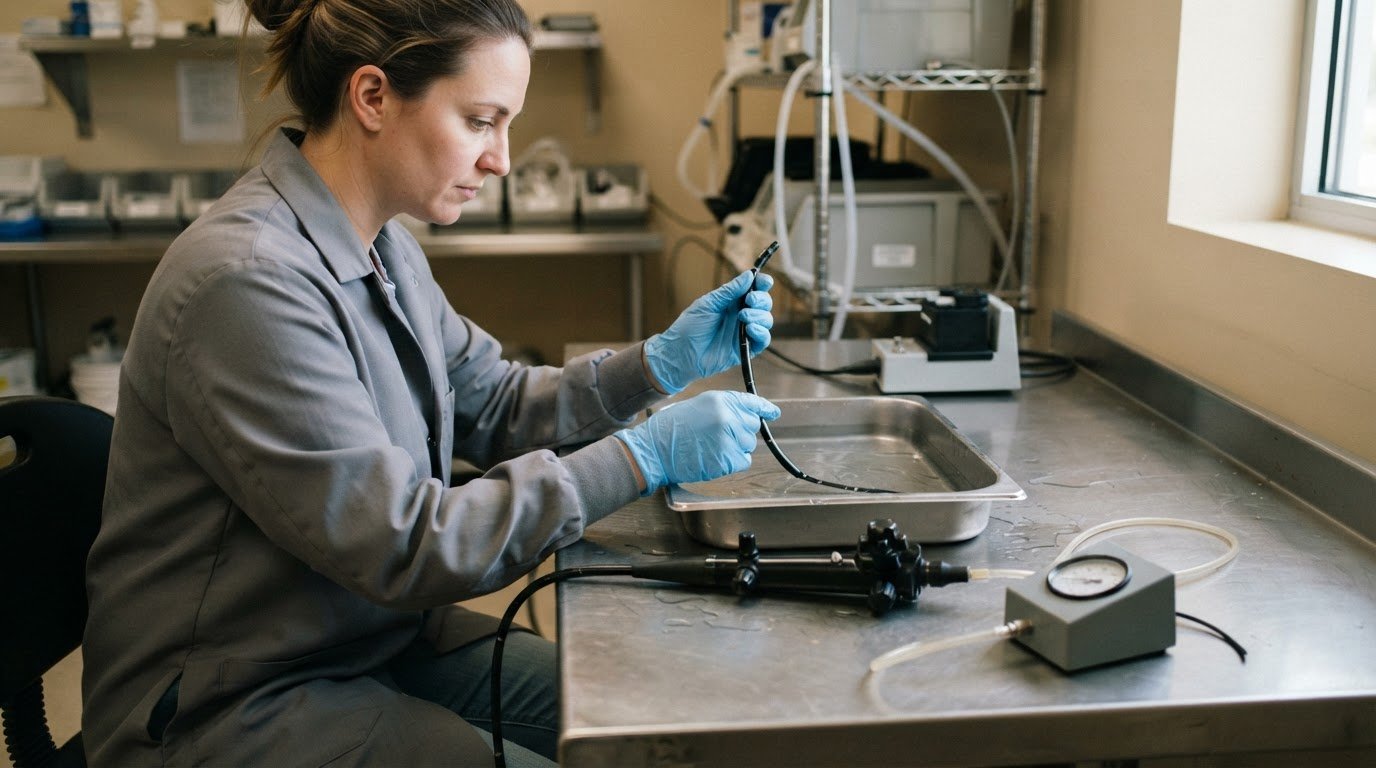
Testing should include operational and functional checks, an electrical safety inspection, and documentation of test readings. Recertification testing can examine performance, accuracy, calibration, cleanliness, safety, and conformity with OEM specifications. These checks provide distinct evidence: functional results show how the equipment operates, while electrical readings document safety testing.
NFPA 99 and IEC 62353 are examples of criteria that may be used for electrical safety testing. The applicable tests depend on the equipment and the servicing performed. A recorded result is more informative than a general pass statement because it identifies what was measured and provides a basis for reviewing the outcome.
For ventilators and anesthesia machines, quality assurance testing should verify gas volume and pressure accuracy, gas mixtures, and backup systems. Checks for anesthesia equipment should also address staff exposure to anesthetic gases. These examples show why a generic power-on check cannot replace testing specific to a device’s functions and risks.
Patient Safety and Device Reliability
Patient safety and device reliability depend on whether servicing restores the device’s intended performance and final checks identify unresolved problems. A malfunction during use can affect both patient care and the healthcare professionals operating the equipment.
Before a refurbished unit is labeled patient-ready and shipped, it should undergo final performance testing and inspection. If a test result falls outside expected performance, the unit needs corrective work and evaluation before release. Completed records should show the test performed, its readings, and the outcome.
Reusable medical devices such as ventilators, endoscopes, and defibrillators require appropriate servicing to protect patients and healthcare providers. Poor servicing can leave performance issues undetected, and incomplete testing weakens the evidence that a device functions as expected. A documented final inspection links the service work to the release decision.
Cosmetic restoration also requires care: refurbishment should restore the device’s original appearance without introducing contamination. Appearance alone does not establish safety, so cleaning and functional checks must be considered separately. Documented operational testing, electrical safety results, and final inspection together provide a clearer basis for assessing whether servicing addressed the device’s condition.
Is refurbished medical equipment safe to use?
Refurbished equipment can be safe when it meets the same safety and performance standards as new equipment. A warranty addresses specified repair coverage, but it doesn’t replace evidence that the unit functions properly.
Warranty and Service Coverage
A warranty defines which repairs or parts are covered after delivery, while a service plan describes ongoing maintenance support. These terms clarify what happens when a fault appears after installation and which costs fall within the stated coverage.
Recertified equipment may include a warranty on parts and labor for normal wear and tear. Review the stated duration, exclusions, repair process, and whether both labor and replacement parts are covered. The wording defines the warranty’s scope; it does not mean every failure or service need is covered.
Some service plans include annual maintenance intended to help extend equipment lifespan. Maintenance is distinct from warranty coverage: one describes planned servicing, while the other describes covered repairs or replacement. For example, a plan may set out scheduled maintenance, while a warranty addresses an eligible part failure. The equipment’s records and written terms clarify which applies.
Post-delivery support also matters when a fault affects performance. Written terms should explain how a service issue is reported, assessed, and resolved, including whether repair work is covered. Clear terms help teams plan for device availability without treating a warranty as a performance guarantee.
State Laws and Accreditation Requirements
State laws and accreditation requirements set rules for a facility or its equipment use, and can shape purchasing and operational decisions. Refurbished devices should be evaluated for safety and performance before use.
No formal guideline governs the refurbishment process as a whole. The FDA distinguishes servicing from remanufacturing, and its guidance explains which activities it classifies as remanufacturing and the requirements that apply to remanufacturers. The distinction depends on the work performed, not simply on whether a seller calls a unit refurbished.
State-specific requirements and accreditation criteria are separate from a device’s service records and warranty terms. The applicable framework depends on the facility and equipment context; a warranty does not establish compliance with either. The FDA’s remanufacturing classification also does not, on its own, describe every facility-level requirement.
Prices for refurbished and new equipment depend on the device, its condition, required parts, recertification work, and included support; pricing is provided after a quote request. Whether sourcing specialized apparatus or routine clinical inventory from suppliers like USA Medical and Surgical Supplies, a sound purchasing decision weighs these factors alongside documented safety and performance, rather than price alone.
Servicing to restore devices to OEM specifications
Refurbishment is meaningful only when service work has a defined technical target: the device’s original manufacturer specifications and intended use, not merely a clean appearance or successful power-on.
Servicing means repair, preventive maintenance, or routine maintenance after distribution that returns a device to its original intended use and the safety and performance specifications set by its original equipment manufacturer. The work should correct an identified fault or maintain function without changing the device’s intended use. The service record should link each action to that target.
A disciplined assessment starts with the device’s model, condition, reported fault, and service history. Technicians inspect the unit, identify worn components, and assess parts that may be near failure. The assessment can also consider issues not apparent through standard OEM preventive maintenance procedures. This broader inspection helps define the work needed to restore the device, rather than addressing only the symptom that prompted repair.
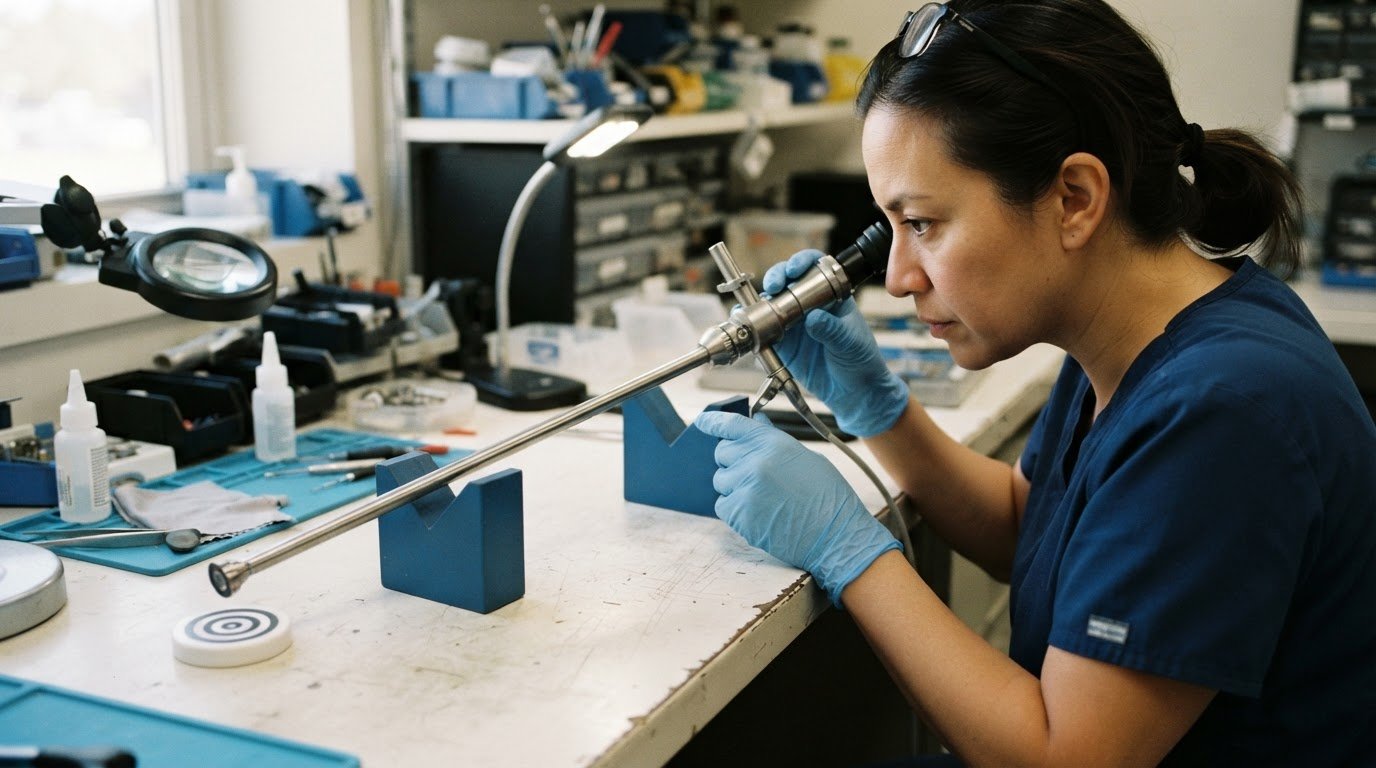
After servicing, calibrated testing equipment with NIST traceability can measure performance against OEM specifications. The comparison should use the specifications relevant to that device, not a generic pass threshold. For example, a calibration result should compare measured performance with the manufacturer’s stated requirement. A documented gap identifies a need for adjustment or further repair before the work is complete.
Software and hardware can both affect intended function. If a repair affects a software-controlled operation, assess it through the relevant functional checks; mechanical work requires checks tied to the functions it affects. Service documentation should identify what changed and how the resulting function was assessed. Linking repair scope to validation makes the technical basis for release easier to understand.
Service work must also be distinguished from remanufacturing. The distinction between routine servicing and substantial changes to a device’s performance, safety, or intended use can matter when assessing the work. Because the regulatory expectations differ, sellers should identify whether work involved routine servicing or substantial remanufacturing. A change to intended use or critical specifications is not merely routine maintenance.
For a refurbished device, the central question is whether the recorded work restores its original specifications and intended use. If a repair changes those specifications, its scope and regulatory treatment need separate consideration. Discuss medical device development and manufacturing requirements when your project involves translating specifications into controlled device processes.
Fong’s Engineering & Manufacturing Private Limited
Fong’s Engineering & Manufacturing Private Limited supports medical device teams with engineering, manufacturing, and refurbishment. When a project needs more than equipment inspection, its CDMO Services and OEM Solutions support device development and production, while Endoscope Repair & Refurbishment serves reusable endoscopes.
This is a relevant next step when your team is evaluating how device requirements, validation, and manufacturing processes fit together. Fong’s provides support spanning concept design, prototyping, validation, large-scale production, and regulatory support, including FDA and ISO 13485 compliance. These capabilities connect quality considerations with the broader device lifecycle, without treating a certification or refurbishment label as a substitute for evidence about a specific unit.
For a discussion about medical device engineering or refurbishment needs, contact Fong’s Engineering & Manufacturing Private Limited.
Make the Next Equipment Decision Deliberate
Use the next equipment decision to define not only what the unit must do, but also how it fits into the wider device lifecycle. Quality standards for refurbished medical equipment are most useful when procurement, engineering, and clinical teams translate them into acceptance criteria for intended use, workflow, and ongoing support. Aligning these needs early helps distinguish refurbishment decisions from broader device-development requirements before technical choices are fixed.
Start with the intended application, then connect it to the technical evidence and lifecycle responsibilities that matter to your organization. This creates a stronger basis for planning equipment integration, future servicing, and related device needs. Fong’s Engineering & Manufacturing Private Limited can be part of that discussion as you determine the right direction for your project. Share your priorities and requirements to shape the next phase. For a discussion focused on your project, contact Fong’s Engineering & Manufacturing Private Limited and move forward with a clear technical direction.
Fong’s Engineering & Manufacturing Private Limited supports quality-focused medical device production
Once you have assessed the quality standards for refurbished medical equipment, Fong’s Engineering & Manufacturing Private Limited can support the next steps through end-to-end services spanning concept design, prototyping, validation, large-scale production and regulatory support, including FDA and ISO 13485 compliance.
Turn to the company when you need endoscope repair and refurbishment, or support with OEM solutions, CDMO services, micro-precision components or complex device assembly. It also manufactures complete medical devices under a client’s brand name using ISO 13485 certified processes.
Frequently Asked Questions
Is recertified equipment dependable?
Recertified equipment can be dependable when its individual test results support its intended function and condition. For a device entering a different clinical workflow, assess whether its documented capabilities match that use, not merely whether it operated during recertification. Service history and calibration findings can also help teams plan integration and future maintenance. Dependability is a device-specific judgment, not a conclusion drawn from the recertification label alone.
What parts, if any, are replaced during recertification?
Recertification may replace components that are worn or near the end of their useful life. Which parts are replaced depends on inspection findings and the device’s condition, not a universal replacement list. A report identifying a changed component links the repair to the original fault or wear. Reviewing it alongside the device’s service history clarifies the work performed and what the recertification process addressed.
What is the difference between refurbished and remanufactured equipment?
Refurbishment generally describes restoration work, while remanufacturing depends on whether the work significantly changes a finished device’s performance or safety specifications or intended use. Refurbishment can involve disassembly, cleaning, replacing worn parts, functional verification, calibration, and performance testing. The label alone does not define the regulatory category. The work performed and its effect on the device determine whether the activity is routine servicing or remanufacturing.
Why Does Quality Assurance Matter?
Quality assurance provides a controlled basis for deciding whether a device is ready for its intended role. A quality process can link a detected fault to corrective work, testing, and a documented release decision. Without those links, a successful power-on may be mistaken for evidence of complete performance. Clear records also support communication among procurement, biomedical engineering, and clinical teams during equipment acceptance.
What quality standards apply to refurbished medical equipment in the United States?
No formal guidelines govern the refurbishment process as a whole in the United States. The applicable framework depends partly on the work performed: routine servicing differs from remanufacturing that significantly changes a device’s specifications or intended use. The FDA’s Quality Management System Regulation incorporates by reference ISO 13485:2016. This quality-system standard is relevant to medical device organizations, but it does not by itself demonstrate the condition of an individual refurbished unit.
What FDA rules apply to refurbished medical devices and reprocessors?
FDA requirements depend on whether an activity is servicing or remanufacturing. Entities engaged in remanufacturing are subject to requirements that include registration and listing, adverse event reporting, QMSR, and applicable marketing submissions. FDA guidance also addresses reusable medical devices that need maintenance or repair. The activity performed matters more than the seller’s chosen label: classification depends on whether the work restores specifications or significantly changes performance, safety specifications, or intended use.
How do FDA requirements differ for refurbished, remanufactured, and reconditioned medical equipment?
FDA expectations depend on the work performed, not simply whether equipment is called refurbished or reconditioned. Servicing means repair, preventive maintenance, or routine maintenance after distribution that returns a device to the safety and performance specifications established by its manufacturer and its original intended use. Remanufacturing involves work that significantly changes a finished device’s performance or safety specifications or intended use. These distinctions explain why devices with similar sales descriptions may receive different regulatory treatment.
Which ISO standards apply to medical device refurbishment and servicing, such as ISO 13485?
ISO 13485:2016 is the international standard for medical device quality management systems, and the FDA’s QMSR incorporates it by reference. Its relevance is to the organization’s quality management system, not a standalone certification of each repaired device. In practice, separate device-level records can show what servicing and testing occurred. Electrical safety testing may also use criteria such as NFPA 99 or IEC 62353, depending on the equipment and testing approach.