
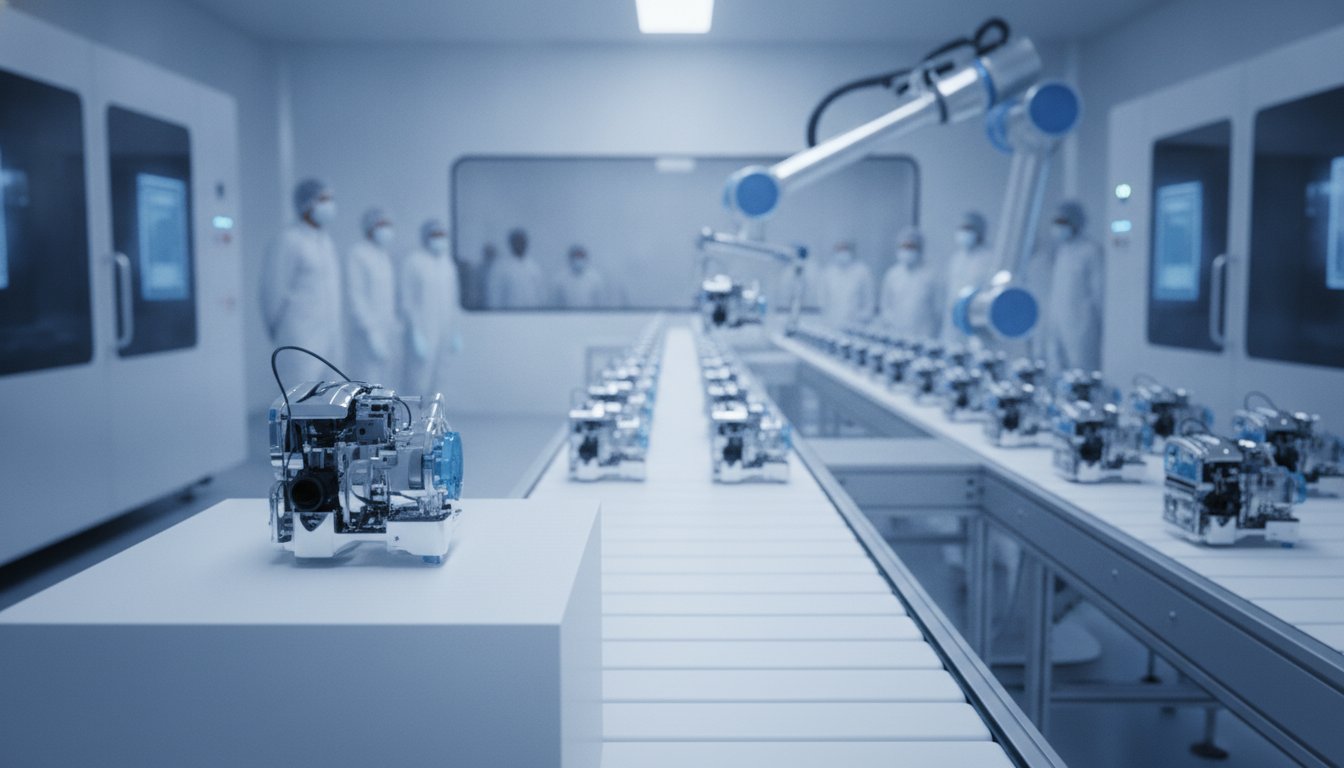
The annual global cost of poor quality for medical device manufacturers is estimated to be as high as $53.7 billion. This staggering figure highlights why medical device scale up manufacturing requires more than just increased volume; it demands a transition from engineering intent to a fully validated, smart ecosystem. You’ve likely felt the pressure of maintaining micro-precision while trying to reduce unit costs through automation. It’s a delicate balance where a single process deviation can lead to significant regulatory delays or supply chain instability.
We’ve designed this guide to help you master the transition from clinical prototypes to high-volume production with absolute technical certainty. You’ll learn how to establish a repeatable manufacturing process that meets the latest FDA Quality Management System Regulations (QMSR) while accelerating your time-to-market. By focusing on rigorous validation and technical mastery, you can achieve the scale your project requires without compromising the precision your patients deserve. This methodical approach ensures your transition is both stable and compliant with global standards.
Key Takeaways
- Learn how Design for Manufacturability (DFM) principles simplify complex assemblies, ensuring high-volume production remains cost-effective without sacrificing technical functionality.
- Understand the role of the Master Validation Plan (MVP) and IQ/OQ/PQ protocols as essential risk-mitigation tools rather than mere regulatory hurdles.
- Discover how integrating Industry 4.0 automation and real-time data monitoring reduces human error and optimizes equipment utilization rates across the production lifecycle.
- Identify the critical criteria for selecting a CDMO partner capable of managing medical device scale up manufacturing while maintaining a resilient global supply chain.
- Gain a strategic roadmap for navigating the transition from R&D environments to smart mass production while ensuring continuous compliance with ISO 13485 and FDA standards.
Understanding the Medical Device Scale-Up Process
Medical device scale up manufacturing represents the rigorous transition from clinical pilot batches to high-volume commercial production. This phase is the ultimate test of a device’s technical maturity. While a prototype demonstrates that a concept works, scale-up proves that the concept can be replicated with absolute precision across thousands of units. It’s not merely a quantitative increase in output. It’s a qualitative shift that requires a validated, repeatable manufacturing environment where every variable is controlled and documented.
In this industry, the stakes are clinical and non-negotiable. Unlike consumer electronics, a minor deviation in a surgical stapler or an endoscope component can have catastrophic consequences. Scaling for medical devices is governed by strict regulatory frameworks, such as the FDA’s Quality Management System Regulation (QMSR). Manufacturers must ensure that the “Valley of Death”, the gap where many MedTech innovations fail, is bridged through meticulous adherence to medical device design principles. Success depends on the ability to maintain the validated state of the product while increasing throughput.
Key Drivers for Scaling Production
Common Pitfalls in Early-Stage Scaling
Many organizations falter by underestimating the complexity of supply chain management for micro-precision components. Supply chain instability can halt production entirely if long-lead items aren’t secured early in the outsourcing medical device production process. Perhaps the most dangerous pitfall is “scaling the prototype.” A design that works in a lab environment often lacks the tolerances or geometry necessary for high-speed automated assembly. Successful medical device scale up manufacturing requires a design that is optimized for the factory floor, not just the benchtop.
Design for Manufacturability (DFM): The Foundation of Scale
Design for Manufacturability (DFM) is the strategic optimization of a device design to ensure it’s produced at scale with maximum efficiency and minimal cost. In the context of medical device scale up manufacturing, DFM isn’t just a design phase; it’s a critical requirement for survival. When transitioning from a clinical prototype to high-volume production, engineering intent must be translated into a format that a factory can execute repeatedly. For complex surgical tools like ultrasonic scalpels or endoscopes, this often involves simplifying assemblies. Reducing the number of individual components minimizes potential failure points and streamlines the assembly line.
Precision machining serves as the backbone of this transition. Utilizing CNC milling and auto-lathe technology ensures that every component, regardless of volume, adheres to the exact specifications of the original design. It’s also vital to integrate secondary processes such as anodizing, electropolishing, and Diamond-Like Carbon (DLC) coating early in the design cycle. These treatments aren’t just aesthetic; they’re functional requirements for biocompatibility and durability. By accounting for these steps during the DFM phase, manufacturers avoid the bottlenecks that occur when finishing processes are treated as an afterthought.
Precision Engineering Techniques for Scalability
Achieving micro-precision at scale for medical device scale up manufacturing requires advanced methodologies. We utilize 5-axis CNC milling and wire-cut EDM to produce the intricate geometries found in Minimally Invasive Surgery (MIS) tools. Laser processing plays an equally critical role. Laser welding and cutting provide the hermetic seals and clean edges necessary for sterile environments. Small components, such as pull rings and marker bands, must be designed for rapid handling. When these micro-precision parts are optimized for automated feeders, assembly speeds increase significantly without compromising the process validation (IQ/OQ/PQ) standards required for regulatory compliance.
Prototyping with Production in Mind
The transition from 3D printing to commercial methods like Metal Injection Molding (MIM) or plastic injection molding is a pivotal moment. While 3D printing is excellent for form and fit, it doesn’t always reflect the material properties or tolerances of mass-produced parts. R&D labs must simulate mass production environments to avoid late-stage failures that occur when a prototype design proves impossible to mold or cast at scale. Ensuring that prototype materials match commercial-grade biocompatible standards from the outset prevents costly redesigns during the clinical trial phase. If you’re currently evaluating the manufacturability of a complex design, it’s beneficial to consult with a technical expert who understands the nuances of precision scaling.
The Regulatory and Validation Roadmap (IQ/OQ/PQ)
Validation isn’t just a bureaucratic delay. It serves as the primary risk-mitigation strategy for medical device scale up manufacturing. Without a rigorous validation roadmap, moving from a pilot run to mass production invites systemic failures that are exponentially more expensive to correct post-launch. A robust Master Validation Plan (MVP) coordinates these activities. It ensures that every piece of equipment and every process step is documented and capable of meeting its intended purpose under high-volume conditions.
Adherence to ISO 13485 quality management systems is mandatory during this expansion. This standard is now the foundation of the FDA’s Quality Management System Regulation (QMSR), which became effective on February 2, 2026. This harmonization means that a single, disciplined quality framework can support global market access. Traceability is another non-negotiable requirement under cGMP (Current Good Manufacturing Practices). Every component, from micro-precision pull rings to complex robotic adapters, must be traceable to its origin. This level of detail ensures that if a defect is identified, the scope of the impact can be precisely contained, protecting both the patient and the brand.
The Three Pillars of Process Validation
The core of the validation roadmap consists of three distinct phases. Installation Qualification (IQ) verifies that all equipment is installed and configured according to the manufacturer’s specifications. This is followed by Operational Qualification (OQ), where the process is tested at its upper and lower limits. The goal is to ensure the process performs as expected even under worst-case scenarios. Finally, Performance Qualification (PQ) demonstrates that the process consistently produces devices of acceptable quality over multiple production runs. This phase confirms that the medical device scale up manufacturing process is stable and ready for full-scale commercialization.
Risk Management and CAPA
Effective scaling requires a proactive approach to risk. We implement Process Failure Mode and Effects Analysis (PFMEA) to identify potential failure points in high-volume lines before they occur. This technical evidence allows for the implementation of controls that prevent defects from reaching the final assembly. A robust Corrective and Preventive Action (CAPA) system further supports this by preventing systemic defects in mass-produced lots. The assembly and packaging of sterile devices must occur in validated cleanroom environments, typically Class 8 or 100k, to maintain the biological safety of the product throughout its lifecycle.
Implementing Smart Manufacturing and Automation
Modern medical device scale up manufacturing is increasingly defined by the integration of Industry 4.0 technologies. This shift moves production from a reactive model to a data-driven, predictive ecosystem. Real-time monitoring allows for the immediate identification of process drifts. This level of oversight is essential when managing high-volume lines where even a slight deviation can result in significant scrap costs. By leveraging technical evidence from the factory floor, engineers can make informed adjustments that maintain the validated state of the process.
Automated assembly lines provide a technical stability that manual processes can’t match. They effectively eliminate the variability introduced by human error, which is especially critical for complex devices like robotic adapters or surgical staplers. Smart lines also address global labor shortages by enabling 24-hour unmanned production cycles. These systems maintain high utilization rates while ensuring that every unit meets the same rigorous standard. Integrating in-process testing, such as leak and voltage testing, directly into the automated line ensures that defects are caught at the source before they progress through the assembly.
Robotics and Advanced Laser Systems
Robotic loading and unloading systems support high-speed precision machining. These systems work in tandem with advanced fiber-laser cutting and ultrashort-pulse (USP) marking. USP marking is essential for reusable devices; it creates identification marks that remain stable after repeated autoclave cycles. Automated blister packaging and sterilization prep, including EtO or Gamma processes, are integrated to maintain a seamless flow from assembly to distribution. This methodical approach ensures that throughput increases without sacrificing the delicate precision of micro-components.
Real-Time Quality Dashboards
Real-time quality dashboards provide engineers with a transparent view of the entire production floor. We utilize 24-hour unmanned CMM inspection to achieve 100% measurement accuracy without interrupting the production cadence. This digital traceability streamlines audit readiness and simplifies compliance with global standards. Quality becomes a byproduct of the manufacturing process rather than an external burden. If you’re ready to modernize your production line, you can discuss your automation requirements with our engineering team.
Choosing the Right CDMO Partner for Scale-Up
The selection of a manufacturing partner is the final, most critical decision in the medical device scale up manufacturing journey. This choice determines whether your engineering intent is successfully translated into a commercial reality or lost in the complexities of mass production. Understanding the fundamental differences between a medical device OEM vs CDMO is essential before evaluating any partner, as each model carries distinct implications for how technical and regulatory risks are managed throughout your device lifecycle. When evaluating medical device contract manufacturing services, you must look beyond basic assembly. A capable partner provides end-to-end integration, from initial DFM refinements to complex cleanroom assembly and sterile packaging. This comprehensive approach ensures that technical standards remain consistent as volumes increase.
A robust national manufacturing network is essential for maintaining supply chain resilience in a volatile market. Partners with strategically located facilities across the United States offer the logistical advantages necessary for efficient national and international distribution. This geographic diversity within a single nation allows for flexible production strategies and localized contingency planning. Transparency in supply chain management, supported by systems like Vendor Managed Inventory (VMI), ensures that long-lead components for complex devices are always available, preventing costly line stoppages during critical market launches.
Technical Mastery and Institutional Trust
Technical mastery is built over decades of navigating high-stakes environments. You should seek a partner with over 40 years of experience in the MedTech industry, particularly one that understands the distinct lifecycles of both disposable and complex reusable devices. Reusable instruments, such as endoscopes, require a deep understanding of material durability and biocompatibility after repeated sterilization. Verifying a partner’s ability to support FDA 510(k) and CE Mark submissions is vital. This “Steady Hand” approach provides the stability needed to manage the full product lifecycle, ensuring that regulatory compliance is maintained from the first pilot run to the millionth unit.
Preparing for the Transition
A successful transition depends on a structured technology transfer process. This involves more than just handing over CAD files; it requires a deep technical exchange to ensure the manufacturing environment accurately reflects the design requirements. Establishing clear communication channels and real-time project milestones allows both parties to monitor progress and address deviations immediately. This methodical preparation minimizes risks and accelerates your time-to-market. Ready to move from prototype to patient? Consult with our engineering experts today to secure your production future.
Secure Your Path to High-Volume Precision
Successful medical device scale up manufacturing is a multi-dimensional challenge that requires a precise alignment of engineering intent, regulatory discipline, and automated execution. By prioritizing Design for Manufacturability (DFM) and implementing smart manufacturing lines with 24-hour unmanned production, you ensure that high-volume output doesn’t compromise the micro-precision of your device. These technical foundations, supported by a rigorous IQ/OQ/PQ validation roadmap, transform your clinical prototype into a market-ready solution that’s both stable and compliant.
Choosing a partner with over 40 years of precision engineering expertise provides the steady hand necessary to navigate complex developmental cycles. With a comprehensive global manufacturing footprint across Singapore, China, and Malaysia, we offer the regional support and technical mastery required for sustained commercial success. Accelerate your medical device scale-up with our ISO 13485 certified CDMO services. We’re ready to help you bring your life-saving innovations to the global stage with absolute technical certainty and operational excellence.
Frequently Asked Questions
What is the difference between pilot production and mass production for medical devices?
Pilot production focuses on clinical validation and small batches, often ranging from ten to one hundred units. Mass production shifts the focus toward throughput, cost efficiency, and absolute repeatability for thousands of units. This transition involves moving from manual R&D assembly to a validated, automated environment where every process variable is controlled and documented to ensure consistent quality.
How long does the medical device scale-up process typically take?
The scale-up timeline generally spans 6 to 18 months, depending on device complexity and regulatory requirements. This period includes critical phases such as Design for Manufacturability (DFM) optimization, tool fabrication, and the completion of process validation (IQ/OQ/PQ). These steps must be meticulously executed before the commercial launch to avoid costly late-stage failures or regulatory delays.
Why is ISO 13485 certification critical for high-volume manufacturing?
ISO 13485 is the international standard for medical quality management systems. It’s critical for high-volume manufacturing because it provides a disciplined framework for risk management and consistent quality throughout the production lifecycle. Compliance with this standard is also the foundation of the FDA’s new Quality Management System Regulation (QMSR), making it essential for global market access.
Can I use the same design for mass production that I used for my prototype?
Prototypes usually require design modifications before they’re suitable for mass production. A design optimized for 3D printing or manual assembly often lacks the tolerances or geometry required for high-speed automated lines. Through the DFM process, engineers refine the design to ensure it’s compatible with commercial methods like injection molding or 5-axis CNC machining without losing functionality.
What are the most common challenges when scaling surgical instrument production?
Maintaining micro-precision tolerances at scale is the primary challenge for complex surgical tools. Manufacturers must ensure that intricate components, such as those in ultrasonic scalpels, remain biocompatible and functional after secondary finishing processes like electropolishing or DLC coating. Simplifying complex assemblies during the scale-up phase is vital to minimize potential failure points and streamline the automated assembly process.
How does automation impact the cost of medical device manufacturing?
Automation significantly reduces per-unit costs by improving equipment utilization rates and decreasing the frequency of human error. While the initial capital investment for smart lines is higher, the long-term reduction in scrap and labor costs makes medical device scale up manufacturing more economically sustainable. Automated systems also provide the technical stability needed to maintain high-volume production without compromising precision.
What is a Master Validation Plan (MVP) in the context of scaling?
A Master Validation Plan is a high-level strategic document that coordinates all validation activities across a manufacturing site or project. It defines the scope of the validation effort, establishes the timeline for IQ/OQ/PQ phases, and identifies the acceptance criteria for each process. The MVP serves as the primary roadmap for ensuring that the entire manufacturing ecosystem remains in a validated state during expansion.
Does scaling production require a new FDA 510(k) submission?
A new 510(k) is generally required only if scaling leads to significant changes in the device’s design, material, or intended use. Minor optimizations to the medical device scale up manufacturing process typically don’t trigger a new submission. However, manufacturers must rigorously document all changes in a Letter to File to demonstrate that the modifications don’t affect the safety or effectiveness of the device.