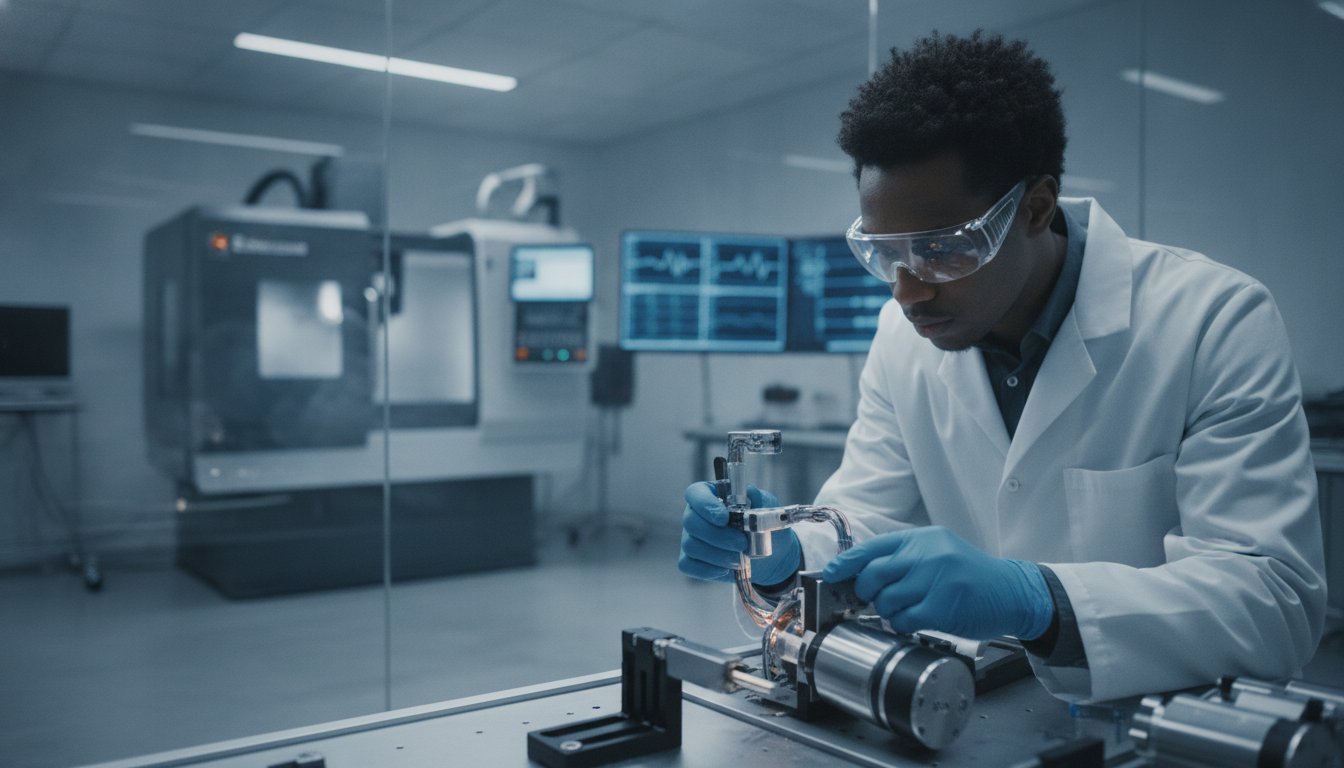
A superficial sharpening of a blade or a basic adjustment of a forcep isn’t a true repair; it’s a temporary postponement of an inevitable failure. For medical facilities managing high-value assets, the distinction between a quick fix and professional surgical instrument repair services determines whether a device returns to the sterile field as a precision tool or a regulatory liability. You understand that the technical integrity of your instruments is directly tied to surgeon confidence and patient safety.
It’s likely you’ve experienced the frustration of rapid instrument degradation following poor-quality repairs or the high costs associated with premature asset replacement. This article demonstrates how engineering-grade restoration ensures your equipment achieves original OEM-spec performance while maintaining strict compliance with the 2026 FDA Quality Management System Regulation and ISO 13485 standards. We’ll examine the rigorous validation processes used in specialized repair centers, the economic advantages of extending instrument lifecycles, and how a CDMO-led approach provides a reliable alternative to new procurement without compromising on technical excellence.
Key Takeaways
- Learn the technical distinctions between basic sharpening and a full engineering refurbishment that restores instruments to their original functional integrity.
- See how CDMO-level manufacturing expertise, including 5-Axis CNC milling and femto laser cutting, is utilized within surgical instrument repair services to achieve OEM-spec performance.
- Understand the impact of the 2026 FDA Quality Management System Regulation (QMSR) on your facility’s equipment servicing and risk management protocols.
- Gain insights into the specialized engineering requirements for the refurbishment of complex endoscopes and robotic-assisted surgical tools.
- Discover how a global repair footprint and dedicated centers of excellence support cost-effective asset management and extended device lifecycles.
What are Professional Surgical Instrument Repair Services?
Professional surgical instrument repair services represent the technical restoration of reusable medical tools to their original functional specifications. This is not merely a maintenance task; it’s a comprehensive engineering effort to return an asset to its baseline state. Surgical instrument repair is a validated process for restoring the mechanical and metallurgical integrity of a surgical instrument. While basic sharpening might address surface-level dullness, full engineering refurbishment involves a rebuild of the device’s architecture, ensuring it returns to service with the same reliability as a new procurement.
Precision is the fundamental link between instrument performance and patient safety. A tool that fails to meet OEM tolerances can lead to prolonged operative times, increased tissue trauma, or unexpected intraoperative failure. High-quality surgical instrument repair services ensure that every articulation, cutting edge, and grip surface operates with the exact tension and geometry intended by the original manufacturer. This meticulous attention to detail protects the surgeon’s technique and ensures the best possible clinical outcomes.
The Scope of Modern Surgical Tool Restoration
Modern restoration covers a diverse inventory, ranging from standard handheld tools to complex laparoscopic and robotic adapters. Specialized engineering is required for micro-precision components, such as ultrasonic scalpel couplers, where even micron-level deviations disrupt performance. As hospitals shift toward sustainable models, the transition from single-use to high-quality reusable instruments has intensified the need for rigorous refurbishment protocols. This approach supports institutional environmental goals while maintaining the high standards required in the operating room. We focus on restoring the intricate mechanical assemblies found in modern MedTech, ensuring they meet the high-stakes demands of the surgical suite.
Key Performance Indicators (KPIs) for Repaired Assets
The success of a repair is measured by specific, technical KPIs that go beyond simple visual inspection. These metrics ensure the device is safe for clinical use and durable enough for long-term service.
- Tactile Feedback: Surgeons rely on the “feel” of a tool; repaired assets must provide consistent ergonomic resistance and grip without sticking or slipping.
- Material Integrity: Instruments must withstand repeated autoclave sterilization cycles without losing structural strength or developing stress fractures.
- Surface Quality: Refurbishment must achieve hermetic welds and corrosion-resistant markings to prevent bioburden accumulation and ensure traceability.
Corrosion resistance is particularly critical. When a tool is poorly repaired, the protective chromium oxide layer is often compromised. Professional restoration involves passivating the surface to rebuild this barrier, ensuring the instrument remains resistant to the harsh chemical environments of modern reprocessing departments. Using advanced laser processing ensures that markings remain legible and surfaces stay smooth throughout the device’s extended lifecycle. This methodical approach ensures that every repaired asset meets the rigorous demands of the modern operating environment.
Engineering-Led Restoration: Leveraging CDMO Expertise
Many providers of surgical instrument repair services operate as simple maintenance shops, focusing on surface-level sharpening and basic adjustments. A CDMO partner brings manufacturing-grade infrastructure to the restoration process, treating each repair as a precision engineering project. This transition from simple maintenance to engineering-led refurbishment is vital for the Management of Surgical Instrumentation across modern healthcare systems. By utilizing the same technical insights used to build original equipment, we ensure that every repaired asset maintains its intended mechanical performance and safety profile.
The advantage of a CDMO-led approach lies in the depth of technical insight. We don’t just fix a broken component; we analyze the failure point using our manufacturing expertise. This allows for the restoration of complex assemblies that standard repair shops cannot handle. Our Irvine, CA repair center operates with the same rigorous standards as our global manufacturing sites, providing a seamless bridge between original fabrication and long-term asset support.
Advanced Laser Processing for Instrument Longevity
Advanced laser processing is central to our restoration methodology. We utilize ultrashort-pulse marking to create high-contrast, corrosion-resistant identification on instruments. This process, often involving Femto laser cutting and marking, ensures that traceability data remains legible even after hundreds of sterilization cycles. Unlike traditional engraving, this method doesn’t compromise the material’s protective oxide layer. Additionally, 5-axis laser welding allows us to perform structural restoration on delicate tools. This technique creates hermetic welds without causing heat-affected zone damage, preserving the metallurgical properties of the surgical grade stainless steel.
Precision Machining and Secondary Processes
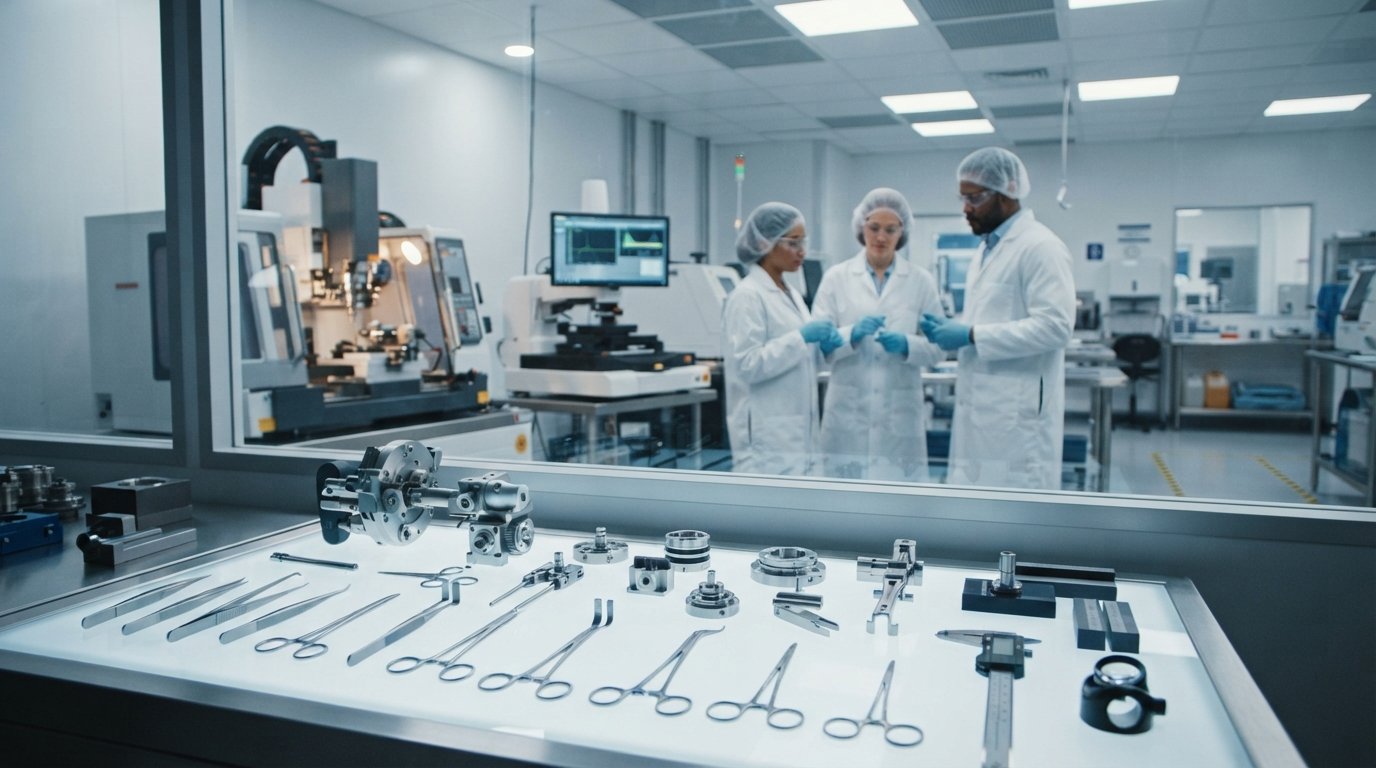
Restoring an instrument to its baseline state requires the ability to replicate original tolerances. We leverage 5-Axis CNC milling and turn-mill technologies to fabricate replacement parts that are indistinguishable from the original components. This capability is essential for restoring the exact geometry of jaw serrations, box locks, and ratchets. Following the machining phase, secondary processes ensure the device meets medical-grade cleanliness standards.
- Electropolishing: Removes microscopic surface irregularities where bacteria can thrive.
- DLC Coating: Applied to high-wear surfaces to reduce friction and extend the operational life of the tool.
- Surface Passivation: Rebuilds the chromium oxide layer to prevent rust and oxidation.
These processes ensure that every refurbished tool provides the tactile feedback and ergonomic consistency surgeons expect. If you are seeking to optimize your facility’s asset lifecycle through technical excellence, you may consult with our engineering team regarding your specific refurbishment needs.
Navigating Regulatory Compliance and Quality Systems
Compliance in surgical instrument repair services isn’t optional; it’s the technical foundation of patient safety. As of February 2, 2026, the FDA’s Quality Management System Regulation (QMSR) has fully harmonized US requirements with the international standard ISO 13485:2016. Adhering to ISO 13485 quality management ensures that every repair follows a documented, risk-based approach. This alignment is critical when distinguishing between simple servicing and remanufacturing, as outlined in the FDA guidance on medical device repair. Maintaining FDA 510(k) and CE Mark compliance for refurbished devices requires a level of technical rigor that mirrors original manufacturing.
Traceability is the final pillar of a compliant repair program. We maintain a “Patient to Prototype” history for every asset, documenting every technical intervention and material replacement. This granular record-keeping supports hospital audits and ensures full accountability throughout the instrument’s extended lifecycle. By integrating these quality systems, we provide a level of validated safety that exceeds standard industry practices.
Validation Frameworks for Surgical Reuse
Validation is the technical proof of a successful restoration. We implement a Master Validation Plan (MVP) that covers three critical stages: Installation Qualification (IQ), Operational Qualification (OQ), and Performance Qualification (PQ). This framework ensures that every piece of equipment, such as our 5-Axis CNC milling machines, operates within specified parameters during the repair cycle. Risk management strategies, including Process Failure Mode and Effects Analysis (PFMEA), are applied to complex instrument assemblies to identify and mitigate potential failure points before the device returns to the hospital. In-process testing for electrical tools includes leak testing and voltage testing to confirm insulation integrity.
Cleanroom Standards in Refurbishment
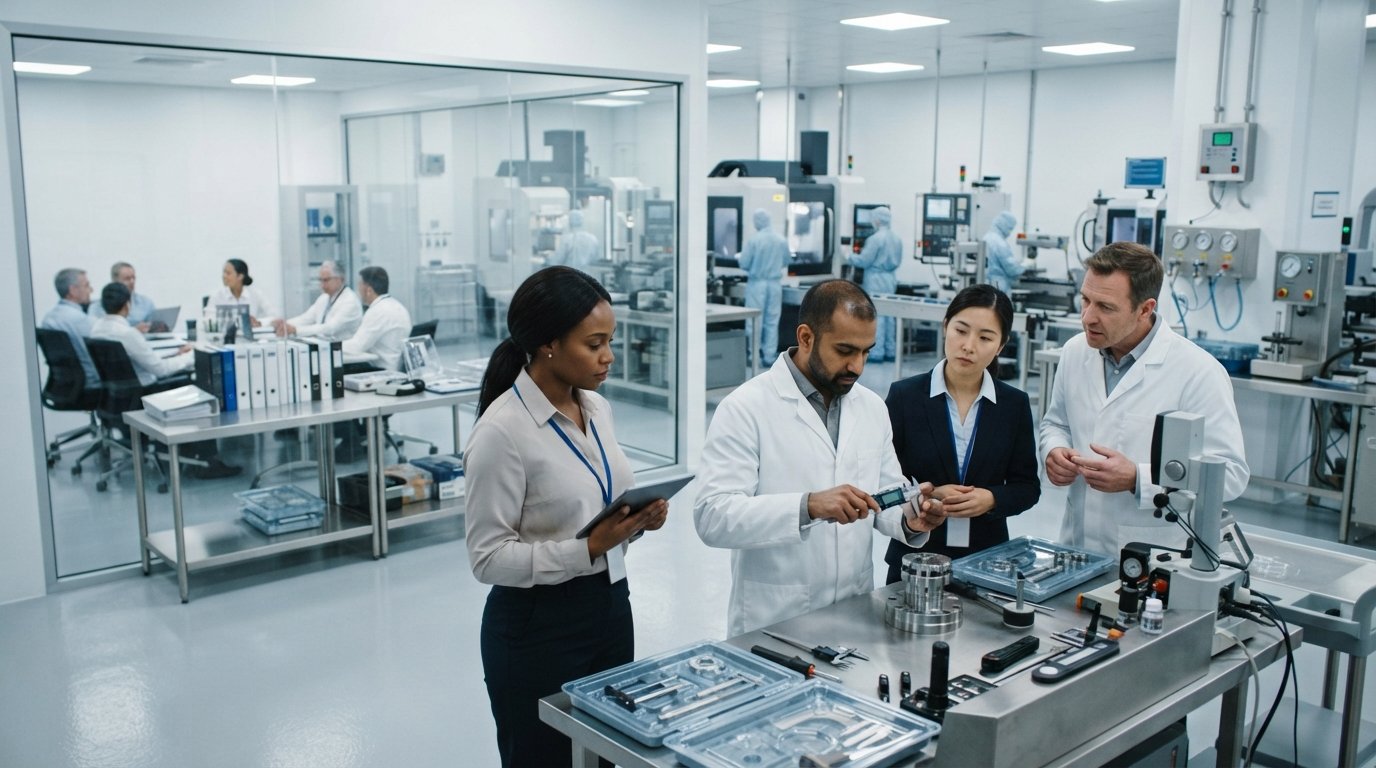
High-precision refurbishment requires a controlled environment to prevent contamination. Our facilities utilize Class 8 (100k) cleanrooms for the assembly of repaired devices, ensuring that particulates don’t compromise mechanical performance. We validate all repairs for compatibility with common sterilization methods, including EtO, autoclave, and gamma processes, according to EN ISO 17665:2024 standards. Packaging integrity is equally vital. We use Tyvek pouches and custom blister solutions to maintain the sterile barrier during transport and storage. This meticulous control over the post-repair environment prevents the introduction of bioburden and ensures the device is ready for its next clinical application.
Specialized Repair for Endoscopy and Robotic Surgery
The evolution of minimally invasive surgery (MIS) and robotic-assisted procedures has introduced a layer of mechanical complexity that standard surgical instrument repair services often fail to address. Devices like ureteroscopes, cystoscopes, and gastroscopes contain delicate optical fibers and micro-articulations that require specialized engineering to restore. Robotic surgical adapters, which translate high-precision electronic commands into mechanical movement, demand tolerances that cannot be achieved through manual sharpening. Our approach treats these tools as complex assemblies, focusing on the restoration of both functional mechanics and optical clarity to ensure clinical readiness.
The Endoscope Refurbishment Workflow
Restoring an endoscope requires a methodical, multi-stage process to ensure the device meets original performance benchmarks. Our workflow is designed to address the unique vulnerabilities of flexible and rigid optics through a disciplined technical sequence.
- Step 1: We perform a comprehensive diagnostic evaluation, including high-pressure leak testing to identify compromised seals or internal moisture that could lead to intraoperative failure.
- Step 2: Technicians execute a precision disassembly of micro-components and optical fibers, ensuring no collateral damage to the delicate internal channels.
- Step 3: We utilize Femto laser cutting and micro-precision machining to restore or replace worn components, such as distal tips, bending rubbers, or control wires.
- Step 4: Reassembly occurs in a Class 8 cleanroom, followed by final validation testing to confirm optical resolution and mechanical articulation.
Restoring Minimally Invasive Surgery (MIS) Tools
MIS instruments often utilize advanced alloys like Nitinol and MP35N to maintain flexibility and strength within small diameters. We address wear in these stents and delivery systems by leveraging our manufacturing background in micro-precision components. Cardiovascular robotic adapters and heart valve ring catheters are refurbished to original performance specs, ensuring they provide the precise tactile feedback surgeons require for life-critical procedures. This level of technical restoration extends to reusable surgical staplers and orthopedic implants, where metallurgical integrity and surface finish are paramount for patient safety.
Maintaining these high-value assets requires a partner capable of handling complex device assembly and rigorous validation. If your facility manages specialized MIS or robotic inventories, you can request a technical assessment of your current equipment state to determine the most cost-effective restoration path. Our Irvine, CA facility is specifically equipped to provide endoscope repair and refurbishment that meets the highest regulatory standards and clinical demands.
Strategic Asset Management: The Global CDMO Advantage
Effective asset management requires more than local proximity; it demands a global infrastructure that ensures technical consistency across borders. For multinational MedTech OEMs, surgical instrument repair services must be integrated into a broader supply chain strategy that minimizes downtime and reduces the Total Cost of Ownership (TCO). By leveraging a global CDMO footprint, organizations can transition from reactive maintenance to a proactive lifecycle management model. This approach ensures that every device, whether serviced in North America or Asia, meets the same rigorous engineering standards established during its original manufacture. It transforms the repair process from a cost center into a strategic advantage that preserves capital and ensures clinical readiness.
Deeper integration with a global partner allows for the collection of longitudinal data on instrument performance. We utilize smart manufacturing insights to monitor repair trends and wear patterns, providing OEMs with the technical evidence needed to refine future device designs. This feedback loop is a hallmark of an engineering-led partnership, offering a level of sophistication that domestic-only logistics providers cannot match. The result is a more resilient supply chain that supports the high-stakes environment of modern surgery.
Global Logistics and Repair Hubs
Our distributed network of facilities ensures that precision restoration is accessible near major medical markets. The Irvine, California repair and reprocessing center serves as a critical anchor for US-based healthcare facilities, providing domestic access to manufacturing-grade refurbishment. Our Singapore headquarters remains the center of excellence for high-tech regional refurbishment in Asia, focusing on complex micro-precision components. To support increasing global demand, the upcoming site in Johor, Malaysia, opening in Q1 2027, will function as a regional logistics and manufacturing hub. This global footprint allows for the rapid rotation of assets while maintaining a centralized quality management system across all locations.
Partnering for Scalable Refurbishment Solutions
Scalable refurbishment solutions are essential for global brands looking to move beyond small-batch prototyping into mass-market support. We specialize in transitioning from initial device development to mass refurbishment programs for global MedTech leaders. Integrating Vendor Managed Inventory (VMI) with instrument repair cycles allows for seamless asset replacement and a significant reduction in administrative burden for hospital staff. Building a “Global Partner of Choice” relationship means we act as a steady hand throughout the device lifecycle, advancing patient care by ensuring that every surgical tool performs at its absolute peak. This collaborative model ensures that your facility’s inventory is always optimized for performance and safety.
Advancing Clinical Excellence Through Engineering-Led Restoration
Transitioning from basic maintenance to engineering-led refurbishment represents a critical shift for MedTech organizations seeking to optimize asset performance. By leveraging manufacturing-grade technologies like 5-Axis CNC milling and Femto laser processing, facilities can restore original functional integrity while ensuring full compliance with the 2026 FDA Quality Management System Regulation. This technical rigor extends the lifecycle of high-value inventories, from standard handheld tools to complex robotic adapters and endoscopes.
Choosing a partner with over 40 years of precision engineering expertise ensures that your surgical instrument repair services are backed by a culture of discipline and technical mastery. With ISO 13485 certification and a dedicated global repair center in Irvine, CA, we provide the steady hand needed to navigate complex regulatory landscapes and maintain clinical standards. You’re invited to Partner with Fong’s for Best-in-Class Surgical Instrument Repair and secure the long-term reliability of your medical assets. Your commitment to precision today guarantees safer outcomes for the patients of tomorrow.
Frequently Asked Questions
What is the difference between surgical instrument repair and refurbishment?
Refurbishment is a comprehensive engineering process that restores a tool to its baseline functional state, whereas repair typically addresses a specific isolated failure. While a repair might focus on a single broken component, surgical instrument repair services that emphasize refurbishment involve a complete technical overhaul. This includes metallurgical restoration, surface passivation, and mechanical recalibration to ensure the device performs as it did when it first left the original manufacturer’s facility.
How do you ensure repaired instruments meet original OEM specifications?
We utilize advanced manufacturing technologies, including 5-Axis CNC milling and turn-mill capabilities, to replicate original component tolerances with absolute precision. Precision is non-negotiable. Every refurbished instrument undergoes rigorous testing in our QA labs to verify that mechanical articulations and tactile feedback align with original design requirements. This engineering-led approach ensures that the device provides the same level of reliability and safety as a new procurement, protecting both the surgeon’s technique and patient outcomes.
Are your surgical instrument repair services ISO 13485 certified?
Yes, our global facilities, including the Singapore headquarters and the Irvine center, maintain ISO 13485 certification for medical device quality management. This certification ensures that every step of our restoration process follows a documented, risk-based approach that meets international regulatory standards. We also adhere to FDA 510(k) and CE Mark requirements. This provides a validated quality system that supports the high-stakes demands of the medical manufacturing and repair industry.
What types of endoscopes can be refurbished at your Irvine, CA center?
Our Irvine, CA facility is equipped to handle the refurbishment of a wide range of rigid and flexible endoscopy devices, including ureteroscopes, cystoscopes, and gastroscopes. We specialize in the precision disassembly and restoration of micro-components and optical fibers within these tools. By utilizing Class 8 cleanrooms for reassembly, we ensure that every endoscope is returned to service with optimal optical resolution and mechanical articulation, meeting the strict cleanliness standards required for minimally invasive procedures.
How does laser processing improve the quality of surgical tool repair?
Advanced laser processing allows for the creation of high-contrast, corrosion-resistant markings that remain legible through hundreds of autoclave cycles. We utilize 5-axis laser welding to achieve hermetic seals without creating a heat-affected zone that could compromise the metallurgical integrity of the tool. This technology ensures that surgical instrument repair services provide a more durable result than traditional methods, as it preserves the protective oxide layer of the stainless steel and prevents bioburden accumulation.
Can you handle the repair of complex robotic surgical adapters?
Yes, we specialize in the technical restoration of complex robotic surgical adapters and components for robotic-assisted surgery. These devices require extremely tight tolerances. They demand sophisticated assembly protocols to translate electronic commands into precise mechanical movement. Our engineering team utilizes micro-precision machining and automated testing to ensure these adapters meet original performance specifications. This capability is a core part of our CDMO-led approach to supporting modern minimally invasive surgical technologies.
What is the typical turnaround time for a full endoscope restoration?
Turnaround times vary depending on the technical complexity of the instrument and the specific refurbishment requirements identified during the initial diagnostic evaluation. We prioritize a methodical and thorough restoration process to ensure every device meets our rigorous safety and performance standards. Quality takes time. While we strive for operational efficiency, our primary focus remains on the validation and mechanical integrity of the tool. You can contact our engineering team directly for a specific assessment based on your facility’s inventory needs.
Do you provide validation documentation for repaired medical devices?
We provide a comprehensive suite of validation documentation for all refurbished medical devices to support hospital traceability and regulatory compliance. This includes records of the Master Validation Plan (MVP) and results from Installation Qualification (IQ), Operational Qualification (OQ), and Performance Qualification (PQ) cycles. This “Patient to Prototype” history ensures that every technical intervention is fully documented, providing healthcare facilities with the evidence needed for internal audits and long-term asset management.