
A prototype that replicates the aesthetics of a finished product but lacks a viable path to high-volume manufacturing is a strategic liability. In the high-stakes sector of medical device development, technical precision is only half the battle; the other half is ensuring that every design choice is rooted in regulatory compliance and scalable engineering. You’ve likely experienced the frustration of a benchtop model that performs well in isolation yet fails the transition to a validated production line, leading to costly redesigns.
This article provides a rigorous checklist designed to bridge the gap between initial concept and mass production. By following this framework, you’ll ensure your device remains compliant with the latest standards, including the FDA’s Quality Management System Regulation alignment with ISO 13485. We’ll examine the critical integration of Design for Manufacturing (DFM), the necessity of institutional engineering depth, and the technical milestones required to transform a functional model into a market-ready medical solution.
Key Takeaways
- Distinguish between Proof-of-Concept and Alpha prototyping to ensure core clinical intent is validated before entering complex engineering phases.
- Integrate Design for Manufacturability (DFM) early to resolve tolerance stack-up issues in micro-precision components, preventing costly redesigns during mass production.
- Establish a robust Design History File (DHF) within an ISO 13485 framework to streamline regulatory approvals during medical device development Singapore.
- Evaluate prototyping partners based on their technical depth in secondary processes like laser processing and their ability to mirror mass-production quality.
- Transition from validated prototypes to high-volume manufacturing by finalizing a Master Validation Plan (MVP) that incorporates automated assembly and robotic loading.
Essential Stages of Medical Device Prototyping Services
Prototyping is a disciplined progression rather than a singular event. For projects involving medical device development Singapore, this journey begins with the Proof-of-Concept (PoC). At this stage, the focus is strictly on validating core functionality. Engineers strip away aesthetic considerations to prove that the fundamental mechanism achieves its clinical intent. This phase often involves rudimentary models that demonstrate a physical principle or a mechanical interaction, ensuring the baseline logic of the device is sound before further investment.
Once the concept is proven, the project moves to Alpha Prototyping. This represents the first integrated assembly. These units are used for initial engineering tests and benchtop evaluations. It’s the first time the separate components function as a single system. Alpha units allow engineers to identify unforeseen mechanical conflicts and refine the device’s internal architecture under controlled conditions.
Beta Prototyping follows, introducing high-fidelity models. These units mirror the final product’s materials, weight, and ergonomics. They’re often used for human factors studies or animal testing. Because they closely resemble the commercial version, they provide the first true look at the user experience and the device’s physical performance in a simulated clinical environment.
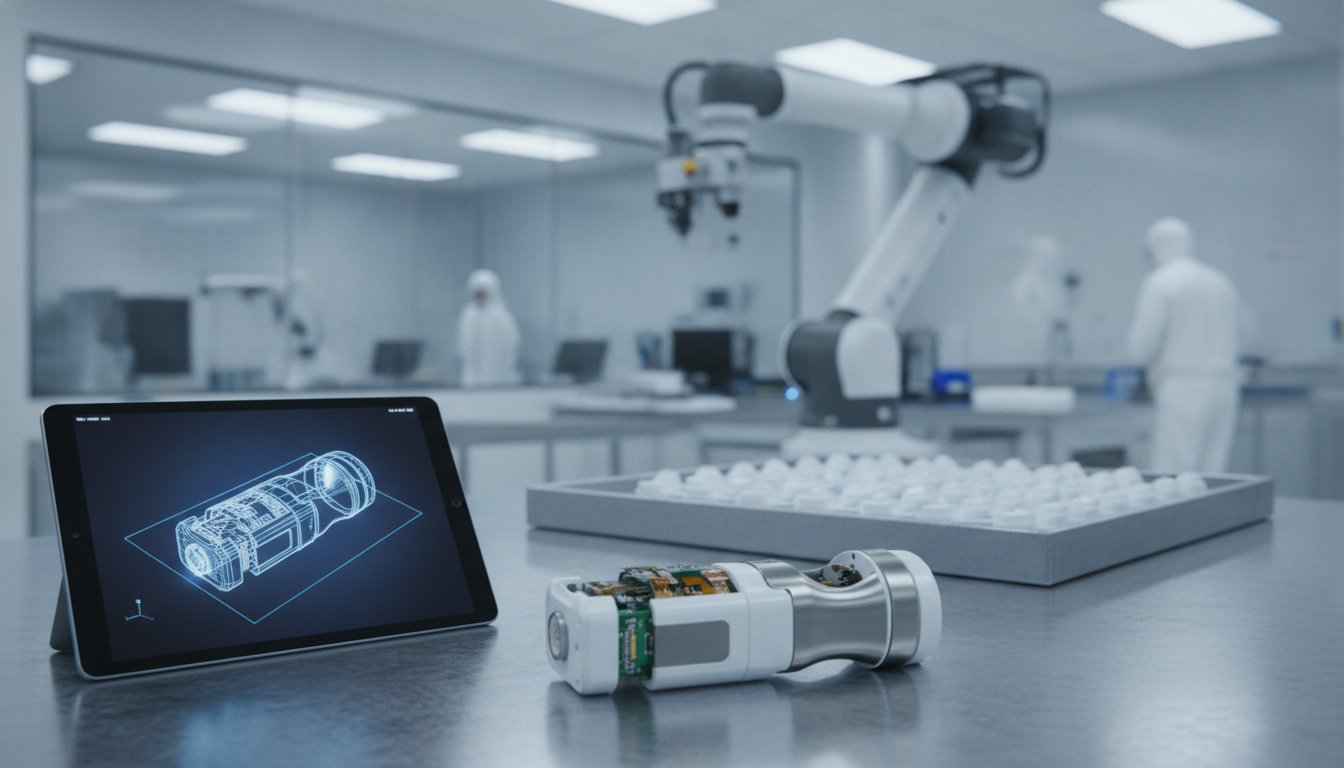
The final stage is the Pre-Production Pilot. Here, we use production-equivalent processes to validate the assembly line. This step is vital for Medical Device Prototyping because it ensures the design is actually manufacturable at scale. For teams engaged in medical device development Singapore, this pilot phase acts as the ultimate de-risking mechanism before high-volume commercialization. It allows for the refinement of assembly fixtures and the finalization of quality control protocols in a controlled environment.
Defining the Scope of Your Prototype
Before manufacturing begins, innovators must identify critical-to-quality (CTQ) features. These are the non-negotiable attributes that dictate patient safety and device efficacy. Establishing a clear ‘Success Criteria’ document is essential. It prevents scope creep and ensures the engineering team understands exactly what needs to be validated at each iteration. Whether the prototype is intended for bench testing or clinical trials, the scope must remain narrow and documented to maintain regulatory alignment throughout the development cycle.
Material Selection for Medical Grade Performance
Material choice is a primary driver of regulatory success. Every patient-contact component must meet ISO 10993 biocompatibility requirements. We evaluate how materials like Nitinol or MP35N respond to specific sterilization methods, such as EtO or Autoclave. Selecting medical-grade polymers requires a deep understanding of long-term stability and chemical resistance. A sophisticated CDMO partner provides the technical evidence needed to justify these choices in regulatory submissions, avoiding the risk of material degradation during the product’s clinical life.
Engineering & DFM Checklist: Bridging Design and Mass Production
Effective medical device development Singapore requires more than just a functional model; it demands a design that survives the transition to high-volume production. A comprehensive Design for Manufacturability (DFM) review during the Alpha phase identifies potential bottlenecks before they become embedded in the technical file. This review evaluates how design choices impact yield rates and manufacturing stability. It’s a proactive approach that prevents a fragmented development cycle where design and production remain siloed, leading to expensive late-stage modifications.
Engineers must perform a rigorous evaluation of tolerance stack-up, particularly for micro-precision components such as cardiovascular stents or robotic surgical adapters. Even minor variances in individual parts can aggregate into a system failure. By simulating these variances during prototyping, we ensure that the device remains within functional limits across thousands of production cycles. Reducing assembly complexity is another priority. Simplifying the architecture minimizes the risk of human error and lowers long-term labor costs. We also integrate smart manufacturing considerations for real-time monitoring, ensuring that later production runs can be tracked with high-resolution data for continuous quality improvement.
Optimizing for Precision Machining
Complex geometries in minimally invasive surgery (MIS) tools often require 5-axis CNC milling to maintain structural integrity. Transitioning these designs to auto-lathe or turn-mill processes can significantly enhance efficiency without compromising accuracy. Micro-precision components require specific tool-path validation during the prototyping phase to ensure that the milling process does not introduce structural stress or thermal deformation in the workpiece. This technical validation ensures that the precision achieved in the lab is repeatable on the factory floor.
Advanced Laser Processing Considerations
Laser welding is essential for creating hermetic seals in complex device assemblies. During prototyping, we determine the feasibility of 5-axis laser welding to ensure consistent weld penetration across complex join geometries. Ultrashort-pulse (USP) marking provides a solution for autoclave-stable identification, ensuring that UDI (Unique Device Identification) remains legible throughout the device’s lifespan. These laser processes must be validated during the prototyping stage to confirm they meet the rigorous standards of ISO 13485 and FDA requirements for sterile barrier integrity. For a deeper technical analysis, innovators should consult our medical device design for manufacturability guide.
Refining these engineering details early in the process is the most effective way to secure a stable product launch. Teams looking to optimize their technical approach can consult with our engineering experts to discuss specific DFM requirements for their next project.
Regulatory Alignment: Prototyping for HSA, FDA, and CE Compliance
Regulatory success is not a post-script to the design process; it’s a parallel track that must begin during the earliest iterations of medical device development Singapore. Every prototyping activity must be documented within a Quality Management System (QMS) that complies with ISO 13485 standards. This disciplined approach ensures that the Design History File (DHF) is established from the first functional prototype, providing the traceable record that regulators require for safety and efficacy validation. Without this foundational documentation, even the most innovative design will struggle to pass the rigorous audits required for market entry.
Risk management is equally critical at this stage. Integrating ISO 14971 principles and performing Process Failure Mode and Effects Analysis (PFMEA) during prototyping identifies potential hazards before they are locked into the final design. We ensure that all materials used in the prototyping phase align with the requirements for final FDA 510(k) or CE Mark submissions. Using non-compliant materials during the Alpha or Beta phases can invalidate testing data. This leads to significant delays and added costs when filing for market authorization, as testing must often be repeated with the correct medical-grade substrates. Engineering teams can benefit from understanding medical device design verification and validation principles to ensure that testing data gathered during these phases remains defensible throughout the regulatory submission process.
Classification-Specific Prototyping Needs
The intensity of validation varies significantly by device risk level. While Class A devices focus on basic safety, Class D devices require exhaustive clinical evidence and rigorous process validation. As of June 2026, the HSA’s updated GN-12-1-R3 guidance introduces stricter criteria for device grouping, making meticulous documentation even more vital for local submissions. If a device has already secured authorization in reference markets like the US or EU, we utilize abridged evaluation routes through the HSA to expedite registration. Integrating medical device manufacturing compliance into the prototyping workflow ensures that the technical documentation is ready for these specific regulatory pathways from day one.
Validation and Testing Protocols
Equipment used for prototyping must undergo Installation Qualification (IQ) and Operational Qualification (OQ) to ensure consistent performance. As we transition to pilot runs, Performance Qualification (PQ) validates that the manufacturing process can repeatedly produce devices meeting all specifications. Utilizing in-house R&D and QA labs allows for an immediate feedback loop. Test results are analyzed and design adjustments are made in real-time. This methodical validation cycle reduces the risk of non-compliance during final audits and ensures the device is ready for the rigors of mass production.
Evaluating Prototyping Services: A Partner Selection Checklist
Selecting a partner for medical device development Singapore is a strategic decision that dictates the trajectory of a product’s entire lifecycle. A basic prototyping shop might deliver a visual model, but a sophisticated CDMO provides a validated pathway to market. The primary filter for any innovator should be the partner’s Quality Management System. You must verify their ISO 13485 certification and request evidence of successful FDA and CE audits. This historical performance serves as a proxy for their ability to maintain the meticulous documentation required for a Design History File and long-term regulatory stability.
Technical depth is equally vital. Evaluate the breadth of in-house secondary processes. Partners that offer electropolishing, Diamond-Like Carbon (DLC) coating, and anodizing under one roof provide superior control over component integrity and lead times. For sterile disposables, assess their cleanroom capabilities. A Class 8 (100k) cleanroom environment is the standard for complex device assembly. Beyond fabrication, look for ‘smart’ manufacturing infrastructure. Robotic handling and real-time data dashboards aren’t just modern conveniences; they’re essential for ensuring repeatability and transparency during the scale-up process.
Assessing Technical Infrastructure
The Value of End-to-End CDMO Support
The most common failure point in medical device development Singapore occurs at the ‘wall’ between prototyping shops and mass production facilities. When these functions are separated, technical knowledge is often lost during the hand-off. An integrated partner ensures a seamless transfer of knowledge from the engineering team to the production floor. This continuity preserves the design intent and accelerates the validation process. Utilizing integrated medical device development and manufacturing significantly reduces the total cost of ownership by eliminating the need for redundant tooling and redesigns.
Establishing a relationship with an authoritative partner early in the cycle ensures that your prototype is built for the factory, not just the bench. To discuss your project’s specific technical requirements, consult with our engineering team today.
Scaling Beyond the Prototype: Transitioning to Mass Production
The transition from a validated prototype to high-volume manufacturing is the final test of a design’s integrity. Success in this phase depends on a finalized Master Validation Plan (MVP). This document consolidates performance data gathered during the Alpha and Beta stages to define a rigorous validation strategy for the production line. It ensures that every manufacturing process is stable, repeatable, and capable of meeting the strict specifications required for medical device development Singapore. Without a comprehensive MVP, innovators risk significant yield loss and regulatory friction during the scale-up process.
High-volume efficiency is achieved through the implementation of automated assembly lines and robotic loading systems. These technologies eliminate the variability inherent in manual processes, ensuring that the tenth thousandth unit is identical to the first. Sterilization coordination is another critical factor. Depending on the device’s material composition and clinical application, we coordinate Ethylene Oxide (EtO), Gamma, or Autoclave sterilization. This is paired with medical-grade packaging solutions, such as Tyvek pouches or thermoformed trays, to maintain sterile barrier integrity throughout the product’s shelf life. Leveraging a global manufacturing footprint allows for improved regional market access, ensuring that devices are produced closer to their end-users while maintaining a centralized standard of technical excellence.
Preparing for Global Distribution
Logistical efficiency is as important as manufacturing precision. We utilize Vendor Managed Inventory (VMI) to streamline the supply chain, ensuring that inventory levels are optimized based on real-time demand. A multi-site manufacturing strategy, involving facilities in Singapore, China, and Malaysia, provides the flexibility needed to scale rapidly. Our upcoming site in Johor, scheduled for Q1 2027, will further enhance this regional capacity. Maintaining consistent quality across these global hubs requires a unified Quality Management System that ensures every facility adheres to the same ISO 13485 standards and operational protocols.
Post-Market Support and Lifecycle Management
The lifecycle of a medical device extends far beyond the initial sale. For reusable instruments and MIS tools, we establish protocols for precision repair and refurbishment. This capability ensures that devices remain in peak clinical condition throughout their service life. Establishing robust feedback loops between post-market performance and the engineering team drives continuous product improvement. This data-driven approach allows for incremental refinements that enhance device efficacy and manufacturing yield over time. To begin defining these parameters for your project, contact our engineering team to start your prototyping journey.
Securing Your Path to Market-Ready Medical Innovation
Successful prototyping isn’t just about proving functionality; it’s about establishing a repeatable, scalable manufacturing process from the very first iteration. By integrating Design for Manufacturability and rigorous regulatory documentation early, innovators avoid the costly redesigns that often stall progress during the transition to mass production. This structured approach ensures that every technical decision supports long-term compliance and production stability.
Achieving excellence in medical device development Singapore requires a partner that balances cutting-edge precision with institutional experience. With over 40 years of precision engineering expertise and a commitment to ISO 13485 and FDA 510(k) compliant processes, we provide the steady hand needed to navigate complex developmental cycles. From our Class 8 cleanroom facilities for sterile assembly to our advanced R&D labs, we’re prepared to transform your concept into a validated clinical solution.
Accelerate your MedTech innovation with Fong’s Engineering & Manufacturing Private Limited prototyping expertise. We look forward to supporting your vision from initial concept through to global production.
Frequently Asked Questions
What is the typical lead time for medical device prototyping services in Singapore?
Typical lead times for medical device development Singapore vary based on project complexity. Simple mechanical components often require two to four weeks, while complex integrated assemblies requiring custom tooling or specialized laser processing can take eight to twelve weeks. These timelines include material procurement, fabrication, and initial quality inspection. A structured development plan with clear success criteria helps maintain these schedules and prevents delays during iterative refinement phases.
Does a prototype need to be made in a cleanroom?
Early-stage proof-of-concept models generally don’t require cleanroom assembly. However, high-fidelity prototypes for clinical trials or sterile disposables must be assembled in a Class 8 cleanroom to evaluate bioburden and particulate levels. This ensures that the prototype accurately reflects the final manufacturing environment. Assembly within a controlled environment is essential for validating the sterile barrier and ensuring the device meets the safety standards required for patient use.
Can I use 3D printing for my final medical device prototype?
3D printing is an excellent tool for rapid form and fit validation during the Alpha phase. It’s often insufficient for final prototypes because the mechanical properties and surface finishes of printed resins differ from production-grade polymers or metals. Final validation usually requires prototypes manufactured via CNC machining or pilot injection molding. These processes ensure the device performs exactly as it will when produced at high volumes on the factory floor.
How do I ensure my prototype is compliant with HSA regulations?
Ensuring HSA compliance requires strict adherence to the latest guidance documents, such as GN-12-1-R3. You must document every design iteration within an ISO 13485 Quality Management System to establish a robust Design History File. This traceability proves that the device was developed through a controlled, risk-based process. Engaging a partner with a deep understanding of the medical device development Singapore regulatory landscape ensures that your technical dossier meets all local submission requirements.
What documentation is required when moving from prototype to mass production?
Moving to mass production requires a comprehensive Device Master Record (DMR) and a finalized Design History File (DHF). You must also provide a Master Validation Plan (MVP) that includes completed Installation, Operational, and Performance Qualification (IQ/OQ/PQ) reports. These documents provide the technical evidence that your manufacturing process is stable and capable of producing devices that consistently meet all safety and performance specifications across high-volume runs.
Why is DFM (Design for Manufacturability) critical during the prototyping stage?
Design for Manufacturability (DFM) is critical because it bridges the gap between a benchtop model and a commercial product. It identifies potential assembly conflicts and machining limitations early in the cycle, reducing the need for expensive late-stage redesigns. By optimizing the design for specific processes like 5-axis CNC milling or laser welding, we ensure high yield rates and lower labor costs when the device enters high-volume production.
How does ISO 13485 certification affect the prototyping process?
ISO 13485 certification mandates a disciplined, risk-based approach to every stage of the prototyping process. It ensures that all materials are traceable and that every design change is formally reviewed and documented. This certification is not just a badge of quality; it’s a regulatory necessity that simplifies the transition to mass production. It provides the institutional trust required to satisfy auditors from the HSA, FDA, and other global regulatory bodies.
Can a CDMO help with the FDA 510(k) submission during prototyping?
A CDMO provides the essential technical data required for a successful FDA 510(k) submission. This includes material biocompatibility reports, process validation data, and detailed engineering specifications gathered during the prototyping stages. While the CDMO doesn’t typically act as the legal registrant, they function as a technical partner. They ensure that the Design History File contains the rigorous evidence needed to demonstrate substantial equivalence to a predicate device in the US market.