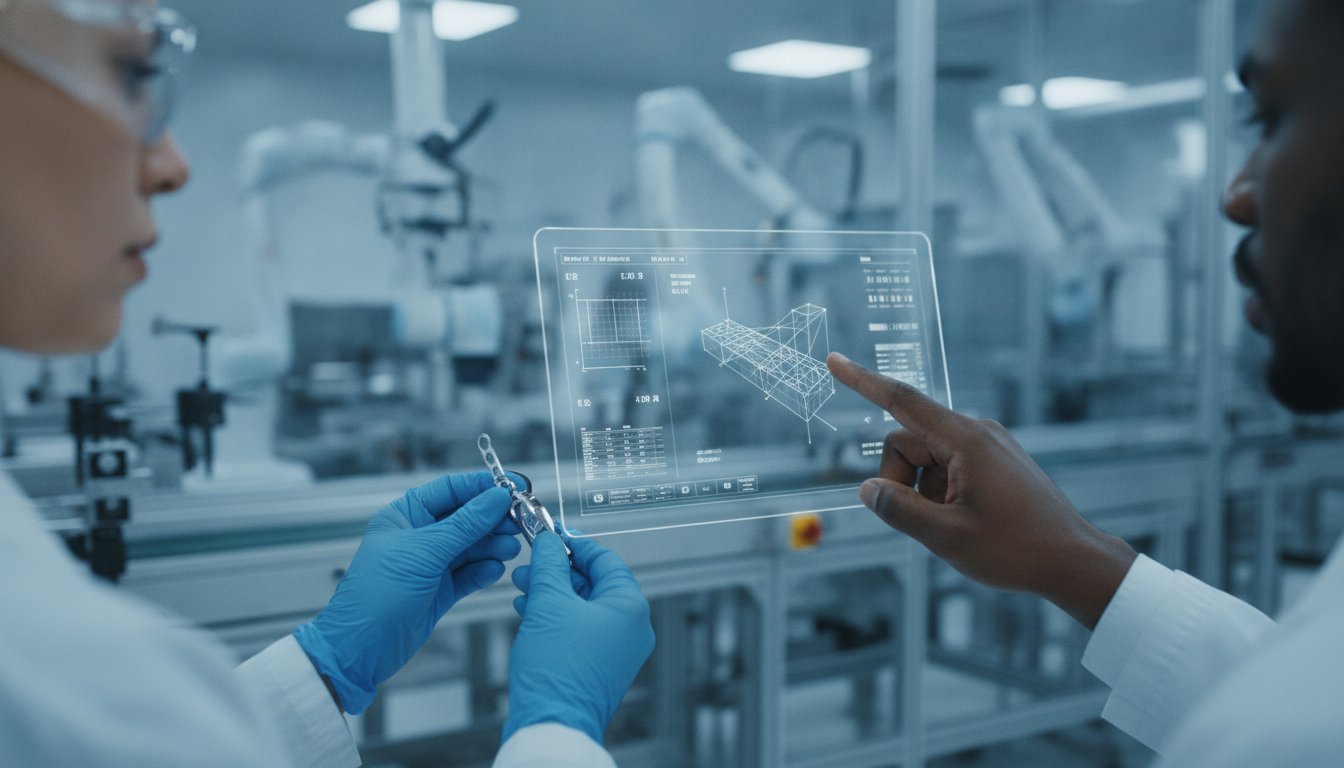
What if the manufacturing partner you choose for your initial prototype is actually the primary obstacle to your Series B funding? Many founders believe a local machine shop can handle an early pilot run, yet they often discover that a lack of regulatory rigor leads to catastrophic redesigns when transitioning to mass production. It’s a common frustration to find that the hidden costs of a poorly planned prototype can jeopardize your entire path to market. You need a partner that understands the high-stakes nature of medical manufacturing where precision is non-negotiable.
Selecting the right medical device CDMO for startups requires more than just finding a vendor with open capacity. It demands a partner that offers a steady hand through the complexities of the new FDA Quality Management System Regulation (QMSR), which harmonized U.S. requirements with ISO 13485:2016 on February 2, 2026. You deserve a collaboration rooted in technical excellence, where Design for Manufacturability (DFM) feedback is integrated early to lower your cost of goods sold and protect your intellectual property.
This guide provides a structured framework for evaluating potential partners based on their ability to scale from low-volume runs to global commercialization. We will examine how to identify CDMOs that prioritize your startup’s growth, ensuring your manufacturing process is validated for both FDA 510(k) and CE Mark requirements while maintaining the meticulous precision your innovation requires.
Key Takeaways
- Understand how a specialized medical device CDMO for startups bridges the gap between benchtop prototypes and clinical-grade production; it’s the foundation for market readiness.
- Identify the advanced micro-precision and laser processing capabilities essential for high-stakes applications in robotics and minimally invasive surgery.
- Learn why global compliance standards, including ISO 13485 and FDA 510(k), are non-negotiable for protecting your intellectual property and securing market approval.
- Discover critical selection criteria for evaluating material expertise and IP protection protocols to ensure your partner supports long-term scalability.
- Gain insights into how a steady hand partnership provides the technical mastery needed to move from initial concept to global mass production.
What is a Medical Device CDMO for Startups?
A medical device CDMO for startups is a strategic partner that integrates medical device design for manufacturability (DFM) with ISO 13485-certified production to ensure a seamless transition from concept to commercialization. While many founders view manufacturing as a final step, a true CDMO (Contract Development and Manufacturing Organization) provides an essential engineering and regulatory partnership that begins long before the first production run. It’s a technical extension of your team, designed to transform a laboratory proof-of-concept into a clinical-grade device ready for the global market.
For emerging MedTech firms, the CDMO bridges the critical gap between a benchtop prototype and a market-ready product. While a Contract Research Organization (CRO) manages the complexities of clinical trials and patient data, the CDMO focuses on the physical realization and technical validation of the device. This partnership centers on risk mitigation. It ensures that every component is manufactured repeatedly and safely at scale, adhering to the rigorous standards required for an FDA 510(k) submission or CE Mark certification.
CDMO vs. Traditional Contract Manufacturing
Traditional contract manufacturers (CMs) typically operate on a “build-to-print” model, which requires finalized engineering drawings and frozen designs to begin work. This approach often fails startups that are still refining their device. A CDMO takes an active role in the development phase, offering access to specialized R&D labs and product test facilities that most early-stage companies haven’t yet built. They don’t just follow instructions; they help create the technical documentation. Crucially, a CDMO manages the rigorous process validation steps, including Installation Qualification (IQ), Operational Qualification (OQ), and Performance Qualification (PQ), ensuring the manufacturing line itself is compliant.
The ‘Valley of Death’ in MedTech Development
The “Valley of Death” describes the phase where many startups fail because their innovative designs are too complex or expensive to mass-produce. A specialized medical device CDMO for startups prevents this by identifying manufacturing constraints early in the prototyping phase. Incorporating DFM feedback at this stage is a strategic move that often secures Series A or B funding, as it demonstrates to investors that the product is viable for commercial scale. By partnering with a full-service organization, founders can move from low-volume pilot runs to mass production without the operational risk of changing vendors. This continuity preserves institutional knowledge and significantly reduces the time-to-market.
Critical Technical Capabilities to Evaluate in 2026
Startups developing instruments for robotic surgery or minimally invasive procedures face technical challenges that standard machine shops simply can’t meet. These applications demand micro-precision and specialized material handling that only a sophisticated medical device CDMO for startups can provide. In 2026, technical evaluation must move beyond basic CNC capacity to include advanced laser processing and digitalized inspection workflows that ensure absolute consistency.
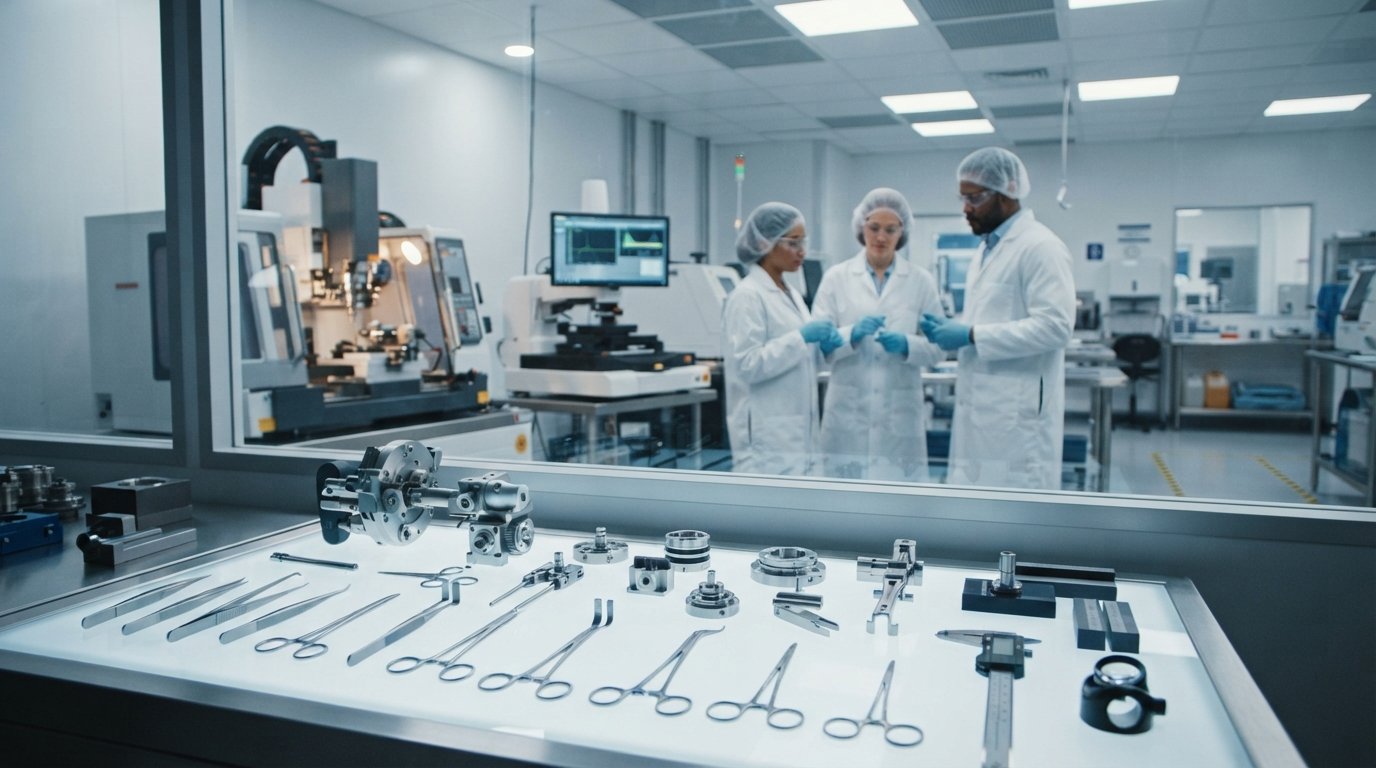
Precision is the primary differentiator. For robotic surgical adapters or cardiovascular implants, 5-axis CNC milling and auto-lathe turning are essential for achieving the complex geometries required for high-performance instruments. Beyond traditional cutting, advanced laser technologies have become a non-negotiable standard. Femto laser cutting allows for the fabrication of Nitinol stents with zero thermal damage, preserving the material’s structural integrity. Similarly, ultrashort-pulse marking provides autoclave-stable identification, ensuring that reusable tools remain traceable throughout their lifecycle without compromising corrosion resistance.
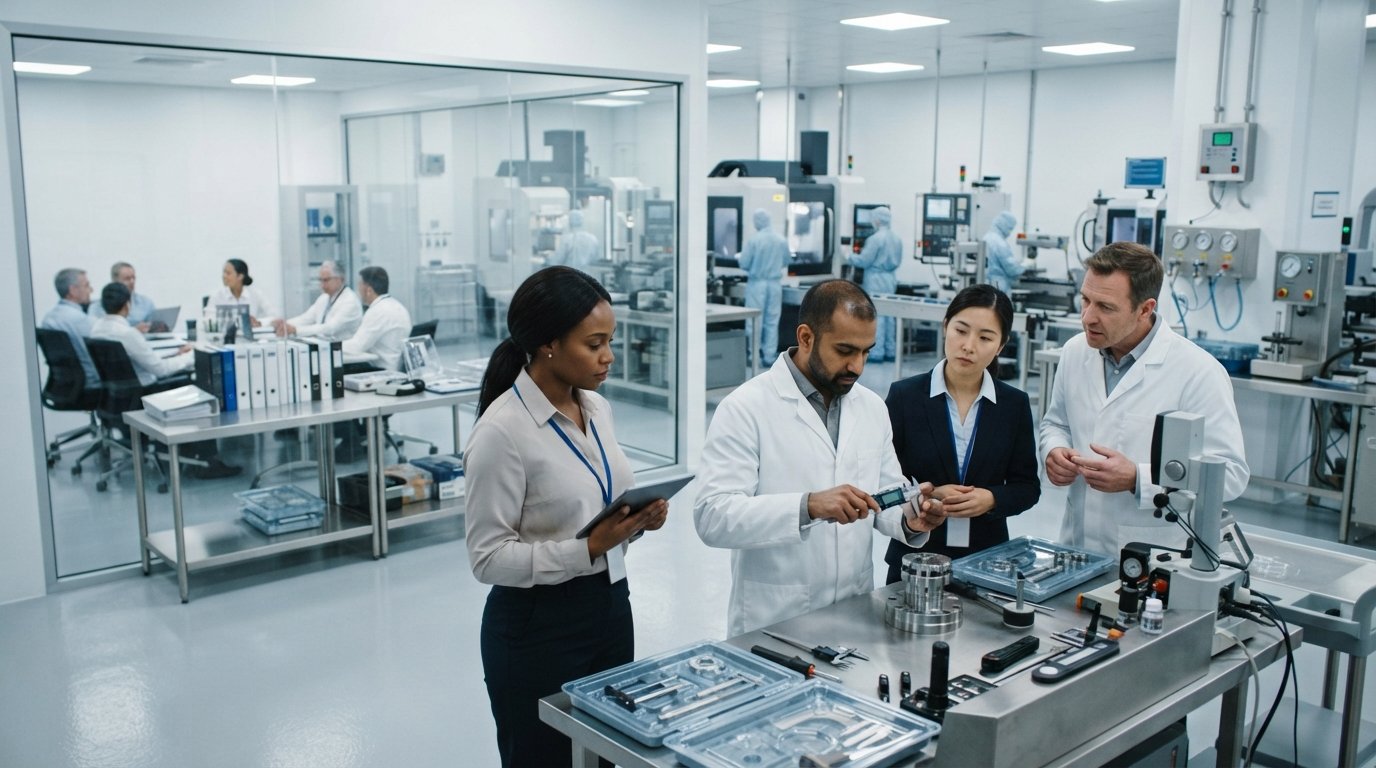
Integrating these technical capabilities within a robust quality framework is critical. The FDA’s Quality Management System Regulation (QMSR) emphasizes that technical execution must be supported by rigorous documentation and process validation. Fong’s employs 24-hour unmanned smart manufacturing lines and automated CMM inspection to minimize human error and ensure that every micro-precision component meets these exacting standards. This level of digitalization allows for real-time monitoring, which significantly improves yield and reduces the risks associated with manual assembly.
Precision Machining and Laser Technologies
Robotic-assisted surgery requires components with tolerances measured in microns. Evaluating a partner’s ability to handle complex robotic surgical adapters involves assessing their 5-axis milling capabilities and experience with medical-grade alloys. Laser processing is equally vital; 5-axis laser welding creates hermetic seals in sensitive electronic housings, while femto laser cutting is the gold standard for cardiovascular stents. These technologies ensure that the final product is both functional and biocompatible. If your project requires this level of technical mastery, consult with our engineering team to discuss your specific requirements.
Cleanroom Assembly and Sterilization Support
Assembly must occur in a controlled environment to prevent contamination. A Class 8 (100k) cleanroom serves as the baseline for both disposable and reusable device assembly. A capable medical device CDMO for startups should also manage the sterilization lifecycle, advising on compatibility with EtO, autoclave, or gamma processes. Professional packaging solutions, such as Tyvek pouches or automated blister packaging, are necessary to maintain sterility until the point of use. This end-to-end support ensures that the transition from a validated manufacturing process to a sterile, market-ready device is seamless and compliant.
The Regulatory and Quality Framework: Non-Negotiables
A startup’s intellectual property is only as valuable as the regulatory approval it can secure. Without a validated manufacturing process, even the most innovative design remains a liability rather than an asset. A sophisticated medical device CDMO for startups provides the Quality Management System (QMS) necessary to bridge this gap. This infrastructure ensures that every production step is documented, repeatable, and compliant with global standards. It acts as the steady hand that guides a founder through the complexities of international market entry.
ISO 13485 and FDA Compliance
ISO 13485 certification represents the global baseline for quality, but true excellence requires deep experience with FDA 510(k) and CE Mark requirements. It’s essential that medical device manufacturing compliance is integrated from day one. During startup audits, regulators focus heavily on the Device Master Record (DMR) and Device History Records (DHR). These documents prove that the device was manufactured according to the approved design and that every batch meets its specifications. Fong’s maintains a meticulous approach to these records, providing the transparency needed to satisfy both notified bodies and potential investors.
Validation and Traceability
The Master Validation Plan (MVP) serves as the roadmap for production stability. It utilizes the IQ/OQ/PQ framework to verify equipment and processes. Installation Qualification (IQ) confirms the machinery is installed correctly. Operational Qualification (OQ) tests the limits of the process parameters. Performance Qualification (PQ) demonstrates that the process consistently produces a compliant device under normal conditions. This rigorous validation is supported by Process Failure Mode and Effects Analysis (PFMEA), which allows the CDMO to identify and mitigate risks before they impact the production line.
Traceability is equally critical, extending from raw materials like MP35N or Nitinol to the final sterile package. Every component must be accounted for to ensure patient safety and regulatory adherence. Automated in-process testing, such as leak or voltage checks, provides objective data to support regulatory claims. This data-driven approach minimizes human error and reinforces the reliability of the manufacturing process. By choosing a medical device CDMO for startups that prioritizes these non-negotiables, founders protect their innovation and accelerate their path to global commercialization.
Selection Criteria: Buying Guide for Startup Founders
Selecting a medical device CDMO for startups is a decision that impacts the total cost of ownership rather than just the initial unit price. Founders must evaluate a partner’s ability to scale logically alongside their funding rounds. A partner that can handle a 100-unit pilot run for clinical trials while possessing the infrastructure for a 100,000-unit mass production contract prevents the need for a costly mid-lifecycle vendor migration. This scalability must be balanced with absolute IP protection. Ensure your contract guarantees strict confidentiality and clear ownership of any manufacturing improvements developed during the refinement phase.
Direct communication and technical transparency are equally vital. A dedicated project manager and immediate access to engineering support are essential for maintaining development velocity. This collaborative environment ensures that technical hurdles are addressed during the prototyping phase, preventing the delays that often plague fragmented supply chains. When your CDMO acts as an extension of your own engineering team, the path to commercialization becomes significantly more predictable.
Material Expertise and Secondary Processes
Startups developing micro precision medical components require a partner with deep expertise in specialized materials like Nitinol, PEEK, and medical-grade stainless steel. Handling these materials requires specific thermal and mechanical knowledge to maintain biocompatibility and structural integrity. Choosing a one-stop partner that offers in-house secondary processes like anodizing, electropolishing, and Diamond-Like Carbon (DLC) coating significantly reduces lead times. By eliminating the need for external vendors for finishing work, you maintain a tighter chain of custody and ensure consistent quality across every batch.
The Lifecycle of Reusable Devices
For startups developing reusable surgical tools, the manufacturing phase is only the beginning. Repair and refurbishment services represent a critical revenue stream and a way to increase the total value of your product line over time. A strategic partner should provide end-to-end support for the device’s entire lifecycle. Evaluate whether the CDMO possesses robust repair and refurbishment capabilities. A US-based repair center, such as Fong’s facility in Irvine, CA, offers a significant advantage for your national after-sales strategy. This localized support allows for faster turnaround times and validated reprocessing protocols for surgical endoscopes and MIS tools, ensuring they remain safe and functional for the long term.
If you’re ready to secure a partner that scales with your ambition, contact our engineering team to review your project specifications and technical requirements.
Partnering with Fong’s: From Concept to Mass Production
Fong’s (FSP Group) provides a unique “Steady Hand” partnership for emerging MedTech firms. This relationship is built on over 40 years of precision engineering expertise, offering the stability required to navigate complex developmental cycles. We provide end-to-end medical device contract manufacturing services that scale seamlessly as your business grows. Our global footprint includes established operations in Singapore and an upcoming facility in Malaysia, opening in Q1 2027. This geographic diversity allows startups to optimize logistics and maintain a competitive cost structure while accessing world-class engineering talent across the Asia-Pacific region.
Choosing a medical device CDMO for startups involves finding a partner that understands the high-stakes nature of the industry. We prioritize technical evidence and adherence to global standards over marketing hype. Our role is to act as a sophisticated problem-solver, ensuring that your innovation is supported by a disciplined and well-documented manufacturing process. By integrating our long-standing expertise with your visionary concepts, we create a path to market that is both reliable and technically excellent.
Smart Manufacturing for Startup Agility
Smart manufacturing is the cornerstone of our operational efficiency. We utilize 24-hour unmanned production lines that maintain rigorous quality standards while significantly lowering the overhead costs typically passed on to startups. These automated systems include robotic loading and unloading, alongside automated packaging, to ensure consistent, high-yield results. Real-time dashboards provide absolute transparency into your production status. Founders can monitor their project’s progress with the same level of detail as their own internal teams. This level of digitalization is a critical advantage for any medical device CDMO for startups, as it replaces manual variability with data-driven precision and predictability.
Collaborative Engineering and R&D
Successful commercialization requires more than just production capacity. It demands a partner that can refine a design during the high-stakes prototyping phase to ensure it is ready for mass production. Fong’s provides startups with direct access to our advanced R&D and QA labs. Here, our engineers collaborate with your team to solve complex assembly challenges, from intricate robotic surgical adapters to delicate cardiovascular stents. We specialize in the transformation of ambitious concepts into validated, market-ready realities. Our focus remains on technical mastery, ensuring your device is ready for the rigors of clinical use and regulatory scrutiny. Ready to scale? Contact our team at Sam.lim@fongspl.com.sg to discuss your project requirements.
Accelerating Your Journey from Prototype to Market
Successfully launching a medical device requires a seamless transition from visionary design to a disciplined, validated manufacturing process. You’ve learned that a partnership built on technical mastery, such as advanced femto laser processing and smart manufacturing, is essential for achieving the precision required in modern robotics and MIS tools. Selecting a medical device CDMO for startups isn’t just a procurement choice; it’s a strategic move to secure your regulatory path and protect your intellectual property. Your partner must provide the stability needed to navigate complex developmental cycles without compromising on quality.
Fong’s brings 40+ years of precision engineering expertise to your project, ensuring your device meets ISO 13485 and FDA 510(k) standards from the very first pilot run. Our global footprint and localized US support provide the infrastructure you need to scale with confidence as your funding rounds progress. We specialize in the transformation of ambitious concepts into clinical-grade realities.
Partner with a Global Leader in Medical Device CDMO; Contact Fong’s Today to begin your technical transformation. Your innovation represents the future of healthcare, and it deserves the reliability of a steady hand to reach its full potential.
Frequently Asked Questions
What should a startup look for in a first-time CDMO contract?
A startup should prioritize clear intellectual property (IP) ownership and transparent scalability milestones in their first contract. It’s essential to define who owns manufacturing improvements and how the transition from pilot runs to mass production is handled. The contract must also specify the scope of engineering support and regulatory documentation. Establishing these parameters early prevents legal ambiguity and ensures the partner can scale alongside your funding rounds.
How does a CDMO handle intellectual property (IP) for medical device startups?
A reputable medical device CDMO for startups handles IP through strict non-disclosure agreements and explicit contractual language regarding ownership. While the startup typically owns the device design, the CDMO may contribute to manufacturing process improvements. Clear contracts should state that any refinement made to facilitate production remains the startup’s property. This protection is vital for maintaining company valuation during future investment audits or potential acquisitions by larger entities.
Is it better for a startup to use a low-volume or a full-service CDMO?
Full-service CDMOs are generally superior for startups because they provide continuity from prototyping to global commercialization. While a low-volume shop might offer lower initial costs, they often lack the ISO 13485 and FDA 510(k) infrastructure required for market approval. A full-service partner like Fong’s integrates Design for Manufacturability (DFM) early, which prevents the costly need to switch vendors when production volumes eventually increase.
What are the typical lead times for medical device prototyping at a CDMO?
Lead times for medical device prototyping vary based on complexity, typically ranging from 4 to 12 weeks for clinical-grade components. Simple mechanical parts move faster, while complex assemblies involving femto laser cutting or 5-axis machining require more rigorous validation. A disciplined CDMO provides a detailed project timeline that includes material procurement, fabrication, and initial quality testing. This structured approach ensures that prototypes meet the exact specifications required for early testing.
How does a CDMO support the FDA 510(k) submission process?
A CDMO supports the FDA 510(k) process by providing the necessary technical documentation and validation data. This includes the creation of a comprehensive Device Master Record (DMR) and individual Device History Records (DHR) for every batch produced. By executing rigorous IQ/OQ/PQ protocols, the CDMO proves that the manufacturing process is stable and repeatable. This technical evidence is a critical component of the regulatory submission that demonstrates safety and substantial equivalence.
Can a CDMO help a startup reduce the cost of goods sold (COGS) through DFM?
Yes, a CDMO reduces COGS by applying Design for Manufacturability (DFM) principles during the earliest development stages. Engineers identify opportunities to simplify complex assemblies, select cost-effective medical-grade materials, and reduce machining time. These refinements lower labor costs and minimize material waste without compromising device performance. By optimizing the production process before mass manufacturing begins, startups can significantly improve their long-term profit margins and market competitiveness.
What certifications are essential for a medical device manufacturing partner?
ISO 13485:2016 is the foundational certification for any medical device manufacturing partner, as it establishes the international standard for quality management systems. Additionally, the partner should be registered with the FDA and demonstrate a clear understanding of the new Quality Management System Regulation (QMSR). For startups targeting European markets, evidence of CE Mark compliance and experience with the EU MDR is equally essential. These certifications ensure the partner maintains rigorous standards.
Does Fong’s offer support for disposable surgical staplers and implants?
Fong’s provides extensive manufacturing support for disposable surgical staplers, cardiovascular stents, and various minimally invasive surgery (MIS) implants. Our facilities utilize advanced laser technologies and Class 8 cleanrooms for the precise assembly and packaging of these critical devices. We specialize in high-precision micro-components that require absolute consistency across large production volumes. This technical capability makes Fong’s a reliable medical device CDMO for startups developing sophisticated surgical instruments and implantable technology.