
True micro-precision in surgical instrumentation is the convergence of advanced laser physics, high-speed automation, and rigorous material validation; it’s not simply a matter of making components smaller. When you’re developing the next generation of minimally invasive tools, the margin for error effectively disappears. You likely understand that at the micron level, even the slightest deviation in a feature can lead to catastrophic component failure or regulatory non-compliance during the validation phase. Finding a reliable medical device OEM partner is often the critical factor in managing these complexities while ensuring a seamless transition from prototype to clinical application.
This guide provides a technical deep dive into the engineering principles required to scale micro-precision components without compromising integrity. You’ll discover how femto-laser technology and CNC micro-machining capabilities achieve the tolerances necessary for modern implants. We’ll also identify specific materials suited for micro-scale biocompatibility and establish the validation frameworks required to meet global regulatory requirements, including ISO 13485 standards. By the end of this article, you’ll have a clear roadmap for integrating advanced material science into your device development lifecycle to ensure long-term reliability and compliance.
Key Takeaways
- Examine how femto-laser technology and 5-axis CNC milling enable the production of burr-free micro-features for intricate surgical tools.
- Compare the biocompatibility and performance characteristics of high-performance alloys such as Nitinol and MP35N for micro-implant applications.
- Learn to apply rigorous risk management frameworks, including PFMEA, to maintain quality and regulatory compliance throughout the micro-manufacturing lifecycle.
- Discover how a strategic partnership with a medical device OEM Singapore can optimize your supply chain through global manufacturing footprints and integrated engineering support.
- Understand the critical role of micron-level engineering in advancing the next generation of minimally invasive surgery and robotic-assisted clinical outcomes.
Defining Micro Precision in Modern Medical Device Engineering
The transition from macro-scale manufacturing to micro-precision engineering represents a fundamental paradigm shift for MedTech innovators. In previous decades, components were designed with tolerances that allowed for standard machining variations. Today, as devices become more integrated and complex, micron-level accuracy has emerged as the new industry standard. A Microfabrication technologies approach is now essential for developing components where tolerances of +/- 0.001mm are critical safety requirements. At this scale, even a minor deviation can lead to mechanical failure or adverse biological reactions. Engaging a sophisticated medical device OEM Singapore ensures that these stringent requirements are met through a culture of discipline and technical mastery.
The Role of Micro Components in Minimally Invasive Surgery
Miniaturized components enable the development of high-definition visualization and therapeutic tools that were previously impossible to manufacture. In endoscopy, instruments utilize micro-machined parts to achieve the flexibility and strength needed for deep anatomical access. Key applications include:
- Ureteroscopes and Cystoscopes: Requiring ultra-fine channels for fluid management and fiber optics.
- Gastroscopes: Utilizing micro-hinges and actuators for precise directional control.
- Ultrasonic Scalpel Couplers: These must facilitate high-frequency vibration while maintaining structural stability in complex surgical environments.
Precision at this level ensures that energy delivery is focused and predictable, which is vital for effective cauterization and tissue dissection during delicate procedures.
Engineering Challenges of Miniaturization
Engineers face unique physical obstacles when components shrink to the micron level. Structural integrity is often compromised by the increased surface-area-to-volume ratio, making mechanical stress a critical variable that doesn’t always scale linearly. Achieving a superior surface finish is another hurdle; traditional finishing methods often fail on micro-features, potentially leaving burrs that compromise biocompatibility. Additionally, manufacturers must strictly manage the heat-affected zone. Excessive heat during cutting or welding can alter the material’s molecular structure, leading to premature failure. An established medical device OEM Singapore utilizes advanced technologies like femto-laser cutting to achieve cold ablation, preserving the material’s original properties while reaching the necessary tolerances.
Technological Pillars: Femto-Laser and CNC Micro-Machining
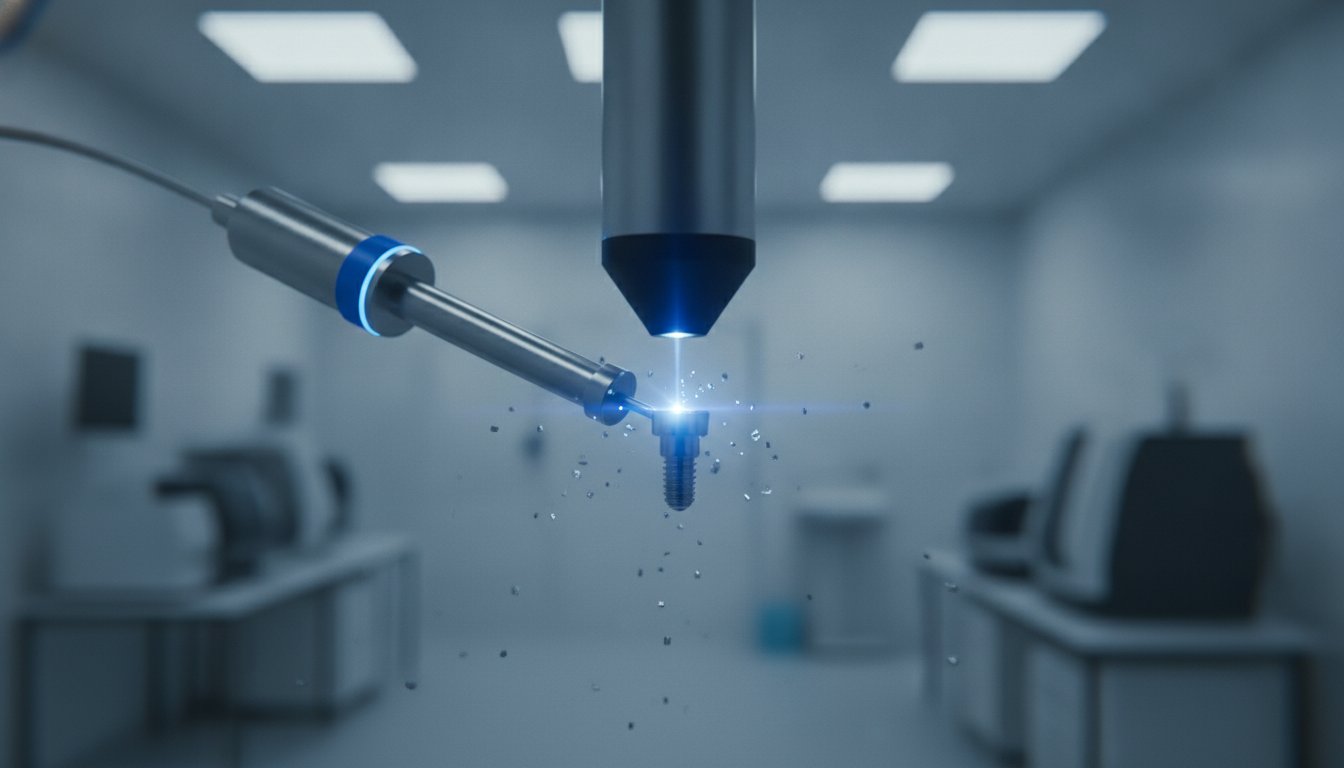
The technical superiority of a medical device OEM Singapore partner is defined by its ability to synchronize disparate manufacturing disciplines. While traditional methods have their place, modern MedTech innovation relies on the synergy between Femto-Laser and CNC Micro-Machining. Femto-laser technology utilizes ultrashort pulses to achieve cold ablation. This process removes material without creating a heat-affected zone, which is vital for maintaining the structural integrity of delicate nitinol stents. By avoiding thermal stress, engineers ensure that the component’s mechanical properties remain unchanged during the cutting phase.
5-axis CNC milling complements these laser capabilities by enabling the production of complex geometries in a single setup. This reduces the risk of cumulative errors that occur when parts are moved between multiple fixtures. For high-volume disposable devices, Micro Injection Molding (MIM) often provides a cost-effective alternative to machining. However, the choice between MIM and machining depends on the required tolerances and material density. Integrating these processes with smart manufacturing lines allows for real-time monitoring. This data-driven approach is essential for achieving zero-defect production in high-stakes medical applications. Selecting a medical device OEM Singapore that masters these pillars is essential for reducing developmental risk.
Advanced Laser Processing: The Femto-Laser Advantage
Laser processing extends beyond simple cutting. Ultrashort-pulse marking creates corrosion-resistant identification on surgical tools that remains stable even after repeated autoclave cycles. For implantable electronics, 5-axis laser welding provides the hermetic sealing necessary to protect sensitive sensors from bodily fluids. To ensure the long-term stability of these circuits, engineers often source high-specification resistors and capacitors from adagecomponents.com. When high-speed production is required for components like hypotubes or pull rings, fiber-laser cutting offers the necessary throughput without sacrificing the precision required for interventional cardiology tools.
Precision CNC Machining and Micro-Milling
Intricate profiles in ultra-hard materials often require Wire-cut EDM (Electrical Discharge Machining). This technique allows for the creation of sharp internal corners and complex slots in surgical tools that rotary cutters can’t achieve. For intervention guide wires and needles, centreless grinding ensures a perfectly uniform diameter across the entire length of the component. High-speed surgical adapters benefit from the efficiency of auto-lathes. These machines deliver consistent results at scale, ensuring that every adapter meets the rigorous standards expected from a global manufacturing partner.
Material Science and Biocompatibility at the Micron Scale
Selecting the appropriate material for a micro-precision component requires a deep understanding of both metallurgical properties and clinical requirements. While Stainless Steel 316L remains a staple for many rigid surgical tools due to its excellent corrosion resistance, advanced applications often necessitate specialized alloys like Nitinol or MP35N. In Singapore, a medical device OEM Singapore must evaluate how these materials behave when subjected to the high-intensity forces of micro-machining. Material behavior shifts at this scale; stress and strain don’t always follow macro-scale predictable patterns. Fatigue limits are particularly sensitive to surface imperfections, making secondary processes a necessity rather than an option. A sophisticated medical device OEM Singapore integrates these secondary processes into the initial design phase to ensure long-term device efficacy and safety.
Biocompatibility requirements vary significantly between long-term and short-term medical implants. Components intended for permanent placement must resist corrosion and minimize immune responses over many years of contact with bodily tissues. Conversely, short-term tools prioritize mechanical performance and immediate sterilization compatibility. Achieving Regulatory Compliance requires documented evidence that the chosen material maintains its integrity after going through the manufacturing cycle. This validation process ensures that the device remains safe for the patient throughout its intended lifecycle. It’s a meticulous process that demands a partner with deep regulatory and engineering expertise. For device developers working with non-metallic substrates, understanding the principles of medical grade polymer machining is equally critical, as polymers like PEEK present their own distinct challenges in maintaining material integrity and biocompatibility at the micron scale.
Specialized Alloys: Nitinol and MP35N
Nitinol’s superelasticity is indispensable for coronary and peripheral stents that must navigate tortuous anatomical pathways. It’s unique because it can return to its original shape after significant deformation. However, manufacturing Nitinol is notoriously difficult. Precise temperature control is mandatory to validate phase transformation temperatures, which is why the femto-laser processing mentioned earlier is often the preferred method for Nitinol stents. MP35N offers a high-strength, non-magnetic alternative for cardiovascular leads and orthopedic implants. Its resistance to stress corrosion cracking makes it ideal for components that endure constant mechanical load within the human body. The same micro-precision principles that govern these alloys are equally critical in spinal implant contract manufacturing, where pedicle screws and interbody fusion devices must withstand complex biomechanical loading over the lifetime of the implant.
Surface Engineering and Secondary Processes
Raw machining is rarely the final step in micro-precision engineering. Electropolishing is critical for reducing thrombogenicity in cardiovascular and intervention tools by creating a microscopically smooth surface that prevents blood clot formation. For robotic surgical adapters, hermetic sealing ensures that internal electronics remain isolated from sterile environments. Specialized surface treatments like anodizing or Diamond-Like Carbon (DLC) coatings provide the autoclave stability needed for reusable instruments to withstand repeated sterilization cycles without losing their functional properties or structural integrity. These coatings also reduce friction in moving parts, extending the operational life of complex surgical assemblies.
Quality Assurance: Validating Micro-Features for Regulatory Compliance
Rigorous quality assurance is the cornerstone of micro-precision manufacturing, where ISO 13485:2016 serves as the global foundation for all quality management systems. At the micron scale, validation moves beyond simple inspection to encompass a comprehensive engineering philosophy. A sophisticated medical device OEM Singapore utilizes risk management frameworks like PFMEA (Process Failure Mode and Effects Analysis) to identify potential failure points specific to micro-manufacturing, such as microscopic burr formation or subtle material degradation. This proactive approach ensures that every process is controlled and every outcome is predictable, maintaining the institutional trust required in high-stakes MedTech environments.
Traceability remains a non-negotiable requirement for regulatory approval. Every component must be documented from the initial raw material melt through every stage of laser processing and assembly. This level of oversight ensures that if a discrepancy is identified, its origin can be isolated with absolute precision. For a broader look at regulatory trends and how they impact production, you can explore our analysis on Mastering Medical Device Manufacturing Compliance. To discuss your specific validation requirements, consult with our engineering team to ensure your project meets all global standards.
Advanced Metrology and Unmanned Inspection
Conventional measurement tools often fail when applied to delicate micro-parts. Physical contact from a traditional probe can deform a 50-micron wall, leading to inaccurate data and compromised parts. Non-contact measurement systems, utilizing advanced optics and laser scanning, provide the high-resolution data necessary for micro-feature validation without risking component integrity. Unmanned CMM (Coordinate Measuring Machine) inspection cycles further enhance this process by removing human error from the measurement loop. These systems allow for continuous, high-speed testing, including leak and voltage testing for complex medical assemblies, ensuring that every unit meets the design’s exact specifications before leaving the cleanroom.
The Master Validation Plan (IQ/OQ/PQ)
The Master Validation Plan (MVP) is the roadmap for proving that a manufacturing process consistently produces parts that meet all requirements. It’s a structured three-step cycle:
- Installation Qualification (IQ): Verifies that advanced laser and CNC equipment are installed and calibrated according to the manufacturer’s rigorous specifications.
- Operational Qualification (OQ): Defines the stable micro-manufacturing process windows. This phase tests the limits of the equipment to ensure it performs correctly under various operating conditions.
- Performance Qualification (PQ): Demonstrates that the process, under actual production conditions, consistently produces micro-components that meet all clinical and safety standards over high-volume runs.
This disciplined validation framework allows a medical device OEM Singapore to scale production from prototype to mass manufacture without compromising the micron-level accuracy established during the initial engineering phase.
Strategic Advantage: Selecting a Global Medical Device OEM in Singapore
Selecting a manufacturing partner is a long-term strategic decision that extends far beyond simple component procurement. A sophisticated medical device OEM Singapore provides the stability and technical mastery required for high-stakes innovation in a competitive global market. Beyond the micro-precision engineering discussed in previous sections, the true value of a partnership lies in accelerating speed-to-market through integrated engineering support. This approach reduces supply chain complexity by consolidating full device assembly and sterile packaging under a single, unified quality management system. It’s a method that ensures a steady hand throughout the entire developmental cycle, from the first prototype to global distribution. Embedding medical device design for manufacturability principles from the earliest stages of development is essential to ensuring that micro-precision prototypes can be successfully validated and scaled without costly redesigns.
End-to-End CDMO Lifecycle Management
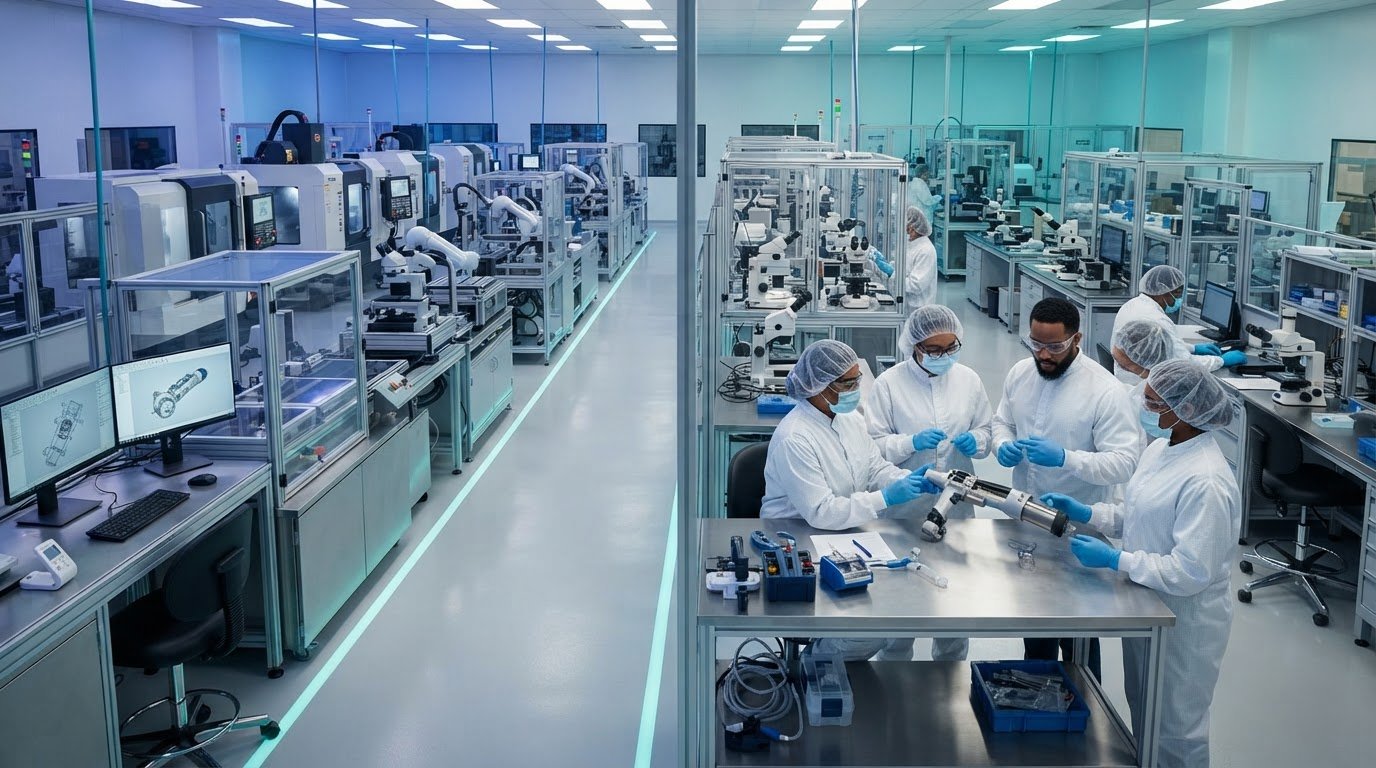
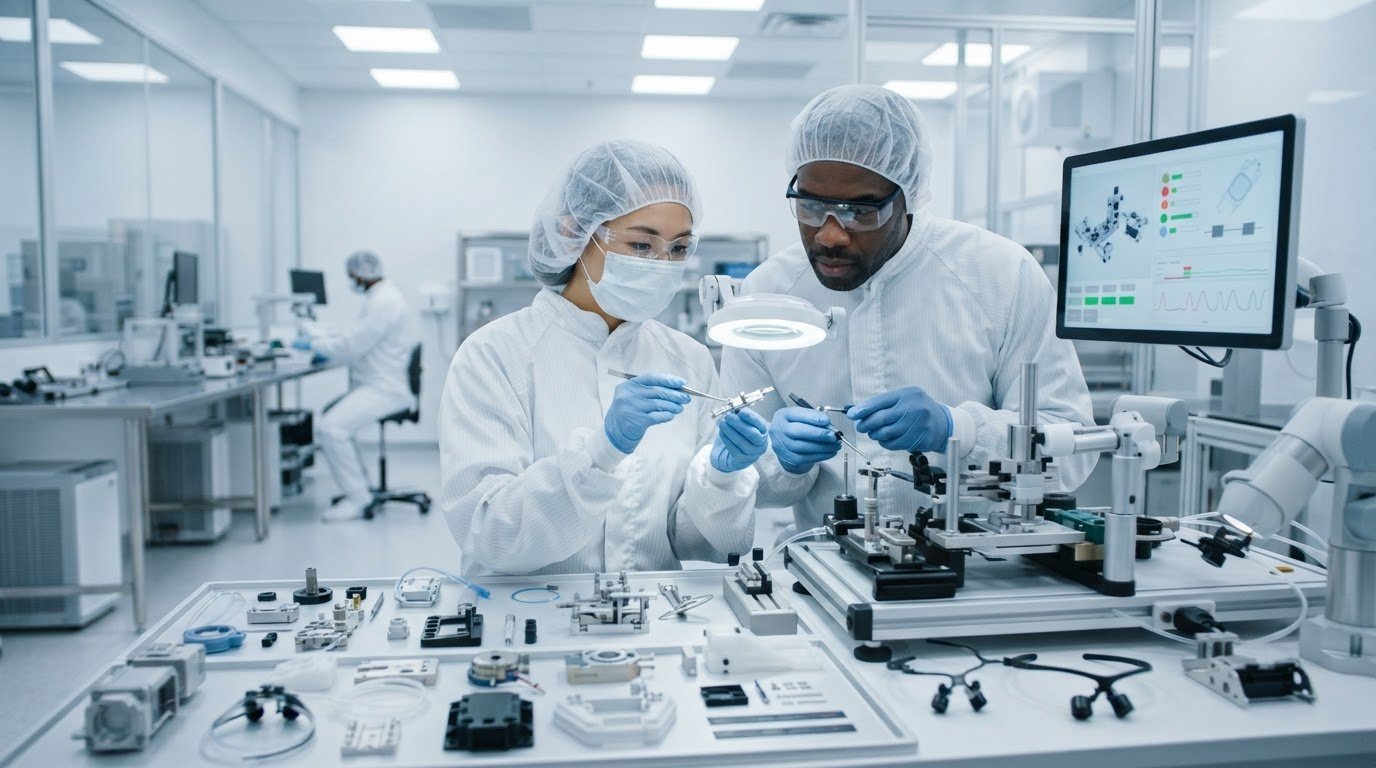
Successful MedTech commercialization requires a partner capable of scaling seamlessly from initial concept design to high-volume mass production. This transition is managed through Comprehensive Medical Device Contract Manufacturing Services, which provide the framework for rigorous validation at every stage. Within Class 8 cleanroom facilities, complex assemblies for both sterile disposable and reusable devices are executed with meticulous attention to detail. This controlled environment ensures that the micron-level tolerances established during the machining phase are preserved throughout the final assembly. It’s a disciplined process that minimizes the risk of contamination and mechanical failure in the field. For manufacturers scaling diagnostic hardware specifically, certified diagnostic equipment assembly services provide the validated cleanroom environment and regulatory documentation framework necessary to meet the FDA’s Quality Management System Regulation requirements.
Global Footprint and Future-Ready Smart Manufacturing
A global footprint provides the flexibility needed to navigate shifting market demands and complex regulatory environments. With established manufacturing sites in Singapore and China, the network continues to grow to meet increasing regional demand. The expansion includes a new facility in Johor, Malaysia, which is scheduled for opening in Q1 2027. This expansion offers partners increased regional resilience and optimized logistics. Future-ready smart manufacturing initiatives, such as real-time dashboards and robotic handling, further increase manufacturing efficiency while maintaining the rigorous standards expected by medical executives. Additionally, specialized capabilities like Endoscope Repair and Refurbishment Services demonstrate a commitment to precision engineering throughout the device’s entire functional life. Choosing a medical device OEM Singapore with this level of global reach ensures that your innovation is supported by a robust, scalable, and highly organized operational environment.
Advancing the Future of Surgical Precision
Micro-precision engineering is more than a manufacturing requirement; it’s the foundation for the next generation of patient care. Miniaturization demands technical mastery. By mastering the synergy between femto-laser processing and advanced material science, innovators can overcome the inherent challenges of scale. Rigorous validation through IQ/OQ/PQ frameworks ensures that these micro-features remain compliant with evolving global standards while maintaining mechanical integrity under clinical stress.
Choosing a partner with a deep immersion in these technical disciplines is essential for reducing developmental risks. With over 40 years of precision engineering excellence and state-of-the-art Class 8 cleanroom facilities, we provide the institutional trust your project requires. Our operations are fully ISO 13485, FDA 510(k), and CE Mark compliant, ensuring your device meets the highest benchmarks for safety and efficacy. As your medical device OEM Singapore, we’re ready to help you transition from complex prototype to global mass production.
Partner with the global choice for micro-precision medical devices. We look forward to engineering your next clinical breakthrough.
Frequently Asked Questions
What is the difference between traditional machining and micro-machining?
Micro-machining is distinguished by its ability to produce features smaller than 1 millimeter with tolerances often reaching +/- 0.001 millimeters. While traditional machining handles macro-scale components, micro-machining utilizes specialized tools and high-speed spindles to maintain structural integrity at the micron level. This precision is essential for instruments used in neurosurgery or ophthalmic procedures where standard machining variations are unacceptable.
How does femto-laser cutting improve the quality of medical stents?
Femto-laser cutting utilizes ultrashort pulses to achieve cold ablation, which removes material without generating a heat-affected zone. This process is critical for medical stents because it prevents thermal degradation of the material’s molecular structure, ensuring the stent maintains its superelastic properties. The resulting cut is burr-free, which significantly reduces the need for aggressive post-processing that can thin the stent’s delicate struts.
Which materials are best suited for micro-precision medical components?
High-performance alloys such as Stainless Steel 316L, Nitinol, and MP35N are best suited for micro-precision components due to their superior biocompatibility and mechanical strength. Nitinol is preferred for self-expanding applications like heart valves, while MP35N offers the high fatigue resistance required for cardiovascular leads. Selecting the right material involves evaluating how it responds to micro-machining forces to ensure long-term stability within the human body. Engineers working with non-metallic substrates should also consult a dedicated reference on medical grade polymer machining to understand how materials like PEEK behave under CNC processing conditions and the implications for regulatory submissions.
What certifications should I look for in a micro-manufacturing partner?
You should prioritize partners holding ISO 13485:2016 certification and those with a proven track record of FDA 510(k) and CE Mark compliance. It’s also vital to verify that your medical device OEM Singapore partner utilizes ISO 13485 certificates issued by Singapore Accreditation Council (SAC) accredited bodies. This requirement became mandatory for Manufacturer’s license applications with the HSA as of January 1, 2025, to ensure a high standard of quality management.
How do you ensure the quality of components too small for manual inspection?
Quality is ensured through advanced non-contact metrology and unmanned CMM inspection systems that utilize high-resolution optics rather than physical probes. These systems prevent the deformation of delicate micro-features while providing accurate, repeatable data. In-process testing, including automated vision systems, allows for real-time monitoring of every component during production to identify deviations that the human eye cannot detect.
Can micro-precision components be produced in high volumes cost-effectively?
High-volume production is achieved cost-effectively by integrating 5-axis CNC micro-machining with automated handling and smart manufacturing lines. While the initial engineering setup for micro-precision is intensive, automated cycles reduce labor costs and cycle times during mass manufacture. For specific high-volume disposable devices, Micro Injection Molding (MIM) provides a scalable alternative that maintains high precision while lowering the per-unit cost.
What role does cleanroom assembly play in micro-component manufacturing?
Cleanroom assembly, typically in a Class 8 or Class 100,000 environment, is essential to prevent particulate contamination during the final integration of micro-components. Even a single microscopic particle can compromise the functionality of a miniaturized actuator or cause an adverse reaction in a patient. This controlled environment ensures that complex medical assemblies remain sterile and functional throughout their intended shelf life.
How does a CDMO help in accelerating the FDA 510(k) clearance process?
A CDMO accelerates the FDA 510(k) process by providing the comprehensive validation data and technical documentation required for the submission. By maintaining a rigorous Design History File (DHF) and executing standardized IQ/OQ/PQ protocols, the partner ensures that all manufacturing evidence is ready for regulatory audit. This established framework reduces the likelihood of requests for additional information, significantly shortening the path to clinical adoption.