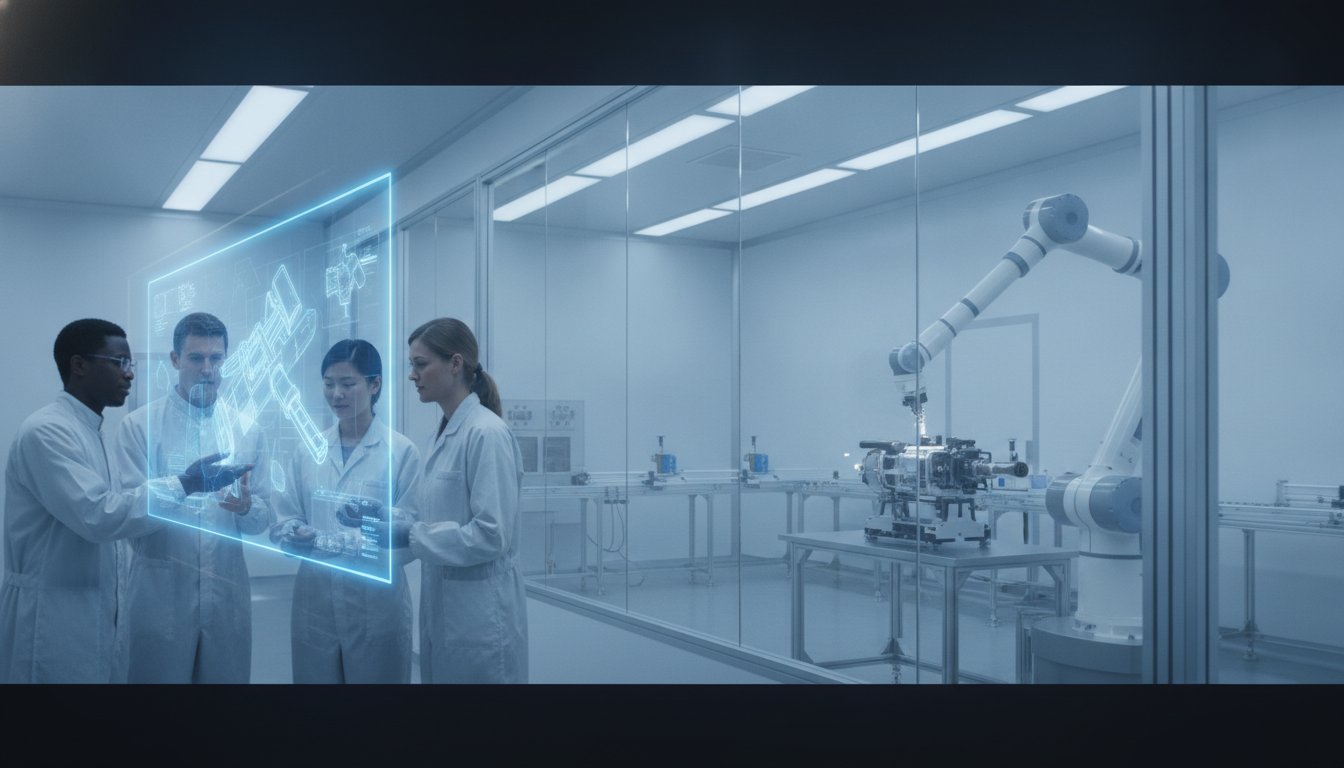
The traditional multi-vendor model for medical device development is no longer a viable strategy for companies aiming to lead the market in 2026. You likely recognize the inherent friction in managing separate design houses, micro-precision component suppliers, and assembly partners. These silos often lead to fragmented quality documentation and communication breakdowns that stall critical projects during the validation phase, especially as FDA 510(k) decision times now average 156 days. Relying on a fractured supply chain creates a hidden tax on innovation that most organizations can no longer afford to pay.
Consolidating these functions provides a decisive competitive advantage. By understanding the strategic benefits of a single-source medical device CDMO, you can eliminate the inefficiencies of vendor handoffs and streamline your path to commercialization. This article explores how a unified approach integrates complex device assembly with a singular Quality Management System to accelerate your transition from prototype to mass production. We will examine how centralizing your lifecycle management ensures compliance with the new FDA Quality Management System Regulation (QMSR) and reduces the total cost of ownership through logistical efficiency.
Key Takeaways
- Consolidating the product lifecycle under one Quality Management System eliminates the fragmented communication and “handoff tax” inherent in multi-vendor models.
- Realize the benefits of a single-source medical device CDMO through accelerated time-to-market, achieved by integrating R&D engineers directly with mass production specialists.
- A unified QMS ensures rigorous regulatory synergy, streamlining the Master Validation Plan and documentation required for compliance with the 2026 FDA QMSR.
- Integrated smart manufacturing, including advanced laser processing and robotic automation, provides the technical precision necessary for complex devices like Robotic Surgical Adapters.
- Global footprint expansion, including the new Malaysia site opening in Q1 2027, enhances supply chain resilience and provides comprehensive lifecycle support.
Defining the Single-Source Medical Device CDMO Model
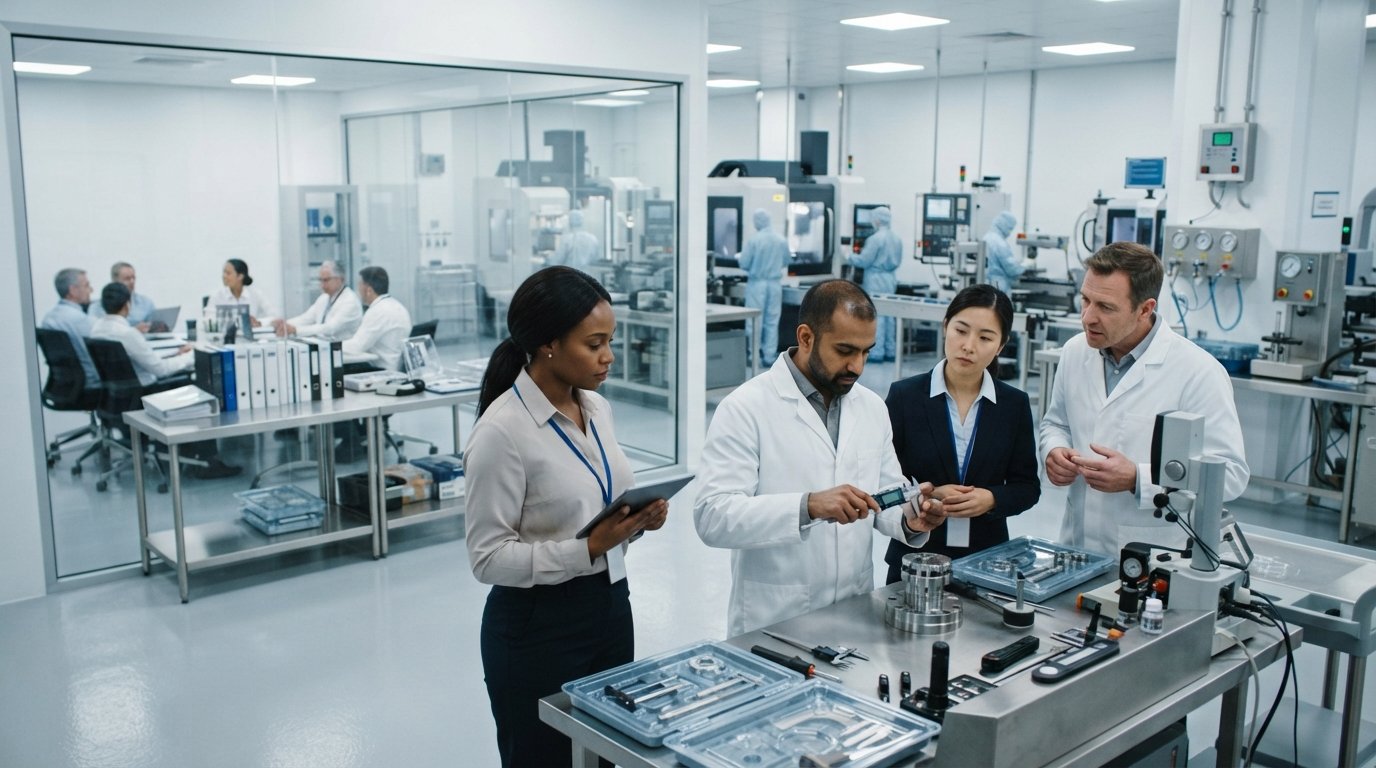
A single-source Contract Development and Manufacturing Organization (CDMO) represents a fundamental shift from traditional vendor-client relationships to a vertically integrated partnership. This model consolidates concept design, rapid prototyping, rigorous validation, and large-scale manufacturing within a single entity. Unlike fragmented outsourcing, where a MedTech firm might manage four or five separate vendors for machining, assembly, and sterilization; the single-source model operates under a unified Quality Management System (QMS). As medical device complexity increases in 2026, particularly with the rise of Robotic Surgical Adapters and intricate Heart Valve Ring Catheters, this integration is no longer optional; it’s a prerequisite for technical success.
The Shift from Fragmented Outsourcing to Integrated Partnerships
Managing multiple vendors introduces a “handoff tax” that manifests as communication delays and inconsistent quality documentation. When design and manufacturing are decoupled, data silos inevitably form, leading to technical friction during the transition to mass production. The evolution of medical device contract manufacturing services has moved toward these strategic partnerships to mitigate such risks. One of the primary benefits of a single-source medical device CDMO is the elimination of these handoffs, ensuring that the design intent is preserved throughout the entire lifecycle. This “steady hand” approach provides the institutional stability required to navigate the high-stakes journey from initial prototype to patient care without the volatility of a disjointed supply chain.
Core Components of a Full-Service CDMO
A true full-service partner provides comprehensive infrastructure that supports every phase of development. These core components include:
- In-house R&D and Test Labs: These facilities allow for immediate design feedback and iterative testing, significantly reducing the time required for technical refinement.
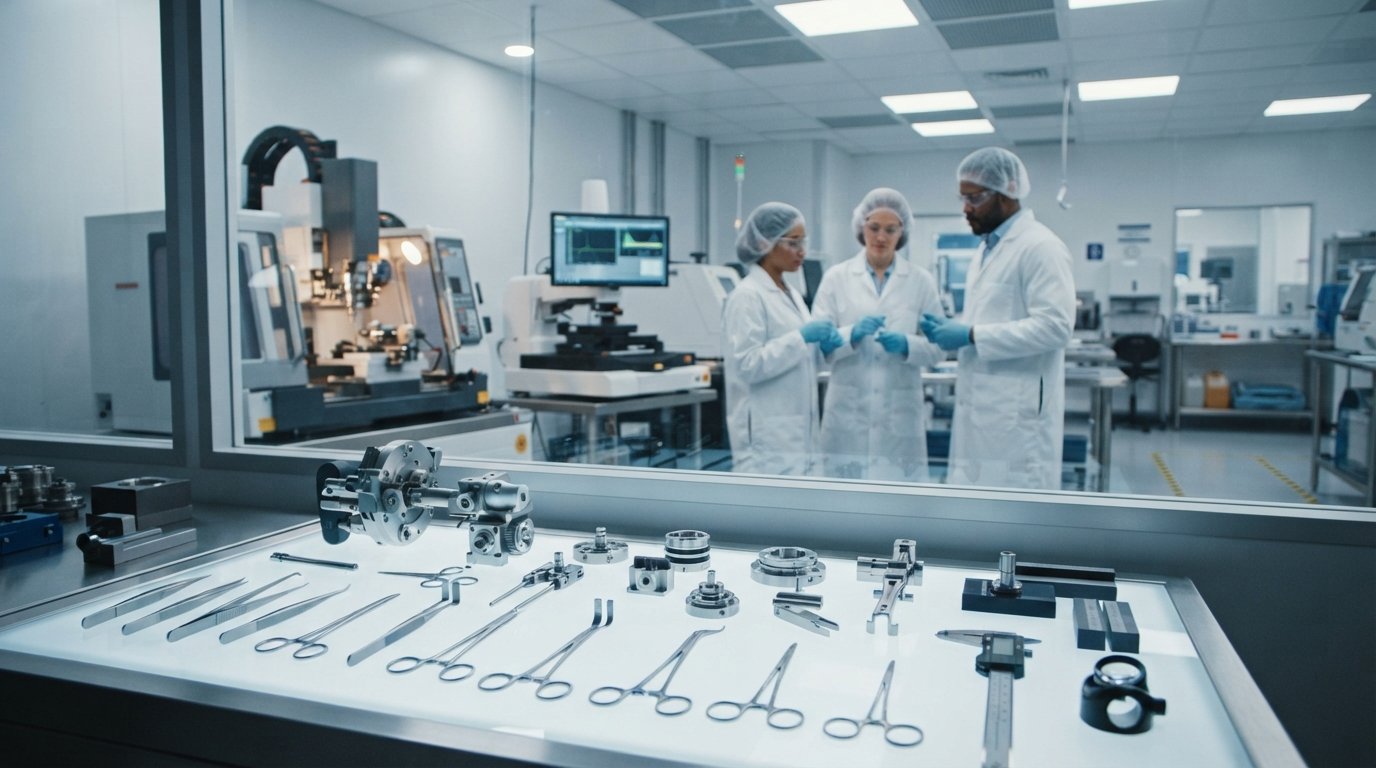
- Class 8 Cleanroom Facilities: Controlled environments are essential for the sterile assembly of disposables and complex precision components, ensuring adherence to global safety standards.
- End-to-End Regulatory Support: With the FDA’s Quality Management System Regulation (QMSR) now in effect as of February 2, 2026, a partner must offer expert guidance on FDA 510(k) submissions and CE Mark compliance to prevent costly delays.
This integrated infrastructure ensures that every technical outcome is validated against rigorous global standards from day one. By centralizing these capabilities, manufacturers can maintain a clear audit trail and a unified Master Validation Plan, which are essential for meeting the heightened scrutiny of 2026 regulatory inspections.
Accelerating Speed-to-Market: Eliminating the Handoff Tax
The “handoff tax” is a significant bottleneck in medical device development. When a design firm finishes a project and hands it to a separate manufacturer, weeks or months are often lost in translation. This phase, known as design transfer, requires the new vendor to re-validate assumptions and re-tool processes from scratch. One of the primary benefits of a single-source medical device CDMO is the total elimination of this friction. By housing R&D engineers and production specialists under one roof, technical insights move instantly between departments. This real-time collaboration ensures that the person designing a complex Heart Valve Ring Catheter understands the exact tolerances of the 5-axis CNC milling machines that will eventually produce it, preventing the “thrown over the wall” mentality that delays product launches.
Efficiency extends beyond engineering. Integrating Vendor Managed Inventory (VMI) directly with the production line ensures that micro-precision components are available exactly when needed. This synchronization prevents the logistical delays and stockout risks that typically plague multi-vendor supply chains. To maintain this level of control and ensure global market access, the partner must adhere to the FDA Quality Management System Regulation throughout the entire development cycle. This alignment ensures that every component is tracked and validated from the initial concept through mass production.
Strategic Design for Manufacturability (DFM)
Successful commercialization depends on medical device design for manufacturability. When production constraints are integrated into the early concept phase, costly redesigns are avoided. Utilizing advanced auto-lathe capabilities and 5-axis milling during the initial design allows engineers to optimize component geometry before any metal is cut. This proactive approach ensures that the device is not just functional in a lab, but also scalable on a high-speed production line without requiring significant modification to the Master Validation Plan.
Rapid Prototyping and Seamless Scaling
The transition from pilot runs to high-volume manufacturing should be invisible. In a single-source model, the equipment and protocols used for the initial prototype are the same ones used for mass production. This continuity allows for rigorous in-process testing, such as leak and voltage validation, to be established during the prototyping phase rather than as an afterthought. It ensures that when you scale, the quality remains constant. As global demand for high-precision MedTech grows, our infrastructure is expanding to meet it. The upcoming Johor manufacturing site, scheduled to open in Q1 2027, will provide additional capacity to support these seamless scaling efforts for global partners.
If your current development cycle is hindered by vendor handoffs, it’s time to discuss a more integrated approach with a technical partner that understands your product’s full lifecycle.
Ensuring Quality and Regulatory Synergy Under One QMS
The administrative weight of managing a fragmented supply chain often results in regulatory instability. When quality documentation is scattered across five or six different vendors, the risk of a non-conformance report (NCR) during an audit increases. One of the primary benefits of a single-source medical device CDMO is the consolidation of these risks under a single, robust Quality Management System (QMS) compliant with ISO 13485. Instead of conducting multiple supplier audits every year, your team focuses on one comprehensive evaluation of a single partner. This unified oversight is critical for high-precision instruments like Robotic Surgical Adapters and Orthopedic implants, where every component must meet identical standards for biocompatibility and mechanical performance.
A single-source partner streamlines the Master Validation Plan by integrating Installation Qualification (IQ), Operational Qualification (OQ), and Performance Qualification (PQ) into a continuous, documented workflow. This alignment ensures that validation data remains consistent from the first micro-precision component to the final assembly. It eliminates the discrepancies that often occur when disparate vendors use different testing methodologies or documentation standards.
Unified Validation and Risk Management
Effective risk mitigation requires a holistic application of Process Failure Mode and Effects Analysis (PFMEA). In a single-source model, the PFMEA isn’t a static document passed between vendors; it’s a living tool applied across the entire product lifecycle. This approach ensures total traceability from the raw material stage to the final sterilized and packaged device. Maintaining this level of medical device manufacturing compliance allows for a more defensive and transparent regulatory posture during FDA inspections. It simplifies the technical file creation, ensuring all data is centralized and ready for review.
Advanced Quality Control Technologies
Precision is maintained through the integration of smart manufacturing and automated inspection. Utilizing unmanned Coordinate Measuring Machine (CMM) inspection allows for 24/7 verification of critical dimensions without the variability of human intervention. Real-time dashboards monitor line performance, providing immediate data on yield rates and process stability. For reusable devices, the use of ultrashort-pulse (USP) laser marking provides autoclave-stable identifiers that don’t compromise material integrity. These technical refinements ensure that your device remains compliant and functional throughout its entire intended use life. Every step is intentional and measured.
Technical Superiority Through Integrated Smart Manufacturing
The technical synergy between advanced laser processing and precision machining defines the modern production floor. In a fragmented model, a component might be machined in one facility and shipped to another for laser welding or marking, introducing risks of surface contamination and dimensional variance. One of the core benefits of a single-source medical device CDMO is the ability to perform these high-precision operations within a single, controlled environment. This integration ensures that the mechanical tolerances achieved during 5-axis CNC milling are preserved through subsequent laser processing stages, maintaining the structural integrity of complex assemblies from start to finish.
Efficiency is further enhanced through the implementation of 24-hour unmanned production cycles. By utilizing robotic loading and unloading systems, the facility maximizes machine utilization while significantly reducing the potential for human error. These automated systems extend to final stages, including automated blister packaging, ensuring that the finished device is secured in a sterile environment with minimal manual handling. This level of automation doesn’t just reduce operational costs; it creates a repeatable, data-driven manufacturing process that is essential for high-volume commercialization.
Advanced Laser Processing Capabilities
Precision at the micron level requires specialized laser technologies tailored to specific material properties. For instance, achieving hermetic seals in Robotic Surgical Adapters requires 5-axis laser welding, a process that provides deep penetration with a minimal heat-affected zone. When producing cardiovascular implants, femto laser cutting is utilized to process Nitinol and MP35N materials without causing thermal damage or altering the material’s shape-memory characteristics. Additionally, ultrashort-pulse (USP) laser marking provides corrosion-resistant identifiers on reusable endoscopes and surgical tools. These markings withstand repeated autoclave cycles, ensuring long-term traceability and compliance with global Unique Device Identification (UDI) requirements.
The Future of MedTech: Smart Lines and Real-Time Monitoring
Smart manufacturing lines represent the next evolution in production stability. These lines integrate real-time monitoring sensors that provide a continuous stream of data on every critical process parameter. This data is vital for diagnostic equipment assembly services, where in-process testing for leak detection, voltage, and optical alignment must be documented at every stage. When a deviation occurs, the system provides immediate alerts, allowing for proactive adjustments before a non-conformance is generated. This real-time visibility informs continuous improvement and Corrective and Preventive Action (CAPA) processes, ensuring that the manufacturing line remains optimized for peak performance.
If your project requires this level of technical integration and precision, contact our engineering team to discuss your specific manufacturing requirements.
The Global Advantage: Risk Mitigation and Lifecycle Support
A global footprint is a critical component of supply chain resilience in the 2026 MedTech environment. While previous sections detailed the technical and regulatory advantages of integration, the geographical distribution of a partner provides a final layer of risk mitigation. One of the strategic benefits of a single-source medical device CDMO is the ability to leverage multiple international sites while maintaining a singular Quality Management System. This ensures that whether a component is produced in Singapore or at our Kunshan facility, the technical standards remain identical. By positioning manufacturing centers near major logistics hubs like Changi and Senai airports, lead times are reduced, ensuring that high-precision devices reach global markets with minimal disruption.
This global reach also provides a redundant manufacturing strategy. If a regional disruption occurs, the unified QMS allows for a more fluid transition of production between sites without the need to re-validate an entirely new vendor’s quality standards. It’s a proactive approach to lifecycle management that protects the OEM from the volatility of the modern global economy.
Lifecycle Extension via Repair and Refurbishment
The responsibility of a CDMO shouldn’t end at the factory gate. A partner that understands the internal mechanics of a device is uniquely qualified to maintain it throughout its useful life. Our U.S.-based repair center in Irvine, CA, provides a strategic base for endoscope repair and refurbishment, restoring complex tools like the Ureteroscope and Gastroscope to original OEM specifications. This lifecycle support extends the utility of capital equipment and provides OEMs with a technical feedback loop. Insights gained during refurbishment can inform future design iterations for Robotic Surgical Adapters or other surgical tools, creating a continuous cycle of refinement and innovation.
Scalable Logistics and Global Compliance
Scaling from low-volume R&D to high-volume commercialization requires a seamless transition between specialized sites. Typically, the initial engineering and pilot runs occur in Singapore, where proximity to R&D labs allows for rapid refinement. Once the process is validated, production scales into our Malaysia manufacturing site, which is scheduled for a significant capacity expansion in Q1 2027. This multi-site approach ensures that global compliance is never compromised during the transition. Consistency is maintained through several key factors:
- Unified quality standards are applied across all 500,000 sq ft of global facilities.
- Proximity to major international airports enables rapid response for global distribution and service needs.
- Redundancy in manufacturing sites protects against regional supply chain shocks and ensures continuity of supply.
This global strategy positions MedTech firms for 2027 and beyond, providing the infrastructure necessary to support both the launch of new technologies like the Heart Valve Ring Catheter and the long-term maintenance of existing surgical portfolios.
Strategic Integration for the Next Decade of MedTech
Success in the 2026 medical landscape requires a technical partner that offers more than just manufacturing capacity. The benefits of a single-source medical device CDMO lie in the seamless integration of engineering, validation, and global logistics under a unified Quality Management System. This model effectively eliminates the technical friction caused by vendor handoffs and ensures that your documentation remains audit-ready throughout the product lifecycle. By centralizing your development with a sophisticated problem-solver, you gain the stability needed to scale complex assemblies with absolute precision.
Fong’s Engineering brings 40+ years of precision engineering excellence and a global manufacturing footprint to every collaboration. As an ISO 13485 and FDA-registered partner, we provide the institutional trust required to navigate high-stakes regulatory environments. Whether you’re refining a prototype or preparing for high-volume production, we remain the steady hand that ensures your technical outcomes meet the highest global standards. It’s time to move beyond fragmented outsourcing and embrace a more disciplined approach to MedTech development.
Partner with Fong’s Engineering for your next medical device project and secure the technical future of your surgical innovations.
Frequently Asked Questions
What is the difference between a CMO and a CDMO in the medical device industry?
A Contract Manufacturing Organization (CMO) focuses strictly on the production of components or finished devices based on provided designs. In contrast, a Contract Development and Manufacturing Organization (CDMO) provides end to end support, including concept design, prototyping, and regulatory validation. This comprehensive lifecycle management is one of the primary benefits of a single-source medical device CDMO. By integrating R&D with mass production, a CDMO eliminates the technical friction of transitioning between separate design and manufacturing entities.
How does a single-source CDMO help with FDA 510(k) submissions?
A single-source partner streamlines FDA 510(k) submissions by maintaining a unified Quality Management System (QMS). All documentation, from initial design inputs to final process validation, is centralized and consistent. This integrated approach ensures that the Master Validation Plan aligns with regulatory requirements from the start. It reduces the risk of data discrepancies that often lead to requests for additional information, preventing costly delays in receiving market clearance for complex devices.
Can a single-source partner handle both disposable and reusable medical devices?
Yes, a full-service partner handles both categories using specialized infrastructure tailored to each. Disposable items, such as Suction Irrigators and Heart Valve Ring Catheters, are processed in Class 8 cleanrooms for sterile assembly. Reusable instruments, like Ureteroscopes or Robotic Surgical Adapters, require different technical considerations, including biocompatibility and autoclave stable markings. Integrated facilities support the distinct validation, sterilization, and packaging requirements for both product categories within a single manufacturing ecosystem.
What are the risks of consolidating all manufacturing with one CDMO?
The primary perceived risk of consolidation is a single point of failure, which is mitigated through a strategic global footprint. A CDMO with multiple manufacturing sites provides redundancy against regional supply chain disruptions while maintaining a singular QMS. This distributed model ensures that physical production remains resilient even if one site faces challenges. It protects the OEM from the volatility associated with relying on multiple, disconnected vendors that lack a unified risk management strategy.
How does Design for Manufacturability (DFM) impact the total cost of a medical device?
Design for Manufacturability reduces the total cost of ownership by preventing expensive redesigns during the scaling phase. By integrating production constraints into the early design cycle, engineers optimize component geometry for 5-axis CNC milling or auto-lathe production. This proactive alignment reduces scrap rates, improves machine utilization, and ensures a seamless transition to mass production. It eliminates the hidden handoff tax often seen when design and manufacturing are handled by disparate vendors.
What certifications should I look for in a single-source medical device partner?
Critical certifications include ISO 13485 for medical device quality management and active FDA registration. You should also verify that the partner has experience with CE Marking if you intend to enter international markets. A single-source partner must demonstrate a robust process validation framework, including IQ, OQ, and PQ protocols. These credentials ensure that the CDMO can maintain compliance across complex product lifecycles and meet the heightened scrutiny of the 2026 regulatory landscape.
How does a CDMO manage the sterilization and packaging process?
A CDMO manages the entire post production cycle, including sterilization validation and protective packaging design. Common sterilization methods such as EtO, gamma, and autoclave are coordinated to ensure material compatibility for specific devices. Packaging solutions, including Tyvek pouches and automated blister packaging, are designed to maintain a sterile barrier during transport. This integrated management ensures that the device arrives ready for surgical use, with all validation data centralized in a single technical file.