A room classification alone cannot tell you whether an assembly environment is right for your device. Medical device cleanroom assembly services should connect product requirements with contamination controls, clear work instructions, process validation, and documented quality checks. For OEM teams, the practical challenge is identifying which controls matter at each assembly step, then keeping testing, packaging, and production records aligned.
That means looking beyond the room designation. Fong’s Engineering & Manufacturing provides Class 8/100k cleanroom assembly for disposable and reusable devices as part of an integrated CDMO workflow. The capability connects assembly with product testing, QA, packaging, sterilization options, and IQ/OQ/PQ process validation. Smart manufacturing lines add real-time monitoring and in-process testing.
This article explains how controlled environments support device assembly, how to relate room classification to product-specific quality needs, and what to define when scoping a program. It also outlines how to assess assembly capability across the path from controlled operations to validated production.
Key Takeaways
- Set contamination-control requirements around the device and assembly process, not room classification alone.
- Map personnel, material movement, handling, housekeeping, and documentation into a consistent controlled workflow.
- Compare manual, semi-automated, and automated assembly by task, repeatability, and production volume.
- Look for medical device cleanroom assembly services that connect assembly with testing, QA, packaging, and validation.
- Define requirements, validation stages, and documented handoffs early. Fong’s provides Class 8/100k assembly for disposable and reusable devices.
Why medical device cleanroom assembly services matter to product quality
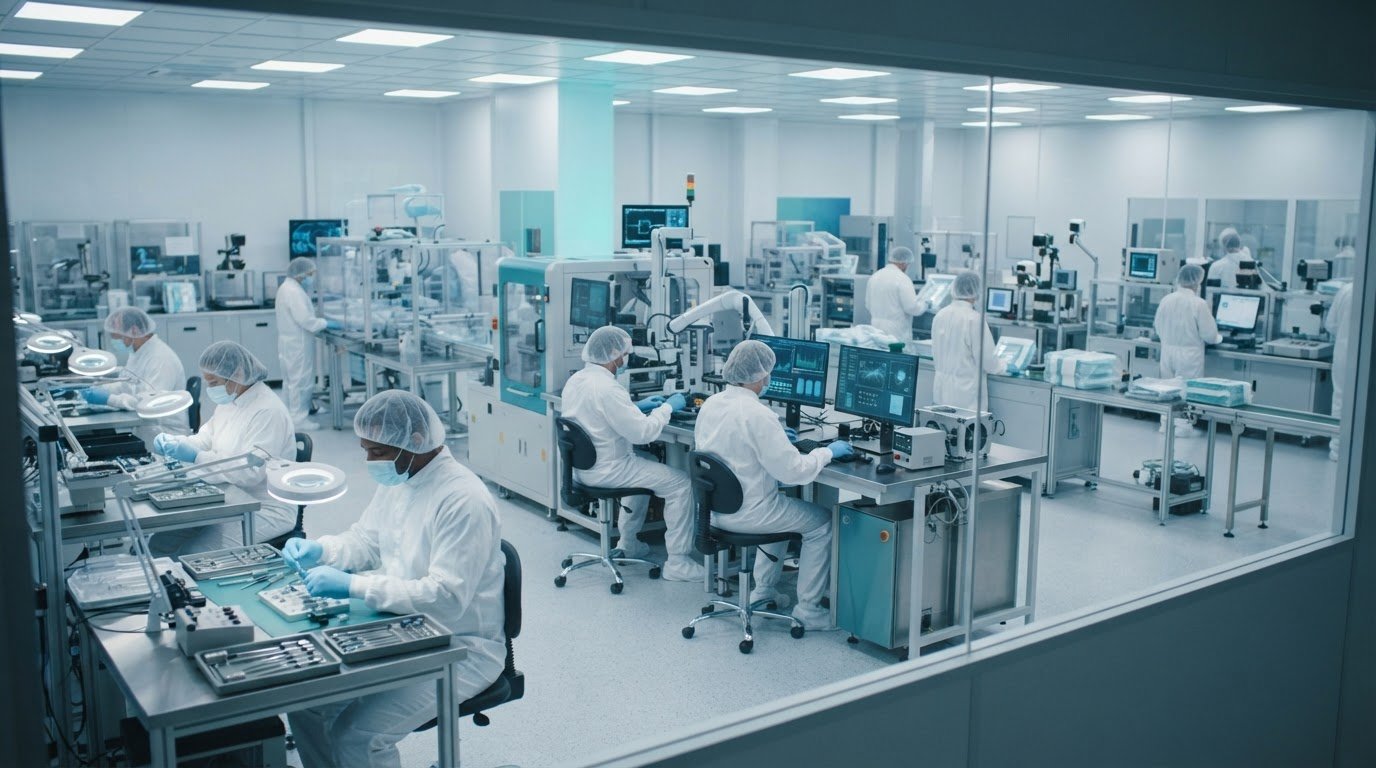
Cleanroom assembly means assembling a medical device or its components in an environment where airborne particles and other contamination risks are controlled. The goal is to manage conditions around the work, not to make a broad claim about the finished device. A cleanroom uses defined environmental controls, and its classification describes a particular aspect of cleanliness. For a device program, classification is one input to a broader quality strategy.
Medical device cleanroom assembly services can help reduce exposure to contaminants during sensitive operations. The level of control depends on the device, materials, assembly sequence, and intended production process. Consider room conditions alongside product design, work methods, inspection criteria, and process validation. A room classification alone does not establish that a device meets its specifications.
Which medical device programs may need cleanroom assembly?
A controlled assembly environment may be appropriate when exposure to particles or other contamination could affect a component, an assembly step, or a downstream process. Start with the product and its manufacturing risks, then identify where contamination control is relevant. Do not begin with a preferred room class and assume the same controls fit every device.
Disposable and reusable devices can have different assembly requirements and production pathways. In both cases, the control plan should reflect the materials, handling steps, product requirements, and operations that follow assembly. Fong’s provides Class 8/100k cleanroom assembly for disposable and reusable devices. The specific controls are defined around each program’s needs.
What cleanroom assembly does, and does not, establish
Classification describes the cleanliness of an environment against defined criteria. It does not establish that personnel follow the right procedures, materials are handled consistently, or the assembly process produces conforming devices. Those outcomes depend on coordinated controls, documented instructions, appropriate checks, and evidence that the defined process performs as intended.
Keep these distinctions clear during program planning:
- Environmental control addresses conditions in the assembly area and helps manage contamination risks.
- Process validation provides documented evidence that a defined process can consistently achieve its intended results.
- Finished-device acceptance depends on product requirements and established inspection or testing criteria.
Cleanroom assembly also does not automatically mean a device is sterile. Sterility depends on applicable product requirements and the relevant manufacturing and sterilization processes; it cannot be inferred from room classification alone. To scope a program, connect the device’s risk profile to each assembly step, identify where environmental controls matter, and define how process evidence and finished-product checks will support quality decisions.
How cleanroom controls support medical device assembly
For example, a component can be protected during receipt and storage, moved into the assembly area using defined handling practices, and kept within an orderly flow through assembly and inspection. Work instructions specify what operators do at each stage, while training supports consistent execution. Housekeeping procedures and production records help make the control approach repeatable and reviewable.
What a Class 8/100k assembly environment means
Fong’s provides Class 8/100k cleanroom assembly for disposable and reusable medical devices. This describes a facility capability, not a claim that the assembly area or finished device is sterile. The appropriate environmental controls depend on device requirements and the operations performed. Interpret classification as one part of the program’s contamination-control plan, alongside handling, procedures, monitoring, and quality records.
How people, materials, and equipment affect contamination control
Controls work best as a coordinated flow. Entry practices establish how personnel access the assembly area. Material-handling procedures define how components are protected and moved. Equipment and workspace procedures help maintain orderly conditions at the point of use. Clear work instructions set the sequence and required checks, while operator training supports consistent application during production.
- Personnel: Follow defined entry, gowning, and work practices established for the controlled area.
- Materials: Use specified handling and movement steps to protect components as they progress through assembly.
- Equipment and workspaces: Apply documented setup, cleaning, and housekeeping procedures appropriate to the process.
- Records: Capture relevant checks and production information so execution can be reviewed against the defined process.
Monitoring adds visibility, but its purpose should be specific: data needs to relate to defined parameters and support review of production conditions. Fong’s smart manufacturing lines use real-time monitoring and in-process testing. These capabilities provide process information alongside work instructions and quality records; they do not replace process validation or finished-device acceptance activities.
A quality management system provides the structure for controlled procedures and records. ISO 13485:2016 is the international standard for medical device quality management systems, and Fong’s reports ISO 13485 quality systems. For program planning, map each assembly step to its applicable handling controls, checks, and records. This makes gaps easier to spot before production scales. Teams defining these requirements can review Fong’s cleanroom assembly capabilities.
How to assess cleanroom assembly capabilities for your device
Assess an assembly program against the work the device requires. Consider component variation, assembly sequence, inspection points, expected production profile, and how changes could affect repeatability. A capability suited to a stable, higher-volume process may not be the right starting point for a device with variable components or intricate manual steps. The objective is a controlled, documented approach that fits the defined program.
Matching the assembly approach to device and production needs
Manual assembly can suit tasks that depend on operator judgment or careful handling. Semi-automation can support selected repeatable steps while retaining human oversight. Automation may fit defined operations when consistent execution and production needs support its use. These are not fixed categories: one device may combine approaches across its assembly sequence. Evaluate each operation by task complexity, component variation, repeatability needs, and production profile.
Use a capability comparison to make trade-offs visible before selecting a production approach:
- Manual: Review operator instructions, training, inspection methods, and how consistent execution is documented.
- Semi-automated: Identify which steps are equipment-assisted, how operators interact with the process, and how those steps are checked.
- Automated: Define the operation being automated, the process evidence required, and how equipment performance and output are assessed.
For each option, map the documentation, validation activities, and handoffs required. A comparison is useful only when each approach is assessed against the same device requirements and acceptance criteria.
Evaluating integrated testing and downstream processes
Place testing deliberately within the assembly sequence. Identify which characteristics can be checked during production, what counts as an acceptable result, and how results are recorded and handled. In-process testing can provide timely information about defined steps, while QA activities and finished-device checks support separate quality decisions. Keep responsibilities and records clear at each transfer between teams or process stages.
Include downstream requirements in the assessment from the outset. Define packaging needs and how packaging connects to assembly and testing; include sterilization as a scoped program requirement where applicable. Fong’s assembly support includes product testing, QA capabilities, packaging, and sterilization options, allowing teams to consider these elements within an integrated program. Complex medical device assembly also requires attention to how components, operations, and checks fit together across the complete build.
Use an assessment matrix to expose gaps before production planning advances:
- Equipment: Which tools or equipment support each defined assembly task?
- Documentation: What instructions, records, and acceptance criteria govern the work?
- Validation: What process validation evidence is relevant to the proposed approach?
- Handoffs: How do assembly, testing, QA, packaging, and any sterilization steps connect?
Considering cleanroom assembly as part of medical device contract manufacturing services places it within the wider CDMO lifecycle. When evaluating medical device cleanroom assembly services, compare how equipment choices connect to documented process controls and downstream requirements. Room classification or automation alone does not determine whether the approach fits the device.
Planning a controlled, validated cleanroom assembly workflow
A reliable workflow translates device requirements into controlled production steps, evidence, and clear handoffs. Scope medical device cleanroom assembly services before the first production run, with engineering, quality, and manufacturing teams aligned on what must be assembled, how it will be assessed, and which records will demonstrate execution. The steps below provide a planning framework; specific activities depend on the device and defined process.
Define requirements, process steps, and acceptance criteria
Start with device specifications, component interfaces, identified risks, and approved work instructions. Map each assembly operation to the inspection or in-process test that will assess it. Define acceptance criteria before production so operators and reviewers have a shared basis for decisions. Identify the records needed to maintain traceability and review process performance, including relevant equipment, material, inspection, and test information.
- Review requirements: Align device specifications, component inputs, interfaces, and program risks.
- Map the process: Sequence assembly operations and identify handling controls, inspections, and in-process tests at relevant stages.
- Set acceptance criteria: Specify how each check is performed and how acceptable results are distinguished from exceptions.
- Establish records: Define the production documentation needed for traceability, review, and the eventual handoff.
- Validate and release the process: Generate evidence appropriate to the defined process, then document the production handoff and applicable controls.
Validate the process and manage production changes
IQ/OQ/PQ can structure validation activities where applicable to the defined manufacturing process. Installation Qualification (IQ) documents that relevant equipment or systems are installed as specified. Operational Qualification (OQ) evaluates whether they operate as intended across defined conditions. Performance Qualification (PQ) assesses performance under the conditions established for routine production. Tailor the scope and evidence to the process, equipment, and device program rather than treating IQ/OQ/PQ as a universal checklist.
Validation also needs to connect to ongoing process oversight. Risk management and process failure mode and effects analysis (PFMEA) can help teams identify and prioritize process risks. Corrective and preventive action (CAPA) and change control provide structured ways to address issues and assess proposed changes. A change to components, equipment, instructions, or process settings may require review of its effect on existing validation evidence and acceptance criteria.
Keep assembly validation distinct from downstream validation activities. Packaging and sterilization processes have their own requirements and validation evidence; completing assembly validation does not establish that those separate processes are validated. Document the interfaces and handoffs between them so responsibilities, records, and acceptance decisions remain clear. This process-level planning fits within the broader context of medical device manufacturing compliance, where quality-system controls support consistent, reviewable production.
Fong’s supports process validation, including IQ/OQ/PQ, within its medical device manufacturing capabilities. Review the validation needs for your cleanroom assembly workflow.
Fong’s cleanroom assembly services within an end-to-end CDMO
Cleanroom assembly is most useful when it fits within a coordinated manufacturing plan, rather than operating as a standalone step. Fong’s Engineering & Manufacturing Private Limited provides Class 8/100k cleanroom assembly for disposable and reusable medical devices, alongside full-device assembly, R&D and QA labs, product testing, process validation, packaging, and sterilization options. This integrated CDMO scope supports planning across development and production, with requirements defined for the specific device.
From controlled assembly to product testing and packaging
Fong’s Engineering & Manufacturing Private Limited’s R&D and QA labs support product development and quality activities, while full-device assembly connects component integration with downstream testing. Product checks can be scoped to the device and process. Smart manufacturing lines use real-time monitoring and in-process testing to provide production information. These capabilities support a connected workflow, while defined acceptance criteria and documented procedures remain central to quality decisions.
Packaging and sterilization are program requirements, not automatic outcomes of cleanroom assembly. Fong’s packaging capabilities include Tyvek pouch and blister formats. Sterilization options include EtO, autoclave, and gamma. The appropriate format and method depend on the product and its requirements; this does not mean every device uses each packaging type or sterilization method. Scope assembly, packaging, and sterilization validation as distinct activities where applicable.
Quality-system structure supports this connected approach. Fong’s Engineering & Manufacturing Private Limited reports ISO 13485 quality systems and IQ/OQ/PQ process validation capabilities. Together with assembly, testing, and QA, these provide a basis for defining how work is controlled and documented for a program. Real-time monitoring and in-process testing add operational visibility, but they do not replace process validation or product acceptance criteria. Define responsibilities, records, and handoffs from one stage to the next.
Discuss your cleanroom assembly requirements with Fong’s
A focused technical discussion starts with the device and intended production workflow. Preparing key program information helps frame requirements and identify areas for detailed planning:
- Device scope: Provide an overview of the device, components, and assembly interfaces.
- Assembly steps: Outline the sequence, sensitive operations, inspections, and in-process tests.
- Production profile: Describe anticipated production needs and relevant process considerations.
- Quality and validation: Identify documentation, acceptance criteria, validation needs, packaging, and sterilization requirements.
These inputs help scope medical device cleanroom assembly services around the device’s process needs and the connections between assembly, testing, quality, and downstream operations. Discuss your medical device cleanroom assembly requirements with Fong’s Engineering & Manufacturing Private Limited.
Turn cleanroom requirements into a defined project plan
Translate device requirements into a clear manufacturing brief. Identify the assembly sequence, critical interfaces, inspection points, expected production profile, and evidence needed to support process review. A shared scope gives engineering, quality, and manufacturing teams a practical basis for aligning decisions before production planning advances.
Use the brief to frame a technical discussion about how medical device cleanroom assembly services fit the program, including the connections between assembly, testing, quality controls, and downstream requirements. Fong’s brings cleanroom assembly together with quality systems, process validation, and broader CDMO capabilities, so planning can focus on the specific needs of the device.
Bring current specifications and known process requirements, even if some details are still being refined. A focused review can clarify priorities, responsibilities, and the evidence needed to plan the next stage. Discuss your cleanroom assembly program with Fong’s.
Frequently Asked Questions
Does every medical device need cleanroom assembly?
No. Cleanroom assembly is not automatically necessary for every medical device. The decision depends on the device’s design, materials, intended use, and manufacturing risks. For example, a process involving exposed, contamination-sensitive components may call for controls that another assembly step does not require. Assess the full process, including component handling and downstream operations, to determine where a controlled environment adds value and what level of control the program needs.
Is cleanroom assembly the same as sterile manufacturing?
No. Cleanroom assembly controls environmental conditions during manufacturing, while sterile manufacturing involves requirements and processes intended to achieve and maintain a sterile product. A cleanroom may be part of a broader sterile-device production strategy, but its presence alone does not establish sterility. Consider the product’s sterilization approach, packaging, and supporting process evidence separately, according to the device program’s intended requirements.
Does an ISO Class 8 cleanroom guarantee a sterile medical device?
No. An ISO Class 8 classification concerns airborne particle cleanliness; it does not certify that a finished device is sterile. It also does not, by itself, demonstrate that assembly steps were performed correctly or that the device meets its acceptance criteria. Sterility and product conformity require their own defined controls and evidence. Treat room classification as information about the environment, not a finished-product guarantee.
Can cleanroom assembly include testing and packaging?
Yes. An assembly program can include testing and packaging when these activities fit the device requirements and manufacturing plan. Define what each test evaluates, when it occurs, how results are recorded, and how nonconforming results are handled. Packaging requirements should also specify the intended format and acceptance checks. This clarity helps coordinate operations and records without treating packaging or testing as automatic consequences of assembly.
What is the difference between cleanroom assembly and cleanroom packaging?
Cleanroom assembly is the joining or integration of device components in a controlled environment. Cleanroom packaging is the preparation and enclosure of a product or component under specified environmental and process controls. They may be part of a connected production program, but involve different operations and acceptance criteria. Identify where assembly ends, where packaging begins, and which checks and records apply at each stage.
How does ISO 13485 relate to cleanroom assembly?
ISO 13485 provides a quality management system framework for organizations involved in medical device production. It supports controlled processes, documented responsibilities, and quality records, including procedures relevant to cleanroom assembly. It does not prescribe one cleanroom classification for every device or replace product-specific process controls. Address the assembly environment and its procedures within the quality system according to the device and manufacturing process.
What information helps scope a medical device cleanroom assembly project?
Share device specifications, component interfaces, the assembly sequence, and known contamination or handling concerns. Include expected production needs, inspection and test requirements, packaging expectations, and validation objectives. If requirements are still evolving, identify open decisions and the evidence needed to resolve them. This information helps define process boundaries, responsibilities, and records, and shows which activities need further development before production planning is finalized.