Outsourcing medical device assembly is not automatically cheaper, and keeping it in-house does not automatically provide more control. The insourcing vs outsourcing medical device assembly decision depends on the total cost of facilities, equipment, staffing, training, and quality systems, balanced against production scale and the oversight you need to retain.
Unit cost matters, but by itself it can hide the investment needed for reliable assembly. Outsourcing may reduce the need to build internal capacity, while adding supplier coordination and decisions about documentation, process control, and intellectual property.
This comparison shows how production scale, control, core competencies, and quality systems shape the trade-off. You’ll learn when in-house assembly may make sense, when an external manufacturing partner may be a better fit, and which cost drivers to assess before choosing a model.
Key Takeaways
- Map the assembly work from component handling through packaging to identify which capabilities an external partner could provide.
- Set clear boundaries for design files, production documentation, and process changes before transferring assembly work.
- Compare the cost of internal capacity with the demands of your production scale, including how changing volumes affect resource use.
- Assess whether assembly supports your core competencies or draws attention and resources away from them.
- Use quality-system requirements and production needs to guide your operating model, then consider complex device assembly support when external capacity fits.
What Does Medical Device Outsourcing Involve?
Medical device outsourcing can cover assembly alone or extend from design and development through manufacturing. Depending on the agreed scope, a contract manufacturer may also support sterilization, packaging, and distribution. This lets a device company transfer a defined operation rather than its entire production system.
Assembly turns separate components into a finished device or integrated module. For example, a manufacturer might outsource a high-level assembly while keeping final system integration in-house. The contractor supplies a tested module for the manufacturer’s own production line. This arrangement can suit equipment makers that cannot or do not want to transfer complete-system manufacturing.
Access to specialized resources is a central consideration. Medical device assembly may require controlled cleanroom conditions, ISO-compliant assembly lines, and skilled staff. Building and maintaining a cleanroom requires ongoing investment in the facility and its operating processes. Outsourcing can provide access to an established workspace without requiring the device company to create its own assembly operation.
Assembly can involve practical steps beyond joining components. A contractor may kit parts, perform hand assembly, package devices according to customer instructions, and prepare items for shipment. Packaging tasks, for example, can include shrink-wrapping and labeling. A defined workflow spells out what arrives, how assembly and packaging are performed, and how finished items are shipped. Protective gloves may be used during kitting to minimize contact.
Technical complexity shapes the equipment and expertise required. A module assembled from components supplied by different vendors may require coordinated handling, precise work instructions, and appropriate testing. Assembly may also require knowledge of sterilization and international standards. The contractor’s equipment and capabilities must fit both the device and the production scale. A line suited to one assembly may not suit another.
Outsourcing can provide a more efficient route to production when a contractor already has the relevant resources and trained staff. It does not remove the need to define product requirements, assembly instructions, testing, packaging, and handoffs. Those details determine whether external work integrates with the manufacturer’s own process.
| Option | Resources | Operational scope | Primary consideration |
|---|---|---|---|
| In-house assembly | Company-provided facility, equipment, and staff | Direct internal execution | Investment and capacity must match production needs |
| Outsourced assembly | Contractor’s assembly resources and personnel | Selected tasks or integrated modules | Defined requirements and coordination across handoffs |
Choose a model by matching assembly complexity and production scale to the resources and oversight the operation requires.
Control, intellectual property, and confidentiality
Outsourcing can transfer assembly execution, but it also creates dependencies around information, supply, and process control. Key risks include exposure of proprietary drawings, supply interruptions, and quality variation when instructions or change control are unclear. Clearly defined access, responsibilities, documentation, and communication help address these risks.
Intellectual property risk arises when design files, bills of materials, or test protocols leave the company. Drawings, for example, may reveal how a device is constructed or identify specialized components. Share only the information the contractor needs for its assigned manufacturing tasks. Define who can access files, how revisions are handled, and how confidential materials are protected in the working relationship.
Companies transition assembly by defining the project, transferring staff, implementing the service, and handing it over. According to the Supply Chain Resource Cooperative at NC State, these are core stages of a service transition.
Control also depends on clear ownership of documentation. Before production begins, the manufacturer and contractor should jointly review drawings, bills of materials, work instructions, and test protocols. They should agree who records redlines, resolves component issues, and approves revisions. The manufacturer may retain documentation control for regulatory reasons, while the contractor may manage the drawing package to coordinate production changes.
Start contractor selection with the specific assembly scope, not a general capability claim. A company transferring a tested module needs different manufacturing support from one transferring a complete assembly operation. Match the contractor’s equipment, technical capabilities, and production capacity to the defined work. Consider how the contractor will handle supplied components, work instructions, testing, and communication about deviations.
A medical device assembly contract should translate those decisions into operational responsibilities. Define the approved documentation set, change-notification process, component-issue escalation, inspection records, and handoff points. If a drawing changes, for example, both parties need a clear process to confirm which revision governs work already underway. These controls reduce ambiguity, but the manufacturer still needs oversight of the outsourced process and its quality outcomes.
Transition planning also affects staff and supply continuity. Identify employees with process knowledge, then plan how to transfer that knowledge through training, controlled instructions, and implementation activities. Specify how materials will move to the contractor and how completed assemblies will return to the next production step. A phased handover can make responsibilities clearer than changing every process at once.
For a complex assembly transition, discuss assembly requirements and the production handoff.
Budget and production scale
In-house lead times depend on available staff, equipment, and production capacity. Contract manufacturing can use an established operation to support faster market entry. In either model, scalability depends on available line capacity and how well the process can accommodate changes in volume.
Budget Considerations
An in-house budget must account for assembly staff, training, workspace, equipment, and facility upkeep. A controlled cleanroom can add ongoing operating demands, even when output is low. Contract manufacturing shifts some facility and staffing requirements outside the company, but requires coordination and a clearly defined production scope. The comparison is between maintaining internal capability and allocating budget to an external production arrangement.
Volume changes the cost logic. A clinical trial may require assembly of 50 pieces, while early test marketing may call for several hundred. Building a dedicated operation for intermittent runs can leave equipment and staff underused between production phases. A contractor may spread cleanroom costs across hundreds or thousands of devices, connecting facility use more closely to production activity.
Budget planning should cover the resources needed to sustain the chosen model, not just the assembly step. For in-house production, map equipment use, staffing, training, and facility needs against expected demand. When organizations evaluate facility infrastructure or broader operational setups, multidisciplinary engineering consultancies such as Linzer Group often support technical planning across complex project lifecycles. For outsourced production, define the scope, volume, component readiness, and handoffs that shape the work. This helps show whether internal capacity will be consistently used or external capacity better fits variable demand.
Lead Times, Capacity, and Scalability
In-house production offers direct scheduling control, but output is limited by available equipment, trained staff, and facility capacity. A contract manufacturer may help bring products to market more quickly when its established resources match the assembly requirements. Neither model eliminates planning: materials, instructions, and production schedules must align before work begins.
Contract capacity also depends on readiness and agreed production quantities. For example, an agreement may specify a run of 1,000 devices, while a contractor may decline to start if only 995 pieces are ready. This illustrates how a component shortfall can delay a planned batch, even when assembly capacity is available.
Scalability matters across development stages. A company might move from 50 clinical-trial pieces to several hundred units for early test marketing, then adjust production as demand changes. Internal lines may need additional staffing or equipment to absorb higher volumes. An external arrangement can provide access to a different production scale, while requiring coordination of orders, materials, and delivery schedules.
Compare the models against a production forecast covering trial quantities, expected batch sizes, and likely demand changes. Assess whether internal resources can support those stages without creating idle capacity or bottlenecks. For contract manufacturing, align the required quantity and component readiness with the production schedule. The better fit is the model that supports planned volumes while keeping resources proportionate to actual use.
Core competencies and in-house assembly
Keep assembly in-house when it directly strengthens a company’s distinctive engineering or manufacturing capability. A device developer, for example, may need frequent feedback from assembly technicians while refining a product. Keeping those teams close can shorten communication paths and preserve practical process knowledge. The trade-off is that management must also sustain the people, equipment, and procedures needed for repeatable production.
Outsourcing can make sense when assembly and packaging are supporting activities rather than areas where the company differentiates its products. In Contract Pharma’s 2017 outsourcing survey, more than a third of respondents identified focusing on core competencies as the top reason to engage a third-party service provider. This points to a strategic question: which work most directly advances the company’s design, technology, or market priorities?
Separate strategic work from repeatable execution. A company might retain product architecture, design decisions, and process ownership while assigning a defined assembly operation externally. Another may keep a complex integration step in-house because engineers need to resolve design questions alongside production. The decision depends on how closely assembly affects product development, not simply on whether the work can technically be transferred.
In-house assembly also gives operational teams direct access to production feedback. An engineer can observe a recurring fit issue, revise an instruction, and coordinate the change with the assembly team. That proximity can support iteration, but it requires clear revision control and trained staff. If assembly demands draw engineering attention away from design or validation, the internal model may weaken the very competencies it aims to protect.
For outsourcing, define the boundaries of responsibility before transferring work. Specify which decisions remain internal, which instructions govern assembly, and how production issues are reported to engineering. For example, the company may retain approval of design changes while the contractor reports component issues through an agreed escalation route. This preserves decision-making authority while allowing execution to move outside the company.
- Retain assembly internally when hands-on production knowledge feeds essential design decisions or proprietary process development.
- Consider external execution when assembly is repeatable and internal resources are more valuable in product design or another specialty.
- Use a defined split when the company needs direct control over critical steps but can transfer other assembly tasks.
Reassess those boundaries as the device moves from development into established production. A process that benefits from close engineering involvement during refinement may become more standardized later. Conversely, a product change can make a previously stable assembly operation dependent on internal expertise again. Review the work, knowledge requirements, and decision rights at each transition, then assign execution accordingly.
The strongest choice aligns assembly responsibilities with the capabilities the business needs to build and retain. If production work supports a core technical advantage, internal ownership may be valuable. If it consumes capacity without developing a differentiating skill, transferring defined tasks can help the organization focus its people on higher-priority work.
Vendor stability and quality management systems
A contract manufacturer’s quality system and operational continuity affect how well outsourced assembly can be controlled. Assess the production facility, documented processes, and ability to sustain the agreed work.
FDA Regulations for Outsourced Assembly
For US medical device assembly, map FDA-related requirements to the device and the contractor’s assigned manufacturing activities. Applicable controls depend on the work performed, so define them in the quality procedures and contract rather than assuming outsourcing changes the requirements. Include assembly instructions, inspection records, process changes, and escalation routes in the documented scope.
Quality-system evidence provides one part of this assessment. Medical equipment assembly contractors are commonly selected based on facilities registered to ISO 9001 or ISO 13485. These registrations are relevant criteria, but they do not replace a review of whether the facility’s processes fit the specific device and assembly work.
FDA Compliance Responsibility
The device manufacturer should retain oversight of applicable FDA requirements, while the contract manufacturer carries out its assigned controls and maintains records. The written quality agreement should make these responsibilities explicit, including who approves instructions, manages changes, reviews records, and escalates quality issues.
For example, the manufacturer may retain approval of a design or process change while the contractor documents its execution on the assembly line. A clear division prevents a handoff from becoming a gap in control. Both parties need to understand their responsibilities before routine production begins.
Vendor stability also depends on continuity. Changes to a contractor’s staffing, equipment, or production capacity can affect schedules and process consistency. Define how changes affecting the assembly operation are communicated and managed. A documented escalation path helps the manufacturer assess issues before they disrupt downstream production.
Review the quality system against the actual work, not a certificate alone. For an assembly involving several supplied components, examine how incoming parts are identified, how the current work instruction is controlled, and how inspection results are recorded. These examples connect formal systems to the production steps that influence device consistency.
Facility capability should match both technical requirements and production scale. A controlled environment or specialized line may be central to one assembly, while another operation may depend more on staff training and reliable documentation. Assess whether the contractor can maintain the required process as production needs change, and clarify how capacity or equipment changes will be managed.
Before production starts, document responsibilities for records, deviations, corrective actions, and approved revisions. This gives the manufacturer a clear view of the outsourced operation without confusing oversight with daily execution. Quality reviews can then focus on process evidence, open issues, and changes affecting the product.
For a discussion of medical device assembly requirements, including quality-system considerations, contact the team.
Fong’s Engineering & Manufacturing Private Limited: Complex Device Assembly
Fong’s Engineering & Manufacturing Private Limited provides Complex Device Assembly for medical device manufacturers considering external production support. It can be a relevant next step when assembly complexity, production scale, or internal capacity makes an in-house model less suitable. Its CDMO Services and OEM Solutions support medical device work from concept design and prototyping through validation and large-scale production, with regulatory support including FDA and ISO 13485 compliance. This gives manufacturers a way to consider assembly alongside broader development and production needs, rather than treating it as an isolated task. For a discussion of your assembly requirements, contact Fong’s Engineering & Manufacturing Private Limited.
Set the Next Production Step
A decision on insourcing vs outsourcing medical device assembly should reflect the operation you need next, not just the current production model. Define the assembly scope, expected demand changes, and the level of process ownership your team intends to retain. This gives engineering, manufacturing, and quality teams a shared basis for planning a transition or strengthening internal capacity.
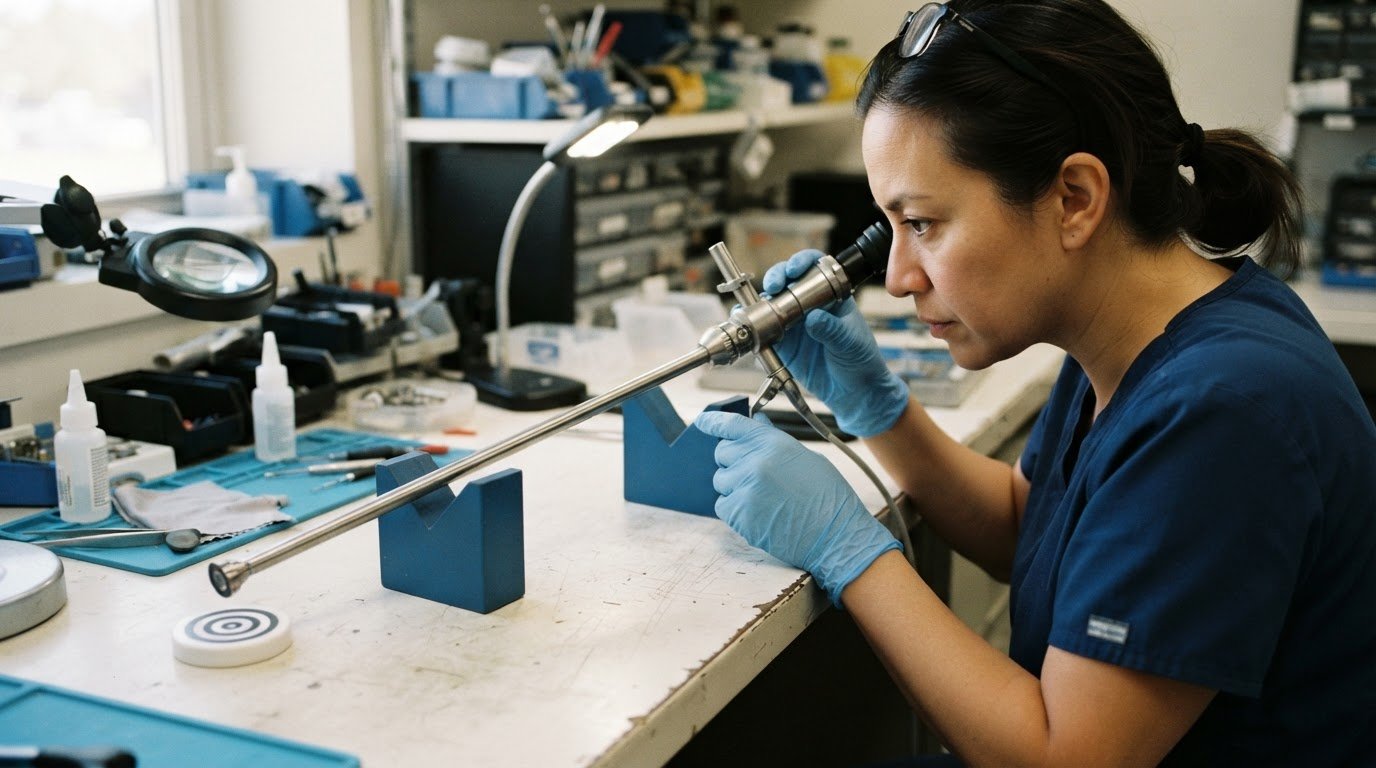
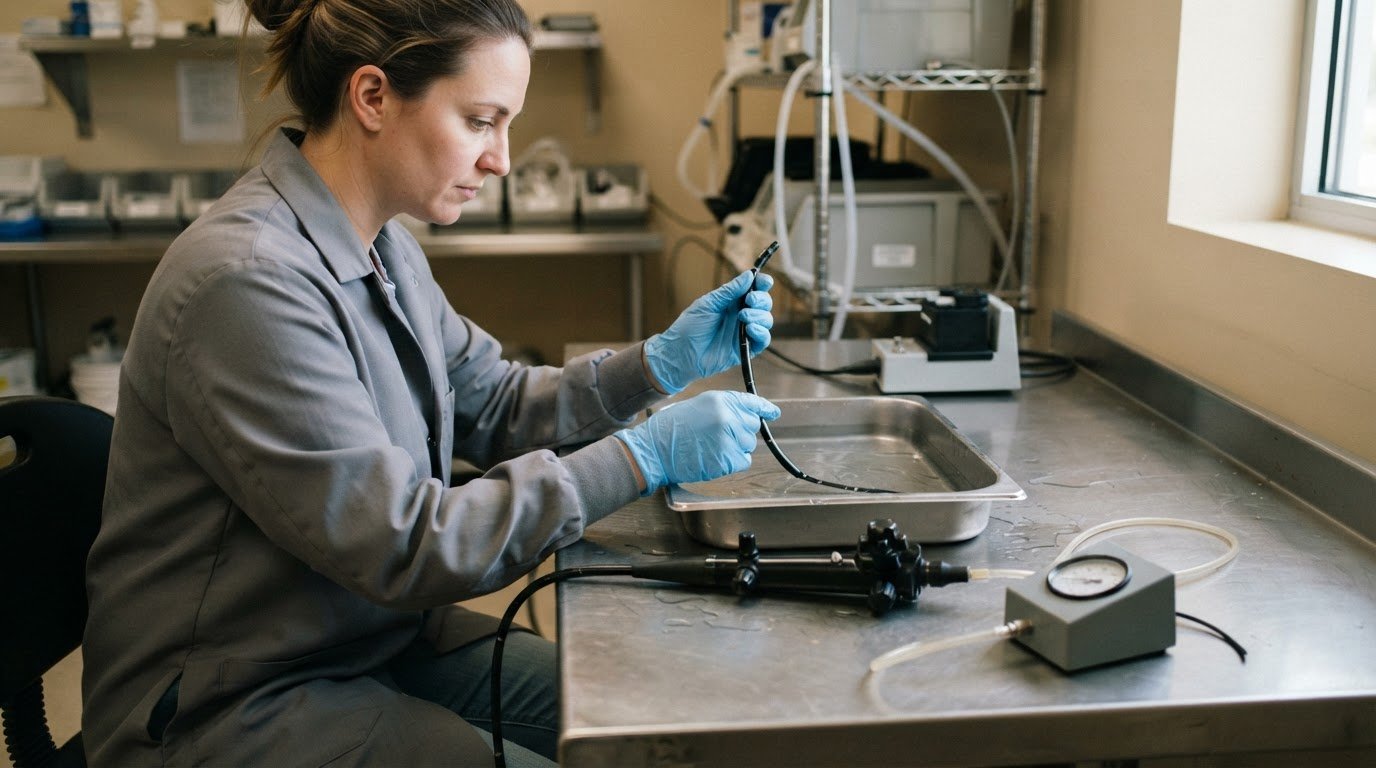
For work that extends beyond assembly, Fong’s Engineering & Manufacturing Private Limited offers CDMO Services and OEM Solutions. Endoscope Repair & Refurbishment addresses a separate need: maintaining reusable endoscopes and surgical instruments. These capabilities may be relevant when manufacturing priorities span device production and instrument lifecycle support.
Discuss the requirements and next steps with Fong’s Engineering & Manufacturing Private Limited. A clear production plan is a practical foundation for moving forward with confidence.
Frequently Asked Questions
Outsourcing or Insourcing: What’s the Right Choice?
Choose the model that best supports your production needs and strategic priorities. In-house assembly can suit a process that requires frequent engineering input or close internal oversight. Outsourcing can fit defined work that needs external capacity or capabilities. For example, a company developing a new assembly process may retain early production internally, then reassess the model once requirements stabilize.
What are the pros and cons of insourcing versus outsourcing medical device assembly?
Insourcing gives teams direct access to production and faster internal communication, but the company must sustain the operation’s resources and expertise. Outsourcing can provide access to an established manufacturing operation, while introducing supplier coordination and information-sharing considerations. A useful comparison is to identify who makes process decisions, who executes each task, and how production issues are reported to engineering.
How do in-house and outsourced medical device assembly costs compare?
In-house costs include maintaining the resources needed to assemble devices, even when demand fluctuates. Outsourced costs relate to the contracted scope and coordination required across the supplier relationship. Compare the full operating model, including equipment use, staffing, training, materials handling, and supplier oversight. A low unit cost alone may hide idle internal capacity or the work needed to manage an external handoff.
What factors determine whether to insource or outsource medical device assembly?
Base the decision on production volume, assembly complexity, available internal capability, process ownership, and how closely assembly connects to product development. A process that changes often, for instance, may benefit from close engineering involvement. A stable, clearly defined operation may be easier to assign externally. Also consider information sensitivity and whether the required equipment and quality processes fit the chosen model.
What quality system and supplier controls are required for outsourced medical device assembly under FDA QMSR and ISO 13485?
Translate FDA QMSR and ISO 13485 quality-system expectations into documented controls for the supplier relationship. Define responsibilities for approved work instructions, production records, traceability, change communication, nonconformances, and corrective actions. Establish how the manufacturer oversees supplier performance and handles quality issues. The precise controls should reflect the assembly activities and the device’s quality requirements, rather than relying on a generic checklist.
When does insourcing medical device assembly make more sense than outsourcing?
Insourcing may fit when assembly knowledge is central to product development, sensitive process details need close internal control, or production requires frequent collaboration with engineering. It can also make sense when a company already has suitable staff and equipment that will be used consistently. For example, keeping a changing prototype process in-house may help engineers incorporate build feedback before transferring a stable production process.