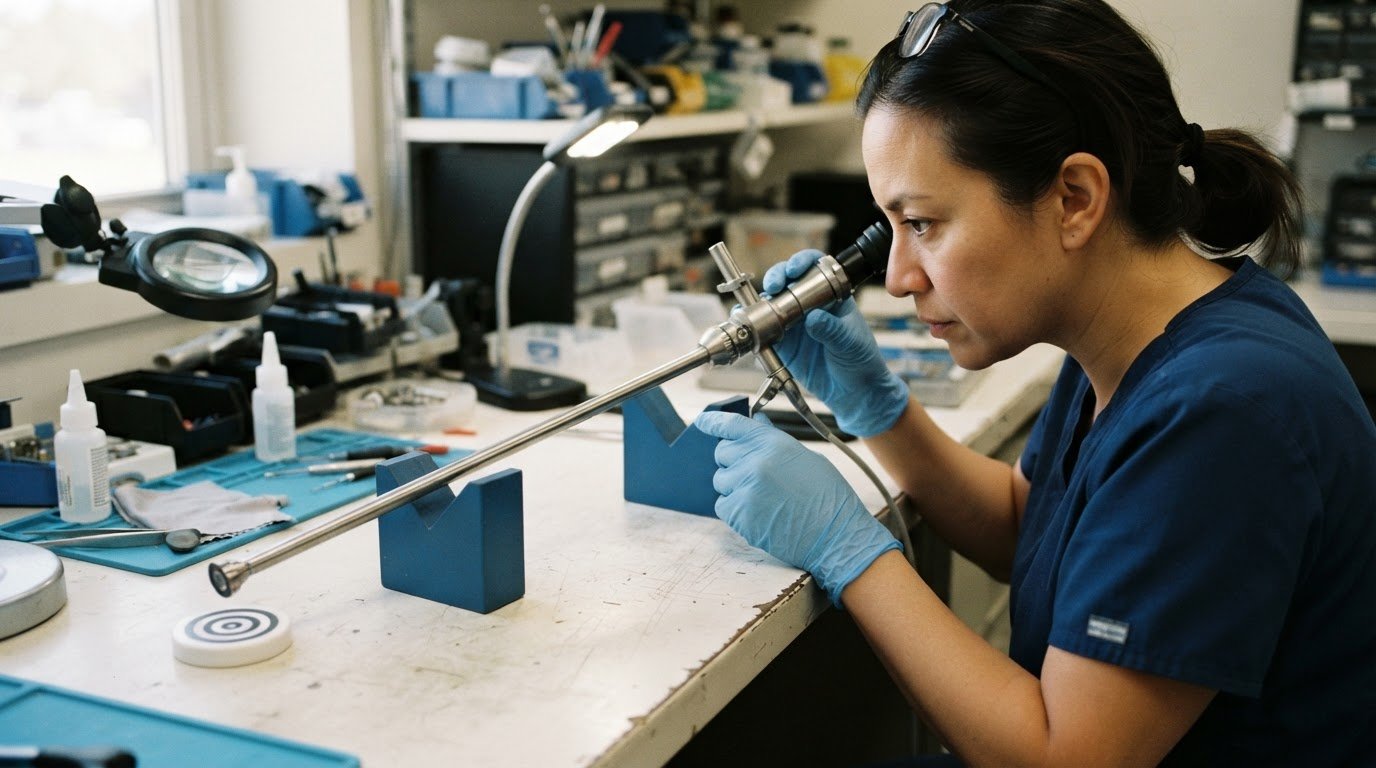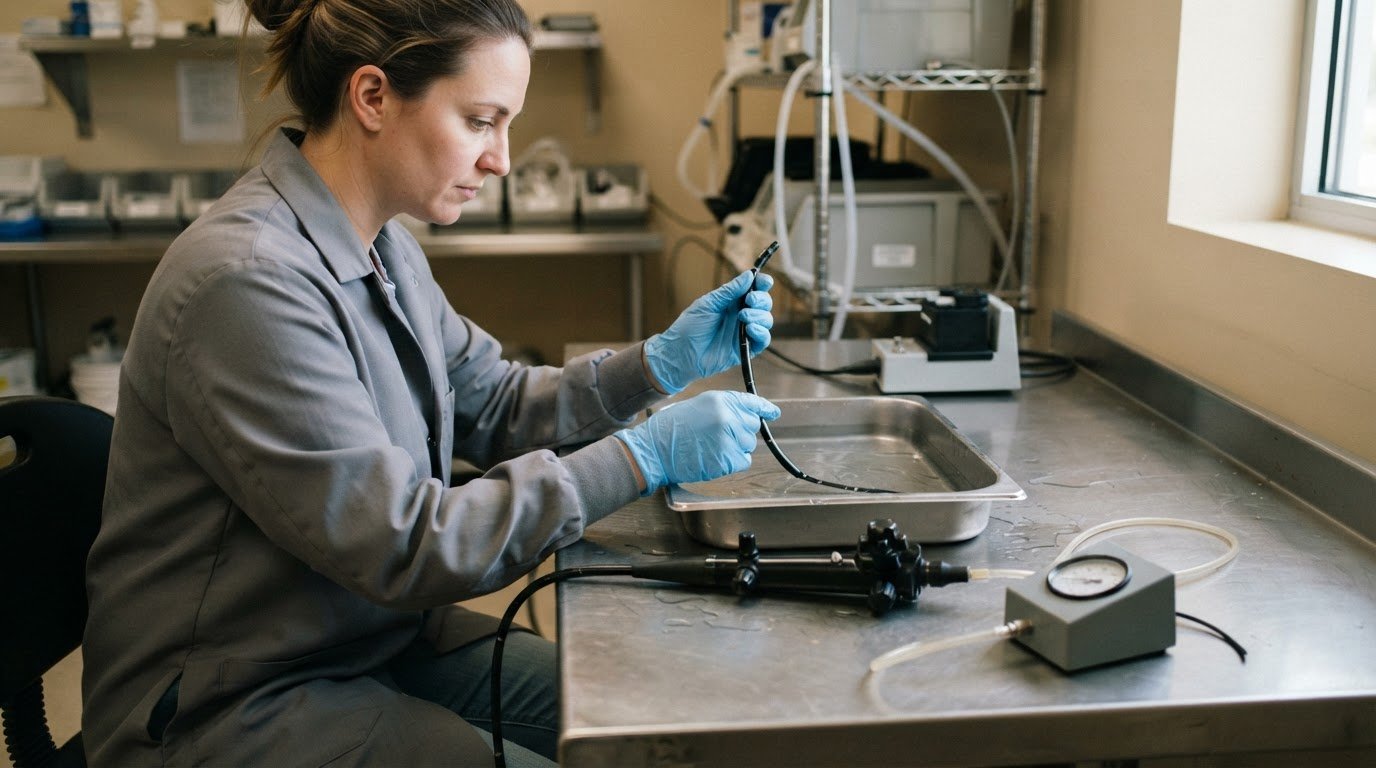

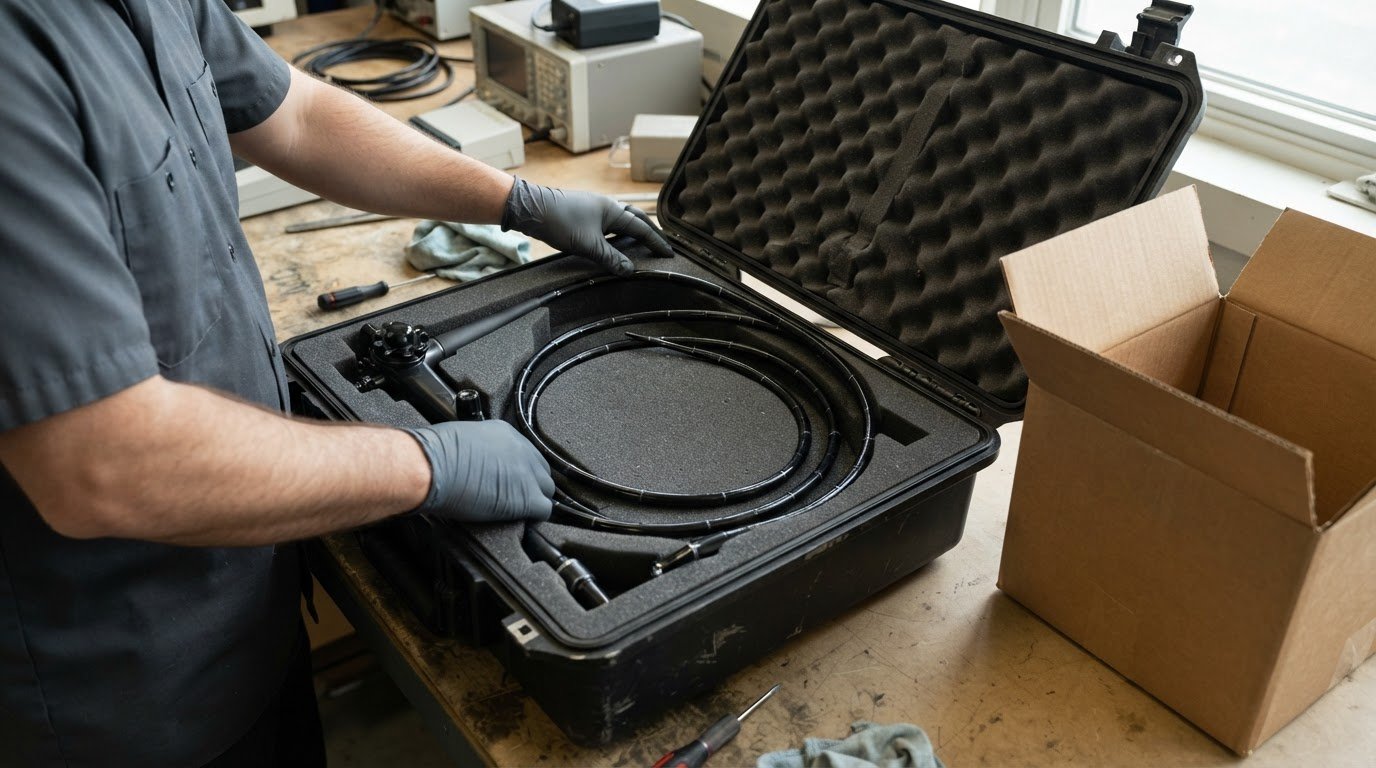
A five-day repair target is a best-case estimate for off-site surgical instrument repair. Shipping adds time before the instrument returns to your facility. The actual turnaround time for surgical instrument repair depends on the instrument, the work required, and the outbound and return transit. Endoscopic instruments may need specialized assessment as part of repair or refurbishment.
When procedure planning depends on an instrument’s return, a clear timeline matters. This article explains the factors that affect repair duration, how to account for shipping, and why endoscopic instrument repairs may follow a different process. It also covers what to consider when reviewing a repair partner’s expertise, testing, and status updates, so you can plan around the full time an instrument is out of service.
Key Takeaways
- Allow for both repair work and outbound and return transit when planning an off-site repair; five days is a best-case turnaround target, not a shipping-inclusive timeline.
- Assess a repair partner’s experience with your instrument types and understand how instruments are evaluated and tested before they’re returned.
- Use status updates and repair reports to track instruments out of service and support procedure planning.
- Account for the scope of work when estimating timing: OEM repairs can take 30 days or more, while urgent requests depend on the repair required.
- Endoscopic instruments may require specialized repair and refurbishment, so consider their specific needs when planning service.
Evaluating surgical instrument repair vendors
Start with the instrument, not a general service description. A repair partner’s expertise should match the devices your facility uses, such as micro-instruments or endoscopic instruments. Different instrument types require different repair capabilities. Matching the repair scope to the instrument helps clarify which expertise and processes the work calls for.
In the United States, ISO 13485:2016 is identified as a quality standard relevant to surgical instrument repair. Use it as one evaluation point alongside the vendor’s documented process for receiving, assessing, repairing, and testing instruments. The standard’s relevance does not answer every question about a particular repair, so examine the work records and instrument-specific checks that support the return decision.
Ask how the repair evaluation leads to an estimate. A useful estimate links the reported damage to the proposed work, any components involved, and findings uncovered during assessment. For example, a loose joint may seem to need only a limited repair, while inspection may reveal wear elsewhere that affects function. The repair provider should explain how new findings affect the scope, approval process, and expected sequence of work.
Post-repair testing deserves as much attention as the repair itself. Find out how the instrument is assessed against its intended function, how results are documented, and how readiness for return is determined. A clear process identifies the repair completed, the tests performed, and the response to any failed check. For an instrument with multiple moving parts, ask how each relevant function is assessed rather than relying on a general statement that the repair is complete.
Use a consistent framework to review repair providers. Consider these operational details:
- Instrument experience: Confirm that the vendor regularly handles the instrument categories your facility sends for repair.
- Evaluation and testing: Review how the vendor records condition, repair work, and post-repair function checks.
- Repair scope: Determine whether the service specializes in micro-instrument repair or covers general repairs.
- Accountability: Consider the vendor’s track record, including reviews or testimonials from healthcare professionals.
- Business model: Understand whether the vendor has an interest in selling new instruments, which may shape repair recommendations.
Repair reports, end-of-day reports, and quarterly business reviews can help facilities track instruments under repair. Status updates make those records more useful for planning, especially when several items are out of service. Before choosing a repair partner, establish how status is shared and what each report includes. This gives your team a practical view of the repair queue without treating every instrument as the same job.
2. Off-site repair turnaround and shipping
Off-site repair adds transport to the technical work. A best-case target for an off-site surgical instrument repair shop is five days, but shipping affects the total time an instrument is away. The timeline may include dispatch, receipt, assessment, repair, post-repair checks, and return transit. Treat a five-day target as the repair shop’s turnaround aim, not automatically as a door-to-door timeline.
Map each stage before sending an instrument. Record when it leaves, when the repair facility receives it, and when it is dispatched back. A repair completed promptly can still take longer to return if transit adds time. Ask for the estimated return-shipping duration and the cost of expedited shipping as separate planning details.
In-house repair can offer same-day service at a hospital, while off-site work generally includes repair time and shipping in both directions. In-house service can reduce transport time. Off-site repair may require a wider planning window, even when the repair itself meets the five-day best-case target.
Shipping arrangements also affect the estimate and instrument availability. Include outbound and return shipping, packaging, transit time, and any expedited option in the repair plan. Do not assume free shipping is included. Treat shipping terms separately from repair work so you can compare the technical scope and transportation requirements clearly.
Facilities can avoid preventable delays by coordinating dispatch with instrument rotation. Identify instruments needed for upcoming procedures, then schedule shipment while suitable alternatives remain available. Keep an inventory record of each item’s status from dispatch through return. This helps teams identify whether a delay is due to transit, assessment, repair, or final checks.
- Before dispatch: Record the instrument identity, reported issue, and shipping date.
- During repair: Track receipt, evaluation, and progress updates.
- For return: Capture dispatch details and estimated arrival timing.
These steps create a more reliable view of the repair cycle without treating shipping as incidental. For an endoscope repair project, discuss repair planning as part of coordinating the instrument’s return to service.
Off-site surgical instrument repair shops generally cite a five-day turnaround as a best-case scenario. Use it as a planning reference, not a promise about the full time an instrument will be away. A dispatch plan should account for the time before repair begins and the return journey after completion. When arranging service, distinguish the estimate for repair work from the estimate for the instrument’s full trip. This helps teams determine whether the expected return fits instrument rotation and procedure schedules.
If the expected return changes, update the availability plan and notify relevant staff that the instrument remains away. Compare the revised estimate with available alternatives to decide whether shipment timing needs to change. Clear expectations about the best-case repair turnaround and the wider shipping window help teams plan without assuming that the repair-shop target includes transit.
3. Repair turnaround time
Repair duration depends on instrument type, damage, required work, parts, and post-repair testing. A minor adjustment differs from work that requires disassembly, component replacement, and several functional checks. These steps determine how long technicians need before the instrument is ready to return.
The initial evaluation shapes the work plan. Technicians identify the reported fault, inspect the instrument, and determine whether other issues affect its function. For example, restricted movement may prompt closer examination of connected components. If inspection reveals additional work, the repair scope and schedule may change.
Instrument design also matters. A straightforward repair and an endoscopic instrument repair can involve different components and evaluation needs. Specialized instruments may require matching expertise and suitable test procedures. The instrument’s condition and fault are therefore more informative than a broad average repair estimate.
Several stages can influence the overall repair period:
- Assessment: Inspection establishes the fault and the work required.
- Repair scope: Replacing or adjusting components can involve different tasks.
- Parts: Required components must be available to complete the repair.
- Work queue: The number of instruments awaiting assessment or repair affects scheduling.
- Testing: Functional checks follow repair before the instrument is released.
Include testing in the timeline. A completed repair still needs evaluation against the instrument’s intended function. For instance, a hinged instrument should be checked for the movement affected by its reported fault. A complex device may need several checks, while a narrower repair may require fewer. The expected return date should account for this verification.
Facilities can plan more effectively by recording when each instrument leaves service and the repair stage reported. Status records can distinguish assessment delays from repair or testing time. This gives staff a clearer basis for arranging instrument rotation and procedure schedules. Since repair delays can postpone procedures and increase costs, tracking progress supports operational planning.
For patient care schedules, plan around the instrument’s function and the procedure that depends on it. Identify whether an alternative is available, then prioritize dispatch according to clinical scheduling. This does not shorten the technical work, but it helps the facility manage availability while repair and testing proceed.
4. Repair turnaround times
Repair duration varies with instrument type, damage severity, and the work required. A limited adjustment differs from work involving extensive disassembly, component replacement, and additional testing. Assessment establishes the scope and helps determine the sequence of work.
Instrument design influences the repair scope. A pair of scissors, for example, may need attention to a specific function, while a more complex instrument can require assessment of several components. Damage matters too: a clearly defined fault may need narrower work than damage affecting connected parts. Instrument-specific assessment is more useful than applying one timeline to every repair.
OEM instrument repairs can take 30 days or more. That timeframe illustrates why repair category matters: the required process, parts, and checks all contribute to the schedule. It shouldn’t be treated as a general estimate for every instrument or repair type. The assessment and work plan provide the relevant basis for planning each case.
Repair can involve several stages. Technicians first inspect the instrument and identify the reported fault. They then determine the work required and whether further damage changes the scope. After the repair, they assess the instrument’s function before release. Each stage affects completion time, so an estimate should account for more than hands-on repair.
For a facility, the practical impact depends on the instrument’s role in scheduled procedures. If a frequently used instrument is unavailable, the team may need to adjust its rotation or use an alternative. A less frequently used item can create a different operational constraint. Recording the instrument type, reported issue, and procedure needs helps staff assess the effect of each repair.
- Instrument type: Identify whether the repair involves scissors, an endoscopic instrument, or another device.
- Damage severity: Describe the observed fault and any affected functions.
- Repair scope: Separate the initial assessment from the work approved after evaluation.
- Parts and testing: Include required components and post-repair checks in scheduling.
- Clinical use: Consider how the instrument’s absence affects procedure planning.
These details help build a realistic schedule without treating repair duration as fixed. If assessment reveals a broader fault than initially reported, for example, the work plan may change. An updated scope should explain which additional tasks affect completion and testing.
For endoscopic instruments, repair and refurbishment should reflect the device’s design and the functional evaluation it requires. Matching the assessment to the instrument connects the repair scope with testing and return planning. Facilities can then plan instrument availability around the work required.
5. How long does emergency or rush surgical instrument repair take?
Emergency repairs have no single turnaround period that applies to every instrument. Urgency can affect scheduling, but the work still requires assessment, repair, and functional testing. The U.S. Bureau of Labor Statistics notes that urgency in repairing vital medical equipment can affect turnaround because repairers are expected to work quickly. This explains why urgent work may receive attention without establishing a fixed completion time.
A rush request should distinguish the facility’s clinical need from the technical scope. Identify the instrument, the fault, and the affected procedure, then communicate the required return timing. A defined issue may involve different work from damage discovered during assessment. Technicians still need to determine the scope and assess the instrument after repair.
Shipping also affects emergency timing. Off-site repairs involve outbound and return transit, while on-site surgical instrument repairs can offer same-day service at a hospital. The five-day off-site target is a best-case repair-shop turnaround, not an emergency deadline or a shipping-inclusive promise. Account for the instrument’s location and transport stages when planning for urgent needs.
Urgency does not remove essential repair stages. Assessment identifies the reported problem, repair addresses the fault, and post-repair testing evaluates function before return. For example, an instrument with restricted movement needs that function checked after repair. Skipping or compressing evaluation would not provide a sound basis for returning it to service.
For an urgent request, organize the information needed for triage and planning:
- Instrument identity: Record the device type and identifying details used by the facility.
- Reported fault: Describe the observed issue, such as a damaged component or restricted movement.
- Clinical impact: State which scheduled procedure depends on the instrument and when it is needed.
- Logistics: Include dispatch or collection timing and return-shipping needs for off-site work.
These details help the repair team understand urgency alongside the required work. A facility can also identify an alternative instrument or adjust rotation while the original is assessed. That planning supports patient-care schedules without treating a rush label as a substitute for repair and testing. OEM repairs can take 30 days or more, illustrating why repair category and scope matter in scheduling.
For endoscopic instruments, urgent planning should account for the specific repair and refurbishment work required. Share the instrument’s issue and scheduling constraints through discuss urgent repair planning so the request can be considered with its technical scope.
When evaluating a surgical instrument repair provider, ask about return-shipping duration and expedited-shipping costs. These details clarify the shipping portion of an urgent repair plan. Consider them alongside the repair estimate when choosing a provider.
Fong’s Engineering & Manufacturing Private Limited: Endoscope Repair & Refurbishment
Fong’s Engineering & Manufacturing Private Limited provides endoscope repair and refurbishment, including restoration of reusable endoscopes to like-new condition. This service is for endoscopes requiring repair or refurbishment, not general surgical instrument maintenance. The instrument’s condition and required work shape the process, so planning should account for assessment, repair, and functional evaluation.
For facilities considering repair alongside broader medical-device development or production needs, Fong’s also offers CDMO Services, OEM Solutions, and Micro-precision Components. These offerings address different project requirements and are distinct from endoscope repair.
To discuss endoscope repair or refurbishment for your instruments, contact Fong’s Engineering & Manufacturing Private Limited.
Build a Repair Plan Around Your Instruments
Use your next repair request to establish a clearer planning process. Align instrument priorities with procedure schedules, assign responsibility for status updates, and decide how repair information will be recorded. A practical turnaround time for surgical instrument repair plan connects the instrument’s clinical role with the repair scope and your facility’s operational needs.
For endoscopic instruments, consider whether repair or refurbishment is the appropriate next step. A focused discussion about the instrument and its requirements can help define the work ahead. Fong’s Engineering & Manufacturing Private Limited provides endoscope repair and refurbishment, while CDMO Services and OEM Solutions support separate medical-device development and manufacturing needs.
Contact Fong’s Engineering & Manufacturing Private Limited to discuss your endoscope repair or refurbishment needs. A considered next step can help your team plan instrument support with greater clarity.
Frequently Asked Questions
Need an Instrument Repaired?
Yes. Fong’s Engineering & Manufacturing Private Limited repairs and refurbishes reusable endoscopes, restoring them to like-new condition. Describe the instrument and its issue when making a repair request. An endoscope that needs restoration is a good fit for this service. It is separate from the company’s CDMO and OEM offerings for medical-device development and manufacturing.
What is the typical turnaround time for surgical instrument repair?
There is no single timeline for every repair, because instrument type and required work affect the schedule. Off-site shops may target five days in a best-case repair scenario, while OEM instrument repairs can take 30 days or more. These are different repair contexts, not a universal estimate. For planning, distinguish the repair-shop timeline from any assessment, testing, or transport time associated with the specific instrument.
How long does shipping add to surgical instrument repair time?
Shipping adds the time needed for outbound transit and the return journey. The added time depends on the route, carrier service, dispatch timing, and chosen shipping speed. For example, an instrument dispatched after a carrier’s collection window may not begin its journey until a later pickup. Include both transit legs when planning instrument availability against inventory and procedure schedules.
What steps are involved in surgical instrument repair, testing, and return to service?
The process typically moves from intake and condition assessment to repair, functional evaluation, and return. Assessment identifies the reported fault and helps establish the work scope. Technicians then complete the repair and test the functions affected by it. For example, a repaired instrument with moving components should be checked for the relevant movement. After return, the facility follows its established instrument-handling workflow before clinical use.