
A manufacturer’s decision to stop servicing an endoscope doesn’t, by itself, determine whether it can remain clinically useful. Well-maintained endoscopes may remain dependable for years. Extending the life of surgical endoscopes starts with consistent equipment management, device-specific reprocessing, and informed repair decisions. Service history and professional evaluation help guide whether to repair, refurbish, or retire a device.
It’s understandable to weigh the risks of keeping older equipment in service against the cost and disruption of replacement. The decision calls for more than age alone: cleaning practices, infection-control considerations, device condition, and serviceability all matter. Rigid endoscopes also warrant attention in lifecycle planning, where repair and refurbishment can be part of the assessment.
This article explains practical ways to manage equipment, follow manufacturer instructions for reprocessing, and assess repair options. It also shows how professional repair and refurbishment fit into lifecycle decisions, helping you identify what supports dependable performance and responsible equipment planning.
Key Takeaways
- Use equipment service history and condition to inform whether an endoscope should be repaired, refurbished, or retired, rather than relying on age alone.
- Reprocessing needs to follow the device-specific manufacturer instructions, with procedures applied consistently across care settings.
- Cleaning and disinfection are distinct parts of infection prevention; thorough manual cleaning supports the effectiveness of subsequent processing.
- Wear and failure can reflect equipment condition and handling as well as serviceability, so a professional evaluation can clarify the next step.
- When repair or refurbishment is being considered, share the device’s service history and reported issues to support an informed assessment.
1. Endoscope equipment management cost savings
Good equipment management can prevent avoidable replacement by making each endoscope’s condition and service history visible. Start with an inventory that identifies each device, its type, location, and status. Add service records, reported faults, repairs, refurbishment, and return-to-use dates. Complete records help teams distinguish recurring problems from isolated faults and give decision-makers a clearer basis for planning maintenance and evaluating repair options.
Use a consistent record format across inpatient and outpatient settings. Staff can, for example, log a damaged image, intermittent function, or handling incident against the relevant device. Note when the issue occurred and what action followed. This makes patterns easier to identify and supports better equipment planning. It also links operational interruptions to specific devices instead of treating each service event as unrelated.
A manufacturer’s decision to stop servicing an endoscope may reflect a business choice, not a judgment about its clinical performance. That distinction matters when planning replacement. Service status alone does not describe a device’s condition, repair history, or performance. Before retiring a surgical endoscope, review its service history and obtain a professional evaluation. The findings can inform whether repair, refurbishment, or retirement is appropriate.
Keep manufacturer communications with the device record. The U.S. Food and Drug Administration provides manufacturer-specific instructions and updates on device safety alerts. When a notice applies, record the affected model and the response to maintain a traceable management history. Current manufacturer information also gives teams a consistent reference when reviewing serviceability and device-specific handling requirements.
Plan maintenance around documented condition and actual service patterns, rather than age alone. If an endoscope repeatedly returns with the same issue, its history can guide a focused technical evaluation. If faults are isolated, the record may show a different pattern. Either way, maintenance decisions can be more specific, helping teams distinguish equipment that needs attention from equipment that remains suitable for its intended use.
For cost-conscious lifecycle planning, compare the practical options for each device: continued use, repair, refurbishment, or retirement. Consider its condition, recorded faults, service history, and professional evaluation. Don’t treat replacement as automatic when a manufacturer ends servicing. A documented decision process can help preserve usable equipment, target repair resources, and reduce unnecessary disruption to clinical operations.
2. Endoscope design and cleaning challenges
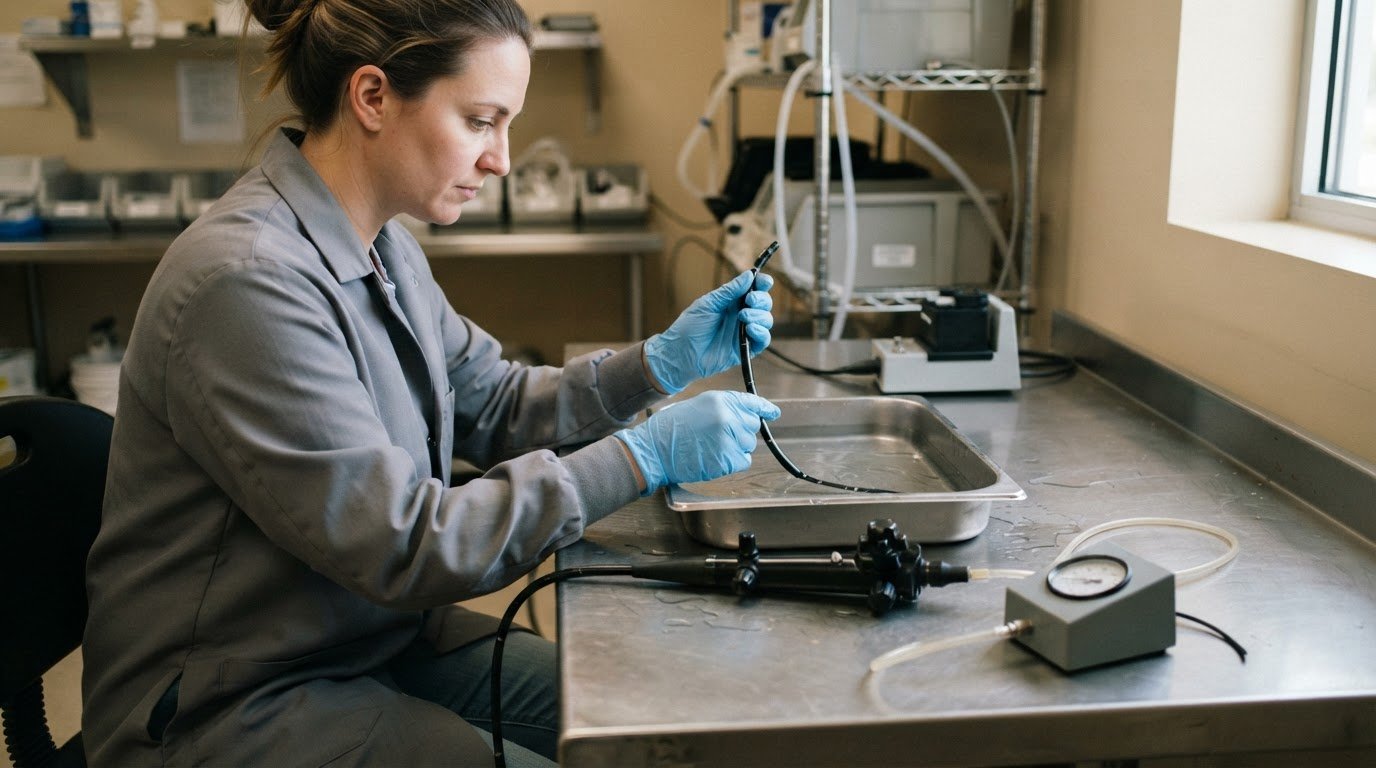
Flexible endoscopes combine delicate components with channels and surfaces that require careful processing. Their heat sensitivity limits sterilization options: flexible endoscopes cannot undergo steam sterilization. Reprocessing must follow the device’s design and its manufacturer’s instructions for use. A method suitable for one model may not suit another, so care procedures must match the specific device. This model-specific approach is central to extending the life of surgical endoscopes, since unsuitable handling can compromise their condition.
Manual cleaning is a critical step, not a substitute for later processing. It can reduce bacterial load by 102, or by up to 104 when every manual-cleaning step is completed perfectly. Those figures show why consistency matters: missed steps can leave more contamination for subsequent disinfection to address. Staff training and adherence to the device-specific process help make cleaning repeatable across operators.
A professional endoscope service should apply the manufacturer’s instructions for use to the exact device model, including its care, maintenance, and reprocessing requirements. These instructions guide the appropriate method and help prevent incompatible handling or processing from compromising components.
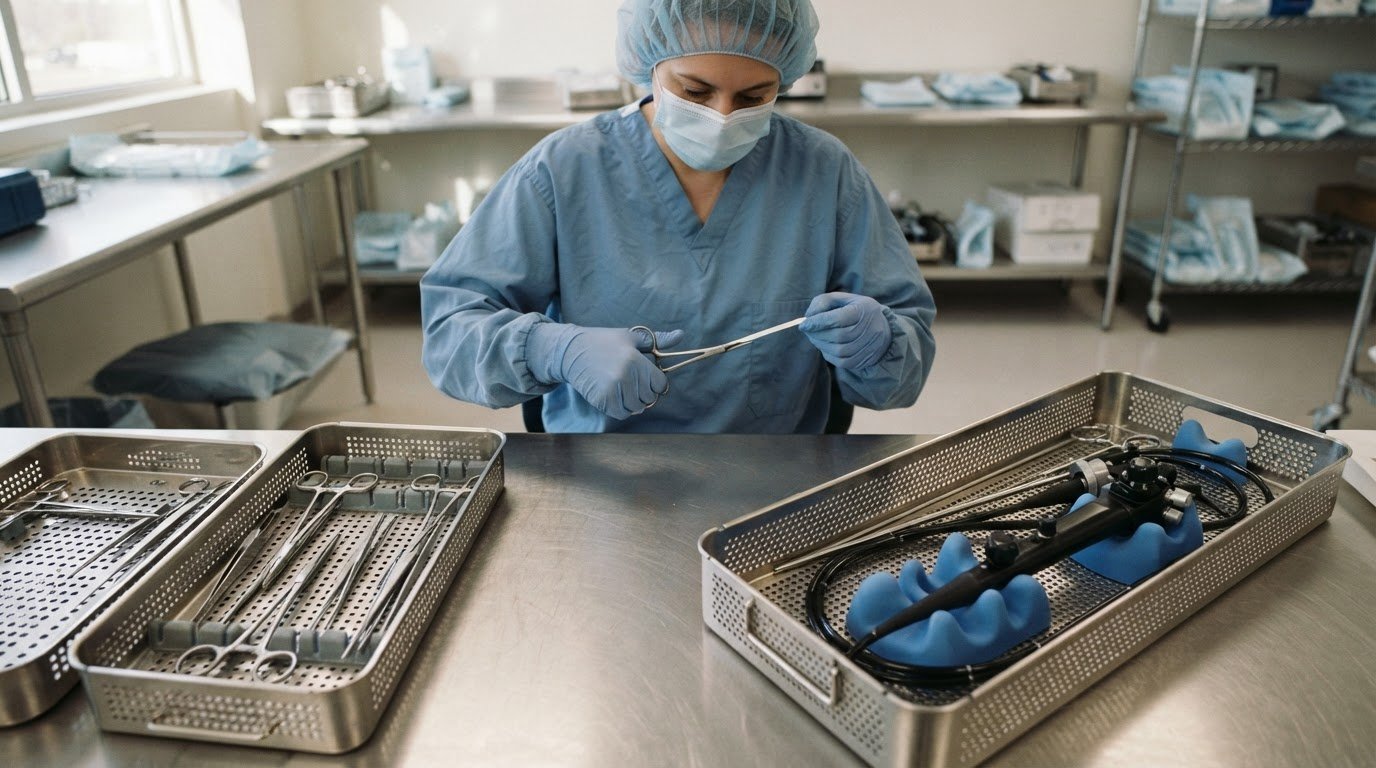
Routine maintenance should follow those instructions and include condition checks, documented service observations, and storage as specified for the device. For terminally sterilized flexible endoscopes, retain the tray and packaging in which sterilization occurred. This preserves the specified packaging arrangement instead of introducing an unsupported storage method.
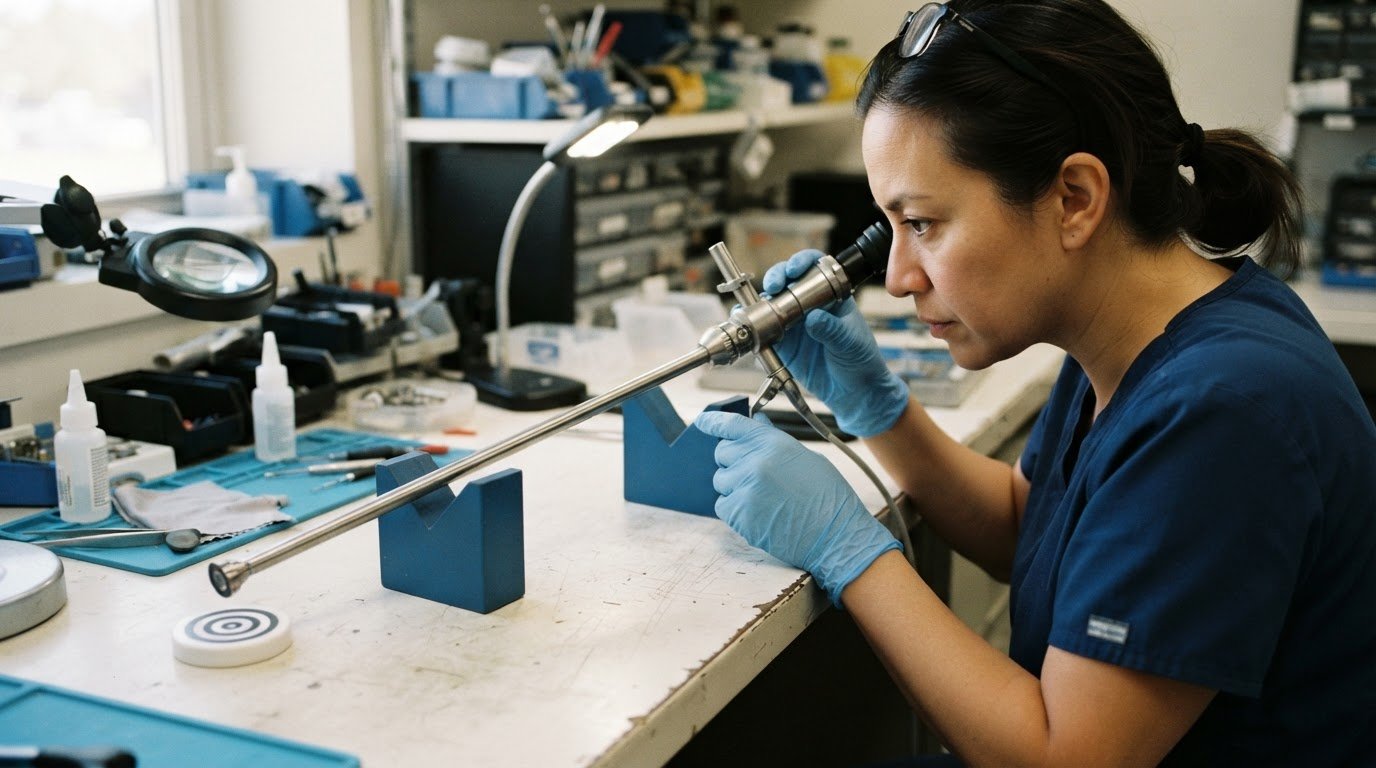
Design details make careful handling essential. Channels, joints, and delicate surfaces can be difficult to access, while damage may affect function or make cleaning less effective. A professional assessment can connect a reported fault with the device’s service history and establish whether repair or refurbishment is appropriate. Keep the model information and observed performance issues in the device record. For example, intermittent function or visible damage gives the service team a specific point to assess.
Consistent processing matters across care settings. Facilities can use the manufacturer’s instructions as a shared reference for staff training and procedural documentation. The U.S. Food and Drug Administration provides manufacturer-specific instructions and updates on device safety alerts, which can inform reviews of applicable device information. Record relevant updates and responses alongside the endoscope’s service documentation. Consistent implementation supports extending the life of surgical endoscopes while keeping care procedures aligned with device requirements.
When cleaning or maintenance concerns coincide with a device fault, professional endoscope repair and refurbishment can assess its condition alongside its documented history. A clear record helps the technical evaluation focus on the specific device and reported issue.
Manual cleaning can reduce the bacterial load by 10^2, or by up to 10^4 when all manual-cleaning steps are completed perfectly. The larger reduction is tied to completing every step, not simply to carrying out a cleaning pass. That distinction makes the stated outcome a reminder to keep the full procedure intact and consistent, rather than treating a partial sequence as equivalent to complete manual cleaning. The figures describe different results under different conditions, so the completion of every step remains central to the best stated reduction.
3. Infection and cross-contamination risks
U.S. endoscope reprocessing draws on manufacturer instructions, infection-control guidance, and recognized processing standards. The U.S. Food and Drug Administration provides manufacturer-specific instructions and device safety alerts. ANSI/AAMI ST91:2021 addresses flexible and semi-rigid endoscope processing, while the CDC provides its Guideline for Disinfection and Sterilization in Healthcare Facilities.
Reprocessing matters because contamination can persist if cleaning and disinfection are inadequate. A Johns Hopkins University study covering six states found endoscope-related infections in one out of every 1,100 procedures. That finding underscores why each processing stage, from cleaning through high-level disinfection, needs consistent execution and documentation.
Microbial reductions are expressed in logarithmic steps. A 1-log reduction means inactivating 90 percent of target microbes. High-level disinfection can reduce microbes by a further 106 after cleaning, and it is the minimum standard for flexible endoscope reprocessing. These measures depend on effective preceding cleaning; disinfection does not replace that step.
The remaining contamination illustrates why process control matters. A flexible endoscope may carry up to 10 billion bacteria after a standard procedure. With maximum initial contamination, average manual-cleaning efficacy, and standard high-level disinfection, 100 bacteria may remain before storage. These figures describe the basis of a 6-log reduction comparison, not a guarantee of the result for every device or cycle.
A damaged or poorly maintained endoscope can raise two related concerns: impaired function and more difficult reprocessing. Damage to components or surfaces may interfere with effective cleaning, while a performance fault can affect a procedure. If a device shows damage or inconsistent function, have it assessed before returning it to use. Recording the fault and service history helps connect the technical evaluation with the device’s condition.
Practical infection-control measures include following the device-specific instructions for use, documenting each reprocessing cycle, and keeping procedures consistent between staff and care settings. If a safety alert applies, incorporate the manufacturer’s instructions into relevant device records and workflows. For example, a repeat fault after processing warrants review of both the endoscope’s condition and its documented processing history.
Infection prevention and lifecycle management rely on the same disciplined records. A clear account of processing, storage, alerts, and device faults helps teams identify patterns and respond appropriately. When damage could compromise performance or reprocessing, a professional evaluation can determine whether repair, refurbishment, or retirement is the sound next step.
Follow the device-specific instructions for use during reprocessing and care. Assess an endoscope with damage or inconsistent function before returning it to use, and record faults and service history. Incorporate applicable safety alerts into device records and workflows.
These practices also support broader infection-prevention efforts by making reliable reprocessing part of routine care. Boston Consulting Group reported a 20 percent reduction in all hospital-acquired infections at the health system discussed. High-level disinfection can reduce microbes by a further 10^6 after cleaning, but that step remains dependent on effective cleaning and consistent execution. Maintaining clear records helps teams identify deviations and reinforce the steps that protect patients from preventable exposure.
4. What is the typical lifespan of a surgical endoscope?
There isn’t one dependable lifespan for every surgical endoscope. Well-maintained endoscopes may remain dependable for years when properly cared for. Practical service life depends on the individual device’s condition and performance, not age alone. A model’s service history, recurring faults, and assessment findings provide a more useful basis for lifecycle decisions than an assumed retirement date.
Start with the device record. A professional review can consider its service history, previous repairs, reported faults, and current condition together. For example, an endoscope with a documented isolated fault calls for a different assessment from one with repeated problems affecting the same function. This record-based approach helps distinguish a repairable issue from a pattern that may affect continued use.
Usage and care also shape a device’s condition over time. Endoscopes are handled, reprocessed, transported, and stored throughout their working life. A professional assessment can consider how these practices relate to reported damage or performance changes. Manufacturer instructions remain the reference for device-specific care. Consistent application helps avoid unsuitable handling and gives teams a clearer baseline for reviewing changes in condition.
Age alone cannot show whether an endoscope remains dependable. A newer device with an unresolved fault may need assessment, while an older one may still function as intended. The decision should account for current performance, documented history, and technical evaluation. This avoids assigning a lifespan based only on calendar years or treating every device of the same age identically.
Serviceability is another factor. A manufacturer may stop servicing a model for business reasons, which does not by itself establish that the device has lost clinical performance. Before retirement, review the service record and obtain a professional evaluation. The assessment can clarify the device’s condition and support an informed choice among continued use, repair, refurbishment, or retirement.
Consider the operational effect of each option, too. A device that repeatedly develops faults may interrupt availability, while a successful repair may address a specific issue. Relevant evidence includes the fault pattern, current condition, and previous service outcomes. Recording the decision and its technical basis helps future reviews build on the same device history rather than start with incomplete records.
For lifecycle planning, set review points around documented events rather than an unsupported fixed age limit. A reported fault, change in performance, or new service evaluation can prompt reassessment. Compare findings with earlier device records and applicable manufacturer instructions. This makes expected lifespan a device-specific conclusion grounded in condition and maintenance, not a universal number.
5. What factors cause surgical endoscopes to wear out or fail?
Endoscope wear usually develops through interacting stresses, not one isolated event. Repeated handling, reprocessing, transport, and storage can all affect condition. A gradual change in performance may have several contributing causes. Reviewing the device’s history helps connect reported problems with specific events and maintenance patterns.
Mechanical stress is one potential source of damage. A drop during transfer, pressure on a delicate component, or repeated strain during handling can affect function. Even without visible damage, an endoscope may develop intermittent performance problems. Record the fault, when it appeared, and whether it recurred. These details help a professional assessment focus on the relevant issue.
Reprocessing can also contribute to wear when the method doesn’t match the device’s instructions for use. Flexible endoscopes are heat-sensitive and cannot undergo steam sterilization. An incompatible process may expose components to conditions they weren’t designed to withstand. For example, a process intended for different equipment can create avoidable stress. Device-specific instructions are the reference for appropriate care.
Cleaning challenges can affect both device condition and safe use. Flexible endoscopes have channels and surfaces that need careful processing, so missed steps can leave contamination behind. Incomplete manual cleaning also places greater demands on later disinfection. Consistent staff procedures and documented processing help identify whether a concern follows a particular handling or cleaning pattern.
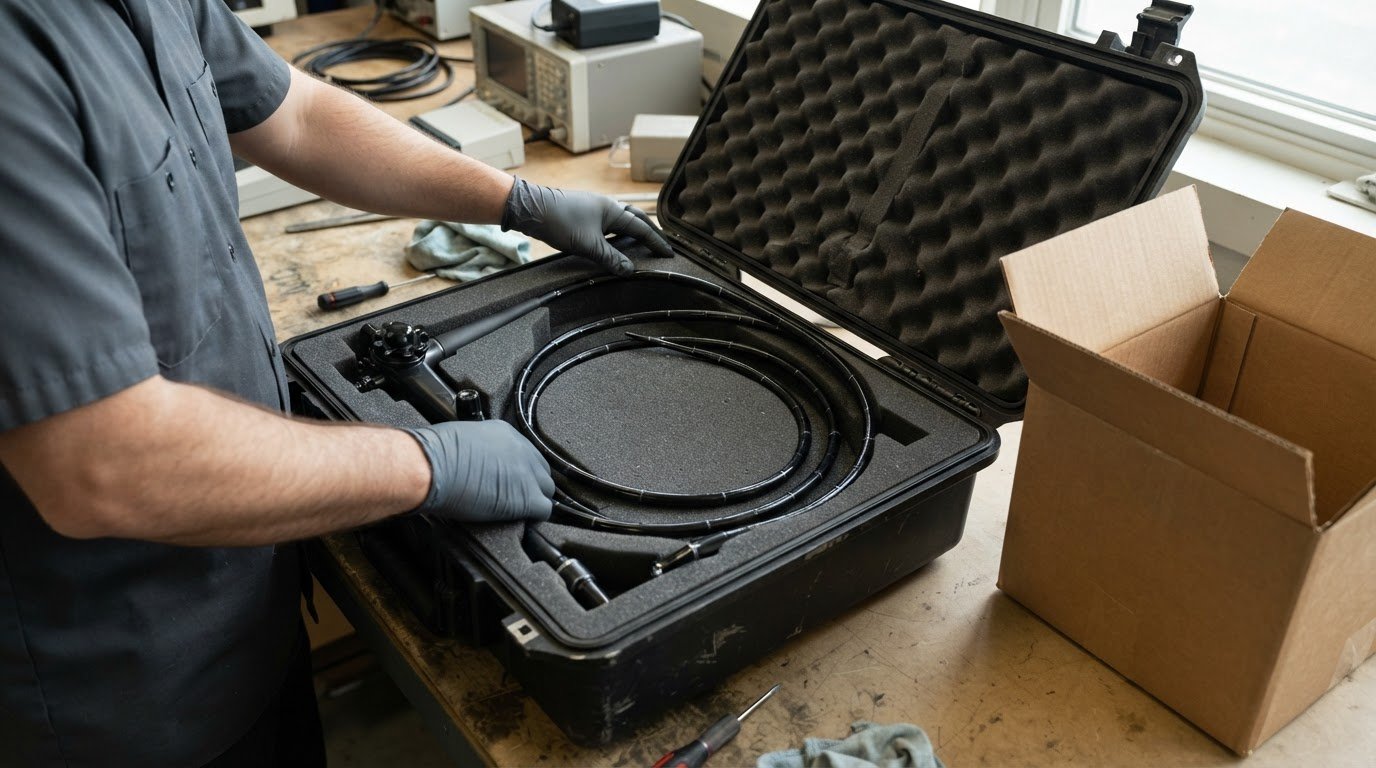
Storage and transport create further opportunities for damage. A device stored or moved contrary to its instructions may experience pressure, impact, or unsuitable conditions. For terminally sterilized flexible endoscopes, retain the sterilization tray and packaging during storage. A clear record of storage or transport incidents can help distinguish them from a component fault or recurring performance issue.
Service history matters because repeated repairs or recurring faults can reveal a developing pattern. A single reported issue differs from the same function failing repeatedly after service. Document each fault, evaluation, and repair outcome. Before retirement, review that history and obtain a professional evaluation. A manufacturer’s decision to stop servicing a model may reflect a business choice, not a judgment about clinical performance.
When an endoscope shows visible damage, inconsistent function, or repeat faults, professional evaluation can establish its condition and repair options. Request a professional endoscope assessment to support an informed decision about repair, refurbishment, or retirement.
Fong’s Engineering & Manufacturing Private Limited: Endoscope Repair & Refurbishment
Fong’s Engineering & Manufacturing Private Limited provides precision repair and refurbishment for reusable endoscopes. Turn to this service when an endoscope has a fault, visible damage, or recurring performance concerns and needs professional attention. Sharing the device’s service history and reported issue helps inform the repair or refurbishment assessment. The outcome depends on the endoscope’s condition and evaluation; continued use, repair, refurbishment, or retirement should follow the technical findings. This is a practical next step when equipment management and routine care aren’t enough to resolve a device concern.
Contact Fong’s Engineering & Manufacturing Private Limited to discuss endoscope repair and refurbishment.
Make lifecycle decisions part of equipment planning
Turn equipment records into a forward-looking lifecycle plan. Align technical assessments with replacement planning so each device has a documented path based on its condition and role in clinical operations. This makes extending the life of surgical endoscopes part of deliberate equipment management, not just a response to faults.
For devices needing technical attention, Fong’s Engineering & Manufacturing Private Limited offers Endoscope Repair & Refurbishment. Its CDMO Services and OEM Solutions also support medical device development and manufacturing. The right path depends on the project: repair or refurbishment addresses an existing endoscope, while CDMO Services or OEM Solutions serve broader development and manufacturing needs.
Bring a clear record of the device, its service history, and the issue under review into the next discussion. That context helps focus the conversation on the technical need and relevant next steps. Contact Fong’s Engineering & Manufacturing Private Limited to discuss your endoscope repair or refurbishment requirements and move forward with a considered plan.
Frequently Asked Questions
How should surgical endoscopes be cleaned, disinfected, and sterilized by trained professionals?
Trained professionals should follow the instructions for the specific endoscope, completing manual cleaning before the required disinfection or sterilization process. Flexible endoscopes are heat-sensitive and cannot undergo steam sterilization; high-level disinfection is the minimum standard for their reprocessing. The U.S. Food and Drug Administration provides manufacturer-specific instructions, while the CDC’s disinfection and sterilization guideline offers healthcare-facility guidance. The device instructions determine the applicable process and handling.
What damage to surgical endoscopes can be repaired, and what does repair cost?
Repair may address damage or faults that a technical evaluation finds suitable for restoration, including damaged parts. For example, a reported performance issue can be assessed alongside the endoscope’s condition and service history to determine whether repair or refurbishment is appropriate. Repair cost depends on the device and work required, and is provided after a quote request. Fong’s Engineering & Manufacturing Private Limited offers Endoscope Repair & Refurbishment.
When should a surgical endoscope be repaired versus replaced?
Repair is worth assessing when a fault appears addressable and the endoscope’s condition supports continued use after professional evaluation. Replacement may be more appropriate if the evaluation finds the device unsuitable for continued use or repair. Base the decision on current condition, performance, service history, and technical assessment, not age alone. A manufacturer’s decision to stop servicing a model doesn’t itself establish that replacement is necessary.