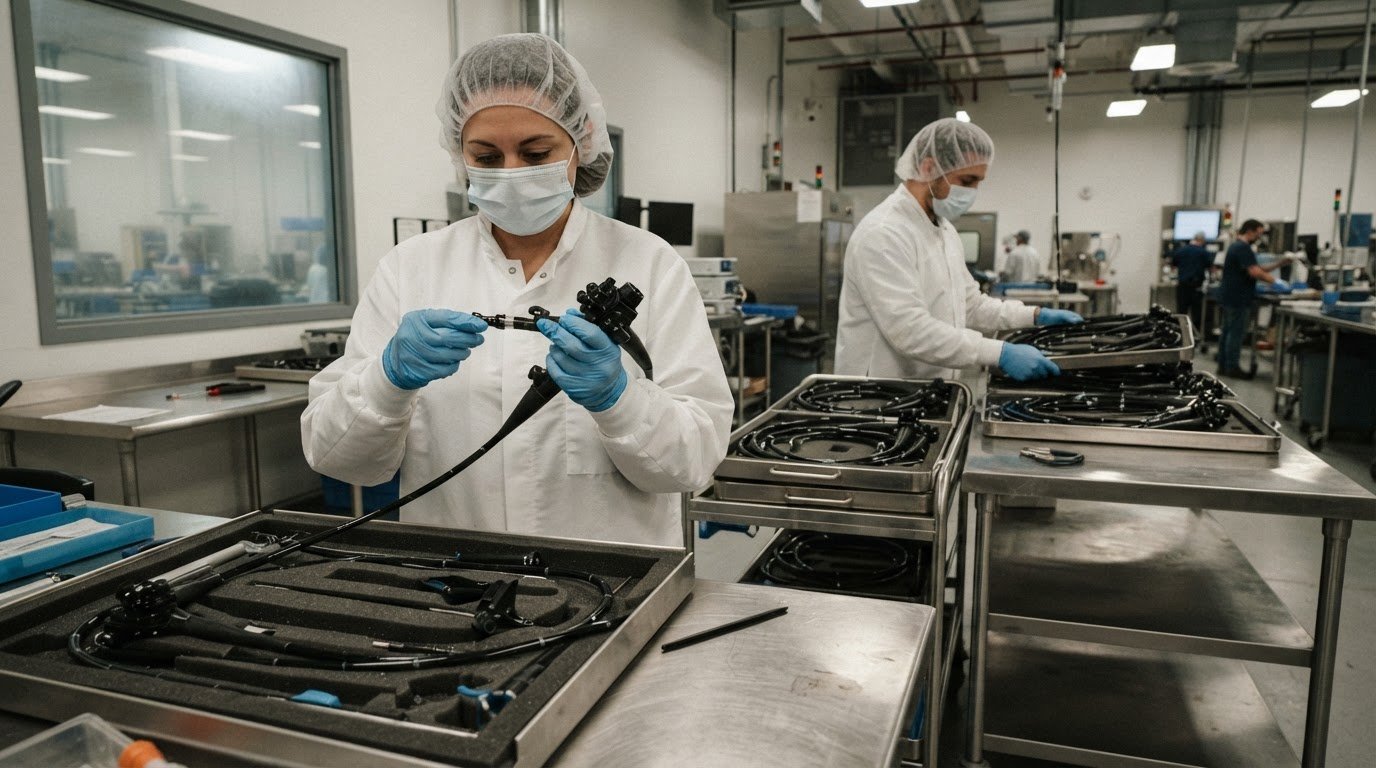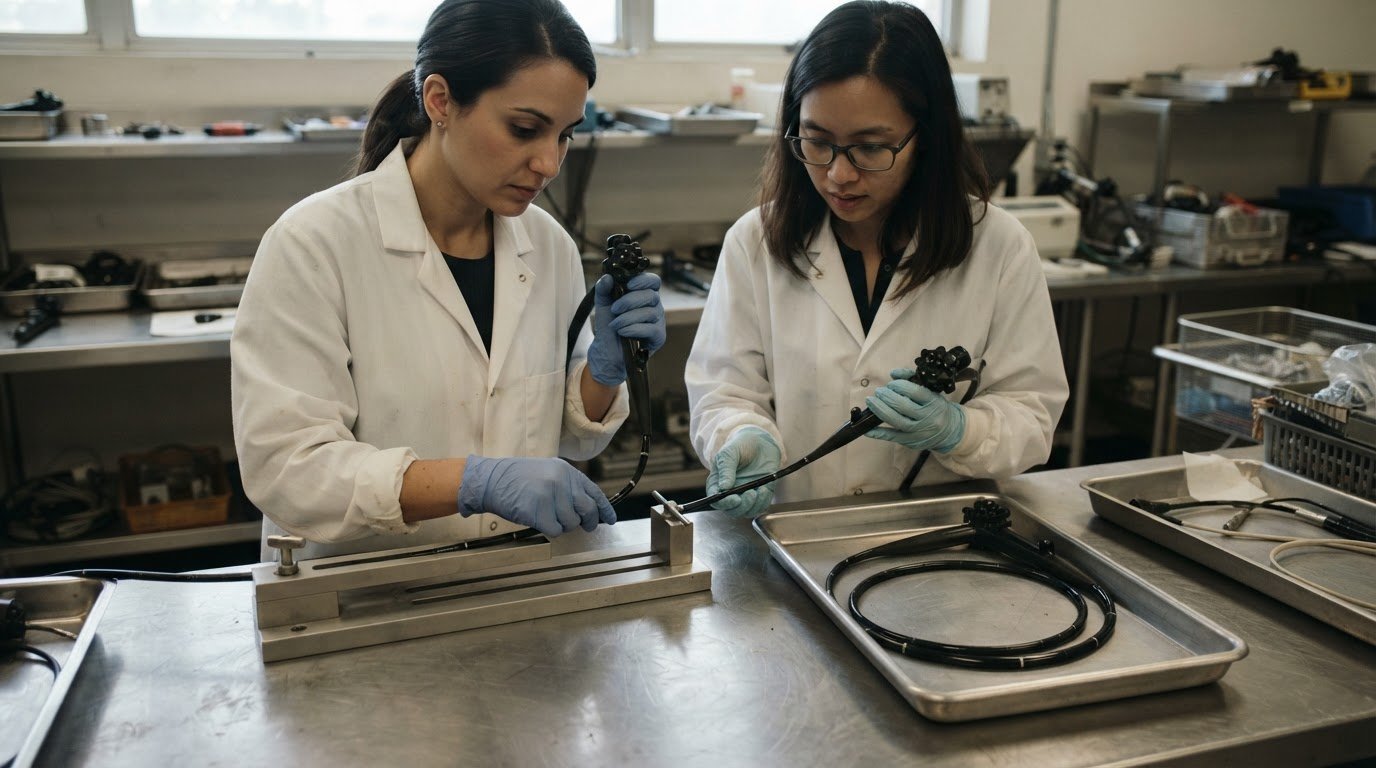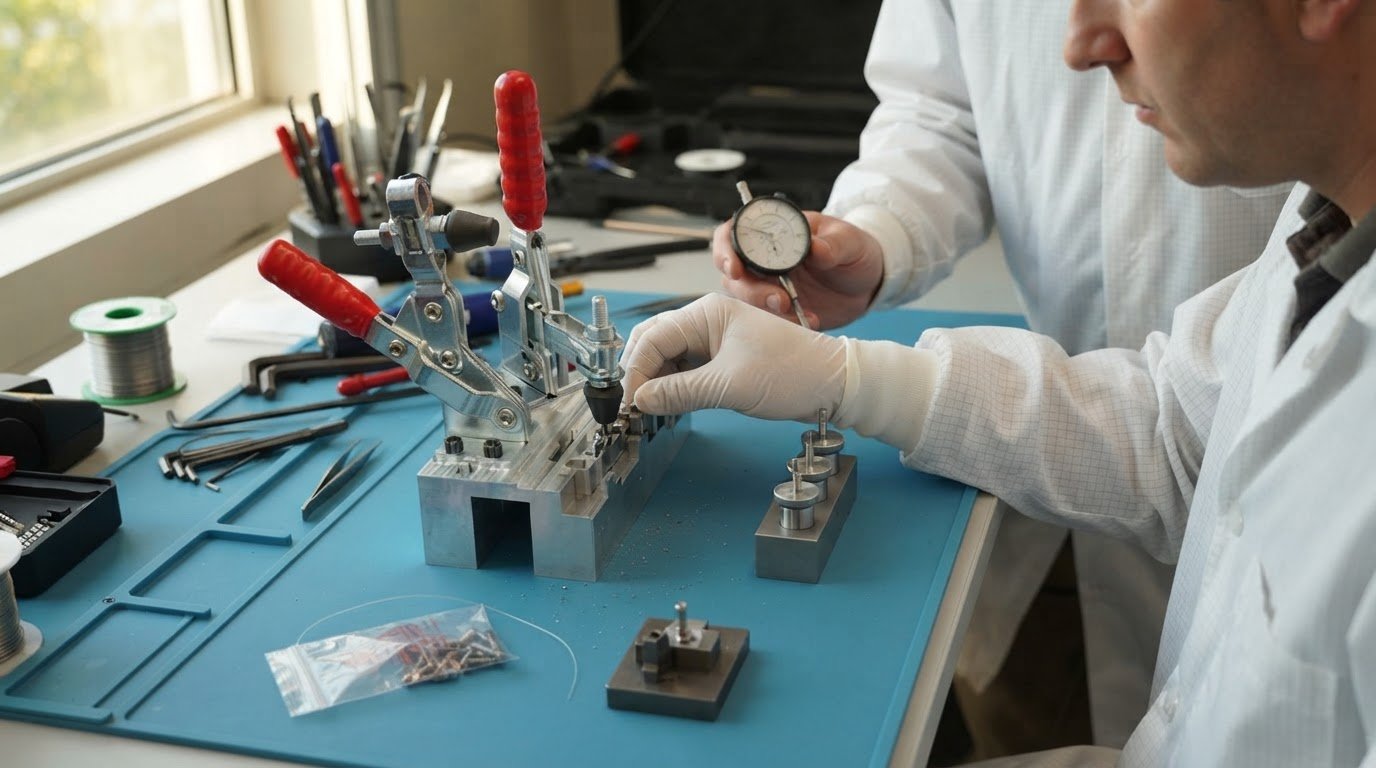
The challenges of transferring medical device production go beyond moving equipment and drawings. A transfer must also carry over process knowledge, quality systems, supplier relationships, and regulatory controls so the receiving site can produce devices consistently. The goal is to connect an approved design with manufacturing processes that can reproduce it reliably.
A production move may support higher volumes, diversify supply, bring manufacturing closer to customers, or address a continuity problem. These benefits can make a transfer worthwhile, but they do not remove the need to manage documentation, compliance, and production risks carefully.
This article explains what medical device technology transfer involves, why manufacturers move production, and where difficulties commonly arise. It covers how design and transfer records, supplier and process controls, validation, and risk planning help establish a controlled transition. Understanding these factors clarifies what the move requires and how manufacturing expertise can contribute from early design through production readiness.
Key Takeaways
- Plan design transfer as an ongoing part of product development, not a final handoff to manufacturing.
- Use complete, controlled documentation to connect design outputs with production instructions, inspection criteria, and traceable records.
- Assess supplier consistency, process capability, equipment, and production scale to identify transfer risks before they disrupt manufacturing.
- Build change control, design controls, and risk management into the transfer plan; according to the U.S. Food and Drug Administration, the Quality Management System Regulation compliance date is February 2, 2026.
- Clarify the business reason for moving production, then align milestones and risk mitigations with the intended outcome.
What happens during “design transfer”?
Design transfer turns approved design outputs into repeatable production, including the knowledge, suppliers, and controls required at the receiving site. It should start during design and continue as manufacturing requirements and production capability take shape.
Manufacturing process and equipment validation
Validation documents evidence that manufacturing processes, equipment, and software can consistently produce devices that meet specifications. It matters because a process that worked for prototypes may behave differently with production equipment, software settings, or operating conditions at the receiving site.
After transfer, revalidation is needed when a change could affect the validated process or its output. Design verification must be completed for each design output before transfer to production, while design validation must use production or production-equivalent devices. Depending on the process, qualification may include Installation Qualification, Operational Qualification, and Performance Qualification.
Qualification at the receiving site should check suppliers, components, tooling, and equipment against defined requirements. Activities may include reviewing material certifications, approving component samples, verifying approved suppliers, and confirming equipment suitability. Training is also essential: personnel need to understand the transferred work instructions and process parameters before production begins.
Production team involvement
Manufacturing engineers and production leaders translate design outputs into practical production methods. Involving them early helps identify difficult assembly steps, inspection needs, equipment constraints, and training requirements before they become transfer problems.
For example, a production leader can spot where an operator needs clearer work instructions, while an engineer can assess whether existing tooling supports the required process. Including these roles in design reviews helps establish production requirements as the design develops, rather than leaving teams to resolve avoidable problems during launch.
Design for scalable production
Design for manufacturing aligns product features and specifications with processes that can be repeated at the intended production scale. A component that can be assembled by hand in a prototype may require a different fixture, process sequence, or inspection method in larger batches.
For a domestic manufacturing transfer, the receiving manufacturer must establish suitable suppliers, component specifications, and production controls. Locating production closer to customers can reduce lead times and transportation costs, while diversifying supply sources can strengthen continuity during disruptions. These benefits depend on transferring supplier knowledge and controls along with the design.
Pilot production
Pilot production uses the receiving site’s production environment to assess process stability and product quality before full-scale manufacturing. It can reveal differences between prototype methods and repeatable production, such as assembly variation, inefficient work sequences, or inspection steps that need refinement.
Validation units should be built using production design outputs, including drawings and specifications. A few successful test units alone do not show that the same process will perform at full scale. Pilot results help teams decide whether to adjust process controls, equipment settings, training, or documentation before expanding production.
Device master record and transfer documentation
At the receiving site, manufacturing relies on a controlled record of the released design and its production requirements. Clear documentation connects approved outputs with the work performed, inspected, and recorded during production.
The Device Master Record (DMR) contains the information and instructions needed to manufacture a device. Based on the final released design outputs, it should provide a complete production recipe rather than a collection of disconnected files. The DMR should align with revision-controlled drawings, the bill of materials, approved components, work instructions, process parameters, inspection points, and test procedures used at the receiving site.
Traceability must continue throughout the transfer. For example, a component change needs a visible link between its approved supplier, material certification, applicable drawing revision, inspection result, and change approval. Production records should also connect test results, device history records, and nonconformance documentation to the relevant manufacturing activity. When a file is revised, the receiving team must be able to distinguish the released version from superseded instructions.
Production-ready documentation
Production-ready documentation turns the released design into instructions the receiving team can follow consistently. Without a complete process flow or inspection method, operators may lack the information needed to build and assess a device.
The transfer package may include process flow diagrams, work instructions, inspection procedures, PFMEA documentation, control plans, test procedures, packaging and labeling instructions, and equipment or fixture requirements. It should also identify applicable software and process parameters. For a complex assembly, clear sequencing and defined inspection points link each operation to its required record.
Compliance records and documentation gaps
Compliance records show that controlled procedures and production specifications are being followed. During an FDA audit, reviewers need a traceable connection between design outputs, approved changes, and manufacturing records.
Transfer gaps can include mismatched drawing and BOM revisions, missing supplier certifications, incomplete test procedures, or change approvals absent from the production file. A focused review should compare each released output with its corresponding manufacturing instruction and record. Technology transfer documentation may also include relevant 510(k) clearances or PMA pre-market approval documentation for the product or component.
For cross-border transfers, import documentation should address device classification, valuation, and applicable import requirements. High-value or regulated devices also need chain-of-custody records so each handoff remains traceable. Shipment and receiving documents should align, linking the identified device or component to its destination and condition on receipt.
When documentation and complex assembly requirements need to be aligned, discuss your production transfer requirements with the team responsible for the work.
Regulatory compliance, design controls, and risk management
A production transfer must preserve the link between the approved design, manufacturing controls, and regulatory records. The quality management system provides the framework for maintaining that link at the receiving site.
Translating product risks into production controls
Risk controls turn identified product hazards into manufacturing checks that can detect or prevent errors. A transferred process must preserve the controls that protect device performance and intended use.
For example, if an assembly characteristic affects device function, the transfer team can link its specification to an inspection point, test method, and production record. Risk documentation should also account for changes to components, suppliers, equipment, software, or production location. Reviewing these links helps determine whether existing controls remain suitable or need revision before production begins.
Design control requirements
Design controls define how design inputs, outputs, reviews, verification, validation, and changes are managed. During transfer, they help ensure that production specifications accurately reflect the controlled design.
Under 21 CFR part 820.30(h), the U.S. Government Publishing Office states that manufacturers must establish and maintain procedures ensuring device design is correctly translated into production specifications. ISO 13485:2016 is the named quality management system standard for medical devices, with requirements for regulatory purposes, according to the International Organization for Standardization. The U.S. Food and Drug Administration states that the FDA Quality Management System Regulation compliance date is February 2, 2026.
Centralized quality and design control systems
A centralized quality management system and design control software provide controlled access to procedures, records, approvals, and current design revisions. This helps teams at the originating and receiving sites work from the same released information.
For example, a controlled system can link a revised drawing to its approval record, affected work instruction, and implementation status. Access permissions and revision histories help teams distinguish current documents from obsolete versions. The system should also preserve records of risk reviews, testing, nonconformances, and corrective actions, keeping transfer decisions traceable across functions and sites.
Change control and regulatory submissions
Change control assesses proposed changes before mass production and records their impact on design, materials, suppliers, processes, equipment, testing, packaging, and production location. This is important because a manufacturing change can affect risk controls and regulatory documentation.
Companies manage submissions, notifications, and market approvals by assessing each change against the device’s existing regulatory status and affected markets. They document the assessment, required approvals, and any applicable regulatory notification or submission before implementing the change. The decision and supporting rationale should remain linked to the approved design and production records.
For a supply transfer, coordinated review by quality, regulatory, engineering, and manufacturing teams links risk assessments with production controls. Keeping the change record, software-controlled documents, and testing evidence aligned gives each function a traceable basis for release decisions.
Project assessment and risk mitigation planning
A transfer assessment reviews technical documents, the quality system, and manufacturing processes before work moves to the receiving site. It helps identify project risks and define mitigation actions while the transfer plan is being established.
Early transfer planning
Early transfer planning brings manufacturing considerations into device development instead of waiting for a final design handoff. This matters because production constraints can affect design choices, documentation needs, supplier readiness, and the work required at the receiving site.
A project assessment starts with a structured review of technical documents, the quality system, and manufacturing processes. It connects product specifications with the receiving operation’s equipment, process knowledge, and production requirements. For example, a missing process instruction or unclear component specification becomes a defined risk rather than an issue discovered during production setup.
Each identified risk needs a mitigation action, an owner, and a way to track progress. A supplier risk might require qualification activities; a process knowledge gap might call for documented training. Record these actions alongside the issues they address so teams can confirm mitigation is complete before dependent work proceeds.
Starting early also lets the originating and receiving teams resolve design or documentation questions while development continues. Manufacturing engineers and production leaders can contribute practical knowledge about specifications and process requirements, helping the transfer team identify potential gaps before the contract manufacturer prepares production activities.
Technology transfer planning
Technology transfer planning defines the work, timeline, milestones, and deliverables required to move production to a contract manufacturer. It matters because technical, quality, and manufacturing activities depend on one another and need coordinated oversight.
The plan should turn assessment findings into linked tasks. For example, a component supplier may need to be qualified before production can use that component, while equipment preparation must align with process validation. Mapping these dependencies shows which actions affect later milestones and where unresolved risks could change the project sequence.
A practical plan identifies the responsible teams, required outputs, and reviews that confirm progress. Deliverables can include revised process documents, risk mitigation records, completed training, and validation evidence. Milestone reviews give the originating team and receiving manufacturer regular opportunities to assess completed work and discuss technical issues.
Review the transfer plan with the customer and update it as risks or project requirements change. Regular progress updates and technical discussions keep decisions visible across engineering, quality, and production. Reviewing specifications, deliverables, and mitigation actions helps maintain a controlled transition rather than a set of disconnected tasks.
Reasons for transferring medical device production
Manufacturers move production to address capacity needs, strengthen supply chain resilience, improve efficiency, or respond to an operational problem. A sound rationale connects the move to a specific outcome, such as meeting demand or maintaining continuity.
Transfer drivers
Transfer drivers are the business or production conditions that make a new manufacturing arrangement necessary. Identifying the main driver defines what the transfer must achieve and how success will be assessed.
Growing demand may exceed an existing site’s capacity, prompting an OEM to move production to a manufacturer with resources for higher volumes. A second production source can also diversify supply and support continuity during natural disasters, geopolitical issues, or pandemics. In each case, the intended benefit depends on a receiving operation that meets product and quality expectations.
Location can influence the decision. Moving production closer to customers may reduce lead times and transportation costs, while a contract manufacturer with more efficient processes or advanced technologies may help improve quality and time to market. A manufacturer may also seek more competitive pricing to support margins or reduce customer costs. Because these objectives differ, the transfer plan should identify which outcome takes priority.
Sometimes a production problem prompts the move. The transfer may be intended to address the issue and maintain business continuity. The source of the problem matters: if it involves a process weakness, supplier inconsistency, or capacity constraint, the new setup must address the cause rather than reproduce it at another site.
Transfer cost factors
Transfer cost factors are the project activities and resources required to establish production at the receiving site. Understanding them matters because a move involves more than transporting equipment or starting a new production run.
The transfer cost depends on the project and is provided after a quote request. Key cost drivers include design changes, supplier qualification, tooling, equipment, validation, documentation, training, and production volume.
A transfer with unchanged specifications and ready equipment has different requirements from one involving revised tooling, new supplier relationships, or additional process validation. A pilot run may also reveal work needed before production expands. These activities shape the project scope and the resources required to achieve the intended outcome.
Compare the planned transfer work with its purpose: a capacity move must establish the required production capability, while a continuity move must address the identified vulnerability. A domestic move closer to customers may support shorter lead times, but the receiving site still needs qualified supply and controlled production. Discuss your medical device production transfer to define its scope, drivers, and required manufacturing work.
Fong’s Engineering & Manufacturing Private Limited: Complex Device Assembly
Fong’s Engineering & Manufacturing Private Limited supports medical device production through Complex Device Assembly, CDMO Services, and OEM Solutions. These capabilities fit transfers that require coordinated manufacturing support, from development and validation through production, rather than an equipment move alone.
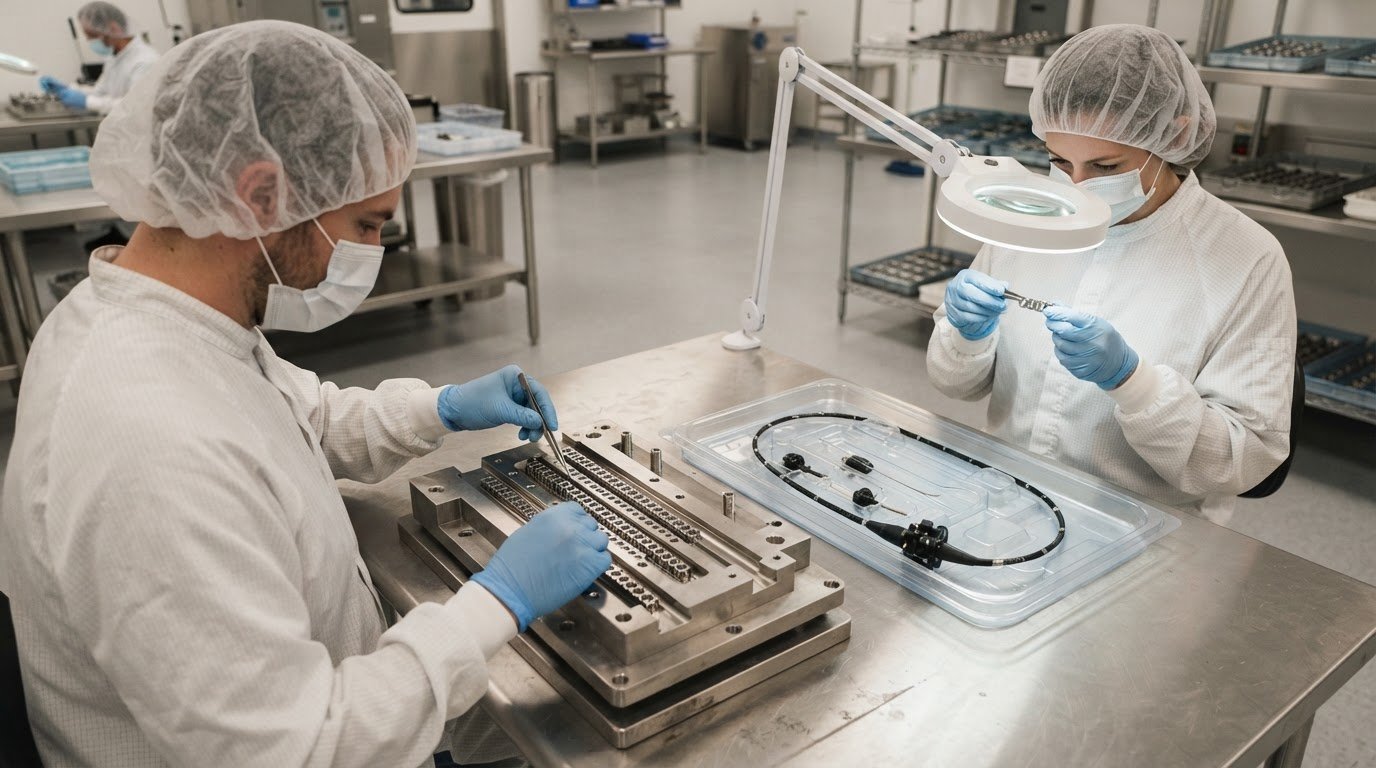
For devices with demanding assembly requirements, Complex Device Assembly can align component integration with controlled production processes. Micro-precision Components can also support products where precise component manufacturing is central to assembly. The appropriate scope depends on the device, its specifications, and the production requirements defined during transfer planning.
Fong’s also provides Endoscope Repair & Refurbishment for reusable endoscopes and other surgical instruments. To discuss a production transfer or assembly requirement, contact Fong’s Engineering & Manufacturing Private Limited.
Set the Next Transfer in Motion
The challenges of transferring medical device production are easier to manage when the next move begins with a defined objective. Before starting the transition, align the intended outcome with the capabilities and support the project requires. This keeps technical decisions connected to the product’s needs, rather than treating the transfer as a change of location alone.
Fong’s Engineering & Manufacturing Private Limited offers CDMO Services and OEM Solutions for medical device manufacturing, as well as Endoscope Repair & Refurbishment for reusable devices. These services address distinct needs, from production support to instrument refurbishment. The next step is a project discussion focused on your device, current production requirements, and intended direction.
Contact Fong’s Engineering & Manufacturing Private Limited to discuss the requirements of your manufacturing project. A clearly scoped conversation can help establish a practical starting point for the work ahead.
How Fong’s Engineering & Manufacturing Supports Production Transfers
Fong’s Engineering & Manufacturing Private Limited offers end-to-end services from concept design and prototyping through validation, large-scale production, and regulatory support, including FDA and ISO 13485 compliance. If you are assessing how to move medical device production into manufacturing, its CDMO Services and OEM Solutions can support that work.
The company manufactures complete medical devices under clients’ brand names using ISO 13485 certified processes. Consider its services when you need support spanning production and regulatory requirements, or when your project calls for complex device assembly, micro-precision components, or endoscope repair and refurbishment.
Frequently Asked Questions
What Is Medical Device Technology Transfer?
Medical device technology transfer moves the knowledge and controls needed to manufacture a device from one production setting to another. It covers more than equipment: design outputs, process instructions, quality practices, supplier information, and production expertise must work together at the receiving site. For example, the receiving team needs enough process knowledge to interpret specifications and carry out the intended assembly consistently.
How do specification gaps lead to structural batch failures during commercial scale up?
Specification gaps can leave critical product characteristics open to inconsistent interpretation. During scale-up, operators or production lines may apply different assembly methods, component criteria, or acceptance limits. If a device depends on a specific relationship between components, such variation can affect batch consistency. Released specifications should connect product requirements to manufacturing instructions and inspection criteria before production volume increases.
When Should You Consider Moving to a New CDMO?
Consider a new CDMO when your current arrangement cannot meet a defined business or manufacturing need. Examples include demand exceeding available capacity, a need to diversify supply, production closer to customers, or a process problem that threatens continuity. Compare the proposed move with the underlying objective: if supplier inconsistency is the issue, the new site must address its cause rather than simply relocate production.
What are the main challenges when transferring medical device production to a new facility or manufacturer?
The challenges of transferring medical device production include transferring process knowledge, aligning quality systems, maintaining supplier and component consistency, and demonstrating that production works at the receiving site. Differences in equipment, software, training, or work methods can expose weaknesses that prototypes did not reveal. For example, a component may meet its drawing requirements but behave differently in the receiving site’s assembly sequence, requiring investigation and controlled action.
What steps are involved in a medical device manufacturing transfer?
A transfer typically begins with a review of technical files, quality arrangements, and the current manufacturing process. Teams then define project risks, assign mitigation actions, prepare the receiving site, and transfer the required production information. Supplier and equipment readiness, personnel training, and process validation follow as applicable. Pilot production can help assess process stability before full-scale output. The sequence depends on the device, process, and changes involved.
What documentation and design history records must be transferred?
The receiving operation needs released design outputs and manufacturing instructions, with records showing how revisions and changes were controlled. Relevant materials may include drawings, bills of materials, work instructions, process flows, inspection and test procedures, risk records, change approvals, and supplier documentation. The Design History File compiles design and development documentation; the Device Master Record provides manufacturing information and instructions for producing the device.
How do FDA regulations and QMSR requirements apply to medical device production transfers?
FDA requirements make controlled translation from design into production a central transfer consideration. Under 21 CFR part 820.30(h), manufacturers must establish and maintain procedures ensuring device design is correctly translated into production specifications, according to the U.S. Government Publishing Office. The U.S. Food and Drug Administration states that the FDA Quality Management System Regulation compliance date is February 2, 2026. Transfer changes should be assessed within the applicable quality system.
What are the risks of production delays, capacity constraints, and supply interruptions during a transfer?
These are practical challenges of transferring medical device production: delays can arise when receiving-site equipment, suppliers, training, or production records are not ready for dependent activities. Capacity constraints may emerge when prototype methods cannot support planned production volumes. A supply interruption can follow if a component source changes or a new supplier is not ready. Mapping task dependencies, supplier readiness, and production capacity helps teams identify continuity risks.