
A proactive maintenance protocol can reduce a facility’s total annual repair expenditure by 40 percent, yet many surgical centers continue to struggle with the rising capital costs of new imaging equipment. You’ve likely faced the difficult decision of whether to authorize a major overhaul or invest in a new video endoscopy system that can cost up to $150,000. Finding the balance in the cost of endoscope repair vs replacement requires a meticulous analysis of both clinical performance and the total cost of ownership. This guide offers a clear framework for determining the exact point when a scope becomes beyond economical repair, ensuring your facility maintains technical excellence without unnecessary spending.
We’ll explore the financial trade-offs of refurbishment, the implications of the 2026 FDA Quality Management System Regulation (QMSR), and how our Irvine, CA repair center applies CDMO-level precision to restore your instruments to original performance specifications. By understanding these technical and regulatory benchmarks, you can optimize your equipment lifecycle and achieve a higher return on investment for your surgical fleet.
Key Takeaways
- Differentiate between capital expenditure and operational costs to stabilize your facility’s budget through structured equipment lifecycle management.
- Evaluate the financial variables influencing the cost of endoscope repair vs replacement to determine the most sustainable path for scaling your surgical fleet.
- Identify specific technical thresholds, such as CCD camera failure or significant insertion tube damage, that indicate when a device is truly beyond economical repair.
- Understand how the 2026 FDA QMSR and ISO 13485 standards provide a framework for validating the safety and performance of refurbished medical instruments.
- Discover how CDMO-level precision at our Irvine, CA facility restores endoscopes to original specifications, ensuring clinical excellence and technical longevity.
The Economics of Endoscopy: Navigating the Repair vs. Replacement Dilemma
Surgical centers in 2026 operate under intense fiscal scrutiny. The global endoscope repair market is projected to reach $5.1 billion by 2034, which highlights a major shift in how facilities manage their diagnostic fleets. Administrators must constantly choose between high capital expenditure (CAPEX) for new acquisitions and the operational expenditure (OPEX) of maintaining current inventory. A “replace-first” mentality often leads to the premature decommissioning of viable instruments, which strains budgets without necessarily improving patient outcomes. Evaluating the cost of endoscope repair vs replacement has become a core competency for modern facility managers.
Modern endoscopy requires specialized equipment that balances technical durability with delicate optics. When the cost of endoscope repair vs replacement is analyzed through a lifecycle lens, precision refurbishment emerges as a technically sound and financially responsible alternative to constant turnover. It’s a strategic approach that prioritizes technical evidence over marketing cycles.
The Rising Cost of New Endoscopy Technology
Acquiring new units presents a steep financial hurdle for many centers. Advanced video systems can reach $150,000, while standard flexible scopes range from $15,000 to $45,000. For facilities that decide to invest in new surgical inventory, check out M.D. Surgical & Healthcare Supplies to find a wide selection of medical equipment. These figures are driven by both inflation and the integration of sophisticated imaging features. Beyond the initial purchase, new OEM service contracts often lock facilities into high-cost ecosystems that offer little flexibility. Facilities shouldn’t overlook the hidden costs of staff retraining. Every new equipment generation requires time and resources to ensure personnel are proficient with updated ergonomic layouts and software interfaces.
Refurbishment as a Value-Engineering Strategy
Precision refurbishment offers a disciplined middle ground. This process differs from basic repairs that only address surface-level failures. Refurbishment is a comprehensive restoration involving a systematic teardown and rebuild to original performance specifications. Extending an instrument’s functional life by three to five years significantly improves the bottom line. High-tier engineering ensures these refurbished devices meet the same safety and image-quality standards as new units. This strategy allows centers to scale their fleets sustainably while maintaining the technical excellence required for complex procedures. It’s about maximizing the utility of existing assets without compromising clinical integrity.
Comparative Analysis: Analyzing ROI and Total Cost of Ownership
A comprehensive ROI analysis must go beyond the initial invoice. For instance, a new rigid endoscope typically costs between $1,200 and $12,000, while flexible models represent a significantly higher investment of $15,000 to $45,000. When assessing the cost of endoscope repair vs replacement, administrators should evaluate the frequency of minor interventions. These typically cost between $400 and $2,500. If a facility experiences frequent fluid invasion leading to major $9,000 overhauls, the cumulative OPEX might eventually justify a replacement. However, proactive maintenance often keeps these costs within a sustainable range.
The “Downtime Tax” is a critical, often overlooked variable. Beyond the $600 daily rental fee for loaner scopes, the loss of procedural revenue can destabilize monthly targets. Premium refurbishment warranties often mirror OEM terms, providing a similar level of confidence in the instrument’s longevity without the $45,000 price tag of a new unit. Patient safety remains the primary driver of these decisions. Accurate FDA evaluation of endoscope reprocessors ensures that even refurbished units maintain strict sterilization standards, which is vital for long-term clinical viability.
Upfront Investment vs. Amortized Repair Costs
Choosing refurbishment over a $30,000 replacement preserves your capital for other strategic needs. It also ensures that your existing inventory of biopsy forceps, snares, and cleaning brushes remains compatible. This continuity avoids the logistical burden of staff training on new equipment generations and prevents the friction of immediate large-scale capital approval cycles. By utilizing tiered repair structures over a 24-month cycle, surgical centers can manage their budgets with greater predictability and technical stability.
Calculating the Break-Even Point
The formula for determining the break-even point requires comparing the cost of restoration against the projected revenue from future procedures. One study indicates that improving maintenance protocols can increase the average number of procedures performed between repairs from 52.1 to 87.2. A repair is typically considered uneconomical when it exceeds 50 to 60 percent of the replacement value. Total Cost of Ownership (TCO) represents the comprehensive financial commitment of an instrument, including acquisition, maintenance, and the operational impact of downtime. To better understand your fleet’s specific TCO, you may consult with our engineering team for a detailed lifecycle assessment.
Technical Thresholds: When is an Endoscope Beyond Economical Repair (BER)?
Determining the Beyond Economical Repair (BER) status of a surgical instrument is a technical decision as much as a financial one. While the industry often cites a 50 to 60 percent threshold relative to replacement value, the actual decision relies on the structural integrity of core components. CCD camera failure, for instance, represents a catastrophic technical event. Replacing a high-definition image sensor in an aging scope often tips the balance in the cost of endoscope repair vs replacement toward a new acquisition. Conversely, insertion tube damage, while serious, is frequently a candidate for precision restoration if the internal electronics remain viable.
Component obsolescence presents an insurmountable barrier. When manufacturers cease production of specific micro-precision parts, a device essentially enters its terminal phase. Repeated fluid invasion incidents also compromise long-term viability. While a single event can be mitigated through thorough decontamination and sealing, multiple incursions lead to systemic corrosion. This cumulative damage undermines the device’s stability and eventually makes further investment irrational.
Critical Failure Points for Flexible Scopes
Fiber optic light bundles and angulation systems are high-wear areas that require careful evaluation. A full distal end rebuild, necessitated by severe objective lens damage, is one of the most complex procedures in the repair cycle. Administrators must weigh the cost-to-benefit ratio of these intensive restorations. If the angulation system shows significant internal wear alongside optical degradation, the cumulative labor and material requirements often exceed the device’s remaining market value. Meticulous inspection of these failure points is essential for maintaining a safe and functional inventory.
Strategic Decommissioning of Aging Fleets
Maintaining procedural capacity during a transition to newer technology requires a balanced approach. Facilities can phase out older models by identifying which units are still eligible for endoscope repair and refurbishment. This strategy keeps legacy instruments operational as reliable backups while the primary fleet undergoes modernization. Integrating these technical assessments into a five-year capital plan allows for a disciplined exit from aging platforms without disrupting surgical schedules. This methodical lifecycle management ensures that the cost of endoscope repair vs replacement remains optimized throughout the fleet’s entire service life.
Quality Assurance: Ensuring OEM-Grade Performance and Compliance
Precision is non-negotiable in the medical manufacturing industry. When evaluating the cost of endoscope repair vs replacement, administrators must look beyond the immediate invoice to the technical validation behind the service. A refurbished instrument is only as reliable as the quality management system (QMS) that produced it. ISO 13485 certification is the essential benchmark for any technical partner, ensuring that every restoration process follows a documented, risk-based approach. Without this rigorous oversight, surgical centers risk “repair-induced” failures, where substandard components or improper assembly lead to premature device breakdown or patient safety incidents.
Restoring a device to original OEM specifications requires more than basic mechanical skills. It demands the ability to maintain hermetic seals and apply autoclave-stable markings that won’t degrade during repeated sterilization cycles. Rigorous testing protocols, including leak testing and image clarity validation, are mandatory to ensure that a refurbished scope performs with the same technical excellence as a new unit. This level of scrutiny preserves the instrument’s longevity and protects the facility’s capital investment.
Regulatory Standards for Reusable Devices
Effective February 2, 2026, the FDA’s Quality Management System Regulation (QMSR) has harmonized U.S. requirements with ISO 13485:2016. This shift emphasizes that refurbishment must align with strict medical device manufacturing compliance standards. Validation through Installation Qualification (IQ), Operational Qualification (OQ), and Performance Qualification (PQ) ensures that repair processes are consistent and repeatable. This meticulous documentation is vital for hospital audit readiness, providing a clear chain of custody and technical evidence for every instrument in the fleet.
Advanced Engineering in Restoration
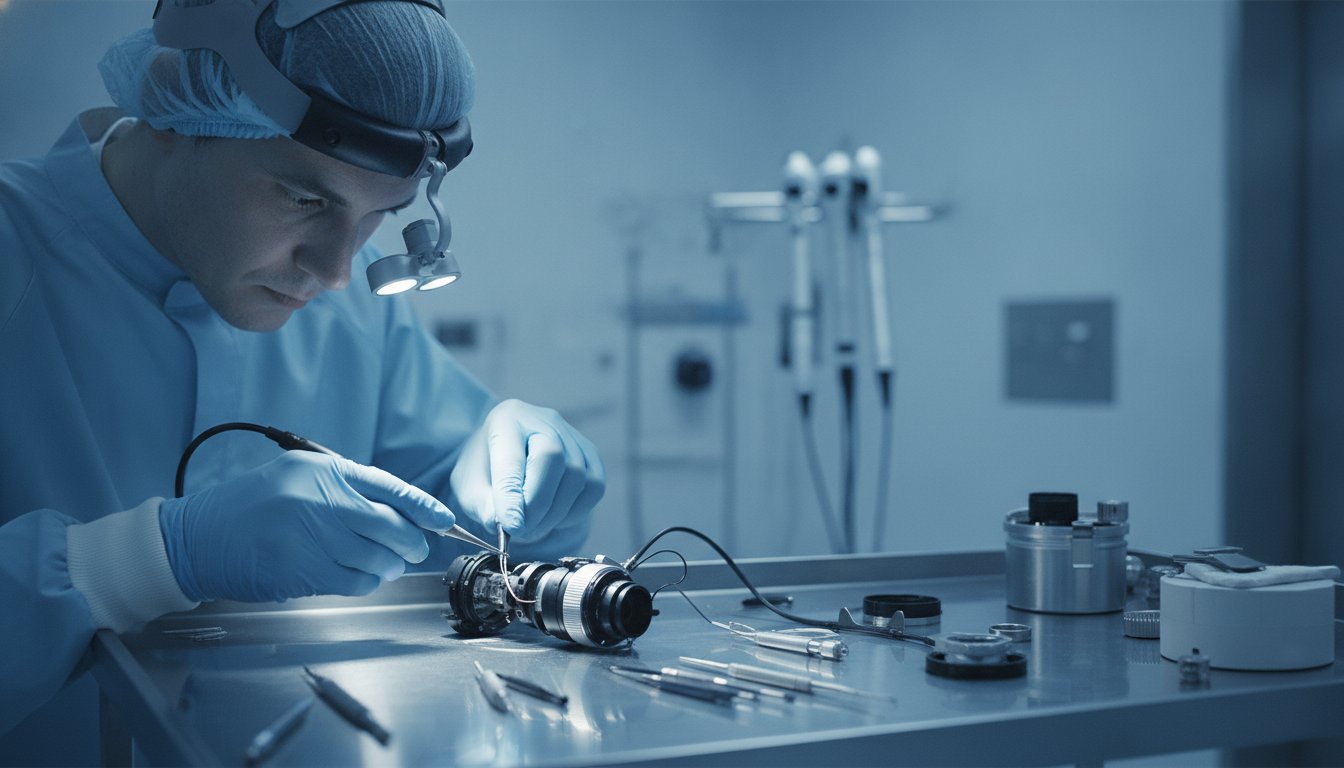
Our Irvine, CA facility utilizes advanced laser welding and marking technologies to ensure corrosion-resistant distal end repairs and permanent traceability. Precision machining allows us to maintain the exacting mechanical tolerances required for bending sections and complex internal channels. CDMO-level engineering surpasses standard repair shop capabilities by integrating the same sophisticated manufacturing disciplines used to create the devices originally. This high-tier technical approach ensures that every restored endoscope meets the rigorous demands of the modern operating room. To ensure your fleet meets these 2026 regulatory standards, you can request a technical consultation with our Irvine-based engineering team.
Strategic Lifecycle Management with Fong’s Precision Refurbishment
Fong’s (FSP Group) operates as a sophisticated problem-solver within the global medical device ecosystem. With over 40 years of precision manufacturing experience, we’ve refined the act of instrument restoration into a disciplined engineering process. Our specialized repair center in Irvine, CA serves as a critical technical hub for U.S. surgical centers, providing rapid logistics and expert technical support. When your facility evaluates the cost of endoscope repair vs replacement, having a partner with a deep manufacturing pedigree ensures that your fleet’s lifecycle is managed with absolute precision. We don’t just fix instruments; we restore them to their original performance specifications.
A steady-hand approach is required to navigate the complexities of modern surgical equipment. Our Irvine facility utilizes advanced laser technologies and smart manufacturing workflows to ensure every device meets rigorous validation standards. This methodical thoroughness mirrors the manufacturing processes used by original equipment makers, providing a level of reliability that standard repair shops cannot match. By choosing a partner with institutional expertise, you can extend the life of your diagnostic assets while maintaining the highest standards of technical excellence.
The CDMO Advantage in Device Restoration
Our foundation in medical device contract manufacturing services provides a unique perspective on instrument failure and recovery. We apply the same automated inspection protocols and rigorous quality management used in original equipment production to our refurbishment cycles. This high-tier engineering approach allows us to identify potential failure points before they lead to clinical downtime. Our commitment to technical mastery ensures that every restored endoscope supports best-in-class patient care and operational stability.
Partnering for Long-Term Fleet Sustainability
Sustainable fleet management requires a transition from reactive maintenance to proactive lifecycle planning. We offer customized repair programs tailored to your facility’s specific surgical volumes and instrument usage patterns. Our global manufacturing sites support regional MedTech needs, ensuring that technical mastery remains accessible regardless of your location. Initiating a comprehensive fleet assessment is the first step toward reducing your total cost of ownership. By evaluating the structural integrity and performance of your current inventory, we help you identify which scopes are candidates for restoration and which have reached their terminal phase. Contact Fong’s Engineering for a precision repair consultation to optimize your equipment lifecycle and secure your facility’s technical longevity.
Optimizing Your Surgical Fleet for 2026 and Beyond
The decision-making framework for the cost of endoscope repair vs replacement relies on a disciplined integration of clinical data and technical evidence. By identifying the precise thresholds for beyond economical repair and adhering to the 2026 FDA QMSR standards, your facility can maintain a high-performance inventory without the burden of premature capital turnover. Precision refurbishment acts as a strategic stabilizer, allowing for a controlled lifecycle that prioritizes patient safety and operational efficiency.
Fong’s leverages over 40 years of precision engineering expertise to deliver restoration services that meet the most rigorous technical requirements. Our ISO 13485 certified facility provides the meticulous oversight necessary for modern surgical compliance. Maintaining a technical edge in today’s medical environment requires a partner that understands the nuances of micro-precision components and complex device assembly. It’s about ensuring that every instrument in your fleet performs at original OEM specifications.
We invite you to consult with our Irvine, CA repair center for a fleet assessment to determine the optimal path for your equipment lifecycle. It’s a strategic step toward securing your facility’s technical longevity and clinical excellence.
Frequently Asked Questions
What is the average cost difference between endoscope repair and replacement?
The cost of endoscope repair vs replacement varies by device type, but refurbishment typically represents a 50 to 70 percent saving. A new flexible endoscope can cost between $15,000 and $45,000. Conversely, a major overhaul typically ranges from $7,000 to $9,000. These savings allow surgical centers to reallocate capital toward other critical imaging technologies; for instance, you can explore Direct Sales of Medical Imaging Hardware and Software Licenses to enhance your radiology department’s diagnostic capabilities. You maintain a high-performance inventory through meticulous technical restoration and CDMO-level engineering oversight.
There is no fixed limit on the number of refurbishments, provided the core structural integrity remains intact. The decision depends on the Beyond Economical Repair (BER) threshold. This is reached when repair costs exceed 50 to 60 percent of replacement value. Factors such as repeated fluid invasion eventually dictate replacement. Regular preventive maintenance can extend an instrument’s life through multiple cycles. This delays the need for total fleet modernization.
Will using a third-party repair service void my OEM warranty?
Using a third-party service for repairs doesn’t automatically void your hardware warranty. A September 1, 2026, U.S. Court of Appeals ruling upheld the right to access software for medical device repairs. However, OEM service contracts often include specific clauses regarding unauthorized tampering. Facilities should evaluate the warranty provided by the repair partner. Premium refurbishment centers often provide coverage that mirrors or exceeds original manufacturer terms for all restored components and labor.
What technical signs indicate an endoscope is Beyond Economical Repair (BER)?
Technical indicators of a Beyond Economical Repair status include CCD camera sensor failure or systemic corrosion from repeated fluid invasion. Severe objective lens damage requiring a full distal end rebuild also signals a threshold. When necessary micro-precision components are no longer manufactured, the device is considered obsolete. A professional engineering assessment at our Irvine, CA center can determine if these structural failures make the cost of endoscope repair vs replacement favor a new acquisition.
How does ISO 13485 certification affect the quality of an endoscope repair?
ISO 13485 certification ensures that the repair facility operates under a rigorous Quality Management System. This certification aligns with the 2026 FDA Quality Management System Regulation (QMSR). It emphasizes a risk-based approach to every technical process. Refurbished instruments undergo validated testing protocols, including leak testing and image clarity checks. This ensures they meet the exact safety and performance standards required for modern surgical environments. It’s about maintaining technical excellence at every step.
Can a refurbished endoscope truly meet original OEM performance specifications?
A refurbished endoscope can meet original OEM performance specifications when restored by a partner with CDMO-level engineering capabilities. It’s a matter of technical mastery. Utilizing advanced laser welding and 5-axis machining allows technicians to maintain precise mechanical tolerances. This ensures that the instrument’s optics and structural integrity are indistinguishable from a new unit. Clinical teams gain the absolute confidence needed for complex diagnostic procedures.
What is the typical turnaround time for a major endoscope overhaul?
Turnaround times for a major overhaul depend on damage extent and component availability. Our Irvine, CA center is optimized for rapid technical support. While a minor repair might take a few business days, a comprehensive refurbishment is a more intensive process. It involves a systematic teardown and rebuild. Utilizing a local technical hub reduces the ‘Downtime Tax’. This minimizes the need for expensive rental equipment during the service cycle.
How do I justify the cost of refurbishment to hospital procurement boards?
Justifying refurbishment to procurement boards requires a focus on the Total Cost of Ownership (TCO). Data indicates that proactive maintenance programs can reduce total annual repair costs by 40 percent. Demonstrating that a precision restoration extends an instrument’s life by three to five years provides a compelling financial argument. It’s a fraction of the $45,000 replacement cost. Emphasizing compliance with ISO 13485 also addresses concerns regarding patient safety and institutional risk.