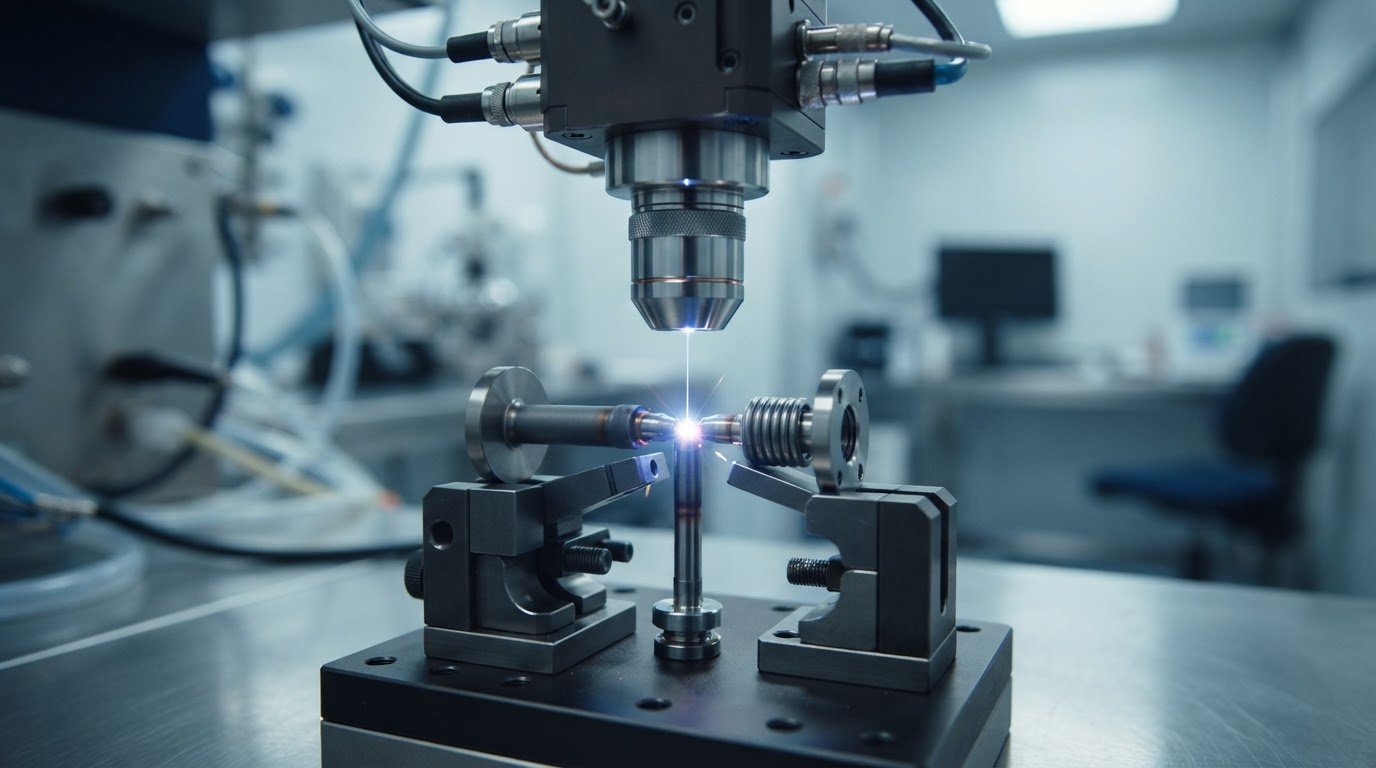
Laser welding does not inherently weaken an implant component. Its effect on strength depends on the material, joint design, fit-up, and heat input. Careful process control helps limit distortion around the weld. Medical device laser welding services can join small titanium and stainless-steel components using localized heat.
It is reasonable to focus on strength: an implant joint must function as part of a carefully engineered device, not merely hold two pieces together. The key is to understand how welding affects the material near the seam and how inspection can assess the finished joint.
This article explains how laser welding can affect material strength, how heat input influences distortion, and what to consider when joining tiny implant components. It also covers weld verification and the manufacturing capabilities that support medical-device development and production.
Key Takeaways
- Assess weld strength by considering the material, joint design, fit-up, and heat input together.
- Learn how focused heat and process control can help limit distortion around small implant welds.
- See why precise alignment and access matter when joining tiny, complex components.
- Compare how titanium and stainless steel considerations shape weld planning and inspection.
- Explore how CDMO services and micro-precision components can support medical-device development and production.
Does laser welding weaken materials?
Laser welding does not inherently weaken a medical component. The outcome depends on the material, joint design, and weld settings. For intricate parts, a focused beam can fuse adjoining edges without filler material, while process control helps preserve the surrounding structure.
For example, a thin titanium housing joined to a small bracket may need a different weld path from a stainless-steel instrument feature. Similar metals generally respond more consistently than dissimilar pairs, since differences in composition and thermal behavior can affect fusion. Before production, specify the material pairing, fit, and required weld location in the joint design.
Material Integrity and Heat-Affected Zones
A heat-affected zone is the material beside the fused seam that experiences welding heat without melting. Its size and effects depend on the beam, joint geometry, material thickness, and exposure. Check where the zone sits in relation to load-bearing features and nearby electronics. A practical step is to inspect a representative joint and compare the weld area with the component’s design requirements.
Precision Joining of Delicate Materials
Laser welding concentrates energy at a small joint, which can help limit heat spread when settings and part fit are controlled. For delicate components, fixture alignment and a repeatable beam path matter: movement between adjoining edges can cause uneven fusion. During setup, check the joint gap, secure the parts, and confirm that the weld path avoids sensitive features. This is especially important when metal components sit near electronics.
Common Welding Risks and Defects
Risks include incomplete fusion, porosity, cracking, and distortion, all of which can affect joint consistency or component fit. What are the risks and common defects in medical device laser welding? Incomplete fusion, pores, cracks, and heat-related distortion are defects to assess because they can compromise the weld or change the part’s geometry. Their likelihood depends on material condition, fit-up, and process control.
Use inspection methods suited to the joint and its acceptance criteria. A visual check can reveal surface irregularities, while ultrasonic or X-ray inspection can help assess internal weld features. NIST describes weld testing that pulls joints apart or compresses them to their breaking point under heavy loads. These destructive tests can characterize joint strength during process evaluation, while inspections can examine production parts without breaking them.
For titanium and stainless-steel applications, document the material pairing, joint design, and inspection results together. This record helps engineers trace a defect to a process step instead of treating every weld issue as a material failure. It also supports decisions about whether to adjust alignment, heat input, or the inspection method before repeating the weld.
Laser welding precision and heat distortion
A focused beam can form intricate joints while concentrating heat near the weld path. Results depend on how engineers balance joint geometry, material response, and process settings.
Precision Welding and Heat-Affected Zones
Precision laser welding directs energy to a defined seam, but the adjacent material still experiences heat. This area, called the heat-affected zone, varies with the metal, joint design, and exposure. For a thin implant enclosure, assess whether the zone reaches a feature that must retain its shape or function. Compare the finished part with its drawing and specified tolerances.
Heat Management During Welding
Heat management starts with the part, not just the laser. A fixture holds adjoining surfaces in position, while the weld path and sequence influence how heat travels through the assembly. On an intricate bracket, welding one side before the other may affect alignment. Review the sequence on representative parts, then assess fit and geometry after welding.
Process settings must suit the application. Beam focus, travel speed, and energy input affect fusion depth and how much surrounding material heats. For example, a seam for a hermetic enclosure needs continuous fusion along its designed path. A decorative or non-sealing joint has different functional criteria. Define the joint’s purpose before selecting settings.
Parts near electronics need particular attention to heat exposure. Identify sensitive features on the assembly drawing, then position the weld path to avoid unnecessary heating nearby. For instance, a delicate sensor housing may need a sequence that limits heat buildup near its mounting point. The inspection plan should also check whether welding changed the component’s alignment or fit.
To refine a process, engineers can evaluate:
- Fit-up: confirm the mating edges stay aligned before welding.
- Weld path: check whether its order could pull an intricate part out of position.
- Finished geometry: compare the welded component with drawing requirements.
These checks connect process choices to the part’s actual function. To assess joint consistency, repeat the same fixture setup and weld sequence across evaluation samples, then compare results with the defined acceptance criteria. A precise bead alone does not establish that the assembly meets its dimensional or sealing requirements.
For a component with sensitive features or a hermetic seam, discuss its geometry and functional requirements with the engineering team as part of planning the welding process.
Welding tiny and complex implant components
A tiny implant part can combine narrow seams, varying thickness, and limited tool access. Effective manufacturing starts by defining the joint’s function, locating the weld path, and planning how equipment will hold each component. These choices affect alignment, weld continuity, strength, and distortion. A small retaining feature, for example, may need a different fixture approach from a broad joining surface.
Complex geometry affects how a laser reaches the joint. A recessed seam can be difficult to access if a nearby wall blocks the beam, while a curved surface may require the part or beam path to follow its contour. Review the component drawing for access, adjoining features, and assembly sequence. Then assess whether the proposed weld location allows consistent positioning and inspection.
Medical components are suitable when their design and function are compatible with a laser-welded joint. Examples to evaluate include small housings, brackets, and adjoining metal features within a medical assembly. The decision depends on material pairing, seam geometry, required joint function, and welding access. If a component must retain a particular shape after joining, review its dimensions after welding to ensure distortion has not compromised its fit with adjacent parts.
Aerospace component welding offers a useful manufacturing comparison because it also involves precision metal joints and controlled assembly. However, an aerospace example does not establish that the same process settings, acceptance criteria, or standards apply to an implant. For a medical component, define the device’s functional needs and manufacturing requirements independently. Then use representative parts to examine joint formation, dimensional change, and the inspection approach for that application.
Before welding a complex component, map the joint against the assembly drawing. This makes key design questions explicit:
- Access: can the beam reach the seam without obstruction from adjacent features?
- Positioning: does the fixture hold both components in the intended relationship?
- Sequence: could the welding order shift a delicate feature or affect later assembly?
- Inspection: can the finished seam be examined against its defined requirements?
These steps connect equipment setup to the finished assembly instead of treating the seam in isolation. For instance, a bracket may appear well joined but still misalign with its mating part if the welding sequence pulls it out of position. Reviewing fit after joining complements weld inspection. Manufacturing teams can use results from representative parts to refine fixture design, weld sequence, and inspection criteria before applying the process consistently.
Biocompatible metals such as titanium and stainless steel
Titanium and stainless steel are common choices for medical components, but they do not behave identically during welding. Select the process based on the specific material grades, joint geometry, and component function. A material’s suitability for an implant does not, on its own, establish how a proposed weld will perform.
Titanium parts require attention to material condition and protection from contamination during welding. For example, a titanium implant component with a narrow seam needs clean mating surfaces and stable positioning. Surface contaminants can affect weld quality, so define cleaning and handling steps before joining. Then assess the finished seam and surrounding material against the component’s engineering requirements.
Stainless steel also requires process planning around its grade, thickness, and joint configuration. A thin stainless-steel enclosure, for instance, presents different heat-flow and fit-up considerations from a thicker bracket. Confirm the exact material identification in the manufacturing records, then match the weld evaluation to the seam’s function. This keeps material selection, weld development, and inspection aligned.
Joining titanium to stainless steel is different from joining similar metals. The dissimilar pair may respond differently to heat and fusion, so evaluate the combination instead of assuming settings for one metal will suit both. Start with the joint design and material specifications. Use representative assemblies to examine the resulting interface, dimensional fit, and performance against defined acceptance criteria.
A practical material review can follow these steps:
- Identify: record the specified metal and grade for each component.
- Map: mark the weld location, adjoining features, and required joint function.
- Evaluate: assess the selected material pair and joint on representative parts.
- Document: connect process settings and inspection results to the material and assembly.
These steps help make manufacturing repeatable across assemblies. For example, if a titanium component fits correctly before welding but shifts afterward, review fixturing and weld sequence alongside material behavior. An accurate assessment considers both the seam and the completed assembly, including how joined parts align with neighboring features.
Material choice also shapes the inspection plan. A visible surface seam may be only one part of the evaluation; required checks should reflect the joint’s design and function. For a stainless-steel housing, verify that joining preserves the intended fit and enclosure geometry. For a titanium implant feature, assess the weld according to its specified structural role. Document results using the same criteria across evaluation parts.
Complex Device Assembly connects these material decisions to the finished device. Engineers can review how titanium or stainless-steel joints interact with adjoining components, assembly sequence, and inspection needs. This integrated view helps determine whether the selected metals and weld design support the intended configuration, rather than judging the weld bead alone.
Medical device and implant laser welding
Medical implant welding connects process control with the device’s intended function and manufacturing requirements. The decision involves weld design, documented quality controls, inspection, validation, and production planning.
Comparing Service Providers
Compare relevant capabilities by examining experience with medical components, process documentation, inspection methods, and production controls. A titanium implant joint and a stainless-steel enclosure have different design demands. A useful comparison connects the proposed welding process to the part drawing, intended joint function, acceptance criteria, and manufacturing stage.
For a meaningful comparison, use the same component specifications and inspection expectations across evaluations. Review how each process addresses representative parts, records results, and manages changes to settings or fixtures. This keeps comparisons focused on technical fit rather than broad claims about precision or equipment.
Requirements for Laser-Welded Devices
Medical laser welding for medical devices, surgical tools, and implants must meet rigorous FDA standards. ISO 13485 compliance can support the quality-system controls used in medical-device manufacturing. The applicable requirements depend on the device and its manufacturing context, so map welding records and acceptance criteria to the relevant quality framework.
Keep the weld process within the device’s documented manufacturing controls. For example, record approved settings, inspection results, and process changes alongside the component specifications.
Quality Inspections and Weld Testing
Methods for inspecting laser weld integrity include visual inspection, ultrasonic testing, and X-ray inspection. Select methods based on joint access, design, and the features being evaluated. A surface check can assess visible seam consistency, while other methods can examine internal features. Define acceptance criteria before production, then document results at each inspection stage.
Testing should assess both the weld and the assembled component. For example, check whether the joint meets its specified function and preserves the required fit with adjoining parts.
Costs and Lead Times
Costs depend on material, joint geometry, production volume, tooling, inspection, and validation requirements. Pricing is determined after a quote request. Lead times depend on the project scope, including design readiness, process development, and production planning. A prototype evaluation and a mature production process involve different work.
For a useful estimate, provide the part drawing, material specifications, expected volume, and required inspection criteria. Include the joint’s intended function and the current development stage. These details help define the welding work and its production requirements.
Laser welding validation establishes whether a defined process can repeatedly produce welds that meet documented acceptance criteria. It uses representative parts, recorded process settings, and planned inspections to assess consistency before routine manufacturing.
Share the component drawing, material grade, joint function, volume expectations, and quality requirements when requesting a quote. Include known constraints such as limited access or sensitive nearby features. To discuss implant welding requirements and project scope, connect with the engineering team.
Fong’s Engineering & Manufacturing Private Limited: CDMO Services
Fong’s Engineering & Manufacturing Private Limited supports medical-device development and manufacturing through CDMO Services and OEM Solutions. This integrated model is suited to an implant or device program that needs coordinated support from concept design and prototyping through validation and production.
For projects involving small, intricate parts, Micro-precision Components supports component requirements, while Complex Device Assembly brings parts together in a finished device. Start by defining the component’s material, joint function, inspection criteria, and development stage, then align manufacturing planning with those requirements. Fong’s also provides Endoscope Repair & Refurbishment for reusable endoscopes and surgical instruments.
Contact Fong’s Engineering & Manufacturing Private Limited to discuss your medical-device manufacturing requirements.
Move Your Implant Project Toward Production
The next step is to turn engineering priorities into a clear manufacturing plan. Align the intended joint function, component drawings, material specifications, inspection criteria, and production stage before defining the work. This gives the project team a shared basis for discussing how medical device laser welding services fit the wider device program.
Fong’s Engineering & Manufacturing Private Limited offers CDMO Services and OEM Solutions for medical-device development and manufacturing, as well as Endoscope Repair & Refurbishment for reusable endoscopes and surgical instruments. These capabilities address distinct needs, from developing and producing devices to maintaining reusable equipment.
Bring your project requirements into a focused discussion about the appropriate next steps. Contact Fong’s Engineering & Manufacturing Private Limited to discuss your medical-device project. A well-defined plan is a practical foundation for moving forward with confidence.
Fong’s Engineering & Manufacturing Private Limited for Medical Device Laser Welding Services
Fong’s Engineering & Manufacturing Private Limited offers CDMO services, OEM solutions, endoscope repair and refurbishment, micro-precision components, and complex device assembly. Its end-to-end support spans concept design, prototyping, validation, large-scale production, and regulatory support, including FDA and ISO 13485 compliance.
If you need support beyond a specific laser-welding step, or are planning a complete medical device under your brand, consider Fong’s. The company manufactures complete medical devices under clients’ brand names using ISO 13485 certified processes.
Frequently Asked Questions
Can laser welding be used to join plastics as well as metals?
Yes. Laser transmission welding can join certain plastics when the materials are compatible with the process: laser energy passes through one part and is absorbed at the joining interface. This differs from metal welding, where the beam fuses metal surfaces. For a medical-device housing, assess polymer type, optical properties, joint design, and intended function before choosing a method.
What are the advantages of laser welding over TIG welding for precision manufacturing?
Laser welding offers a concentrated heat source and an automated path, which can suit small or geometrically complex joints. TIG welding uses an electric arc and can be useful for accessible joints or situations requiring manual control. Compare the methods against the component’s geometry, material, access, and production requirements. For example, a narrow seam may favor a focused beam, while another method may suit a readily accessible joint.
What components are ideal for CNC laser welding?
CNC-guided laser welding can suit components with a defined seam path and repeatable positioning requirements. Examples to assess include tubular assemblies, small brackets, and thin-wall housings. The key question is whether the fixture can hold the parts securely and the beam can reach the joint along its full path. A drawing review should identify obstructions, alignment needs, and the finished assembly’s functional requirements.
What medical device components are suitable for laser welding?
Potential candidates include metal features in surgical instruments, implant assemblies, and device housings, provided the joint design supports the intended function. A guidewire assembly, for example, may contain small adjoining features that need careful evaluation for access and alignment. Suitability depends on the component’s materials, geometry, and role in the device. Assess the weld as part of the finished assembly, not as an isolated seam.
Which materials can medical device laser welding services weld?
Material selection depends on the specific grade and joint combination. Titanium and stainless steel are relevant metals for medical-device applications, while Nitinol and MP35N are used in certain stent products. Their use in a device does not by itself establish that every joint configuration is suitable for laser welding. For a proposed assembly, identify each material and evaluate the pairing and design together.
What laser welding processes are used for medical devices?
Common process choices include pulsed or continuous laser output, with welds formed in conduction or keyhole modes. Spot welds join localized points, while seam welds follow a continuous path. The right method depends on the required joint shape, penetration, material, and component geometry. For example, a continuous seam may suit an enclosure joint, while a localized connection may call for spot welding.