With FDA 510(k) clearance times stretching to an average of 156 days in the first half of 2026, the traditional “wait and see” approach to compliance is no longer a viable strategy. You’ve likely experienced the frustration of watching a breakthrough innovation stall due to regulatory bottlenecks or discovering a critical design flaw only when you’re ready to scale. Achieving medical device speed to market in this increasingly complex environment requires more than just engineering excellence; it demands a disciplined integration of validation and automated manufacturing from the earliest stages of development.
This article provides a comprehensive checklist designed for MedTech leaders who need to bridge the gap between a successful prototype and high-volume commercialization. We’ll outline how to align with the new FDA Quality Management System Regulation (QMSR) that took effect in February 2026 and leverage smart manufacturing to ensure a seamless transition to production. By following this roadmap, you’ll reduce your development timeline while maintaining the technical precision and rigorous standards that patient safety requires. This is your guide to navigating the technical and regulatory requirements of 2026.
Key Takeaways
- Quantify the economic impact of development delays on patent lifecycles and ROI to justify early strategic investments.
- Align design inputs with the 2026 FDA Quality Management System Regulation (QMSR) to optimize medical device speed to market and mitigate regulatory bottlenecks.
- Implement Design for Manufacturability (DFM) and advanced laser processing early in the engineering phase to reduce assembly complexity and component counts.
- Leverage smart manufacturing lines and unmanned quality inspection technologies to ensure high production yields and a seamless transition to mass production.
- Evaluate CDMO partners based on their specialized expertise in complex device assembly and their ability to provide end-to-end support from concept to commercialization.
Understanding the Economic Impact of Medical Device Speed to Market
Speed to market represents the temporal span from the initial conceptualization of a technology to its formal commercial availability in the clinical environment. In the MedTech sector, this metric serves as a primary determinant of long-term viability. A delay of just six months can significantly erode the effective lifespan of a patent, reducing the window for high-margin revenue before generic or iterative competitors enter the space. This erosion directly impacts the return on investment (ROI) for complex R&D projects, as the fixed costs of development are amortized over a shorter period of market exclusivity.
In specialized fields such as robotic-assisted surgery, the first-mover advantage is profound. Establishing an early clinical footprint allows a manufacturer to set the standard for surgical training, hospital workflows, and institutional procurement. Conversely, companies that succumb to what we define as “Development Drag” find their progress hampered by an accumulation of minor inefficiencies. These often stem from misaligned design inputs or late-stage engineering changes that force a restart of the validation process, creating a compounding delay that is difficult to recover.
The Opportunity Cost of Delayed Commercialization
Market windows are not static; they’re dynamic targets that shift as technology evolves. As competitors iterate on similar technologies, the threshold for clinical relevance rises. A device that was revolutionary during its design phase might be considered obsolete if it reaches the market after a competitor has already secured early adopters and established a brand presence. This delay often ripples through the financial structure of a firm, damaging investor confidence and complicating subsequent funding rounds. Securing early clinical feedback is essential to dominate a specific niche, yet this feedback is only accessible once the device is in the hands of practitioners.
Balancing Velocity with Regulatory Rigor
Speed should never be confused with a reduction in quality standards. In fact, accelerating medical device contract manufacturing services relies on the meticulous application of quality management systems rather than their circumvention. A predictable development cadence is built on the foundation of the medical device lifecycle, where ISO 13485 compliance provides a structured framework for every phase.
By integrating regulatory requirements into the engineering workflow from day one, MedTech leaders can achieve a higher medical device speed to market without compromising the technical integrity or safety of the product. Parallel processing, where manufacturing validation occurs alongside final design refinement, becomes possible only when the regulatory roadmap is clearly defined and rigorously followed. This disciplined approach ensures that velocity and compliance are treated as complementary objectives rather than conflicting priorities.
Phase 1 Checklist: Strategic Planning and Regulatory Alignment
The foundation of a successful launch isn’t found in the lab, but in the strategic framework established during Phase 1. Defining a rigid Target Product Profile (TPP) prevents the “feature creep” that frequently derails development timelines. By locking in core functionalities early, engineering teams avoid the recursive design cycles that inflate costs and delay clinical testing. This phase requires a meticulous assessment of the following criteria:
- Regulatory Pathway Identification: Determine if the device falls under Class I, II, or III before finalizing design inputs. With the FDA’s Quality Management System Regulation (QMSR) becoming effective on February 2, 2026, alignment with ISO 13485:2016 is now a mandatory prerequisite for U.S. market entry.
- Master Validation Plan (MVP): Establish the protocols for Installation Qualification (IQ), Operational Qualification (OQ), and Performance Qualification (PQ) early. This foresight ensures that manufacturing validation doesn’t become a bottleneck during the transition to high-volume production.
- Process Failure Mode and Effects Analysis (PFMEA): Conduct early-stage risk management to identify potential manufacturing hurdles. Addressing these risks during the concept phase is significantly more cost-effective than remediating them after tooling has been finalized.
Regulatory Pathway Optimization
In 2026, the regulatory landscape demands proactive engagement. While the average time for a 510(k) clearance is approximately 156 days, manufacturers targeting the European market must also navigate EUDAMED registration deadlines, specifically the May 28, 2026, cutoff for new devices. Comparing these timelines is essential for global launch strategies. Early engagement with notified bodies or the FDA can clarify clinical evidence requirements, potentially shaving months off the approval cycle. If you’re unsure how these shifting regulations impact your specific device, consulting with our regulatory experts can provide the necessary clarity.
Market Validation and Stakeholder Alignment
Technical excellence doesn’t guarantee commercial success. Strategic planning must include early interviews with surgeons and clinicians to validate usability and ensure the device solves a genuine clinical pain point. This stakeholder alignment extends to reimbursement strategies; a device that lacks a clear path to payment will struggle to gain institutional traction. Finally, aligning internal R&D with manufacturing partners ensures that launch dates are rooted in realistic production capacities, further enhancing medical device speed to market by eliminating late-stage surprises.
Phase 2 Checklist: Engineering Excellence and Design for Manufacturability (DFM)
Engineering excellence in the MedTech sector is often measured by the ability to translate a complex clinical requirement into a repeatable manufacturing process. While rapid prototyping is essential for visualizing form, true medical device speed to market is achieved through the early implementation of Design for Manufacturability (DFM) principles. By refining the design to reduce the total number of components and assembly steps, engineering teams can eliminate the “Development Drag” discussed in previous phases. This meticulous approach ensures that the transition from a functional prototype to a scalable product is predictable and technically sound.
For complex minimally invasive surgery (MIS) tools, leveraging advanced laser processing is a critical differentiator. Utilizing femtosecond cutting and 5-axis laser welding allows for the creation of intricate geometries that traditional machining cannot achieve. These technologies are particularly vital when developing stents or micro-precision components where tolerances are measured in microns. Alongside these technical capabilities, validating material selection for biocompatibility and sterilization compatibility is a non-negotiable step. Whether the device requires Ethylene Oxide (EtO) or Autoclave sterilization, ensuring the material maintains its structural integrity and safety profile early in Phase 2 prevents costly redesigns during the final validation stages.
Bridging the Gap Between Concept and Prototype
The Critical Role of DFM in Scaling
DFM is the proactive integration of manufacturing constraints into the design phase to prevent late-stage redesigns. When manufacturing limitations are considered from day one, tool-up time can be reduced by months. This integration is particularly evident when combining plastic injection molding with precision metal parts. A simplified design doesn’t just lower production costs; it accelerates the entire medical device speed to market by shortening the validation cycle for each component. By resolving assembly challenges in the digital and prototyping phases, manufacturers can move directly into medical device scale up manufacturing with confidence in their yields and quality standards.
Phase 3 Checklist: Smart Manufacturing and Supply Chain Integration
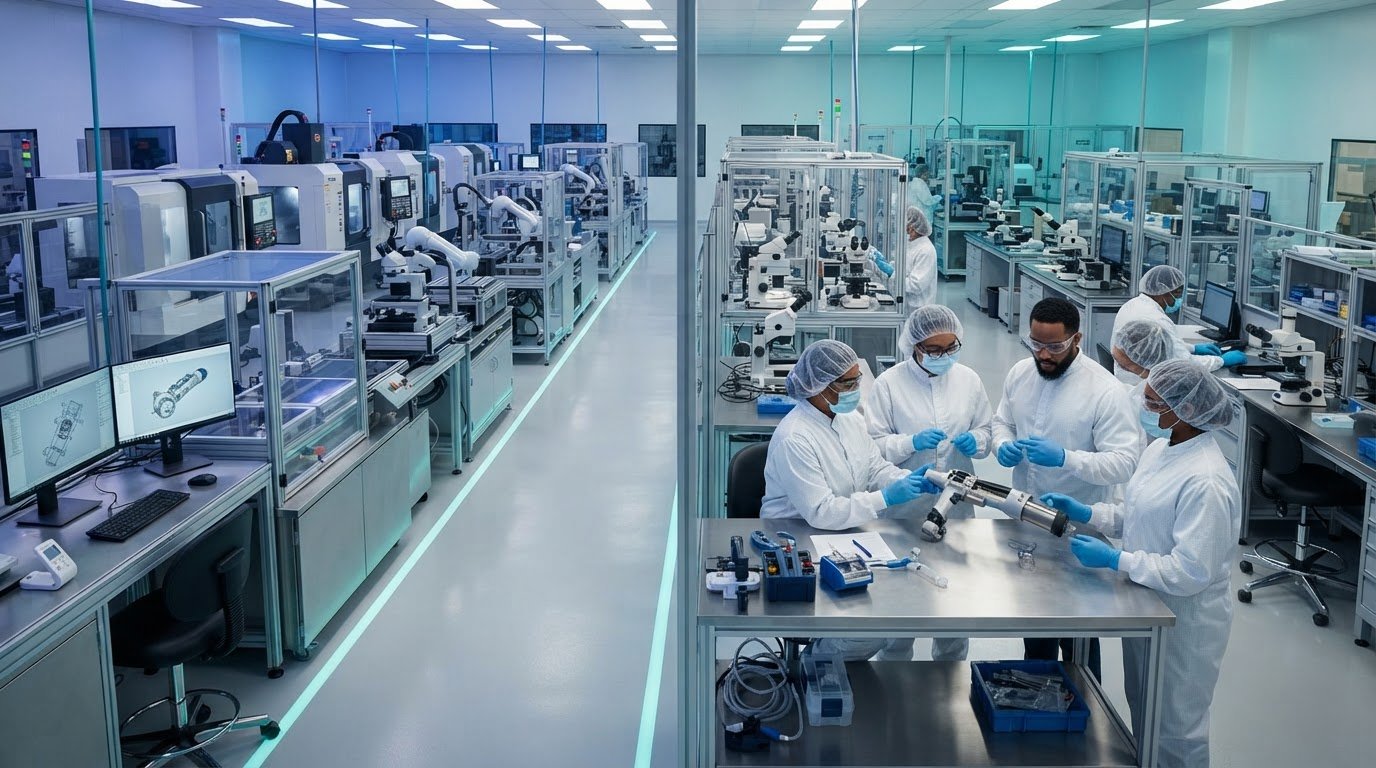
The transition from a validated design to high-volume manufacturing is where many projects lose momentum. Phase 3 focuses on the infrastructure required to maintain medical device speed to market while ensuring zero-defect quality. Smart manufacturing lines, equipped with real-time dashboards, provide immediate visibility into production yields. This data-driven approach allows for the identification of micro-deviations before they escalate into batch failures. Integrating these systems early ensures that the “Development Drag” identified in Phase 1 is permanently mitigated during full-scale production.
- Unmanned CMM Inspection: Implement unmanned Coordinate Measuring Machine (CMM) inspection to accelerate quality assurance cycles without increasing headcount.
- Cleanroom Readiness: Ensure Class 8 (100k) cleanroom assembly environments are prepared for immediate design transfer to maintain sterility and compliance standards.
- Global Footprint Utilization: Optimize the production roadmap by utilizing manufacturing sites in Singapore, Malaysia, and China to balance cost and technical requirements.
Leveraging Automation for Velocity
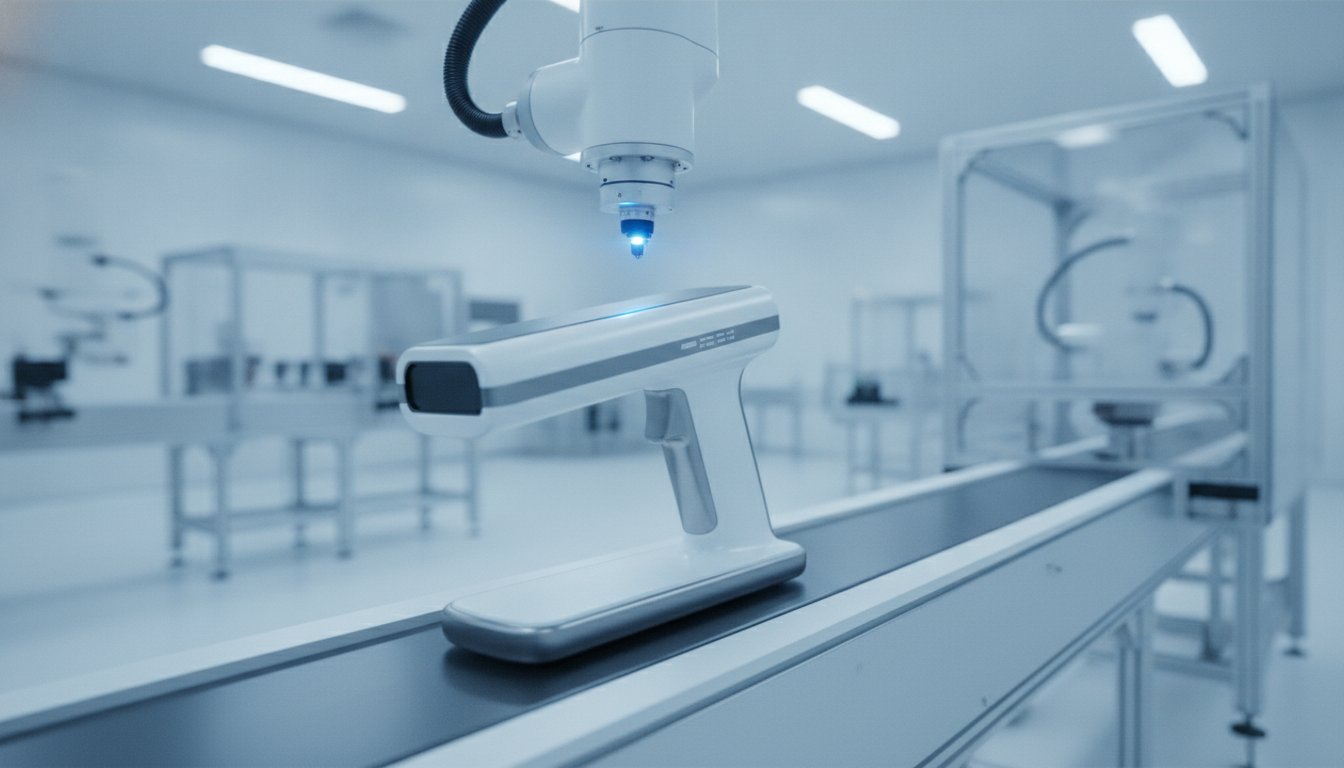
Unmanned production is a requirement for a competitive medical device speed to market. Utilizing 24-hour unmanned monitoring and robotic loading systems maximizes equipment utilization and reduces the lead times associated with manual shifts. Automated blister packaging and in-process leak testing further compress the timeline by integrating secondary operations directly into the primary production flow. Real-time data acquisition enables engineers to perform immediate corrective actions. This prevents batch losses and eliminates the need for retrospective quality investigations that often delay product release by weeks.
Global Supply Chain Resilience
A resilient supply chain depends on strategic positioning near major logistics hubs like Changi or Senai. Selecting a partner with Vendor Managed Inventory (VMI) capabilities ensures that critical components are available precisely when needed, which reduces the burden on your internal logistics team. A multi-site strategy, leveraging facilities across Singapore and Malaysia, provides a necessary safeguard against geopolitical shifts and localized disruptions. This geographical diversity ensures that your commercialization roadmap remains on schedule regardless of external variables. To see how our smart manufacturing infrastructure can accelerate your next launch, contact our engineering team today for a technical consultation.
Choosing the Right CDMO Partner to Compress Timelines
Selecting a CDMO partner is the final strategic lever for optimizing your medical device speed to market. This choice shouldn’t be treated as a transactional procurement exercise; it serves as a critical extension of your internal R&D team. Evaluating a partner’s technical depth in specific applications, such as cardiovascular stents or complex endoscopes, ensures they possess the specialized knowledge required to navigate the nuances of your device’s architecture. A partner that offers end-to-end support from concept to mass production eliminates the friction of handoffs between multiple vendors, which is often a hidden source of “Development Drag” in late-stage commercialization. Understanding the fundamental differences between build-to-print production and integrated engineering intelligence is essential; our detailed guide on medical device OEM vs CDMO can help you evaluate which manufacturing model most effectively mitigates your technical and regulatory risks.
Technical specialized services are essential benchmarks for a high-tier partner. It’s vital to assess capabilities in femtosecond laser cutting for micro-precision components and hermetic sealing for sensitive electronic enclosures. These advanced processes allow for design refinements that improve both performance and manufacturability simultaneously. Auditing a partner’s quality management system is equally non-negotiable. A robust framework for Corrective and Preventive Actions (CAPA), risk management, and rigorous process validation (IQ/OQ/PQ) ensures that the device remains compliant with the FDA QMSR requirements that took effect in February 2026. Understanding the full scope of medical device scale up manufacturing requirements is critical when evaluating whether a CDMO can support your transition from validated prototype to high-volume commercial production.
The Value of 40 Years of Precision Engineering
Institutional knowledge is an intangible but vital asset in the MedTech industry. With over 40 years of experience, a seasoned CDMO has likely encountered and resolved the common “rookie” mistakes that often derail smaller or less specialized firms. This stability creates an atmosphere of institutional trust, particularly during high-stakes validation cycles. Beyond the manufacturing floor, consider the benefits of post-market support. Having access to a dedicated US repair center, such as an Irvine, CA facility for endoscope refurbishment, provides a significant advantage for lifecycle management. A “Quality First” culture ensures that every component meets rigorous global standards before it ever reaches a clinician.
Next Steps: Moving from Concept to Patient
Achieving a reduced time-to-market requires a disciplined adherence to the strategic alignment, DFM, and smart manufacturing checklists outlined in this guide. Moving from concept to patient is a complex journey that demands a steady hand and technical mastery. We encourage a consultative approach where manufacturing constraints are integrated into the earliest design discussions. This collaborative model transforms the development cycle into a predictable, high-velocity engine for innovation. If you’re ready to accelerate your commercialization roadmap, contact our engineering team for a technical consultation.
Building the Future of Patient Care through Operational Precision
Success in the 2026 MedTech landscape requires a transition from reactive development to a model of disciplined integration. By aligning regulatory strategy with design inputs and prioritizing manufacturability from the earliest stages, you eliminate the inefficiencies that typically stall commercialization. Achieving optimal medical device speed to market isn’t merely about velocity; it’s about the technical mastery required to ensure that every phase, from concept to mass production, is executed with absolute precision. Leveraging smart manufacturing and unmanned automation provides the scalability necessary to meet global patient needs without compromising on quality or compliance.
Partnering with a CDMO that possesses over 40 years of MedTech excellence ensures your project benefits from institutional knowledge and ISO 13485 and FDA 510(k) compliant systems. This steady hand allows your team to focus on clinical innovation while the complexities of high-precision engineering and supply chain logistics are managed by experts. Accelerate your medical device speed to market with Fong’s Engineering & Manufacturing Private Limited; contact our experts today to discuss your technical requirements. We’re ready to help you transform your breakthrough concept into a market-leading reality.
Frequently Asked Questions
What is the average time to market for a Class II medical device?
The average time for a 510(k) clearance, which is the most common pathway for Class II devices, increased to approximately 156 days in the first half of 2026. This figure represents the FDA review duration and doesn’t include the preceding months required for design freezes, verification testing, and technical file preparation. Companies must account for these regulatory timelines when forecasting their commercial launch dates to ensure a realistic medical device speed to market.
How does Design for Manufacturability (DFM) specifically reduce development time?
DFM reduces development time by identifying production constraints during the initial design phase, which prevents the need for recursive engineering cycles later. By simplifying part geometries and reducing the total component count, engineers can minimize the time spent on tooling and assembly validation. This proactive integration ensures that the design is optimized for high-volume production from the outset, eliminating the late-stage redesigns that often cause significant launch delays.
Can a CDMO help with FDA 510(k) or CE Mark submissions?
A specialized CDMO acts as a technical extension of your R&D team, providing the critical validation data and documentation required for regulatory submissions. While the manufacturer is the legal submitter, the CDMO provides essential IQ/OQ/PQ reports and process validation evidence that form the core of the technical file. This support is vital for aligning with the FDA Quality Management System Regulation (QMSR) that became effective on February 2, 2026.
What are the risks of discovering a design flaw during the qualification phase?
Discovering a flaw during the qualification phase (IQ/OQ/PQ) often results in months of delay and substantial remediation costs. At this stage, production tooling is already finalized; any design change requires a complete restart of the validation process. These delays erode patent life and can damage investor confidence, especially if the delay allows a competitor to secure the first-mover advantage in a niche clinical field.
How does smart manufacturing impact the cost and speed of medical device production?
Smart manufacturing utilizes real-time data and unmanned automation to maximize equipment utilization and reduce production cycle times. By implementing 24-hour unmanned monitoring and automated quality inspections, manufacturers can maintain a continuous production cadence with higher yields. This integration directly enhances medical device speed to market by identifying process deviations immediately, which prevents batch losses and reduces the need for manual intervention.
Why is ISO 13485 certification non-negotiable for a contract manufacturer?
ISO 13485:2016 is the globally recognized standard for medical device quality management, ensuring that every process meets rigorous safety and traceability requirements. This certification is essential for maintaining institutional trust and is a prerequisite for most global regulatory approvals. Since the FDA’s new QMSR officially incorporated ISO 13485 by reference in early 2026, having a certified partner is now a mandatory requirement for entering the U.S. market.
What is the difference between a prototype and a production-ready device?
A prototype is a functional model used to validate design concepts, while a production-ready device is optimized for scalable manufacturing and long-term reliability. Production-ready designs utilize final materials and validated processes, such as 5-axis CNC machining or precision injection molding. Moving from a prototype to a production-ready state requires a disciplined focus on assembly tolerances and sterilization compatibility to ensure the device can be manufactured at high volumes without quality drift.
How does a global manufacturing footprint improve supply chain speed?
A global footprint improves speed by placing manufacturing sites near major transit hubs and providing regional redundancy to mitigate logistical risks. Utilizing facilities in Singapore, Malaysia, and China allows for better access to specialized micro-precision components and local vendor-managed inventory (VMI) services. This geographical diversity ensures that the supply chain remains resilient against localized disruptions, maintaining a steady flow of finished products to clinical end-users.