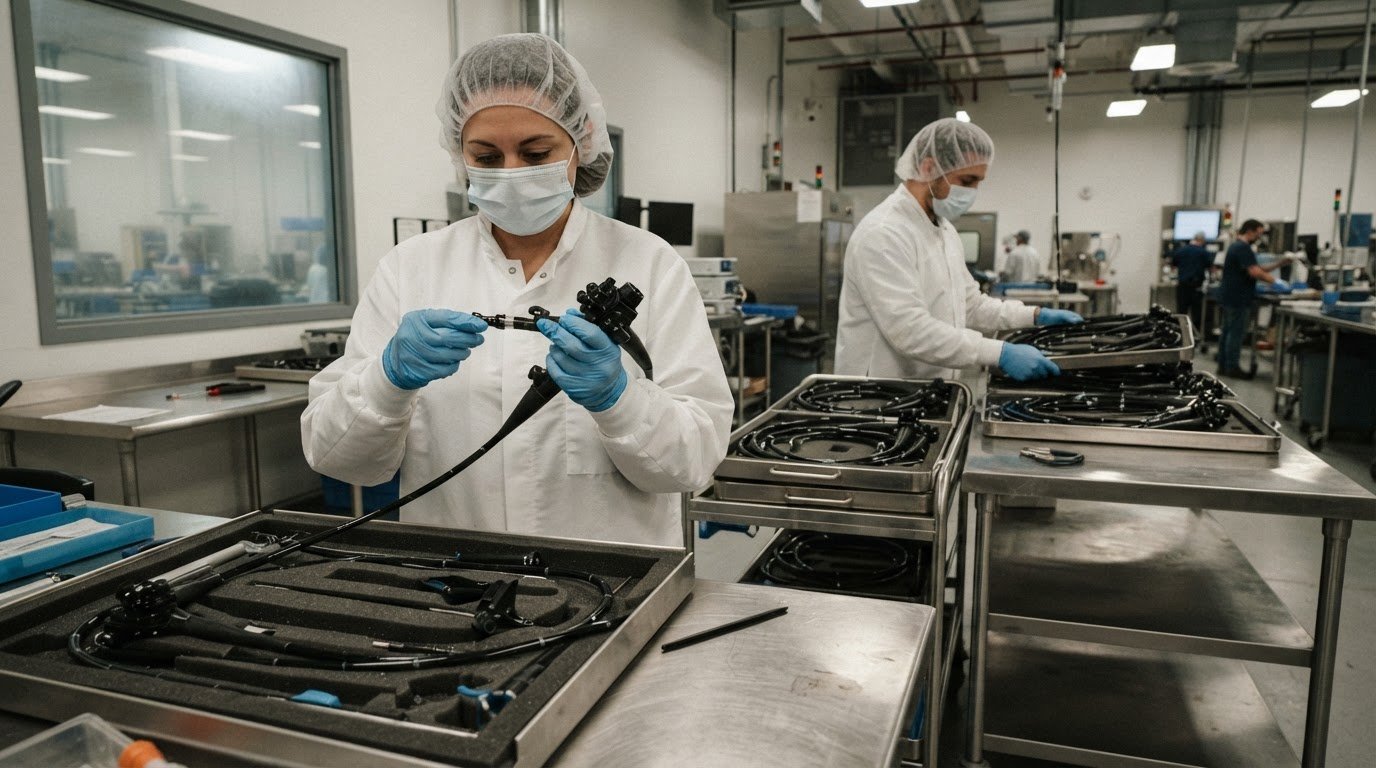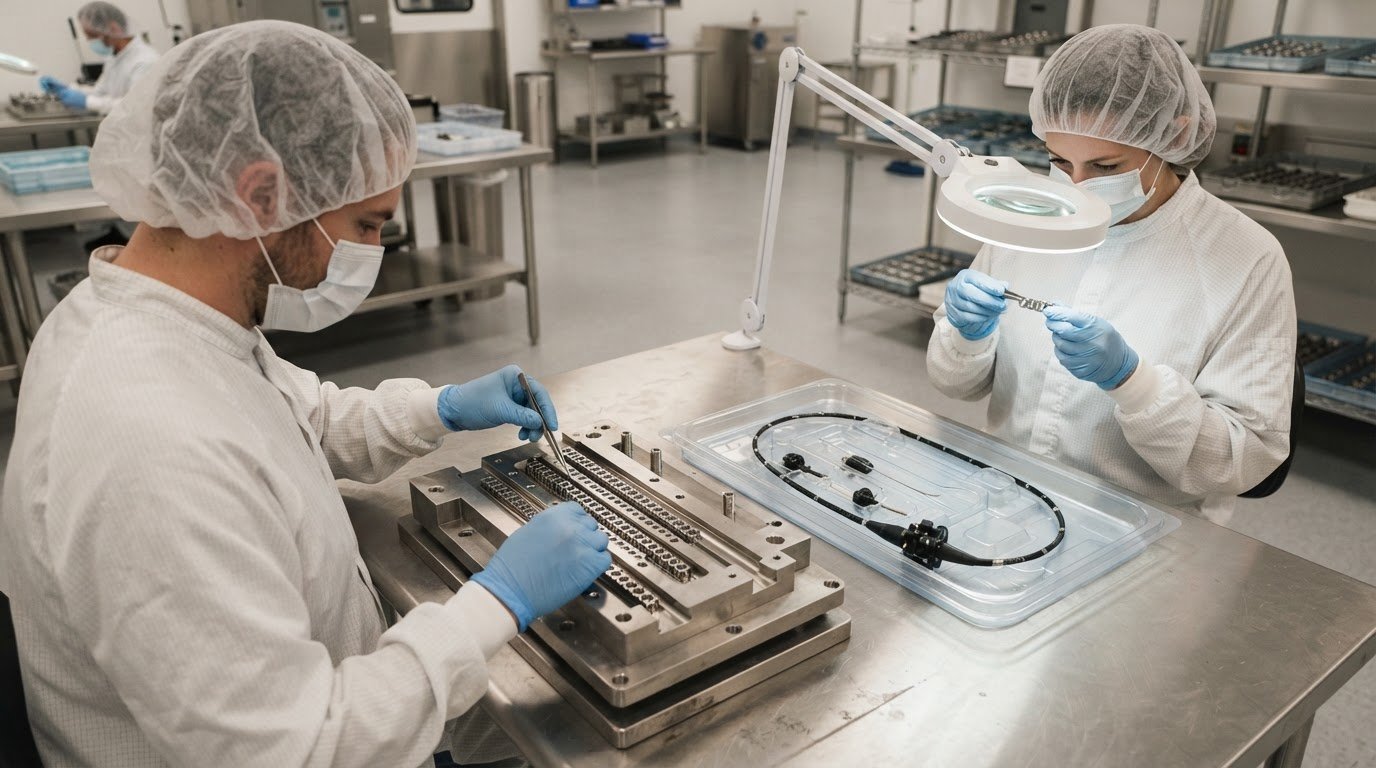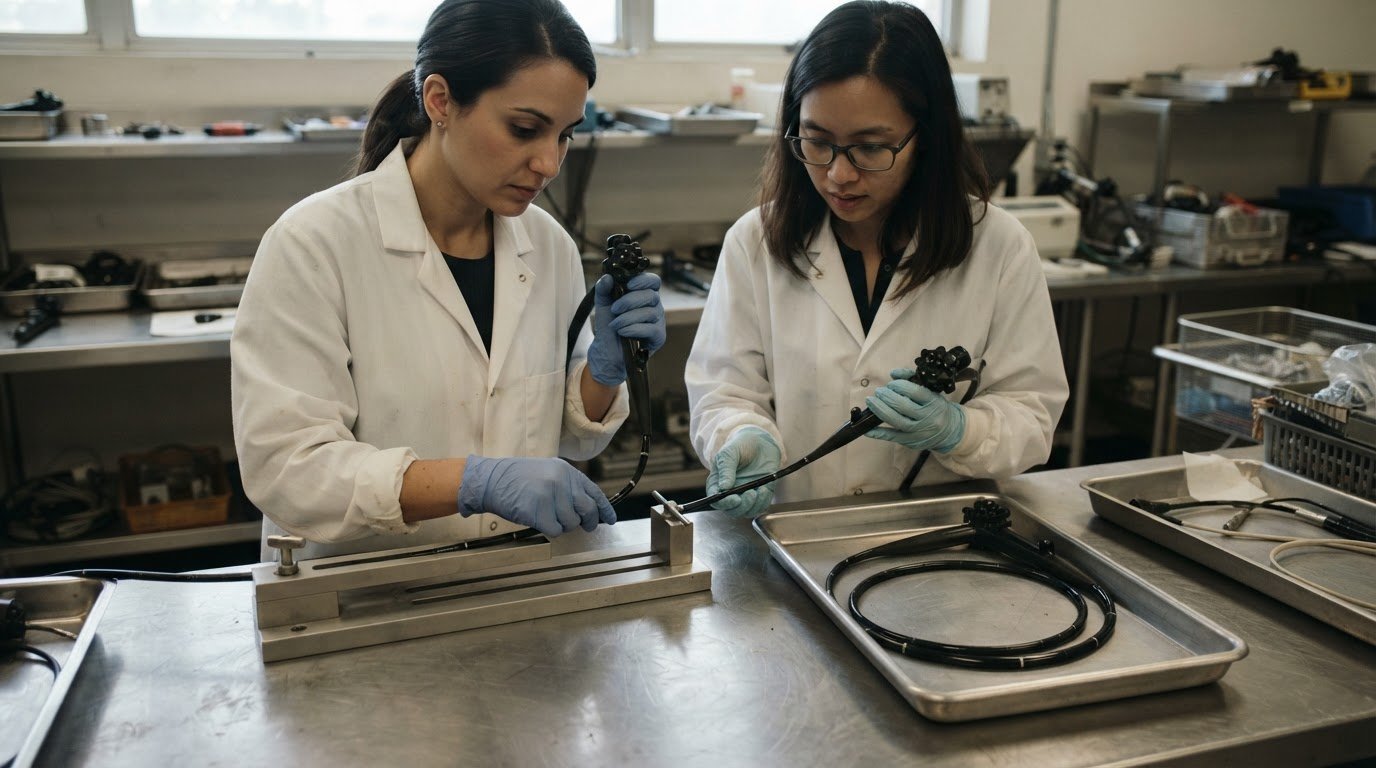

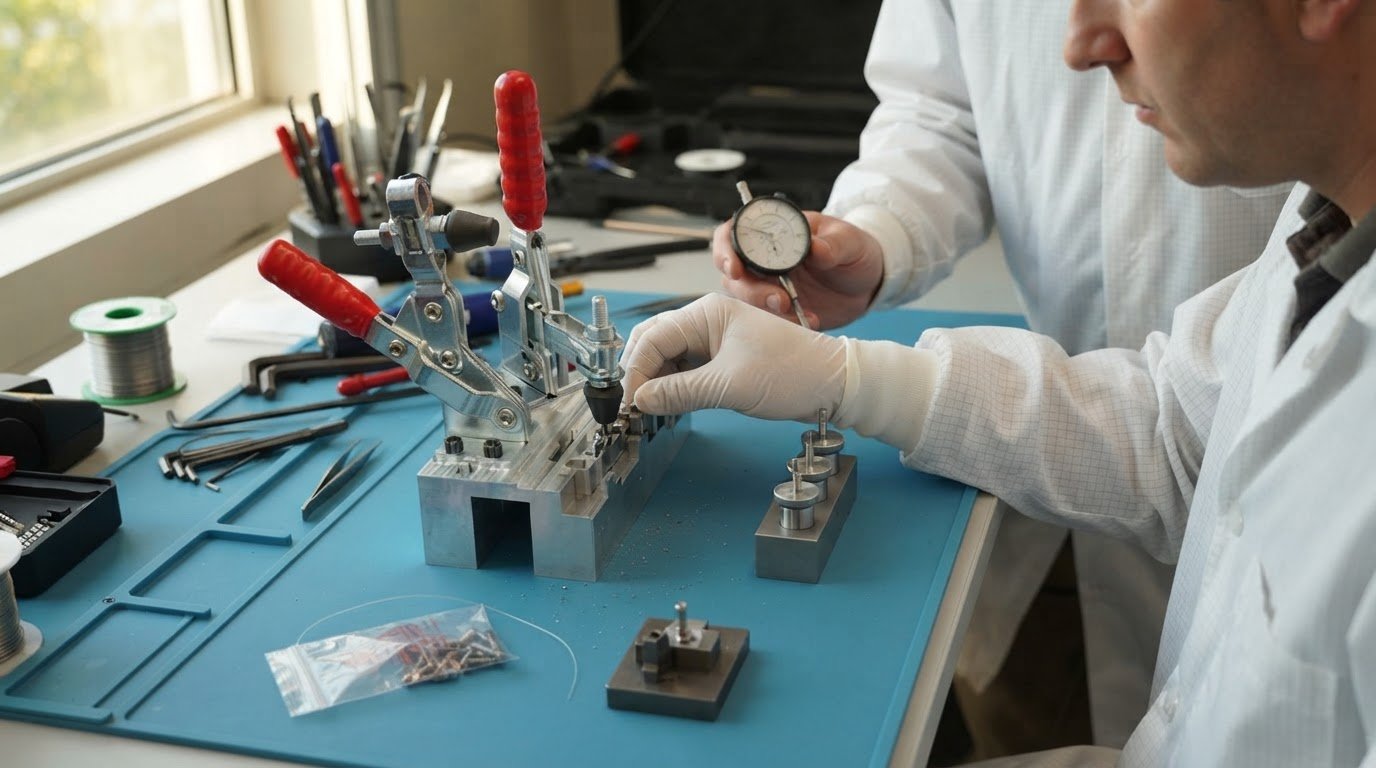
A corrected defect does not necessarily mean the process is under control. The CAPA process in medical device contract manufacturing identifies a quality issue, investigates its root cause, assigns corrective or preventive actions, and verifies that they are effective. The manufacturer and contract manufacturer coordinate responsibility for investigation, implementation, documentation, and review.
That distinction matters: containment can limit immediate exposure, but it does not remove the cause or demonstrate that the issue will not recur. A sound CAPA connects manufacturing and quality evidence to a defined action plan, then assesses effectiveness against measurable results.
This article follows CAPA from the initial quality signal through risk assessment, root-cause analysis, action, and effectiveness verification. It explains how responsibilities are divided when production is outsourced, which records support the investigation, and how CAPA fits into the broader medical device quality system.
Key Takeaways
- Separate immediate containment from actions that remove the cause, so the response addresses both current product risk and recurrence.
- Use risk-based reasoning to decide whether a quality signal warrants a formal investigation, considering its potential product and patient impact.
- Coordinate responsibilities between the medical device company and contract manufacturer, and maintain clear records of findings, decisions, actions, and approvals.
- Set measurable effectiveness criteria before closing a CAPA; trend data, process monitoring, audits, testing, or complaint reviews can help assess whether the failure mechanism is controlled.
- When manufacturing or supplier issues recur, connect the investigation to relevant process controls, supplier actions, and change-control activities.
How does CAPA Work in Medical Device Contract Manufacturing?
In medical device contract manufacturing, CAPA links a quality signal to investigation, root-cause analysis, action, and effectiveness review. Contract manufacturers and device companies define responsibilities, share evidence, and document decisions across their manufacturing relationship.
To investigate root causes, the contract manufacturer reviews relevant process and product evidence, then distinguishes direct, contributing, and escape causes. CAPA records should capture the findings, analysis, planned actions, implementation evidence, effectiveness results, and approvals.
Root Cause Analysis for Device Defects
Root-cause analysis is a structured examination of evidence to determine why a device defect occurred and how it could happen again. This matters because correcting a visible defect alone may leave unchanged the process condition that caused it.
An investigation may start with the affected part, inspection results, production records, and the steps used to make or assemble it. For example, repeated inspection failures may prompt a review of equipment performance, operator training, process settings, and work instructions. Investigators should also assess whether similar lots or processes show the same pattern.
Analysis should distinguish the direct cause from contributing factors and escape causes. The direct cause explains how the defect arose; a contributing factor helped create the conditions, and an escape cause explains why inspection or other controls failed to detect it. This distinction helps teams choose actions that address both the defect mechanism and any detection failure.
Investigators may use process mapping, trend analysis, fishbone diagrams, or fault tree analysis to test possible causes against evidence. The 5 Whys method can help trace a problem through successive cause-and-effect questions. Each proposed cause should be supported by records, observation, or testing, rather than accepted because it sounds plausible.
Causal Evidence and CAPA Records
Causal evidence is documented information supporting a proposed explanation for a defect. It matters because an action plan needs a defensible link between the root cause and the change intended to prevent recurrence.
In a 5 Whys analysis, investigators ask why the observed failure occurred, then follow each supported answer to the next underlying condition. For example, a missed inspection may prompt questions about the inspection step, the work instruction, and how personnel were trained. The record should distinguish verified findings from hypotheses that the investigation has not supported.
A complete CAPA record brings the investigation and response together in a traceable account. It should identify the issue, summarize the evidence, explain the root-cause analysis, list actions and owners, and retain approvals and implementation evidence. It should also show how effectiveness was assessed, for example, through later process monitoring or review of related complaints.
For a contract manufacturer, clear records make responsibilities and handoffs visible to the device company. The parties can connect a manufacturing deviation to its investigation, action plan, and effectiveness results, then review whether the evidence supports closure. The U.S. Food and Drug Administration states that the U.S. QMSR incorporates ISO 13485:2016 by reference as the foundational quality management framework for FDA-regulated medical device manufacturers.
What are Corrective and Preventive Actions (CAPA)?
A correction addresses a detected problem; corrective and preventive actions address its causes or potential causes. In manufacturing, this distinction determines whether an organization only resolves an affected lot or also changes practices to reduce recurrence.
Correction, Corrective Action, and Preventive Action
A correction fixes an identified nonconformity, while corrective action removes its cause and preventive action addresses a potential cause before a nonconformity occurs. Keeping these responses distinct helps teams match each action to the problem and its risk.
For example, sorting a lot and removing defective units is correction and containment. Changing a process control after evidence links it to repeated defects is corrective action. Reviewing a similar process and addressing a weakness before defects occur is preventive action. Each response needs its own rationale and record.
Action Planning and Implementation
An action plan turns investigation findings into assigned work, implementation evidence, and defined success criteria. Manufacturing actions should address the demonstrated cause, rather than relying solely on extra inspection, which may detect defects without removing the process cause.
For a recurring equipment issue, actions might include calibrating the equipment, revising calibration procedures, retraining personnel, and inspecting affected lots. For a supplier issue, the response may include quarantining materials, initiating supplier corrective action, and evaluating potential product impact. Document owners, approvals, and relevant change-control or validation activities.
Planning also requires coordination between the device company and contract manufacturer. The parties need clear responsibilities for approving actions, implementing them, and reviewing evidence. When a controlled or validated process changes, applicable change-control and validation processes help assess the impact before the change is introduced.
Effectiveness Verification and ISO 13485 Clauses
Effectiveness verification evaluates whether implemented actions controlled the cause and reduced recurrence, using criteria defined in the action plan. ISO 13485:2016 addresses corrective action in clause 8.5.2 and preventive action in clause 8.5.3.
Choose evidence that tests the action’s intended result. Trend analysis can show whether similar deviations continue, while process monitoring can assess whether revised controls work as intended. Product testing, additional audits, or complaint reviews may provide further evidence when they relate directly to the failure mechanism.
Set measurable criteria before implementation, such as the process records or complaint patterns the team will review. If the evidence doesn’t demonstrate that the cause is controlled, the CAPA remains open and the organization reassesses its analysis or actions. ISO 13485:2016 also requires corrective actions not to adversely affect product quality, safety, or performance.
For teams aligning manufacturing actions with device requirements, discussing a manufacturing project can help frame the relevant process controls and responsibilities.
CAPA process definition and management challenges
CAPA management connects quality signals to documented decisions, assigned actions, and follow-up across an organization. Common failures include weak cause analysis, actions that do not address causes, and inadequate effectiveness evidence; CAPA deficiencies have ranked among the top quality-system issues cited in FDA 483s in the past several years.
CAPA timelines and costs vary with the issue’s scope, available evidence, supplier involvement, testing, and required process changes. The sections below explain how these factors affect oversight and resource needs.
Supplier Findings and CAPA Challenges
Supplier CAPA management coordinates investigation and action when purchased materials or supplier processes contribute to a quality problem. It matters because the device manufacturer needs evidence that supplier actions address both product impact and the underlying cause.
An audit finding, repeated incoming inspection failure, or material deviation may prompt a review of supplier records and affected inventory. The organization can quarantine material, evaluate product impact, and initiate supplier corrective action. A common weakness is accepting a supplier response that fixes the immediate issue but does not explain its cause or how recurrence will be controlled.
FDA 483 observations have repeatedly included CAPA deficiencies among the leading quality-system issues in recent years. Common weaknesses include incomplete investigations, unsupported root causes, actions that fail to address causal mechanisms, and effectiveness checks without meaningful evidence. Supplier findings require clear ownership, documented follow-up, and escalation when the response leaves risks unresolved.
Documentation, Review, and Risk Feedback
CAPA documentation preserves the evidence, decisions, approvals, and action status needed to evaluate a quality event over time. Disconnected records can obscure whether a supplier issue, audit finding, complaint, or nonconformance shares a recurring cause.
Quality management software can link CAPAs to complaints, deviations, audit findings, supplier events, change controls, and risk assessments. Audit trails can record who changed information, when actions occurred, and how approvals progressed. These connections help reviewers identify patterns across sources rather than treating each signal as an isolated event.
Management review can use CAPA trends, overdue actions, and effectiveness results to identify persistent system problems. Investigations may also prompt updates to risk documentation, such as hazard analyses, occurrence estimates, or risk-control evaluations. This feedback helps the quality system respond to manufacturing evidence and post-production information.
CAPA Timelines and Costs
CAPA timelines and resource needs depend on the investigation’s complexity, the availability of evidence, and the work needed to control the cause. This matters for planning: a contained, well-understood deviation differs from a cross-functional issue involving suppliers, product impact, and process changes.
Readily available records can support faster analysis, while fragmented data or unresolved questions about the cause require further investigation. Supplier coordination, product testing, validation, and review of affected lots can add work. Costs reflect these resource needs, including personnel time, testing, material evaluation, and implementation activities.
Teams can make progress visible by assigning action owners, tracking due dates, recording dependencies, and escalating overdue tasks in their CAPA system. Closure should follow evidence that the action is effective, not an arbitrary schedule. For support aligning manufacturing controls with device requirements, discuss a manufacturing project.
CAPA effectiveness verification and validation
Implementation evidence shows that planned actions were completed; effectiveness evidence shows whether they controlled the causes. Keeping these judgments separate helps prevent the quality management system from closing a CAPA merely because tasks are complete.
Implementation Validation and Effectiveness Checks
Implementation validation confirms that an approved change was put into practice as intended, while an effectiveness check tests its impact. Both matter because a revised procedure can be issued without being followed consistently on the production floor.
For a revised assembly instruction, implementation evidence might include the approved revision, training records, and production records showing that the new process was used. Reviewers can compare these records with the action plan to identify incomplete steps, affected work areas, or execution gaps.
Effectiveness checks should target the original failure mechanism. If a process deviation prompted CAPA, monitoring can examine subsequent deviation records and process performance. If an escape cause involved inspection, an audit or product test can assess whether the relevant control now detects the issue.
Choose evidence that fits the action. Trend analysis can reveal whether similar events recur, while complaint reviews can identify related problems beyond production records. Additional audits or process monitoring may show whether changed practices remain in use. Measures should connect directly to the causes under investigation, not merely count completed training or revised documents.
Effectiveness Review and CAPA Closure
Effectiveness review compares collected evidence with criteria established in the CAPA plan and determines whether the action controlled the failure mechanism. This matters because closure is a conclusion about results, not simply the completion of assigned work.
Reviewers should assess whether the evidence covers the affected process, product, and relevant quality data. For example, a change intended to prevent an assembly error may require production monitoring and complaint review, rather than relying only on a signed training record.
If monitoring shows the same defect pattern, or the evidence does not address the original cause, the CAPA should remain open. The organization may need to revisit its causal analysis, revise the action, or gather more evidence. A documented rationale should explain why the evidence supports closure or why further work is needed.
For a contract manufacturer, the device company and manufacturing team should agree on who reviews results and records the closure decision. A clear handoff preserves the connection between implementation evidence, effectiveness findings, and approval. This traceable record shows how the quality management system evaluated whether the causes were controlled.
CAPA’s role in medical device contract manufacturing
CAPA connects manufacturing evidence to decisions that protect product quality and prevent recurring process failures. Responsibility is shared: the contract manufacturer investigates processes under its control, while the medical device legal manufacturer coordinates product-level quality decisions through agreed procedures.
For an in-house manufacturer, investigation, decision-making, and implementation take place within one organization. Contract manufacturing adds handoffs, making written responsibilities, escalation paths, and shared records central to effective oversight.
The quality agreement and related procedures should define who opens a CAPA, leads the investigation, approves actions, and evaluates effectiveness. They should also explain how the parties exchange production, supplier, complaint, and audit information. Clear assignments help prevent a manufacturing issue from falling between organizations.
A contract manufacturer can investigate process deviations, equipment conditions, assembly records, and supplier material issues within its operations. The legal manufacturer can assess broader effects on device quality, risk documentation, complaints, and product-level decisions. Both parties need access to relevant evidence, even when one leads a particular task.
Consider a recurring assembly defect. The contract manufacturer can examine production records, work instructions, equipment, and operator training, then propose process changes. The legal manufacturer can review potential product impact and align on required actions. The parties should record the decision, owners, implementation evidence, and verification criteria.
In an in-house model, one quality system can assign investigation and approval roles across internal teams. In an outsourced model, the same work crosses organizational boundaries. Escalation rules should specify who communicates significant findings, who evaluates affected product, and how approved changes are controlled across the manufacturing relationship.
- Contract manufacturer: investigates manufacturing causes, documents process evidence, and implements assigned actions.
- Legal manufacturer: coordinates product-level assessment and quality decisions under its procedures.
- Both parties: exchange records, agree on responsibilities, and review whether actions address the identified causes.
Complaints also connect the two roles. The FDA considers customer complaints an important source of CAPA data. A complaint linked to a manufacturing issue should reach the relevant production team, while the legal manufacturer evaluates it through its complaint and product-quality processes. Neither party should treat the handoff as a substitute for investigation.
For complex device assembly, define escalation and evidence-sharing expectations before production issues arise. Discuss your medical device manufacturing requirements and the process controls relevant to your project.
Fong’s Engineering & Manufacturing Private Limited: CDMO Services
Fong’s Engineering & Manufacturing Private Limited supports medical device projects requiring coordinated development, manufacturing, and regulatory support. Its CDMO Services cover concept design, prototyping, validation, and large-scale production, making them a relevant option for projects that need integrated manufacturing support.
For production under a customer’s brand, its OEM Solutions support the manufacture of complete medical devices. Micro-precision Components and Endoscope Repair & Refurbishment address specific component and reusable-instrument needs. These offerings serve distinct requirements, from device development to component supply and repair.
If you are assessing a manufacturing project or how quality processes align with production, contact Fong’s Engineering & Manufacturing Private Limited or visit fongspl.com.sg.
Build CAPA into the Next Manufacturing Decision
Use the next quality or manufacturing decision to clarify ownership across the production relationship. Define how teams will share evidence, who approves process changes, and which results will demonstrate that an action addressed its cause. This makes the CAPA process in medical device contract manufacturing a practical part of project governance, rather than a response considered only after an issue recurs.
When manufacturing needs extend beyond a single production activity, Fong’s Engineering & Manufacturing Private Limited offers CDMO Services and OEM Solutions, as well as Endoscope Repair & Refurbishment. These capabilities meet distinct project needs, from device manufacturing to reusable instrument repair, and can be considered alongside your quality and production objectives.
For a discussion about your medical device manufacturing requirements, contact Fong’s Engineering & Manufacturing Private Limited. A clear conversation about project scope and quality responsibilities is a constructive next step toward well-managed production.
Frequently Asked Questions
What Triggers a CAPA?
A CAPA may be triggered by a quality signal suggesting a recurring or systemic issue, or a serious product concern. Examples include repeated manufacturing defects, recurring inspection failures, supplier material problems, complaint trends, and audit findings. A single nonconformance does not automatically require a CAPA. The organization assesses the evidence, scope, product impact, and potential patient-safety implications before deciding whether a formal investigation is appropriate.
What Is This CAPA Guide About?
This guide explains how the CAPA process in medical device contract manufacturing connects quality signals to investigations, assigned actions, and evidence of results. It focuses on how device companies and contract manufacturers coordinate responsibilities, maintain traceable records, and assess whether actions worked. Use this framework to clarify handoffs in a manufacturing relationship and identify the decisions that shape a well-supported CAPA.
What is the best time to implement a CAPA?
Implement a CAPA when documented evidence indicates a meaningful or recurring cause requiring systematic action. A serious product or patient-safety concern can warrant prompt escalation, even before a trend develops. For a limited, isolated issue, correction and documented risk assessment may be appropriate without opening a formal CAPA. Base the decision on the issue’s scope, potential impact, recurrence pattern, and the strength of available evidence.
What does CAPA mean in medical device manufacturing?
CAPA means Corrective Action and Preventive Action, a quality-system approach to addressing detected problems and potential causes. A correction resolves a specific detected nonconformity; corrective action addresses its cause, while preventive action addresses potential causes before a problem occurs. In manufacturing, this distinction helps teams decide whether to repair or contain affected product, change a process, or address a weakness that could lead to a future defect.
What FDA regulations and ISO 13485 requirements govern CAPA for medical device contract manufacturers?
For U.S. FDA-regulated manufacturers, the QMSR incorporates ISO 13485:2016 by reference as its foundational quality management framework, according to the U.S. Food and Drug Administration. The QMSR became effective February 2, 2026. ISO 13485:2016 addresses corrective and preventive action in clauses 8.5.2 and 8.5.3. Under this framework, contract manufacturers and device companies align CAPA responsibilities through their quality systems and manufacturing arrangements.
What are the steps in a medical device CAPA process?
A typical CAPA begins by documenting the quality signal and assessing its risk and scope. The team then investigates causes, defines corrective or preventive actions, assigns owners, implements approved changes, and evaluates results against established criteria. For example, a recurring assembly deviation could prompt a process review, a controlled instruction change, and monitoring of subsequent records. Documenting decisions and approvals throughout creates traceability from the initial signal to the final review.
How do manufacturers assess CAPA effectiveness and determine when to close a CAPA?
Manufacturers assess effectiveness by comparing relevant post-action evidence with the CAPA’s established criteria. For example, after a process change, reviewers might examine later deviation trends, process-monitoring data, and related complaints. Evidence should address the original failure mechanism, not merely show that an action was completed. Keep the CAPA open if results do not demonstrate control; document the rationale and approvals when evidence supports closure.
How should CAPA address supplier issues, nonconformances, complaints, and audit findings?
Connect each signal to the relevant investigation while keeping related quality processes distinct. A supplier issue may require material quarantine, product-impact assessment, and supplier corrective action; an audit finding may reveal a broader control weakness. Complaint investigation and any Medical Device Reporting assessment are related but separate processes. Linking records can reveal shared patterns, while clear ownership shows which organization investigates, approves actions, and reviews outcomes.