

The “valley of death” between a successful prototype and scalable mass production claims nearly half of all medtech innovations before they reach a single patient. You’ve likely felt the mounting pressure of the FDA Quality Management System Regulation (QMSR) that became effective in February 2026, alongside the tightening deadlines for EU MDR compliance. Managing these complex regulatory hurdles while balancing high capital expenditure for advanced manufacturing technology often stretches internal resources to a breaking point. Strategic medical device product lifecycle management outsourcing isn’t just a cost-saving measure; it’s a necessary pivot for organizations that prioritize technical precision and global market readiness.
Fong’s Engineering & Manufacturing Private Limited presents this guide to demonstrate how partnering with a specialized CDMO accelerates your speed-to-market and ensures rigorous ISO 13485:2016 compliance across the entire development journey. You’ll discover how to transform fragmented supply chains into integrated, predictable manufacturing streams that reduce long-term operational costs. We’ll examine the shift toward smart automation, the impact of harmonized global standards, and the specific engineering advantages of a multi-region manufacturing footprint. By the end of this analysis, you’ll have a clear roadmap for selecting a partner that bridges the gap between sophisticated design and commercial excellence.
Key Takeaways
- Understand the strategic necessity of medical device product lifecycle management outsourcing to navigate the evolving FDA QMSR and EU MDR compliance frameworks.
- Identify how Design for Manufacturability (DFM) and precision prototyping protocols eliminate technical bottlenecks during the transition to mass production.
- Examine the application of 5-axis CNC machining and ultrashort-pulse laser processing in achieving the exacting tolerances required for MIS and robotic surgical components.
- Learn to leverage a Validation Master Plan (VMP) to maintain rigorous quality control across complex device assembly and global supply chains.
- Evaluate the operational advantages of a global CDMO partner, including FONG’S regional hubs in Asia and specialized repair centers in the United States.
The Strategic Shift Toward Medical Device Product Lifecycle Management Outsourcing
The medical device industry is undergoing a fundamental transformation. As engineering requirements for robotic surgical adapters and minimally invasive surgery (MIS) tools reach sub-micron tolerances, the burden of maintaining in-house production lines has become unsustainable for many OEMs. The decision to pursue medical device product lifecycle management outsourcing is no longer just about labor arbitrage; it’s a strategic move to secure institutional expertise in a high-stakes market. By delegating the complexities of a product’s product lifecycle management to a specialized CDMO like FSP Group, manufacturers can focus on core R&D while ensuring every stage of production meets rigorous global standards.
Identifying the transition “sweet spot” is critical for operational success. Moving from R&D to a partner too late often results in costly design revisions that delay commercialization. Engaging a partner like FONG’S during the early design phase allows for meaningful Design for Manufacturability (DFM) input. This collaboration stabilizes long-term manufacturing costs and prevents the “valley of death” that frequently occurs during the scale-up from prototype to mass production.
Reducing CAPA and Compliance Risks Through Partnership
Compliance isn’t a static checkbox; it’s a continuous state of technical readiness. With the FDA Quality Management System Regulation (QMSR) now incorporating ISO 13485:2016 as of February 2, 2026, the alignment between international standards and U.S. requirements is absolute. A specialized CDMO manages these frameworks through a deeply integrated quality culture. We mitigate risk by executing meticulous process validation protocols, including Installation Qualification (IQ), Operational Qualification (OQ), and Performance Qualification (PQ). This rigorous approach reduces Corrective and Preventive Action (CAPA) triggers and ensures that every component, from stents to complex assemblies, adheres to FDA 510(k) and CE Mark requirements.
Accelerating Speed-to-Market in a Competitive MedTech Landscape
Market leaders don’t wait for one phase to end before starting the next. CDMOs enable parallel processing, where manufacturing preparation and supply chain sourcing occur simultaneously with final design iterations. By leveraging established global networks and precision hubs in Singapore, China, and the upcoming facility in Johor, Malaysia, FSP Group helps OEMs bypass procurement bottlenecks. This collaborative model is essential for Accelerating Medical Device Speed to Market. It ensures that the transition from a functional prototype to high-volume production is seamless, predictable, and technically sound.
From Concept to Refurbishment: Stages of the Outsourced Lifecycle
Comprehensive medical device product lifecycle management outsourcing involves a structured progression that extends far beyond initial fabrication. It encompasses a five-stage journey: concept refinement, clinical prototyping, regulatory validation, high-volume assembly, and post-market restoration. Each stage requires a distinct set of technical competencies and a deep understanding of the FDA Quality Management System Regulation to ensure that the transition from a designer’s intent to a clinician’s hand is technically flawless and legally compliant.
Design for Manufacturability (DFM) and Prototyping
True innovation requires more than a functional prototype; it requires a design that can survive the rigors of mass production without compromising safety or increasing unit costs. During the DFM phase, we optimize complex surgical tools and orthopedic implants for high-volume output. Our R&D labs specialize in refining critical components, such as ultrasonic scalpel couplers and precision stents, ensuring they meet exact tolerances before the pilot run begins. This phase is vital for identifying potential failure modes early, which prevents costly delays during the clinical trial material production stage. Scalability isn’t an afterthought; it’s engineered into the device from the first iteration.
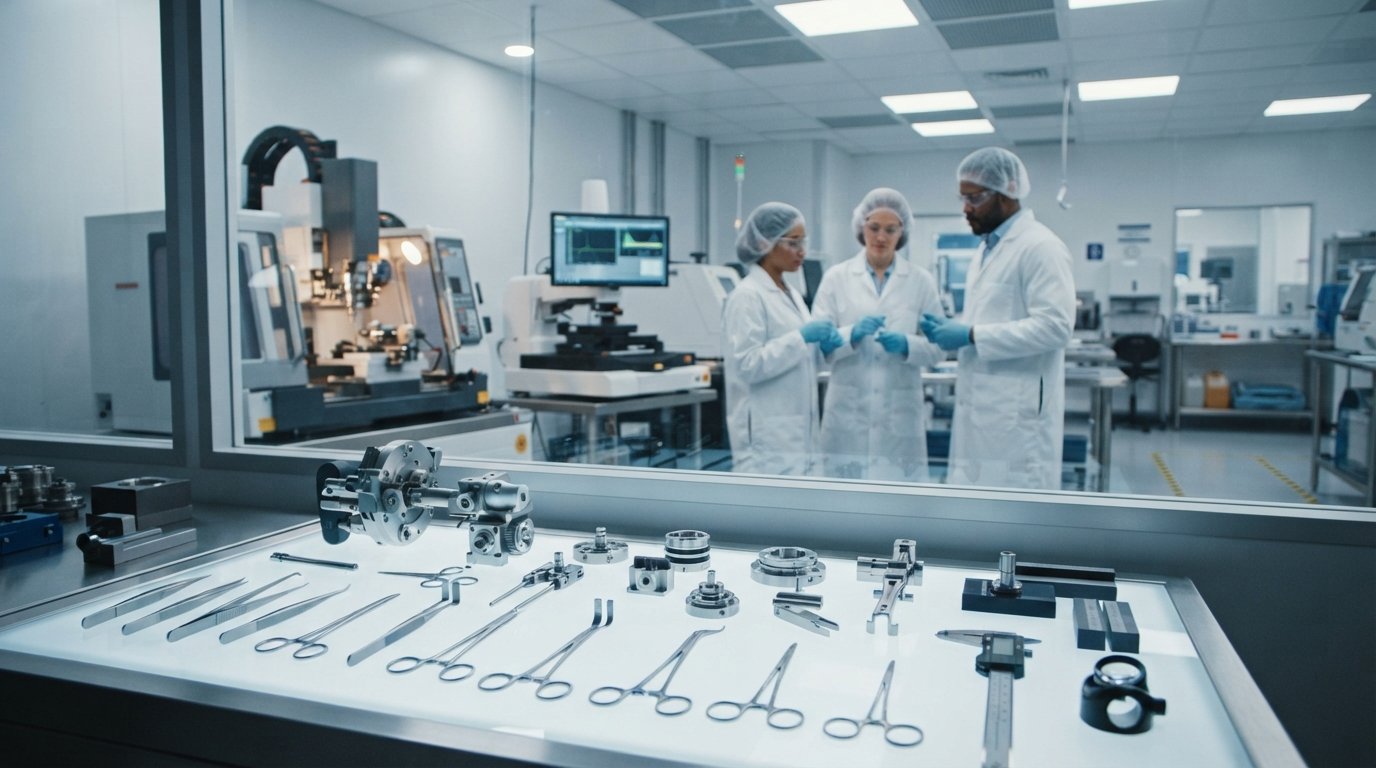
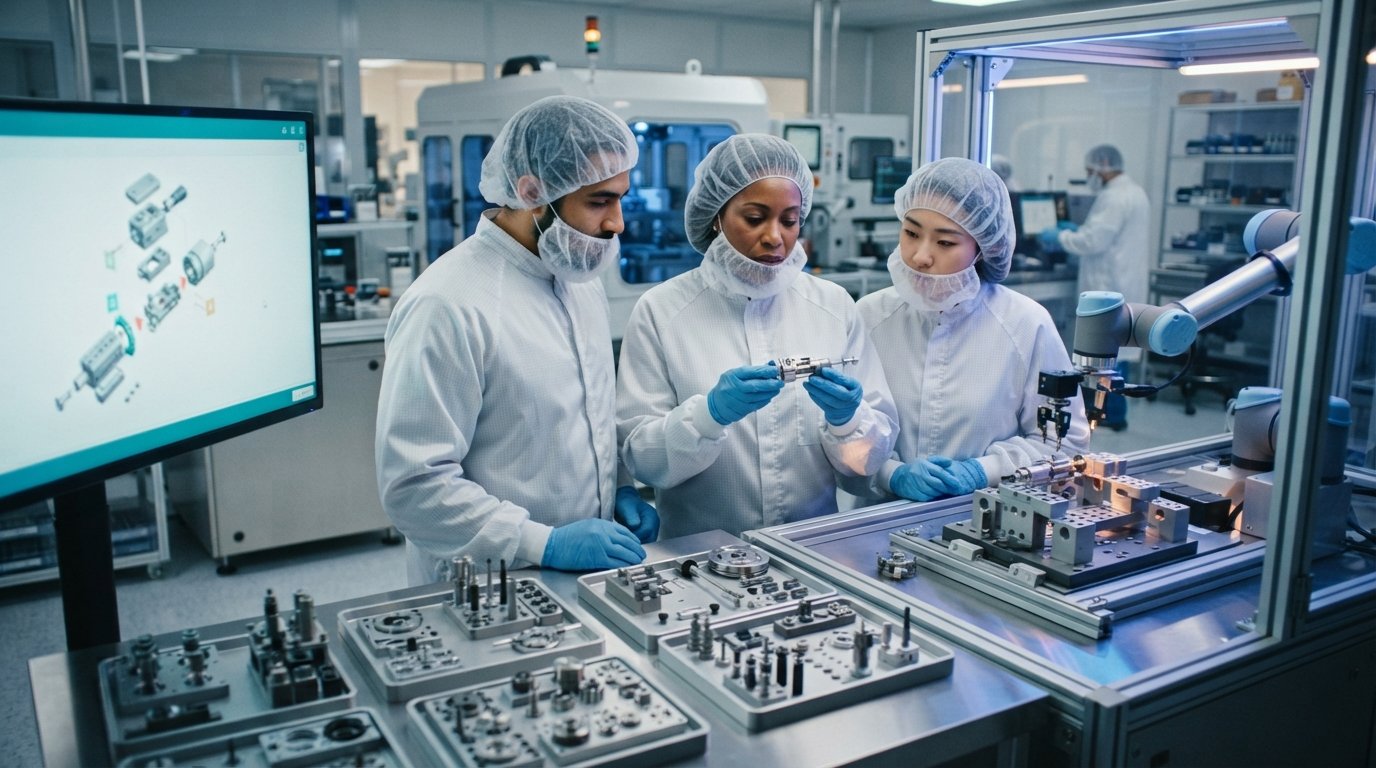
Once the design is frozen, the focus shifts to regulatory submission support and rigorous validation. This involves preparing the technical dossiers and documentation required for global market entry. Following successful validation, the project enters mass production and complex device assembly. At FSP Group, smart manufacturing lines and Class 8 cleanrooms provide the controlled environment necessary for high-risk Class III devices, ensuring that lot-to-lot consistency is maintained through automated in-process measurements.
Closing the Loop: Repair and Refurbishment Services
Many providers conclude their service at the point of sale, but the true value of a strategic partnership lies in managing the entire product lifespan. Post-market support, specifically for reusable instruments like surgical staplers and MIS tools, represents a significant operational advantage for OEMs. Restoring high-value equipment to original specifications extends the utility of capital assets while maintaining patient safety standards. By integrating Expert Endoscope Repair and Refurbishment Services into the lifecycle, manufacturers can offer their customers a sustainable, cost-effective solution for equipment longevity. This “circular” approach to lifecycle management reduces waste and strengthens the bond between the OEM and the healthcare provider. If you’re seeking to enhance your post-market support strategy, contact our technical team to discuss a tailored refurbishment program.
Advanced Manufacturing Technologies Powering PLM Excellence
The physical execution of a medical device design determines its clinical success. In the context of medical device product lifecycle management outsourcing, the choice of technology dictates not only the precision of the component but also the scalability of the entire program. High-risk devices, such as orthopedic implants and cardiovascular stents, require manufacturing methods that eliminate human variability. We utilize 5-axis CNC milling and wire-cut EDM to achieve complex geometries that traditional machining cannot replicate. These technologies are essential for producing the intricate components found in robotic surgical systems, where every micron of deviation impacts performance.
Smart Manufacturing and Robotic Automation
Efficiency in a global CDMO model relies on the integration of smart manufacturing lines. By implementing 24-hour unmanned coordinate measuring machine (CMM) inspection, we ensure that in-process measurements are continuous and objective. This level of automation is a core component of optimizing medtech manufacturing networks for resilience and speed. Real-time dashboards provide absolute transparency to our outsourcing partners, offering visibility into production throughput and quality metrics. This data-driven approach reduces dependency on manual headcount while increasing the consistency of lot-to-lot traceability, which is vital for maintaining the high standards of medical device product lifecycle management outsourcing.
Specialized Laser and Finishing Technologies
The transition from a raw component to a sterile, market-ready device requires specialized secondary processes. We employ fiber-laser cutting for the fabrication of Nitinol stents and hypotubes, providing the edge quality necessary for delicate vascular applications. For reusable surgical instruments, ultrashort-pulse (USP) laser marking creates autoclave-stable identifiers that don’t degrade over hundreds of sterilization cycles. Our in-house capabilities extend to advanced finishing, including electropolishing and Diamond-Like Carbon (DLC) coating. These processes enhance the biocompatibility and durability of MIS tools, ensuring they remain functional throughout their intended lifecycle.
Assembly takes place within Class 8 cleanrooms, providing the controlled environment required for cardiovascular and robotic components. This environment prevents particulate contamination during the final integration of complex assemblies. By housing these advanced technologies under one roof, FSP Group eliminates the risks associated with multi-vendor fragmentation, ensuring that the technical integrity of the device is preserved from the first cut to the final package.
Navigating Regulatory Compliance in an Outsourced Model
Compliance is the non-negotiable cornerstone of successful medical device product lifecycle management outsourcing. As global standards harmonize, a partner’s ISO 13485:2016 certification serves as the baseline for entry into the international market. This framework isn’t merely a set of rules; it’s a systematic approach to quality that must be embedded in every manufacturing process. At Fong’s Engineering & Manufacturing Private Limited, we manage regulatory risk through a comprehensive Validation Master Plan (VMP) that governs the assembly of complex devices. This plan ensures that every piece of equipment and every production step is validated through IQ/OQ/PQ protocols, providing a documented trail of technical reliability.
Risk management is further refined through Process Failure Mode and Effects Analysis (PFMEA). By systematically identifying potential failure points in the manufacturing cycle, we implement controls that prevent defects before they occur. This proactive stance extends to sterilization management, where we coordinate the validation of EtO, Autoclave, and Gamma processes. Managing these high-stakes variables within a single, integrated lifecycle prevents the regulatory friction that often occurs when using multiple, disconnected vendors.
FDA and CE Mark Readiness
Fong’s Engineering & Manufacturing Private Limited functions as a technical extension of your regulatory department. We provide the granular technical documentation and data packets necessary to support 510(k) submissions and CE Mark applications. Our systems ensure absolute traceability throughout the manufacturing lifecycle, allowing for immediate retrieval of component histories and process records. This level of meticulous documentation is fundamental to Mastering Medical Device Manufacturing Compliance. We don’t just build devices; we build the evidence of their safety and efficacy.
Quality Assurance and Product Testing Labs
Technical mastery requires verification at every stage. Our in-process testing labs conduct rigorous assessments, including voltage testing for electronic components, leak detection for fluid pathways, and hermeticity verification for sealed implants. These tests are the practical application of our “Steady Hand” philosophy, ensuring that only “best-in-class” devices reach the final packaging stage. We prioritize technical evidence over assumptions, utilizing advanced metrology to confirm that every device adheres to its original design specifications. To secure your regulatory pathway and ensure manufacturing excellence, consult with our compliance experts today.
Selecting a Global Partner: The FONG’S Advantage
Selecting a partner for medical device product lifecycle management outsourcing requires an evaluation of both technical capacity and geographic stability. FSP Group operates as a global entity with a footprint designed to mitigate supply chain fragmentation. Our global headquarters in a central international location provides the strategic oversight for a platform that includes major precision hubs across key manufacturing regions. These locations are strategically positioned near major international logistics gateways, ensuring that critical components and finished devices move through the global supply chain with minimal friction.
Our vision is “to be the global partner of choice in advancing patient care, through providing best‑in‑class medical devices.” This commitment is reflected in our key US-based repair center. While many CDMOs focus exclusively on initial production, this facility provides essential domestic support for endoscope repair and refurbishment. This localized presence ensures that US-based OEMs can offer their customers rapid, high-quality post-market servicing without the complexities of international shipping for every repair cycle.
Scalability and Regional Support
We manage over 500,000 sq ft of manufacturing capacity across our global sites, supporting a workforce of over 1,000 professionals. This scale allows us to handle both high-mix, low-volume production and high-volume mass assembly with equal precision. A key component of our strategic roadmap is the opening of our new 30,000 sq ft facility in a strategic regional expansion site, in Q1 2027. This site will feature a dedicated team of over 150 staff, further expanding our regional support and providing additional redundancy for complex medical device programs.
Collaborate with an Industry Leader
Successful medical device product lifecycle management outsourcing isn’t a one-size-fits-all arrangement. We customize every agreement to align with the specific technical and regulatory requirements of your device. With over 40 years of precision engineering experience, FONG’S provides the stability of a long-standing expert combined with the innovation of a technical visionary. We invite you to leverage our institutional knowledge and global infrastructure to refine your manufacturing strategy. To discuss how we can support your next project, Contact FSP Group for PLM Outsourcing Solutions.
Securing Future-Ready Manufacturing Excellence
The transition to a unified global quality standard and the rapid evolution of robotic-assisted surgery have redefined the parameters of manufacturing success. Effective medical device product lifecycle management outsourcing requires more than a fabrication vendor; it demands a technical partner capable of managing the entire journey from design transfer to post-market refurbishment. Success in 2026 depends on integrating advanced laser processing and smart automation with absolute regulatory rigor. These foundations ensure that your innovation isn’t only compliant but also commercially sustainable.
FSP Group provides this stability through a global footprint encompassing Singapore, China, and our upcoming site in Malaysia, opening in Q1 2027. Our ISO 13485 and FDA 510(k) compliant facilities, paired with a specialized US-based repair center in Irvine, CA, ensure that your devices meet the highest standards of technical excellence throughout their lifespan. We invite you to leverage our 40 years of precision engineering to accelerate your market entry and optimize operational efficiency. Partner with FSP Group for End-to-End Medical Device Excellence and secure a steady hand for your next innovation.
Frequently Asked Questions
What are the primary benefits of medical device product lifecycle management outsourcing?
Outsourcing provides OEMs with accelerated speed-to-market and access to specialized technical expertise. By leveraging a CDMO’s established infrastructure, companies reduce high capital expenditure and stabilize manufacturing costs across the entire product lifespan. This strategic model ensures that complex regulatory hurdles, such as FDA 510(k) and CE Mark requirements, are managed by professionals who maintain constant compliance readiness. It allows internal R&D teams to focus on innovation while a partner handles the rigorous demands of mass production.
How does FSP Group ensure ISO 13485 compliance during the manufacturing process?
We maintain an integrated quality culture where ISO 13485 standards are embedded into every operational stage. Our compliance framework relies on a meticulous Validation Master Plan (VMP) that includes Installation, Operational, and Performance Qualification (IQ/OQ/PQ). We utilize risk management tools like Process Failure Mode and Effects Analysis (PFMEA) to identify and mitigate potential defects early. This disciplined approach ensures that all medical device product lifecycle management outsourcing projects meet the exact safety and efficacy requirements of global regulatory bodies.
What types of medical devices can be managed through outsourced PLM?
Our capabilities cover a broad spectrum of high-precision equipment and consumables within the medical device product lifecycle management outsourcing framework. We specialize in the assembly of robotic surgical adapters, minimally invasive surgery (MIS) tools, and endoscopy devices like ureteroscopes and gastroscopes. Our expertise also extends to cardiovascular components, such as Nitinol stents, along with orthopedic implants. Whether the device is a complex electronic assembly or a micro-precision component, we provide the technical mastery required for successful commercialization.
How does smart manufacturing impact the cost of medical device production?
Smart manufacturing reduces long-term costs by maximizing equipment utilization and minimizing human error through automation. We utilize 24-hour unmanned lines with in-process CMM measurement and robotic loading systems. These technologies improve consistency and eliminate the variability associated with manual handling. Real-time dashboards provide data-driven insights that allow us to optimize production throughput. This increased efficiency translates into more predictable manufacturing costs and a more resilient supply chain for our global partners during the production phase.
Can a CDMO assist with both disposable and reusable medical devices?
Yes, we provide comprehensive support for both disposable and reusable medical technologies within our Class 8 cleanroom environments. For disposables, we focus on high-volume assembly and specialized packaging like Tyvek pouches or blister packs. For reusable instruments, such as surgical staplers or endoscopes, we offer advanced laser marking that remains stable during repeated autoclave cycles. This dual capability ensures that we can manage diverse product portfolios while maintaining the rigorous technical standards required for each specific device type.
What role does the new Malaysia manufacturing site play in the FONG’S global strategy?
The Johor, Malaysia facility, opening in Q1 2027, is a critical expansion of our regional support and manufacturing scalability. This 30,000 sq ft site will house over 150 staff and is located within 20 minutes of Senai Airport. It provides an additional layer of supply chain redundancy and proximity to our Singapore headquarters. This expansion allows us to offer more flexible production options and rapid logistics for clients seeking a global partner with a strong Asian presence.
How is IP protected when outsourcing medical device development?
We protect intellectual property through a culture of integrity and formal institutional trust. As an established CDMO with over 40 years of experience, our reputation is built on being a reliable partner rather than a competitor. We implement strict data security protocols and confidentiality agreements to ensure that proprietary designs and manufacturing processes remain secure. Our focus is strictly on technical execution and regulatory success, ensuring your innovations are protected as they move from concept to mass production.
What post-market services are included in product lifecycle management?
Post-market support includes technical restoration, refurbishment, and reprocessing of reusable instruments. We operate a specialized US-based repair center in Irvine, CA, that focuses on restoring endoscopes to original OEM specifications. These services extend the functional lifespan of high-value surgical equipment while ensuring continued patient safety and compliance. By integrating these services into the lifecycle, we help manufacturers provide sustainable and cost-effective solutions to healthcare providers, closing the loop on the entire product journey.