
In 2026, the global cardiovascular devices market is projected to reach nearly $90 billion, yet the margin for engineering error remains at absolute zero. Engineering life-critical implants like Nitinol stents or heart valve rings requires a sophisticated approach to minimally invasive surgical instrument manufacturing. You’re likely balancing the need for rapid innovation with the heavy burden of ISO 13485:2016 compliance and the recently implemented FDA Quality Management System Regulation. It’s a high-stakes environment where material fatigue isn’t an option and regulatory hurdles often delay critical market entry.
This engineering guide provides a comprehensive framework for mastering these complexities with precision. You’ll discover how to leverage advanced 5-axis laser welding and specialized metallurgy to ensure long-term implant reliability. We’ll examine the technical pathways for scaling from prototype to mass production while maintaining the rigorous traceability required for 510(k) clearance. By the end of this article, you’ll understand the engineering standards and strategic partnerships needed to reduce time-to-market for the next generation of cardiac care.
Key Takeaways
- Understand the critical metallurgical properties of Nitinol and MP35N required to manage shape-memory and high-strength performance in life-critical cardiovascular implants.
- Evaluate the technical distinctions between 5-axis CNC milling and femto-laser cutting to achieve micron-level precision in minimally invasive surgical instrument manufacturing.
- Learn how smart manufacturing integration and 24-hour unmanned production lines maintain absolute traceability while meeting rigorous ISO 13485 and FDA 510(k) standards.
- Discover how a global CDMO partnership facilitates a structured transition from complex prototyping to mass production, utilizing regional scalability for improved speed-to-market.
The High-Stakes World of Cardiovascular Implant Components Manufacturing
Manufacturing cardiovascular implant components represents the pinnacle of medical engineering. These are life-critical devices designed to function within the human circulatory system for decades without intervention. The industry categorizes these components into three primary segments: coronary, peripheral, and structural heart devices. Each category demands a zero-failure performance standard, as even a microscopic defect can lead to catastrophic patient outcomes. Within the broader scope of minimally invasive surgical instrument manufacturing, the transition toward minimally invasive cardiac surgery has necessitated a new generation of micro-precision components that are smaller, stronger, and more resilient than ever before.
The “zero-failure” requirement isn’t a marketing slogan; it’s a rigorous engineering mandate. In cardiac care, a failure in a coronary stent or a structural heart ring often necessitates invasive emergency surgery, carrying significant risk. This is why the manufacturing process must be validated at every stage, from raw material sourcing to the final inspection of the finished device. As robotic-assisted procedures become the standard for complex interventions, the components must also meet the high-torque and high-frequency demands of robotic systems, ensuring that the technology enhances the surgical outcome through absolute mechanical fidelity.
Core Components: From Stents to Heart Valve Rings
The architecture of modern cardiac care relies on specialized implants like Nitinol stents and heart valve rings. Nitinol stents require extreme precision in laser cutting to maintain their shape-memory properties while navigating tortuous vascular pathways. For structural heart repair, engineering Heart Valve Ring Catheters involves complex assembly of high-strength alloys and biocompatible polymers. Beyond static implants, the rise of robotic intervention has introduced the need for robotic surgical adapters. These adapters act as the critical interface between the surgeon’s robotic console and the patient’s anatomy, requiring precise physical movements that mirror digital commands.
Critical Performance Metrics for Cardiac Devices
Success in this sector is measured by three non-negotiable metrics: biocompatibility, fatigue resistance, and surface integrity. Devices must exhibit long-term hemocompatibility to prevent the body’s immune system from rejecting the implant. Because the human heart beats approximately 35 million times per year, fatigue resistance is paramount. Implants like heart valve frames must withstand these constant cycles without structural degradation. Finally, achieving specific surface finishes is essential to prevent thrombosis. To verify these finishes at a microscopic level, you may visit Electron Optics Instruments, LLC to see how scanning electron microscopes are used for advanced surface analysis. High-precision minimally invasive surgical instrument manufacturing techniques, such as electropolishing and specialized coatings, ensure that every component surface is smooth enough to facilitate healthy blood flow and endothelialization.
Advanced Materials in Cardiac Device Metallurgy: Nitinol and MP35N
Material selection defines the functional limits of any cardiovascular implant. In the field of minimally invasive surgical instrument manufacturing, engineers must select alloys that don’t just survive the human body but actively perform within it. Nitinol remains the industry standard for self-expanding Nitinol Stents due to its unique superelasticity and shape-memory properties. For permanent structural implants like heart valve frames, high-strength alloys such as MP35N and Cobalt-Chromium are preferred. These materials allow for the thin-walled architectures necessary to reduce the delivery profile of Heart Valve Ring Catheters without sacrificing structural integrity under the heart’s constant rhythmic pressure.
Visibility during implantation is equally vital. Because these alloys are often nearly invisible under X-ray, manufacturers integrate radiopaque marker bands made from Platinum or Tantalum. These bands are essential for precise positioning during fluoroscopy-guided procedures. Modern hybrid delivery systems also incorporate biocompatible polymers like PEEK or specialized urethanes to provide the necessary flexibility and lubricity for navigating complex vascular anatomy. For high-performance delivery systems, partnering with a Nylon 12 flexible tubing manufacturer UK ensures that specialized components meet the exact mechanical requirements for navigating the vasculature. Selecting the right combination of these materials requires a deep understanding of how they interact during the production cycle.
Precision is mandatory when managing Nitinol’s phase transformation temperatures, specifically the Austenite finish (Af) temperature. If the Af temperature isn’t strictly controlled during minimally invasive surgical instrument manufacturing, the stent may fail to deploy correctly or exert improper chronic outward force. Achieving this control requires sophisticated precision machining and laser processing solutions that minimize thermal damage. Advanced heat treatment cycles are then used for shape setting complex geometries, followed by meticulous surface processing to optimize the titanium oxide layer. A robust oxide layer is the primary defense against nickel leaching and corrosion, ensuring the device remains biocompatible for its entire clinical life.
High-Strength Alloys for Permanent Implants
MP35N is a nickel-cobalt based alloy prized for its exceptional fatigue strength and corrosion resistance, making it the preferred choice for pacemaker leads and structural fasteners. While stainless steel was once the standard, Cobalt-Chromium has largely superseded it in thin-walled stent designs. This shift is driven by the alloy’s higher density and modulus, which allows for thinner struts that maintain the same radial strength. These thinner struts promote faster endothelialization and reduce the risk of restenosis. Consulting with an expert on specialized metallurgy and material validation is a critical step in ensuring that the chosen alloy meets the specific mechanical demands of the cardiac environment.
Minimally Invasive Surgical Instrument Manufacturing: Precision Machining vs. Laser Processing
The selection between precision machining and laser processing is a strategic engineering decision based on the specific geometry and material requirements of the device. In minimally invasive surgical instrument manufacturing, 5-axis CNC milling is frequently utilized to achieve micron-level tolerances for complex cardiac adapters and robotic interfaces. Conversely, femto-laser cutting has become indispensable for producing ultra-thin stents where minimizing the Heat Affected Zone (HAZ) is critical to preserving the material’s structural integrity. For active implants like pacemakers, laser soldering and welding techniques create the hermetic seals required to protect internal electronics from the physiological environment. To ensure long-term compliance, ultrashort-pulse marking provides a corrosion-resistant, autoclave-stable Unique Device Identification (UDI) that doesn’t compromise the component’s surface finish.
Micro-Precision Machining for Intricate Cardiac Components
Achieving the high-fidelity requirements of cardiac lead production often involves a combination of wire-cut EDM and centreless grinding. These processes allow for the creation of intricate features that are otherwise impossible to machine using traditional methods. To meet the strict standards for hemocompatibility, components undergo electropolishing or receive Diamond-Like Carbon (DLC) coatings to achieve mirror-like finishes. For a deeper technical analysis of these processes, you may refer to our detailed guide on The Science of Micro Precision Medical Components. This integration of mechanical refinement ensures that every surface interacting with blood flow is optimized to prevent thrombosis.
Advanced Laser Processing for Cardiovascular Innovation
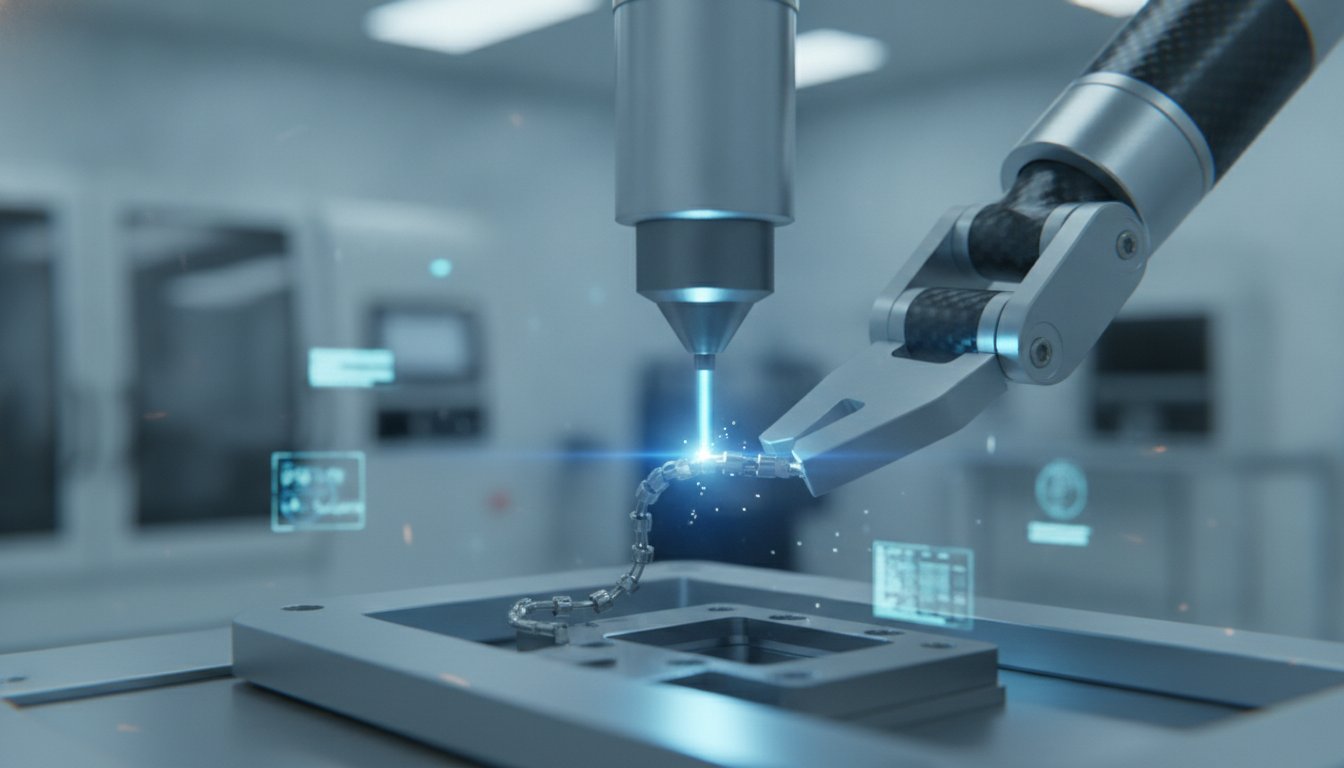
Laser processing offers unparalleled precision for cardiovascular innovation, particularly when working with sensitive materials. Fiber-laser cutting is the preferred method for fabricating Nitinol stents and heart valve frames, as it allows for extremely tight kerf widths and complex lattice structures. When developing these devices, manufacturers must adhere to the FDA guidance on Nitinol devices to ensure mechanical and biocompatibility standards are met. For more complex assemblies, 5-axis laser welding enables the joining of intricate robotic surgical adapters with minimal thermal distortion. Hermetic laser welding is a specialized process that creates an airtight, leak-proof seal to ensure the long-term safety and functionality of implanted cardiac electronics. This level of technical integration is what differentiates standard production from high-performance minimally invasive surgical instrument manufacturing.
Quality Systems and Smart Manufacturing in Cardiac Production
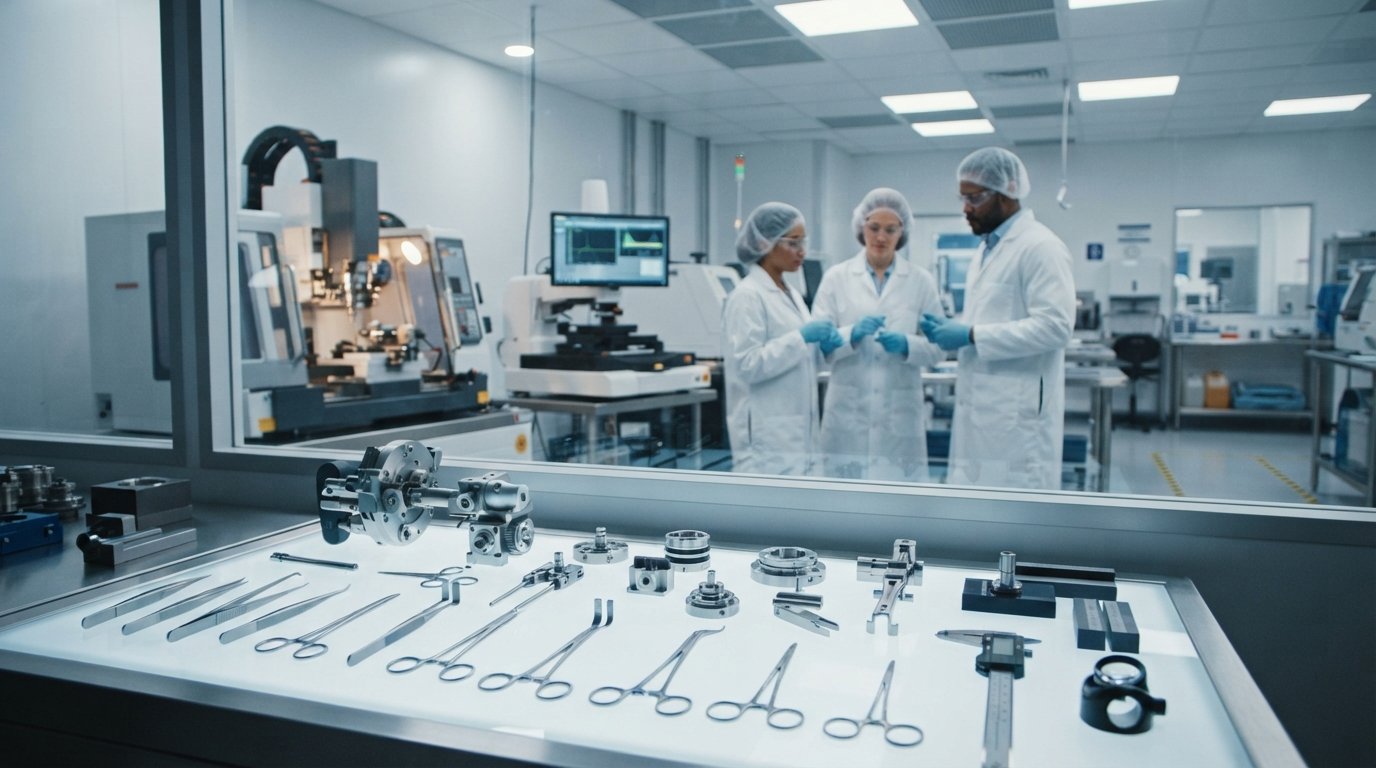
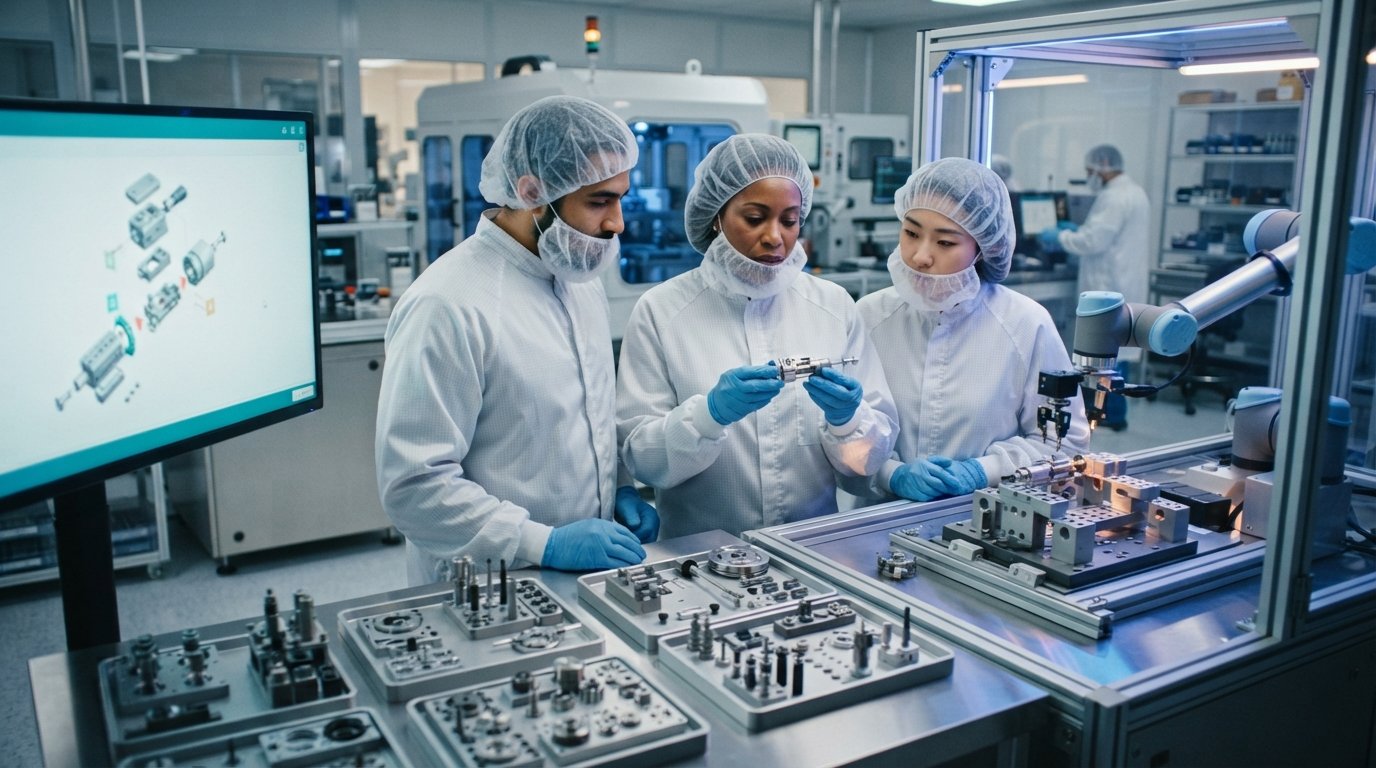
Precision in minimally invasive surgical instrument manufacturing isn’t solely a product of high-end machinery; it’s the result of a disciplined system that validates every variable. Adherence to ISO 13485 and the FDA 510(k) framework serves as the foundational requirement for cardiovascular manufacturing. To exceed these standards, the industry is shifting toward smart manufacturing, utilizing 24-hour unmanned production lines that operate with consistent accuracy. These lines employ real-time monitoring to detect microscopic deviations in process stability before they impact the final product. Unmanned CMM inspection systems are integrated directly into the workflow to provide 100% dimensional accuracy for complex cardiac parts. This level of automation is supported by Class 8/100k cleanroom facilities where final assembly and packaging occur under strictly controlled particulate levels.
Validation Frameworks: IQ, OQ, and PQ
The transition from prototype to mass production requires a comprehensive Master Validation Plan. This framework includes Installation Qualification (IQ) to verify equipment setup, Operational Qualification (OQ) to test process limits, and Performance Qualification (PQ) to confirm long-term stability. Risk mitigation is managed through Process Failure Mode and Effects Analysis (PFMEA), which quantifies potential risks and implements preventative controls. This rigorous methodology is essential for maintaining the “zero-failure” standard required for cardiovascular implants. You can explore these strategies further in our overview of Mastering Medical Device Manufacturing Compliance.
Smart Lines and Automated Inspection
Modern cardiac production lines leverage robotic loading and automated blister packaging to eliminate the variability introduced by manual handling. Real-time digital dashboards provide engineers with immediate visibility into yield optimization and machine performance. In-process testing for cardiac devices includes specialized validation for leak, voltage, and hermeticity to ensure every housing and lead is perfectly sealed. This automated approach doesn’t just improve speed; it enhances the reliability of the life-critical components discussed in previous sections. If you’re looking to integrate these advanced quality systems into your supply chain, connect with our specialists to discuss your specific regulatory and production requirements.
The CDMO Model: Accelerating Cardiovascular Speed-to-Market
The CDMO model provides a structured pathway for MedTech firms to navigate the complexities of minimally invasive surgical instrument manufacturing. It isn’t just about production; it’s about a consolidated lifecycle that bridges the gap between a concept and a market-ready device. By integrating secondary processes like anodizing, electropolishing, and EtO or autoclave sterilization, a full-service partner eliminates the risks associated with multi-vendor supply chains. This integrated approach ensures that every cardiovascular component maintains its technical integrity from the first laser cut to final sterile packaging. It’s a strategy that prioritizes consistency and regulatory safety above all else.
Scalability is supported by a robust global footprint. With a Singapore headquarters and established facilities in China, the network is expanding with a new site in Malaysia scheduled to open in Q1 2027. This infrastructure allows for regional logistics advantages and the ability to scale production volumes as a device gains clinical traction. For firms seeking high-capacity output without compromising on precision, our Full-Service Medical Device Contract Manufacturing model provides the necessary stability and technical depth to compete in the global market.
Design for Manufacturability (DFM) in Cardiac Implants
Design for Manufacturability (DFM) is the cornerstone of cost-effective cardiovascular production. Optimizing stent geometry for high-efficiency laser cutting reduces material waste and processing time. Simultaneously, precision micro-machining can simplify assembly by creating interlocking features that reduce the need for secondary fasteners. Engineers should consult the Medical Device DFM: Strategic Engineering Guide 2026 to understand how early-stage design choices impact long-term production yields and regulatory compliance in minimally invasive surgical instrument manufacturing. This proactive engineering ensures that complex devices remain viable for mass production.
End-to-End Lifecycle Management
End-to-end lifecycle management extends beyond the factory floor. Efficient supply chain management and Vendor Managed Inventory (VMI) ensure that global MedTech firms maintain consistent stock levels without overextending capital. Packaging solutions, including automated blister packaging and Tyvek pouches, are validated to maintain sterility for both disposable and reusable tools. Post-market support is anchored by the Irvine, CA repair center, which provides specialized instrument refurbishment and technical support. This comprehensive oversight ensures that devices perform reliably throughout their entire clinical lifecycle, providing a steady hand from initial prototype to post-market maintenance.
Advancing Cardiac Care through Technical Excellence
The evolution of cardiovascular care depends on the seamless integration of advanced metallurgy and automated production. We’ve explored how mastering Nitinol phase transformations and high-strength alloys like MP35N ensures the long-term reliability of life-critical implants. By leveraging smart manufacturing and 24-hour unmanned production lines, manufacturers can achieve the 100% dimensional accuracy required for complex cardiac components. This meticulous approach to minimally invasive surgical instrument manufacturing is what allows visionary MedTech firms to navigate the path from prototype to mass production without compromising on patient safety.
As regulatory frameworks like the FDA QMSR harmonize global standards, choosing a partner with institutional expertise becomes a strategic necessity. Fong’s Engineering & Manufacturing Private Limited provides the technical depth and global footprint required to scale your innovations across the cardiac landscape. With ISO 13485 and FDA 510(k) certification, our advanced laser processing capabilities are designed to meet the most demanding engineering specifications. Partner with Fong’s Engineering & Manufacturing Private Limited for Advanced Cardiovascular Manufacturing to refine your production cycle and deliver the next generation of life-saving devices with absolute confidence.
Frequently Asked Questions
What are the most common materials used for cardiovascular implant components?
The primary materials include Nitinol for self-expanding stents and MP35N for high-strength heart valve frames. Cobalt-chromium is also utilized for thin-walled stent designs due to its superior radial strength compared to traditional stainless steel. Radiopaque marker bands typically consist of Platinum or Tantalum to ensure visibility during fluoroscopy. These alloys are selected for their biocompatibility, fatigue resistance, and specific mechanical properties required to withstand constant cardiac cycles.
How does laser cutting differ from traditional machining for Nitinol stents?
Laser cutting, particularly femto-laser processing, provides a non-contact method that achieves much tighter kerf widths and more intricate geometries than traditional machining. This technique is essential in minimally invasive surgical instrument manufacturing because it minimizes the Heat Affected Zone (HAZ), preserving Nitinol’s superelastic properties. Traditional CNC milling is better suited for larger, high-tolerance adapters and robotic interfaces where bulk material removal and micron-level surface finishes are the primary engineering requirements.
What regulatory certifications are required for cardiovascular manufacturing?
Manufacturers must adhere to ISO 13485 for quality management and obtain FDA 510(k) clearance or CE Marking for specific devices. These certifications ensure that the production environment meets rigorous safety and performance standards. In addition to these certifications, processes must be validated through Installation Qualification (IQ), Operational Qualification (OQ), and Performance Qualification (PQ). This framework guarantees that every life-critical cardiovascular implant is produced within a controlled, predictable, and fully traceable manufacturing environment.
Why is ISO 13485 essential for cardiac device contract manufacturing?
ISO 13485 is the internationally recognized standard for medical device quality management systems, providing the necessary framework for risk management and traceability. It requires manufacturers to implement rigorous controls throughout the product lifecycle, including Process Failure Mode and Effects Analysis (PFMEA). For cardiac devices, this standard ensures that every component is manufactured with the “zero-failure” reliability required for patient safety. It also facilitates global market access by aligning production processes with international regulatory expectations.
What is the role of Nitinol in self-expanding cardiovascular implants?
Nitinol is a shape-memory alloy that allows cardiovascular implants to be compressed for delivery through small catheters and then self-expand once deployed. Its superelasticity enables stents and heart valve frames to exert a constant chronic outward force while remaining flexible enough to navigate tortuous vascular pathways. This material is indispensable for minimally invasive surgical instrument manufacturing because it maintains structural integrity under the heart’s continuous rhythmic pressure without suffering from significant fatigue or permanent deformation.
How can smart manufacturing improve the quality of medical implants?
Smart manufacturing integrates real-time monitoring and 24-hour unmanned production lines to reduce human error and improve process stability. By utilizing robotic loading and automated in-process testing, manufacturers can achieve consistent dimensional accuracy across high-volume production runs. Real-time dashboards allow engineers to monitor machine performance and yield optimization instantly. These automated systems ensure that every cardiovascular component is inspected to 100% accuracy, providing a level of reliability that manual processes cannot consistently replicate.
What cleanroom standards are required for cardiovascular device assembly?
Cardiovascular device assembly typically requires Class 8 (100k) cleanroom facilities to control particulate contamination and maintain environmental stability. These controlled environments are essential for both disposable tools and permanent implants to ensure that no foreign debris is introduced during the assembly process. Cleanroom protocols include strict gowning requirements and specialized air filtration systems. This level of environmental control is a mandatory component of ISO 13485 compliance and is critical for ensuring the biocompatibility of finished medical devices.
Can reusable cardiovascular instruments be refurbished to OEM specifications?
Yes, reusable cardiovascular instruments and endoscopes can be refurbished to original OEM performance specifications through specialized technical restoration. This process involves meticulous testing, part replacement, and validation to ensure the device remains safe for medical reuse. Specialized repair centers utilize advanced laser marking and hermetic sealing to restore instruments while maintaining full regulatory compliance. This refurbishment model provides a cost-effective alternative to replacement while ensuring that the instruments continue to meet the high standards required for surgical interventions.