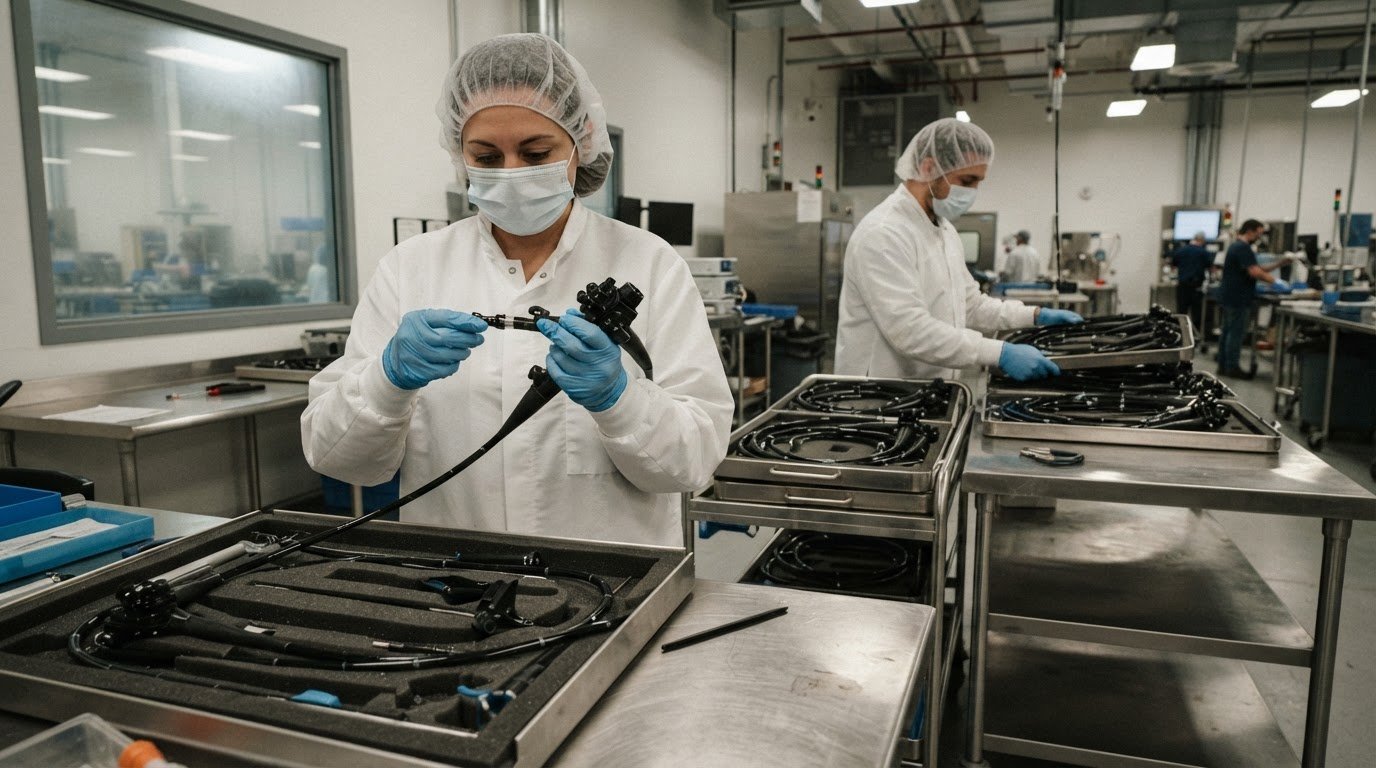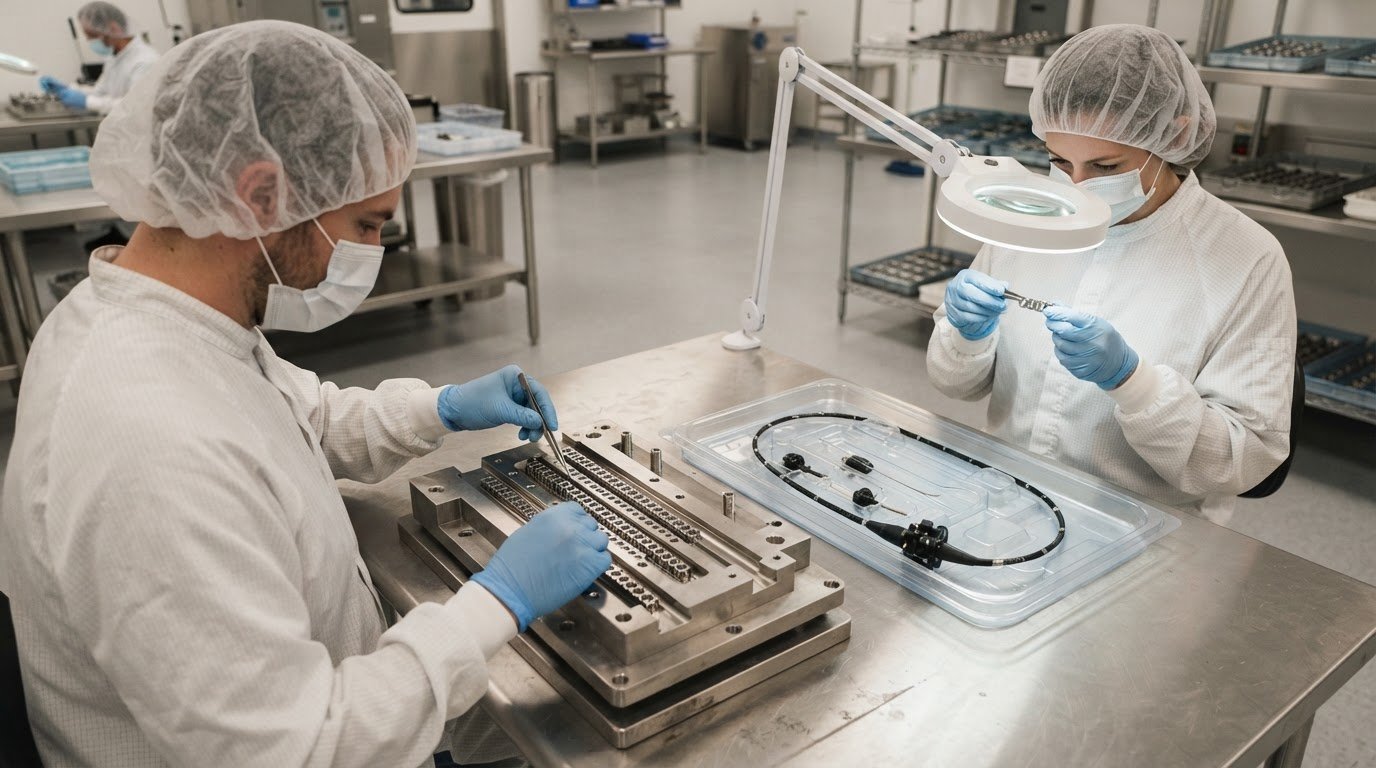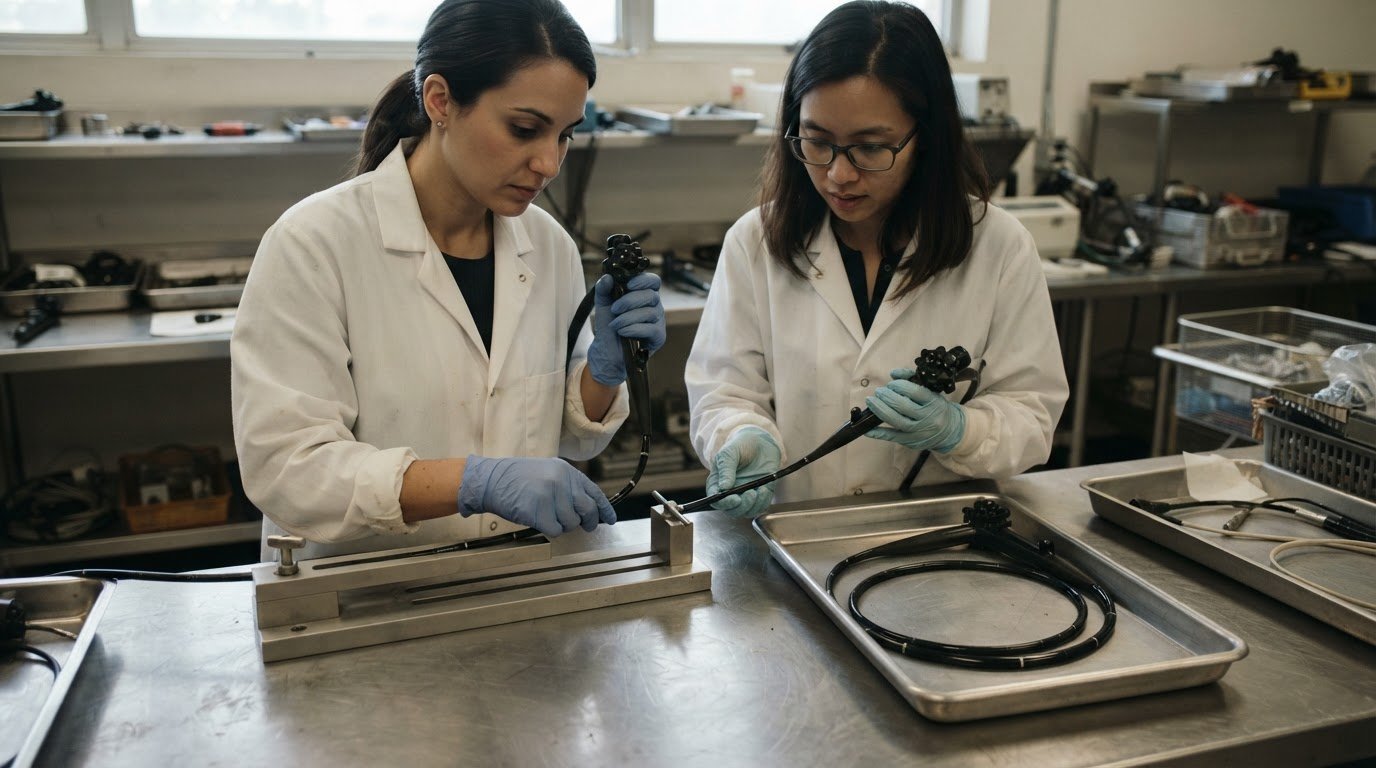


Preventing medical device manufacturing defects requires controls throughout design and production, not just final inspection. Problems with materials, assembly, or process control can affect device performance. Effective prevention combines material compatibility reviews, monitored manufacturing processes, and testing before release, helping teams identify and address issues early.
That layered approach matters because a defect may originate in a design decision, a component, or an assembly step, then affect multiple devices before it is detected. Quality control is most useful when it provides evidence about both the finished device and the processes that produced it.
This article explains how material selection, process checks, assembly controls, and pre-release testing work together to reduce defect risk. It also covers how investigations and corrective actions can strengthen controls over time, giving engineering and quality teams a practical framework for deciding where prevention belongs in the device lifecycle.
Key Takeaways
- Assess material compatibility and component quality as part of design and manufacturing control.
- Use assembly checks to identify variation before it affects the finished device.
- Build comprehensive testing into pre-release quality control to evaluate device performance and safety.
- Review manufacturing processes for errors that could create defects or allow them to recur.
- Investigate failures to identify root causes and guide effective corrective actions.
Assembly and quality control
Assembly controls turn device designs into repeatable, verifiable operations. Quality control checks whether components and completed assemblies meet defined requirements.
Quality Management System Requirements
A quality management system (QMS) is the documented framework for controlling design, production, inspection, and corrective actions. In the United States, the U.S. Food and Drug Administration oversees medical device approval and monitoring, and can recall devices when widespread issues are identified. Manufacturers use a QMS to assign responsibilities, maintain records, and connect production controls with applicable oversight.
For assembly teams, the practical requirements are consistency: approved instructions, trained operators, controlled records, and clear responses to deviations. A changed component or assembly method, for example, should prompt a documented review before production continues. This helps keep the approved device configuration aligned with the process on the floor.
Statistical Process Control and In-Process Inspection
Statistical process control (SPC) tracks process measurements over time to reveal variation before it produces nonconforming assemblies. In-process inspection checks selected components or operations during production, rather than relying solely on final inspection. Together, these methods help teams distinguish normal variation from a developing problem.
For example, an assembly team can record a critical dimension at a defined operation. If readings move toward a specification boundary, supervisors can investigate equipment setup, tooling, or operator technique. Inspection criteria should specify what to measure, when to measure it, and what to do if a result falls outside limits.
Automation, Machine Vision, and Traceability
Automation performs defined assembly tasks consistently, while machine vision checks visible features such as orientation, presence, or placement. Traceability links device or component records to relevant production information. Together, these controls help detect missed operations and identify units that may share an issue.
A vision station, for instance, can flag a connector installed in the wrong orientation before the next assembly stage. A linked production record can help isolate affected units and focus the investigation. Automation still requires validated instructions, suitable inspection criteria, and a response plan for rejected parts.
Effective assembly control starts with clear work instructions and component identification at every operation. Operators should confirm the correct part and revision before assembly, then record required checks where the work takes place. These measures reduce mix-ups between similar components and make deviations visible while the product remains under manufacturing control.
Quality teams can review recurring nonconformities by operation, component, and production record. If a defect repeatedly appears after one assembly step, investigate that step rather than treating each failed unit as an isolated case. Root-cause findings should inform corrective actions, revised instructions, or additional inspection when the evidence supports a change.
Assembly quality depends on the interaction of people, equipment, components, and documented methods. Controlled handoffs between operations, supported by inspection records and traceable decisions, give manufacturers evidence to investigate variation and improve processes. This disciplined approach helps prevent medical device manufacturing defects from going unnoticed in later production stages.
Comprehensive testing before market release
Pre-release testing evaluates whether a medical device performs as intended under defined conditions. Comprehensive testing and quality control help manufacturers reduce failure risks before market release. A useful test plan links each requirement to a method, acceptance criterion, and recorded result.
Start with the device’s intended functions and consider how each could fail. If a device must deliver a measured output, for example, testing can assess whether that output stays within defined limits during operation. Specify the test setup, measurement method, and conditions that count as failure. This makes results useful, not merely recorded.
Testing should address distinct performance questions rather than rely on one final inspection. Functional testing checks whether a device performs its intended operations. Mechanical evaluation can assess whether moving parts or connections work under specified conditions. For a device with an electronic interface, testing can check whether controls and indicators respond as designed. The appropriate methods depend on the device’s design and intended use.
Acceptance criteria make test results actionable. Before testing, define what passes and what requires investigation. A test might specify the expected response to a control input and record any delay, missed response, or inconsistent output. Clear criteria help teams compare test runs and handle borderline results consistently.
Test representative units from a controlled production process, and link each result to the device configuration in the records. If a design or manufacturing change could affect performance, assess whether the test plan still addresses the relevant risks. A connector change, for example, may require renewed testing of fit, electrical response, or device operation, depending on its function.
When a test fails, preserve the result and investigate its cause before making a release decision. Review the test setup, device configuration, production records, and observed failure mode. A repeatable failure may indicate a design issue; an isolated result may warrant checking the test method or production variation. Document the reasoning and corrective action so later results can be assessed consistently.
Release review should bring together test evidence, unresolved deviations, and the applicable acceptance criteria. Quality control can then determine whether the evidence supports the device’s defined requirements or whether further investigation is needed. A useful next step is to discuss how device testing and manufacturing needs align with your development program.
At this stage, the evidence should support a clear decision about release readiness. Apply the defined acceptance criteria consistently, and do not let otherwise satisfactory results obscure unresolved concerns. If the evidence is inconclusive, further assessment may be needed before proceeding. Documented review connects test outcomes and quality-control work to the release decision, while providing a basis for follow-up if concerns arise. Comprehensive testing and quality control help manufacturers assess whether devices meet applicable safety requirements before market release.
Manufacturing-process errors
A device defect can originate in its design or manufacturing process. Process controls help teams identify where execution differs from the intended method and how that deviation affects product quality.
Recognizing Process Errors
A manufacturing-process error occurs when a production activity does not follow its defined method or produces an unintended result. The same process flaw can affect multiple devices before it is detected.
Consider a bonding operation: incorrect surface preparation may weaken a joint, while inconsistent curing may produce variable results. A misplaced component, incorrect setting, or skipped assembly step can also create defects. Investigating the operation, equipment, materials, and records helps distinguish a process issue from a design flaw.
Validating Production Processes
Process validation evaluates whether a defined production process can consistently produce output that meets requirements. To prevent defects, define process steps and acceptance criteria, assess equipment and instructions, evaluate representative production output, and document the results. The evidence should show which settings and controls matter, not simply that production was completed.
When a process changes, assess its effect on output and whether existing evidence remains relevant. New equipment, for example, may change how a component is positioned or joined. Review the changed step and inspect its output to establish whether the process still performs as intended.
Map each operation from incoming component preparation through final assembly. At every transition, identify the required input, the action, and the expected result. A sequence that cleans, aligns, and bonds a component, for example, should define how operators confirm completion at each stage. Without a handoff check, an error can carry forward.
Set clear limits for process parameters and define what to do when readings fall outside them. If a joining operation depends on equipment settings, record those settings and link them to the production record. When an unexpected result appears, pause the affected operation, identify potentially impacted units, and investigate before resuming. This keeps unexplained deviations from becoming routine.
Equipment condition and operator instructions also affect process outcomes. A worn fixture may hold a part differently, while an unclear instruction can lead to inconsistent preparation. Equipment checks, current work instructions, and practical operator training help address these risks. A visual reference, for example, can clarify the correct orientation before a component moves to the next operation.
After identifying a process error, determine its root cause and address that cause, not just the affected unit. Review related records for similar deviations, then assess whether the corrective action changed the process as intended. This closes the loop between investigation and production control, helping prevent recurring errors instead of repeatedly sorting defective output.
Material quality and compatibility
FDA 21 CFR Part 820 and ISO 13485 are related but distinct quality frameworks. The former applies to U.S. medical device regulation, while the latter is an international quality management standard. Their requirements should be mapped carefully rather than treated as interchangeable.
Select materials based on the device’s intended use and the conditions it will encounter. A polymer used near an adhesive, for example, may need evaluation for bonding compatibility and exposure conditions. A material that performs well on its own may behave differently when joined with another component or processed during assembly.
Assess compatibility across the full manufacturing sequence. A cleaning agent may affect a surface needed for bonding, while a joining process may alter a nearby material. Map each material to its contact points, manufacturing steps, and intended function. This can reveal interactions that a component-by-component review misses.
Material changes need particular attention. A substitution made to address supply constraints can affect fit, strength, or compatibility with adjacent parts. Compare the proposed material with the device’s design requirements, then determine what evaluation is needed before implementation. Link the decision to the affected component and production configuration.
Incoming inspection can identify visible damage, incorrect labeling, or a mismatch between received and approved materials. A mislabeled adhesive, for example, could lead to incorrect use even if its container appears intact. Clear identification and controlled storage help keep materials separate and support reliable selection during assembly.
A practical material review links each component to its role, interfaces, and relevant processing conditions. In one controlled record, teams can document the approved material, supplier documentation, inspection criteria, and change history. When a concern arises, these links help narrow the investigation to affected materials and device configurations.
Material quality is not just a purchasing concern. A supplier change, surface treatment, or assembly interaction can influence the finished device. Reviewing materials consistently from approval through production helps teams identify compatibility concerns early and make informed decisions before they become recurring manufacturing defects.
Part 820 is tied to U.S. medical-device regulation, while ISO 13485 serves as an international quality-management standard. Their requirements need to be assessed and aligned individually; compliance with one should not be assumed to satisfy the other.
Medical device manufacturing defects
Defects can stem from design, manufacturing, engineering, or packaging, and may affect many devices. An effective response connects risk assessment, investigation, corrective action, and post-market information.
Costs and Risks of Prevention and Correction
Prevention uses resources to control processes before defects occur; correction addresses affected products and their causes afterward. Prevention decisions matter because a process issue can extend across production before detection.
Compare the effort of adding an inspection with the work of sorting affected units, investigating failures, and revising production controls. The balance depends on the defect’s potential impact, how readily it can be detected, and how widely its cause may have spread. Early process evidence helps teams target controls where they can reduce exposure.
Using Risk Management to Prevent Defects
Risk management identifies potential failure modes, evaluates their consequences, and links each risk to a control. It helps manufacturers prioritize design and production concerns instead of treating every deviation alike.
Investigating Defects and Implementing CAPA
A defect investigation gathers evidence to identify the root cause and guide corrective and preventive action (CAPA). Correcting a single unit without addressing the cause can leave the same failure pathway active.
Define the affected product and production records, examine the defect, and compare findings with process and inspection evidence. Identify the likely cause, implement a corresponding action, and evaluate whether it addresses recurrence. If an assembly step caused misalignment, for example, a revised process control should target that step, with follow-up evidence supporting the decision.
Defect Rates and Quality Benchmarks
A defect rate describes nonconforming output relative to production, while a quality benchmark gives teams a basis for evaluating performance. No single benchmark suits every device or process, so define measures against product requirements and manufacturing controls.
Track defects by type, operation, component, and production period. An increase in one category may reveal a process shift that an overall rate obscures. Compare results with established acceptance criteria, investigate adverse trends, and document the reasoning for corrective action. A low aggregate rate does not prove that a high-impact failure mode is controlled.
In the United States, the U.S. Food and Drug Administration oversees medical device approval and monitoring and can recall devices when widespread issues are identified. Healthcare providers, patients, and caregivers may voluntarily inform the FDA about potential safety issues. The FDA receives over two million medical device reports each year concerning suspected device-associated deaths, serious injuries, and malfunctions. Manufacturers should encourage reporting and use investigations to evaluate emerging signals.
For help addressing complex production concerns, discuss medical device manufacturing requirements with a team experienced in device assembly.
Fong’s Engineering & Manufacturing Private Limited: CDMO Services
Fong’s Engineering & Manufacturing Private Limited supports medical device projects through its CDMO Services, coordinating development and manufacturing controls. Its work spans concept design, prototyping, validation, production, and regulatory support, helping teams address quality throughout development and manufacturing.
For companies producing devices under their own brands, OEM Solutions offer a relevant manufacturing pathway. Micro-precision Components can support projects where component accuracy is central, while Endoscope Repair & Refurbishment serves needs involving reusable endoscopes. Each offering meets a different operational need, so the right starting point depends on project scope and device lifecycle stage.
Contact Fong’s Engineering & Manufacturing Private Limited to discuss your medical device manufacturing requirements.
Put Quality Priorities Into Action
Reliable manufacturing quality depends on decisions that stay connected throughout a device’s lifecycle. Teams can use quality findings to clarify ownership, maintain continuity between engineering and production, and tie improvement work to defined product requirements. This makes preventing medical device manufacturing defects an ongoing operational priority, not just a final inspection objective.
Identify where your project needs focused manufacturing support. Fong’s Engineering & Manufacturing Private Limited can discuss how its capabilities align with your device development or production requirements. A focused conversation can help define the project scope and determine which manufacturing priorities need attention first.
Contact Fong’s Engineering & Manufacturing Private Limited to discuss your medical device manufacturing needs. With a clear quality focus, your team can move forward with greater confidence in its production planning.
Frequently Asked Questions
What are the most common causes of defects in medical device manufacturing?
Common causes include design flaws, process errors, material problems, assembly mistakes, and ineffective quality controls. Supply chain disruptions can introduce components that differ from expected inputs, while contamination can affect component quality and reliability. An unreviewed material substitution, for example, may behave differently during assembly even if its dimensions appear acceptable. Comparing the defect with affected components can help focus the investigation.
What role do supplier qualification and incoming material inspection play in defect prevention?
Supplier qualification assesses whether a supplier can consistently provide components that meet defined requirements, while incoming inspection checks each delivery against approved criteria. Together, they can detect discrepancies before materials enter production. A receiving check might compare a component’s identity and accompanying records with the purchase specification, then set aside any mismatch for review. Recording supplier and lot information also helps trace a concern to relevant production units.