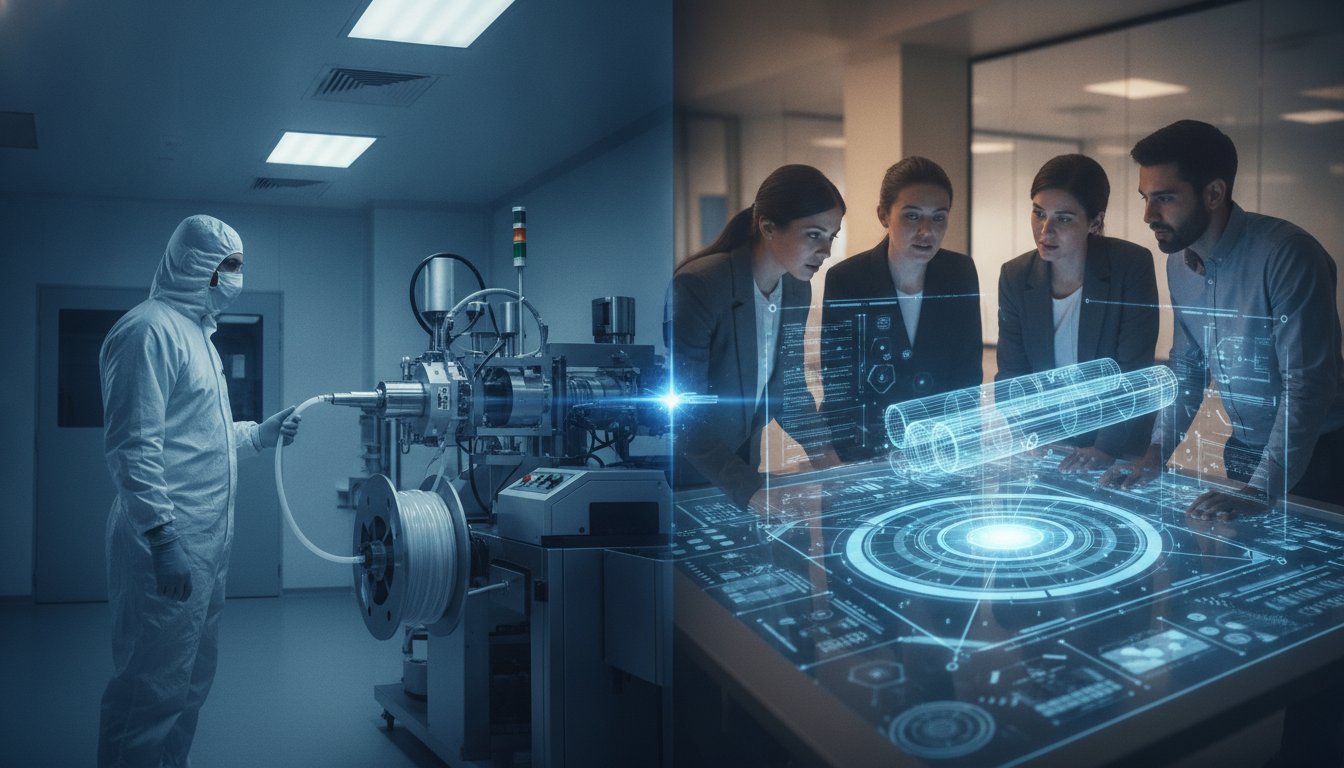
The global medical device outsourcing market is projected to reach $186.82 billion in 2026, yet many firms still struggle to decide whether to build or buy their core capabilities. You likely recognize the internal pressure to maintain absolute control over your production line, especially when handling complex, multi-lumen tubing for cardiovascular or endoscopic devices. However, the high capital expenditure required for ISO 13485:2016 compliant cleanrooms often clashes with the need for rapid, agile development cycles. Determining the right path requires a cold, analytical look at the trade-offs between Teleflex Medical OEM vs in-house extrusion.
It’s understandable that you want to avoid the long lead times often associated with massive providers while simultaneously fearing the regulatory burden of internal validation. This article evaluates the technical, financial, and regulatory trade-offs between tier-1 providers and in-house operations to optimize your device lifecycle. We’ll provide a clear ROI comparison, analyze the impact of the FDA’s new Quality Management System Regulation, and identify where integrated secondary processes like laser welding can reduce your time-to-market.
Key Takeaways
- Analyze how the increasing complexity of multi-lumen and bioabsorbable materials in 2026 necessitates a critical choice between vertical integration and operational specialization.
- Evaluate the total cost of ownership for in-house facilities, accounting for substantial capital expenditures and the ongoing challenge of recruiting specialized polymer engineering talent.
- Use our 5-point framework to navigate the decision between Teleflex Medical OEM vs in-house extrusion by assessing your specific technical requirements and annual volume forecasts.
- Understand the strategic advantages of partnering with agile CDMOs that provide integrated secondary processes, such as 5-axis laser welding and precision assembly, to reduce overall time-to-market.
- Identify how to protect proprietary designs and maintain ISO 13485:2016 compliance when transitioning from pilot runs to high-volume production.
The Extrusion Dilemma: In-House Control vs. OEM Expertise
The strategic choice between Teleflex Medical OEM vs in-house extrusion is a foundational decision for medtech executives in 2026. As the cardiovascular and endoscopic sectors continue to dominate the outsourcing market, representing an estimated 23% of the application share, the technical requirements for tubing have escalated. We’re seeing a rapid shift from simple single-lumen designs toward complex, multi-lumen structures and bioabsorbable materials that require specialized thermal handling. This complexity makes the “make vs. buy” decision central to the entire device lifecycle.
Vertical integration promises absolute control over the production schedule, yet it demands a relentless focus on operational excellence that can distract from core innovation. In contrast, partnering with a Tier-1 provider allows a firm to concentrate on R&D and commercialization. This trade-off is particularly critical given the February 2, 2026, implementation of the FDA’s Quality Management System Regulation (QMSR). This rule officially harmonizes U.S. requirements with ISO 13485:2016, placing a heavier burden on in-house teams to maintain global compliance across increasingly intricate validation protocols for every new extrusion run.
The Shift Toward Micro-Precision Extrusion
The rise of robotic-assisted surgical platforms has mandated a level of accuracy that standard extrusion lines cannot reach. These systems require micro-diameter tubing with wall thicknesses measured in microns, often incorporating Nitinol reinforcement for torqueability and kink resistance. Mastering the precision extrusion process is now a baseline requirement for next-gen catheters. It’s no longer enough to produce tubing; manufacturers must ensure that advanced polymers retain their mechanical properties during high-speed runs. For many, the technical barrier to entry for these tolerances makes in-house production a high-risk venture that can lead to catastrophic yield losses.
Defining “In-House” vs. “OEM” in the Modern MedTech Landscape
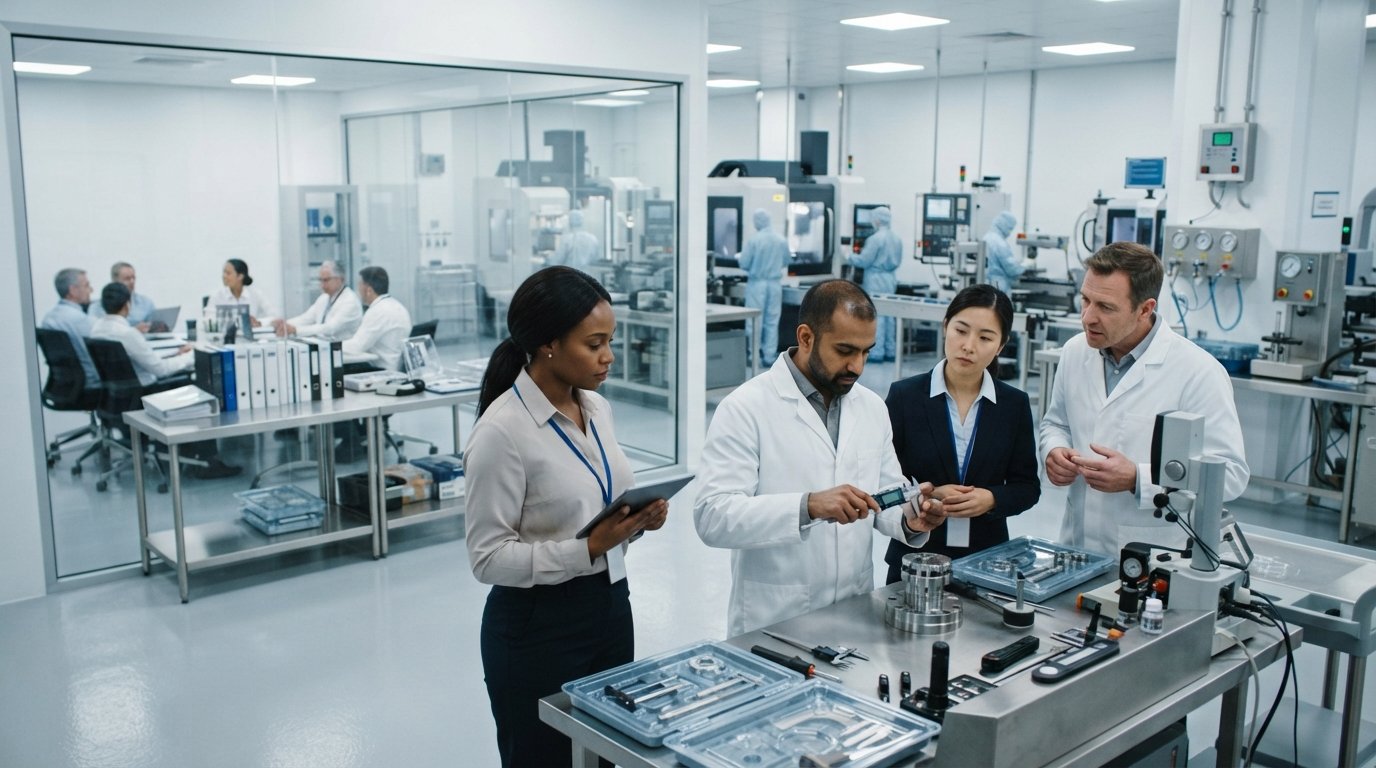
A true in-house extrusion line isn’t just a piece of machinery. It’s a comprehensive ecosystem that includes certified cleanrooms, a suite of validated testing equipment, and a dedicated team of polymer engineers. Maintaining this infrastructure requires massive capital expenditure and ongoing operational overhead. It’s a commitment to a discipline that is constantly evolving.
The Teleflex Medical OEM model represents a vertically integrated approach where the provider manages everything from raw material sourcing to final assembly. However, many firms now view the CDMO as a strategic extension of their own R&D department. This collaborative model provides the stability of an institutional partner while offering the agility needed for rapid prototyping. When evaluating Teleflex Medical OEM vs in-house extrusion, you must decide if your organization has the engineering bandwidth to manage a complex manufacturing discipline or if that energy is better spent on clinical outcomes and device innovation.
Total Cost of Ownership: The Hidden Risks of In-House Extrusion
When evaluating Teleflex Medical OEM vs in-house extrusion, the financial analysis must extend beyond simple unit price to include the Total Cost of Ownership (TCO). Many organizations focus on the “make” cost while ignoring the massive capital expenditure required for Class 7 cleanrooms and precision extrusion lines. Beyond the hardware, the human capital burden is significant. Recruiting and retaining specialized polymer engineers in a competitive 2026 market adds a layer of operational risk that many firms aren’t equipped to manage. If your internal team is stretched thin, the hidden costs of recruitment and training can quickly eclipse any perceived savings.
Maintaining compliance with the FDA’s Quality System Regulation is another substantial overhead. Since the FDA’s Quality Management System Regulation (QMSR) took effect on February 2, 2026, the official alignment with ISO 13485:2016 has standardized global requirements. This harmonization doesn’t reduce the workload; it merely shifts the focus toward more rigorous, globally recognized documentation that must be maintained in-house. For a single-site manufacturer, the cost of audits, documentation management, and regulatory filings creates a heavy administrative drag.
The Validation Burden (IQ/OQ/PQ)
Process validation is a continuous cycle rather than a one-time task. It involves rigorous Installation Qualification (IQ), Operational Qualification (OQ), and Performance Qualification (PQ) for every new material or geometry. For custom medical tubing, the Master Validation Plan must be exhaustive to account for material variability and environmental fluctuations. In-house lines often struggle with 24/7 quality monitoring, which leads to inconsistent yields and high material waste. If your team lacks the bandwidth for this meticulous oversight, it might be time to discuss your manufacturing requirements with a specialized partner.
Opportunity Cost and Scalability
Every hour your lead engineers spend troubleshooting an extrusion line is an hour lost on product innovation. This opportunity cost is often the most damaging hidden risk. Fixed in-house assets also lack scalability. If a cardiovascular device sees a sudden market demand spike, an in-house line has a hard capacity ceiling. Conversely, a CDMO partner offers the flexibility to scale production without requiring additional capital investment. Converting CapEx into predictable OpEx allows your firm to remain agile while shifting the operational risks of downtime and yield loss to an expert provider.
Teleflex Medical OEM vs. Specialized CDMOs: A Strategic Comparison
Beyond the initial choice of Teleflex Medical OEM vs in-house extrusion, medtech leaders must evaluate the specific profile of their manufacturing partner. While the Teleflex OEM business transitioned into a standalone entity as of August 2026, it remains the industry benchmark for high-volume conglomerate scale. However, for complex cardiovascular or robotic surgical components, a massive partner can sometimes become a bottleneck. The decision often rests on whether a project requires the sheer industrial force of a global giant or the meticulous, precision-focused agility of a specialized CDMO.
The Conglomerate Advantage: Teleflex Scale
Large-scale OEMs offer undeniable efficiency for commodity components. They maintain a vast library of proprietary resins and materials, providing a convenient one-stop-shop for standard extrusion needs. Their infrastructure is designed for massive throughput, making them ideal when the primary goal is high-volume production of well-established designs. For basic tubing where the design is static and the volumes are in the millions, the conglomerate model provides a stable, predictable output. These organizations have the financial depth to secure raw material supply chains, which is a significant advantage during global shortages.
The CDMO Advantage: Precision and Partnership
Specialized CDMOs excel when a device requires more than just a standard tube. In these partnerships, extrusion is often only 50% of the value chain. Precision-focused firms integrate critical secondary processes, such as 5-axis laser welding and ultrashort-pulse marking, immediately post-extrusion. This integration reduces the risks associated with multi-vendor supply chains and ensures that the final component meets the exact tolerances required for robotic surgical adapters.
A key differentiator is the level of personalized engineering support. Moving from a complex concept to mass production requires a steady hand and a collaborative approach to quality. This is where Fong’s CDMO services provide a strategic advantage, offering deep technical mastery in micro-precision components and complex device assembly. To ensure a seamless transition, both parties should follow the FDA guidance on quality agreements, which establishes clear roles for quality control and compliance management.
Managing proprietary designs also requires a nuanced approach to IP protection. While global manufacturers have robust legal frameworks, a smaller, more focused partner often provides greater transparency and closer alignment with your R&D team. Specialized partners often offer superior supply chain resilience through multi-site footprints in regions like Singapore, China, and Malaysia. This geographic diversity mitigates geopolitical risks and ensures that production remains stable even during regional disruptions. When evaluating Teleflex Medical OEM vs in-house extrusion, the choice between a conglomerate and a specialized partner is as critical as the choice to outsource itself.
5-Point Framework for Selecting Your Extrusion Strategy
Selecting between Teleflex Medical OEM vs in-house extrusion is a foundational decision that dictates your long-term operational agility. This framework provides a methodical approach to evaluating your manufacturing path based on technical roadmaps and financial sustainability. Each step requires a rigorous assessment of current capabilities against your five-year growth projections.
- Step 1: Define Technical Complexity. Evaluate whether your device requires simple single-lumen tubing or complex multi-lumen structures. Intricate geometries often necessitate the specialized tool-making capabilities found in Tier-1 OEM environments.
- Step 2: Forecast Volume and Lifecycle. With the outsourcing market projected to grow at a CAGR of up to 15.4% through 2030, your strategy must accommodate rapid scaling. Pilot runs are manageable in-house, but 1M+ units annually often require the industrial force of an external partner.
- Step 3: Assess Internal Regulatory Bandwidth. Determine if your quality team can manage the continuous validation required for 510(k) compliance and the recently harmonized QMSR standards without diverting focus from product development.
- Step 4: Evaluate Post-Extrusion Needs. If your component requires 5-axis laser welding, ultrashort-pulse marking, or complex assembly, an integrated partner reduces supply chain risks.
- Step 5: Perform a 5-Year TCO Analysis. Compare the initial CapEx and specialized staffing costs of an in-house line against the predictable per-unit cost of an OEM solution.
When to Keep Extrusion In-House
Retaining production internally is a logical choice when the extrusion process itself is a proprietary “secret sauce” central to your intellectual property. It’s also appropriate for extremely high-volume, low-complexity tubing where demand is stable and existing infrastructure is currently under-utilized. In these scenarios, the benefit of absolute schedule control outweighs the administrative burden of maintaining a certified cleanroom environment.
When to Partner with an Expert CDMO
Partnering is the superior path when your project requires advanced laser processing or medical device DFM to ensure manufacturability. Speed-to-market is frequently the deciding factor; building a cleanroom can take over a year, whereas an established partner provides immediate capacity. For complex devices requiring micro precision medical components, the technical risk of in-house yield loss is often too high to justify. A specialized partner acts as a steady hand, ensuring that micro-diameter tolerances are met consistently from the first prototype to mass production.
To refine your manufacturing strategy and ensure your components meet the highest precision standards, contact our engineering team for a technical consultation.
Beyond Tubing: Integrating Precision with Fong’s Engineering
The strategic evaluation of Teleflex Medical OEM vs in-house extrusion often reveals that the most critical phase of manufacturing occurs after the tube is formed. For high-precision surgical instruments and robotic adapters, the extrusion process is merely the beginning of a complex value chain. Fong’s serves as a specialized partner for firms that require more than just a component supplier. We provide the technical mastery and agile engineering support necessary to transform raw extruded materials into sophisticated medical assemblies. This approach addresses the common pain points of fragmented supply chains and inconsistent post-processing quality.
Precision Secondary Processes
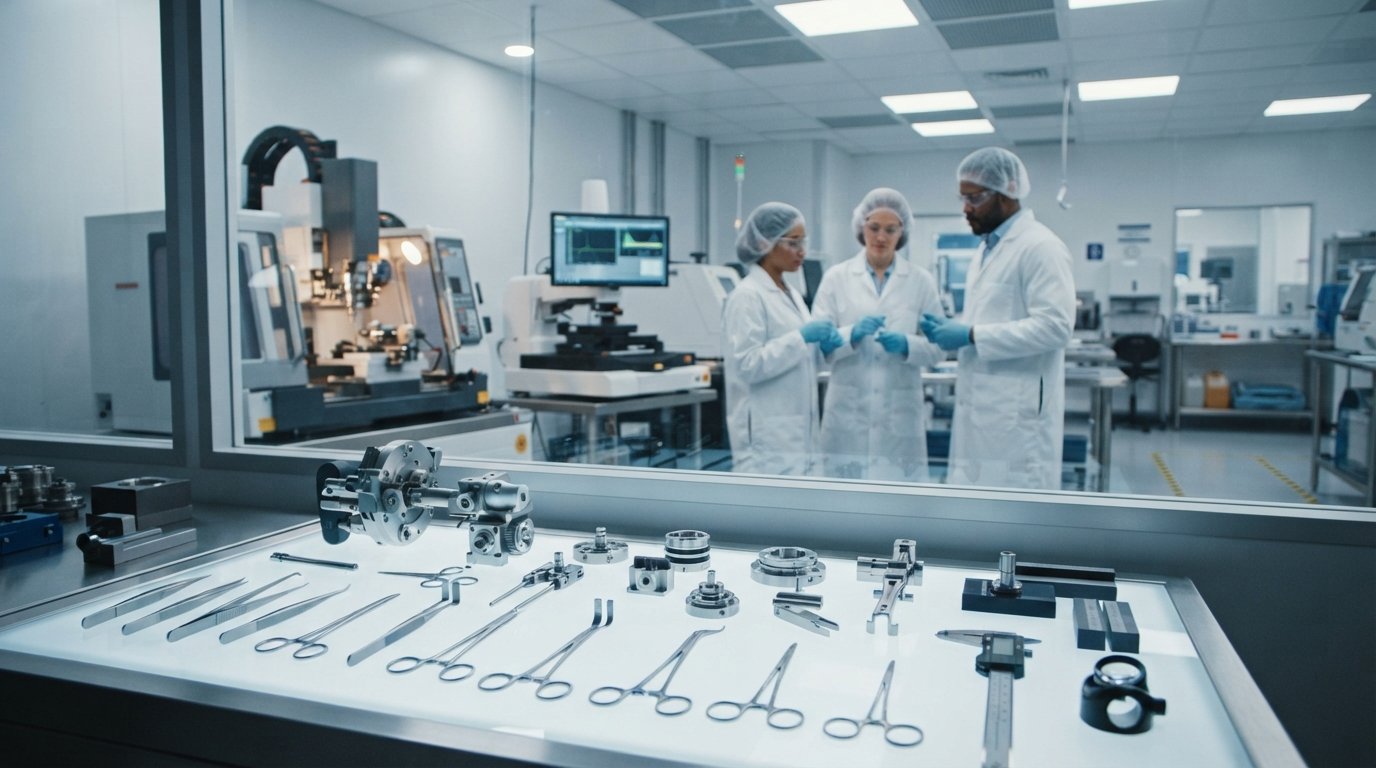
Extrusion provides the foundation, but secondary processes define the final device’s performance. Our facilities utilize advanced laser-based technologies, including ultrashort-pulse marking and 5-axis laser welding, to achieve tolerances that standard manufacturing cannot match. These capabilities are vital for creating corrosion-resistant markings and hermetic welds that maintain integrity during repeated sterilization cycles. By integrating extrusion with complex medical device assembly, we mitigate the risks of component damage and contamination that often occur when parts are moved between multiple vendors. Our expertise is particularly deep in cardiovascular implants and orthopedic tools, where every micron of accuracy is essential for patient safety.
A Partnership Built on Quality Culture
Our commitment to a “steady hand” in manufacturing is backed by smart manufacturing lines that feature 24-hour unmanned in-process measurement. These systems provide real-time quality dashboards, ensuring that every production run remains within specified limits. This level of technical evidence is crucial for maintaining the institutional trust required in the medtech sector. Our global footprint reinforces this reliability. With our Singapore headquarters and Kunshan site, we offer significant regional resilience. We’re also expanding this footprint with our upcoming site in Johor, Malaysia, which is scheduled to open in Q1 2027.
Adherence to ISO 13485 and FDA 510(k) standards is a baseline across all our global operations. We prioritize a collaborative engineering culture that focuses on providing best-in-class medical devices through meticulous attention to detail. When the choice between Teleflex Medical OEM vs in-house extrusion involves high-stakes surgical applications, leveraging our end-to-end CDMO capabilities ensures your product benefits from both innovative laser processing and rigorous validation. We invite you to partner with an organization that values technical mastery and regulatory precision above all else.
Optimizing Your Manufacturing Roadmap for 2026 and Beyond
The decision between Teleflex Medical OEM vs in-house extrusion requires a meticulous balance of immediate operational control and long-term financial scalability. We’ve examined how the total cost of ownership extends far beyond machinery to include the continuous burden of regulatory validation and specialized engineering talent. For complex devices, the true value lies in integrating advanced secondary processes like 5-axis laser welding and precision assembly directly into the manufacturing workflow. This integration reduces supply chain fragmentation and ensures that every micron of accuracy is maintained.
Fong’s provides a steady hand throughout this development lifecycle. Our global footprint across Singapore, China, and Malaysia ensures supply chain resilience, while our ISO 13485 and FDA 510(k) compliant processes guarantee institutional trust. By combining Red Dot Award-winning design thinking with rigorous technical standards, we help you transition from concept to mass production with absolute confidence. We’re committed to the act of transformation and the rigorous validation your components deserve.
Partner with Fong’s for Best-in-Class Medical Device CDMO Services to refine your manufacturing strategy. We look forward to supporting your commitment to technical excellence and precision engineering.
Frequently Asked Questions
What are the main advantages of outsourcing extrusion to a CDMO?
Outsourcing allows you to convert massive capital expenditures into predictable operational costs while accessing deep technical expertise. It eliminates the need for cleanroom construction and specialized staff recruitment. By leveraging a partner’s validated lines, you reduce time-to-market for complex devices. This shift is essential when evaluating Teleflex Medical OEM vs in-house extrusion, as it allows your internal team to focus on clinical innovation rather than line maintenance.
How does Teleflex Medical OEM compare to smaller, specialized manufacturers?
Teleflex Medical OEM provides massive industrial scale for high-volume commodity parts, while specialized manufacturers like Fong’s offer greater engineering agility. Large conglomerates often prioritize high-throughput projects with static designs. In contrast, specialized partners provide more personalized support for complex, micro-precision components. This distinction is critical for robotic surgical adapters or cardiovascular implants where design iterations require a more collaborative, steady hand than a conglomerate typically provides.
What is the typical lead time for custom medical extrusion prototyping?
Lead times for custom medical extrusion prototyping generally range from four to eight weeks, depending on the tool complexity and material availability. Simple single-lumen profiles are often delivered faster; however, complex multi-lumen tubing with Nitinol reinforcement requires longer development windows. Prototyping speed is a major factor in the Teleflex Medical OEM vs in-house extrusion debate. A specialized partner can often accelerate this phase through existing validated equipment and localized tool-making capabilities.
Can Fong’s Engineering handle both disposable and reusable device components?
Fong’s Engineering maintains the infrastructure to support both disposable and reusable device components across our global manufacturing sites. Our Class 8 cleanrooms are designed for the assembly of high-precision surgical instruments, including reusable endoscopes and disposable surgical staplers. We offer specialized testing for autoclave-stable markings and hermetic welds. This ensures that reusable tools maintain their original performance specifications over multiple sterilization cycles while meeting all regulatory safety standards.
What secondary processes are most critical after the extrusion phase?
Laser-based secondary processes are the most critical for ensuring the functionality and safety of extruded components. Advanced laser marking provides corrosion-resistant, high-contrast identification that survives harsh sterilization. Additionally, 5-axis laser welding is essential for creating hermetic seals in complex assemblies like robotic surgical adapters. Integrating these processes immediately post-extrusion minimizes the risks associated with multi-vendor logistics and ensures that the final assembly meets the tightest micro-precision tolerances.
How does ISO 13485 certification impact the “make vs. buy” decision?
ISO 13485 certification significantly increases the internal administrative burden, often making the “buy” decision more attractive for mid-sized firms. Maintaining a certified quality management system requires dedicated staff for audits, documentation, and CAPA management. When you partner with an ISO 13485-certified CDMO, you leverage their existing quality culture and validated processes. This reduces your direct regulatory risk and ensures that your components meet global standards without the overhead of in-house compliance.
What materials are commonly used in high-precision medical extrusion?
High-precision medical extrusion utilizes a wide range of advanced polymers and reinforced materials tailored to specific clinical applications. Commonly used materials include PEEK for high-strength requirements, PTFE for lubricity, and various grades of Pebax for catheter shafts. We also process Nitinol-reinforced tubing for torqueability and bioabsorbable materials for temporary implants. Selecting the correct material requires a deep understanding of thermal properties and mechanical performance to ensure the final tube meets its design intent.
Does Fong’s provide support for FDA 510(k) regulatory submissions?
Fong’s provides comprehensive support for FDA 510(k) regulatory submissions as part of our end-to-end CDMO services. We manage the full process validation framework, including Installation Qualification (IQ), Operational Qualification (OQ), and Performance Qualification (PQ). Our engineering team assists with the necessary technical documentation and risk management files required for successful clearance. This level of support ensures that your device moves through the regulatory pathway with the technical evidence needed for a successful submission.