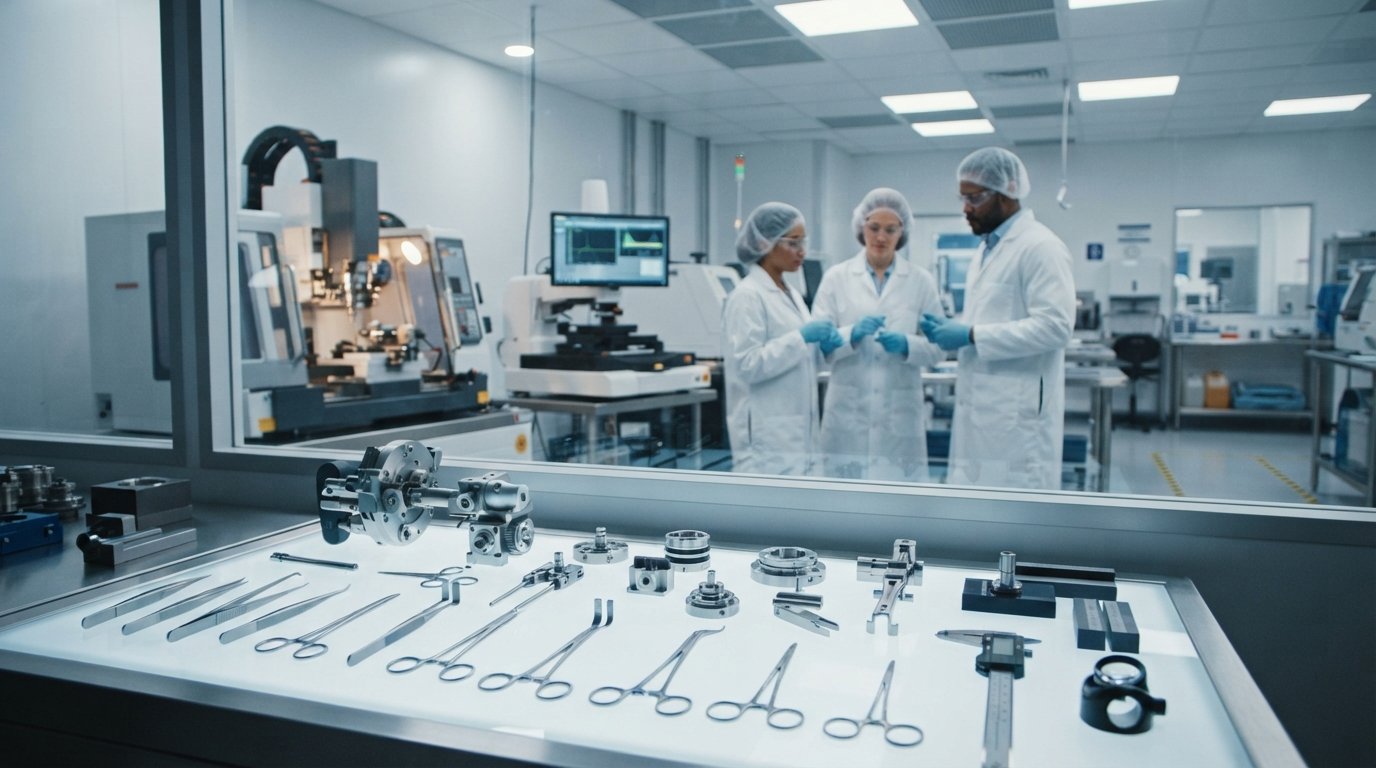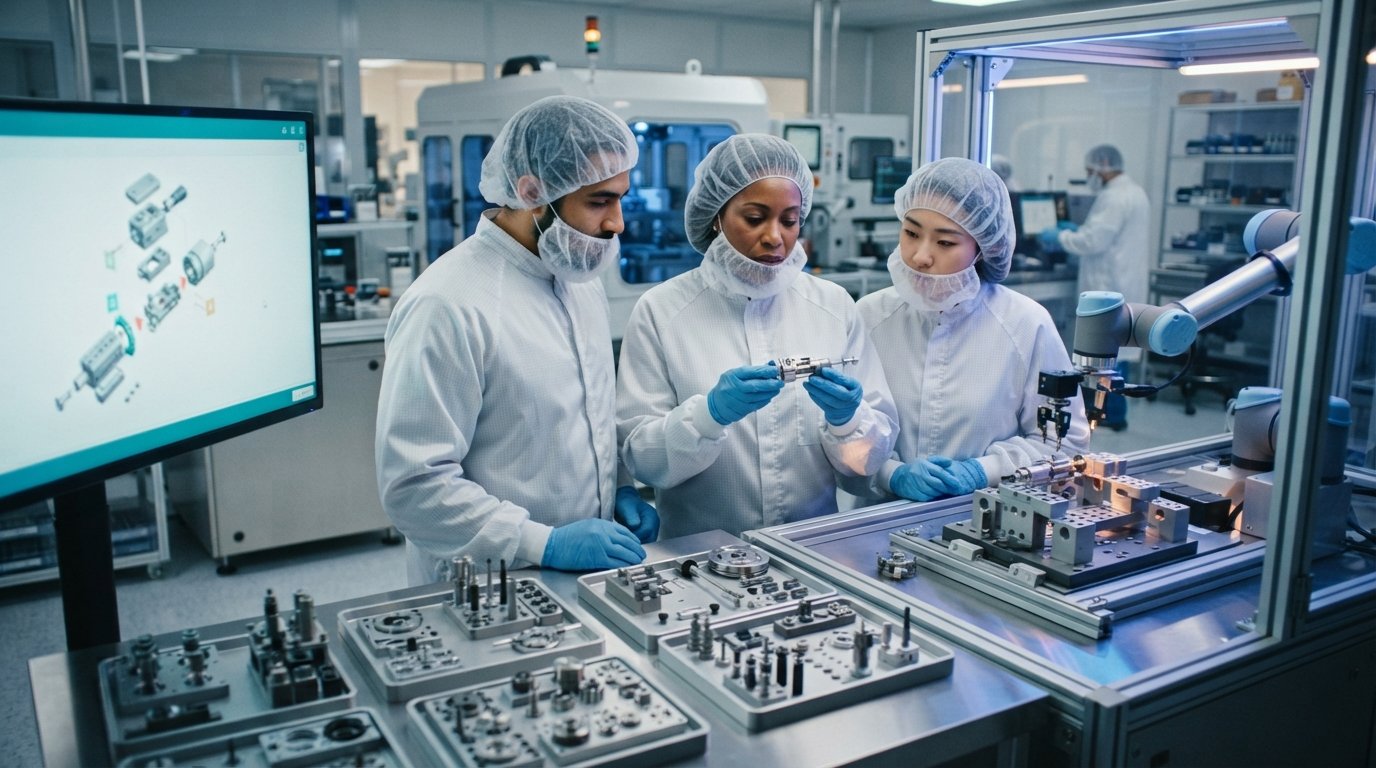


While many view a sterile environment as a mere regulatory hurdle, the reality is that cleanroom validation for medical device manufacturing functions as a strategic engineering asset that determines the lifecycle success of your most critical innovations. A single microscopic particle can trigger a devastating product recall or a multi-month regulatory delay. You likely recognize that aligning the rigorous demands of ISO 14644 with the specific mandates of FDA 21 CFR Part 820 is a meticulous technical challenge that leaves little room for error.
This guide provides the technical clarity you need to master these complexities. It ensures your high-precision devices maintain absolute integrity from the first prototype through global distribution. We’ll explore a comprehensive roadmap for IQ/OQ/PQ protocols, identify the precise cleanroom classifications required for Class II and III devices, and examine how smart monitoring technologies are redefining compliance in 2026. This analysis offers a clear framework for ensuring your manufacturing environment meets the highest global standards for precision engineering and regulatory stability.
Key Takeaways
- Understand the updated ISO 14644 standards and FDA 21 CFR Part 820 requirements to ensure your facility maintains a high state of regulatory readiness.
- Develop a robust Master Validation Plan that integrates IQ, OQ, and PQ protocols to streamline cleanroom validation for medical device manufacturing.
- Evaluate the risk profiles of your specific medical devices to determine whether an ISO Class 7 or Class 8 environment provides the optimal balance of sterility and cost.
- Leverage real-time environmental monitoring and automated inspection systems to mitigate human-borne contamination risks and enhance long-term data integrity.
- Identify the critical criteria for selecting a CDMO partner whose specialized assembly capabilities and quality systems align with global manufacturing standards.
The Regulatory Framework of Cleanroom Validation in 2026
Cleanroom validation for medical device manufacturing represents more than a series of air quality tests. It’s the formal process of providing documented evidence that an environment remains within specified particulate and microbial parameters. This control is vital for the stability of high-precision components. Understanding Cleanroom fundamentals is the first step in establishing a facility that complies with the rigorous expectations of 2026 regulatory bodies. Validation ensures that the environmental variables, such as humidity, pressure, and temperature, don’t compromise the safety of the final device.
ISO 14644-1: The Global Benchmark for Cleanliness
The ISO 14644-1:2015 standard remains the primary metric for airborne particulate cleanliness. The classification system ranges from Class 1, which is the most stringent, to Class 9. Most medical device manufacturing occurs within ISO Class 7 or Class 8 environments, depending on the device’s intended use and contamination risk profile. Each class defines specific concentration limits for particles of various sizes, ranging from 0.1 µm to 5.0 µm. In an ISO Class 8 environment, the maximum concentration limit is 3,520,000 particles per cubic meter for particles sized 0.5 µm or larger. Achieving these metrics requires precise HEPA filtration and a disciplined approach to personnel movement.
FDA and GMP Requirements for Sterile Assembly
FDA 21 CFR Part 820.70(c) specifically mandates that manufacturers establish and maintain procedures to prevent contamination of equipment or products by the facility. This is where Good Manufacturing Practices (GMP) intersect with cleanroom engineering. Regulatory auditors expect robust data integrity from continuous monitoring systems. They look for evidence that the environment was controlled during the exact window of production. Validation protocols don’t just exist for internal quality; they’re foundational for FDA 510(k) and CE Mark submissions. Without a validated environment, the technical file for a sterile device is incomplete, leading to immediate rejection by notified bodies.
The industry is seeing a significant shift toward harmonized global standards. Organizations like Fong’s Engineering & Manufacturing Private Limited maintain ISO 13485 certification to bridge the gap between Asian and Western regulatory landscapes. This alignment reduces the risk of redundant validation cycles when launching products in multiple jurisdictions. As a global CDMO, FSP Group integrates these regulatory requirements into the early design phase, ensuring that cleanroom validation for medical device manufacturing isn’t an afterthought but a core component of the engineering lifecycle.
Executing the Validation Lifecycle: IQ, OQ, and PQ
The Master Validation Plan (MVP) serves as the strategic foundation for any successful cleanroom project. It defines the scope, responsibilities, and acceptance criteria before a single filter is installed. Integrating a Process Failure Mode and Effects Analysis (PFMEA) at this stage allows engineers to identify potential contamination vectors early. This proactive risk management ensures that cleanroom validation for medical device manufacturing remains a predictable, structured process rather than a reactive one. A well-constructed MVP facilitates a smooth transition from design qualification to physical installation by aligning all stakeholders with the final performance requirements.
Installation and Operational Qualification (IQ/OQ)
Installation Qualification (IQ) confirms that all cleanroom components, from HVAC units to wall panels, meet the specified engineering requirements. We verify that every HEPA filter is seated correctly and that all structural materials are non-shedding and chemically resistant. For facility designers seeking high-quality components, you can explore Stainless steel handrails and custom fabrications that meet these stringent durability standards. Operational Qualification (OQ) then tests the system’s performance at its functional limits. This phase involves challenging the “worst-case” scenarios, such as maximum occupancy or high-load equipment operation, to ensure pressure differentials and airflow patterns remain stable. These rigorous protocols align with FDA Recognized Consensus Standards, providing the technical evidence required for regulatory audits.
While OQ tests the environment’s capacity, Performance Qualification (PQ) demonstrates its consistency during actual production. Cleanroom validation for medical device manufacturing requires testing under both “at-rest” and “operational” conditions across multiple consecutive shifts. This data proves that the environment can sustain the required cleanliness class while personnel and machinery are active. Establishing these baseline trends allows for the creation of data-driven re-validation intervals, shifting from arbitrary schedules to risk-based lifecycle management. Consistency is key when managing high-volume production for life-critical devices.
Fong’s Engineering & Manufacturing Private Limited utilizes these integrated frameworks to support complex device assembly. Our FSP Group facilities employ real-time monitoring to ensure that high-volume production runs never deviate from validated states. This methodical approach provides the stability needed for complex developmental cycles. If your project requires this level of technical mastery, you may wish to consult our engineering team for a detailed validation assessment.
Strategic Selection: Class 7 vs. Class 8 Cleanrooms
Choosing the appropriate cleanliness level is a critical engineering decision that directly impacts regulatory overhead and operational sustainability. This selection process begins with a rigorous assessment of the device’s clinical application and its potential for patient risk. While a higher classification offers greater environmental security, it also introduces significant increases in energy consumption, filtration maintenance, and gowning protocols. The ISO 14644-1:2015 standard provides the framework for these classifications, but the final choice must be justified within your technical file through a data-driven risk analysis.
Class 8 (100k) Applications for General MedTech
ISO Class 8 environments, often referred to as 100,000-grade cleanrooms, are the standard for many non-invasive and minimally invasive tools. These facilities typically require 10 to 25 air changes per hour to maintain particulate limits. This classification is well-suited for the production of surgical staplers and various micro-precision components that undergo final sterilization elsewhere. For many manufacturers, Class 8 provides a balanced environment for complex medical device assembly, ensuring that environmental contaminants don’t interfere with the mechanical functionality of high-precision parts. It offers a cost-effective path to compliance for secondary packaging and non-sterile disposables without the extreme overhead of tighter tiers.
When Class 7 (10k) is Non-Negotiable
High-risk devices, such as cardiovascular implants, stents, and robotic surgical adapters, necessitate the more stringent controls of an ISO Class 7 environment. These 10,000-grade cleanrooms require a significant leap in engineering complexity, often demanding 30 to 60 air changes per hour and more rigorous gowning procedures, including full coveralls and hoods. The financial investment reflects this intensity. Industry data for 2026 indicates that Class 7 facilities can range from $400 to $650 per square foot for construction, compared to the $250 to $450 range for Class 8. Cleanroom validation for medical device manufacturing in a Class 7 space involves more frequent monitoring and stricter pressure differential management to prevent cross-contamination from adjacent zones. For life-critical implants, these costs are a necessary investment to ensure product integrity and patient safety.
Fong’s Engineering & Manufacturing Private Limited operates Class 8 cleanroom facilities specifically designed for the assembly of both disposable and reusable devices. By maintaining these rigorous environments, FSP Group ensures that every component meets global cleanliness standards before reaching the final user. This strategic focus allows us to provide a steady hand during complex development cycles, helping partners navigate the transition from precision machining to sterile-ready assembly with technical confidence.
Operational Excellence: Monitoring and Smart Integration
Modern cleanroom validation for medical device manufacturing has evolved from a static, periodic event into a dynamic state of continuous control. The industry is rapidly adopting “smart cleanroom” technologies, utilizing Internet of Things (IoT) sensors and AI-driven analytics to move beyond manual spot checks. This shift is reflected in the global cleanroom technology market, which is projected to reach US$ 12.17 billion by 2033. By implementing Real-Time Environmental Monitoring Systems (EMS), facilities maintain a constant pulse on air quality, ensuring that every production lot is manufactured under identical, validated conditions. The integration of robotic handling systems significantly enhances cleanroom stability by eliminating the thermal and particulate fluctuations inherently caused by human presence. To learn more about EdNex Automation and their advanced industrial robotics, manufacturers can see how these systems improve consistency in critical environments.
Advanced manufacturing environments now leverage automated Coordinate Measuring Machine (CMM) inspections and unmanned production lines to minimize contamination risks. These systems allow for 24-hour operation without the environmental spikes associated with personnel shifts. Since HVAC and filtration systems typically account for 35% to 55% of a cleanroom’s total budget, maximizing their efficiency through smart integration is both a regulatory and financial necessity. This level of technical mastery ensures that high-precision devices, such as robotic surgical adapters, remain uncontaminated throughout the assembly lifecycle.
Maintaining data integrity is a non-negotiable requirement for 2026 regulatory compliance. Digital dashboards provide immediate visibility into temperature, humidity, and pressure differentials, allowing for instant corrective actions. To meet FDA expectations, electronic validation records must adhere to ALCOA+ principles, ensuring they’re attributable, legible, contemporaneous, original, and accurate. These systems also facilitate predictive maintenance for HEPA filters and HVAC components. By analyzing airflow trends and pressure drops, engineers can replace filters before they fail, preventing unplanned downtime and maintaining the validated state of the facility.
The Human Element: Gowning and Training
While automation reduces risk, the human element remains the most significant source of cleanroom contaminants. Standardized gowning protocols for Class 8 environments must be strictly enforced to mitigate bioburden risks. This includes the use of dedicated cleanroom apparel, hairnets, and gloves, alongside rigorous entry and exit procedures. Personnel must be trained to move with deliberation to avoid disrupting laminar airflow patterns. Maintaining positive pressure requires a disciplined approach to airlock management, ensuring that “clean” zones remain protected from adjacent, less-controlled areas. Consistent training ensures that every technician understands their role in preserving the integrity of the validated environment.
Fong’s Engineering & Manufacturing Private Limited integrates these advanced monitoring capabilities into our FSP Group production lines. We utilize unmanned inspection and real-time monitoring to provide a “steady hand” for your most complex device assembly needs. If you’re looking to optimize your production environment for global compliance, contact our engineering team today to discuss your specific validation requirements.
Fong’s Engineering: Advanced Cleanroom Assembly Solutions
Fong’s Engineering & Manufacturing Private Limited provides a comprehensive suite of CDMO services, guiding partners from initial concept design through to high-volume mass production. Our FSP Group facilities are equipped with ISO 13485 certified quality systems and dedicated Class 8 cleanrooms. This infrastructure is essential for maintaining rigorous medical device manufacturing compliance across all product lines. We’ve built our reputation on the understanding that cleanroom validation for medical device manufacturing isn’t a one-time event but a continuous commitment to product integrity. This is especially true when dealing with the high-stakes requirements of robotic surgery and endoscopy tools.
A unique aspect of our technical capability involves the validation of environments used for endoscope repair and refurbishment. Unlike many providers who focus solely on new disposables, we apply the same rigorous standards to the lifecycle management of reusable devices. Validating a cleanroom for refurbishment requires specific attention to cross-contamination risks and the preservation of micro-precision components during the re-assembly phase. This ensures that refurbished tools perform with the same reliability as new equipment. Our facilities are designed to handle both disposable and reusable assembly, providing the flexibility needed for modern MedTech portfolios.
Precision for Minimally Invasive Surgery (MIS)
Our technical expertise extends to the assembly of complex MIS tools, including ultrasonic scalpel couplers and robotic surgical adapters. Within our controlled environments, we integrate advanced processes such as laser welding and precision marking to ensure every component meets exact engineering specifications. We also verify the autoclave stability of reusable surgical instruments, confirming they can withstand repeated sterilization cycles without compromising mechanical performance. This synergy between precision machining and cleanroom assembly allows us to manage the most intricate developmental cycles with technical confidence.
Global Partnership and Regulatory Support
Navigating the complexities of FDA 510(k) and CE Mark submissions requires a partner with deep regulatory knowledge. FSP Group provides strategic logistics and engineering support across our footprint in Singapore, China, and Malaysia. This global presence allows us to serve both US and Asian markets while maintaining a consistent validation framework. Our team acts as a steady hand, ensuring that your cleanroom validation for medical device manufacturing meets all localized and international standards. For custom validation protocols or specialized assembly inquiries, please contact our engineering team at Sam.lim@fongspl.com.sg.
Advancing Precision through Validated Engineering Excellence
Effective cleanroom validation for medical device manufacturing isn’t just a regulatory checkbox; it’s a foundational engineering discipline that ensures the repeatable precision required for life-critical devices. By integrating the IQ/OQ/PQ lifecycle with real-time smart monitoring and robotic automation, manufacturers can mitigate contamination risks while maintaining absolute data integrity. Choosing between Class 7 and Class 8 environments requires a meticulous, risk-based approach that balances operational costs with specific clinical safety requirements.
Fong’s Engineering & Manufacturing Private Limited brings over 40 years of precision engineering expertise to every partnership. Our global CDMO footprint includes ISO 13485 and FDA compliant facilities equipped with advanced smart manufacturing capabilities to support your most complex development cycles. We provide the technical mastery needed to navigate evolving global standards with quiet confidence and a steady hand. Partner with Fong’s for ISO 13485 Certified Cleanroom Assembly to secure your product’s regulatory future and ensure technical excellence at every scale.
Frequently Asked Questions
What is the difference between ISO Class 7 and Class 8 for medical devices?
ISO Class 7 and Class 8 differ primarily in allowable particle concentrations and air change rates. Class 7 environments permit a maximum of 352,000 particles (0.5 µm) per cubic meter, while Class 8 allows up to 3,520,000. Class 7 usually requires 30 to 60 air changes per hour, whereas Class 8 functions effectively with 10 to 25. High-risk implants often necessitate Class 7, while Class 8 is standard for general cleanroom validation for medical device manufacturing.
Who regulates cleanroom validation for medical device manufacturers?
Cleanroom validation is governed by a combination of international standards and regional regulatory bodies. The FDA enforces 21 CFR Part 820 in the United States, which mandates controlled environments for manufacturing. Globally, ISO 14644-1 provides the classification framework, while ISO 13485 dictates quality management requirements. In Europe, notified bodies assess compliance against Medical Device Regulations (MDR) to ensure that manufacturing environments meet the necessary safety and performance criteria.
How often should a medical device cleanroom be re-validated?
The frequency of re-validation depends on the risk profile of the device and specific regulatory requirements. ISO 14644-2 suggests periodic testing, typically every six to twelve months for particle concentration limits. However, the shift in 2026 toward continuous environmental monitoring allows for a more dynamic, risk-based approach. If significant changes occur in equipment, personnel protocols, or facility structure, immediate re-validation is mandatory to ensure the environment remains in its validated state.
What are the IQ/OQ/PQ requirements for a new cleanroom facility?
A new facility requires a structured three-phase qualification process. Installation Qualification (IQ) verifies that equipment and systems are installed according to engineering specifications. Operational Qualification (OQ) tests the system under “worst-case” conditions to ensure it performs within established limits. Performance Qualification (PQ) then demonstrates that the cleanroom consistently maintains the required cleanliness levels during actual production shifts. These phases are documented within a Master Validation Plan to provide objective evidence of control.
Can a Class 8 cleanroom be used for sterile medical device packaging?
Yes, an ISO Class 8 cleanroom is frequently used for sterile medical device packaging, particularly for devices that undergo terminal sterilization. This environment is suitable for assembling surgical staplers, endoscopy tools, and orthopedic instruments. The primary goal is to control the initial bioburden and particulate levels before the device enters its final sterile barrier system. Manufacturers must justify this classification choice through a rigorous risk assessment that considers the device’s intended clinical use.
What role does HEPA filtration play in cleanroom validation?
HEPA filters are the critical components responsible for removing 99.97% of airborne particles sized 0.3 µm or larger. During cleanroom validation for medical device manufacturing, engineers perform filter integrity testing to identify leaks and verify uniform airflow velocity. These filters create the laminar or turbulent airflow patterns necessary to sweep contaminants away from the production zone. Proper validation ensures that filtration systems are correctly seated and capable of maintaining the specified cleanliness class.
How do smart manufacturing lines improve cleanroom validation outcomes?
Smart manufacturing lines enhance validation by providing continuous, automated data collection. Real-time monitoring systems track pressure differentials, humidity, and temperature, alerting engineers to deviations before they impact product quality. Unmanned inspection and robotic handling reduce the particulate spikes caused by human movement, leading to more stable environmental conditions. These technologies support a state of “continuous validation,” where data-driven insights replace periodic manual checks, improving overall regulatory confidence and manufacturing yield.
What documentation is required for an FDA cleanroom audit?
An FDA audit requires comprehensive evidence of environmental control and data integrity. Key documents include the Master Validation Plan, signed IQ/OQ/PQ reports, and current particle count certifications. Auditors also examine environmental monitoring logs, personnel training records, and gowning protocols. All electronic records must follow ALCOA+ principles to ensure they’re attributable and accurate. Maintaining a well-organized technical file that links cleanroom performance to product safety is essential for demonstrating compliance during inspections.