

In 2026, the traditional boundary between logistics and engineering has vanished, making medical device supply chain management a high-stakes technical discipline rather than a simple movement of goods. You’ve likely felt the pressure of the FDA’s Quality Management System Regulation (QMSR) that took effect this past February, alongside the mandatory EUDAMED modules that launched in May. These shifts, combined with the volatility of sourcing precision components, mean that inconsistency in quality across global manufacturing sites is no longer just a risk; it’s a critical failure point for any life-saving technology.
This article provides a roadmap to building a resilient, compliant, and high-velocity infrastructure by integrating advanced CDMO capabilities with smart manufacturing. We’ll explore the strategic transition from prototype to mass production through multi-site partnerships and zero-defect processes. You’ll discover how to leverage real-time logistics and rigorous technical mastery to ensure your supply chain remains a competitive advantage. We’ll examine the specific roles of global footprints and automated validation in maintaining institutional trust while navigating the complexities of the current regulatory environment.
Key Takeaways
- Learn to transition from reactive logistics to a proactive “Just-in-Case” strategy to effectively mitigate raw material disruptions and ensure operational continuity.
- Understand how smart manufacturing and 24-hour unmanned production lines achieve zero-defect quality and high-velocity throughput for complex devices.
- Integrate the Master Validation Plan and PFMEA into your medical device supply chain management to satisfy the 2026 FDA QMSR and EUDAMED regulatory mandates.
- Discover how end-to-end CDMO partnerships bridge the gap between prototyping in Singapore and global mass production in China or Malaysia.
- Secure total quality consistency by internalizing critical secondary processes like electropolishing and DLC coating within a single, audited manufacturing framework.
The Evolution of Medical Device Supply Chain Management in 2026
Effective medical device supply chain management in 2026 functions as an integrated lifecycle that bridges initial design, raw material sourcing, precision manufacturing, and global distribution. It’s no longer a back-office logistical function but a front-line strategic pillar. Historically, manufacturers relied on ‘Just-in-Time’ models to minimize inventory costs. However, the current landscape demands a shift toward ‘Just-in-Case’ strategic buffering. This transition ensures that critical components for life-saving devices remain available despite unpredictable shifts in global trade or raw material scarcity.
At the center of this evolution lies the medical device definition and classification, which dictates the rigorous regulatory pathway each product must follow. ISO 13485 serves as the non-negotiable foundation for every link in this chain, ensuring that quality management isn’t just a final check but a continuous process. We’re witnessing the rise of the ‘technical supply chain,’ a concept where manufacturing precision and engineering mastery directly dictate logistical success.
Macro Trends Shaping MedTech Logistics
Global trade policies are increasingly volatile, directly impacting the sourcing of specialized alloys for stents and orthopedic implants. This volatility is a challenge across all global trade sectors, where German-based wholesale specialists like mocimportsexportgmbh.com work to stabilize the bulk supply of essential cleaning and janitorial goods. To counter these shifts, MedTech industry leaders are adopting regionalization strategies by establishing manufacturing hubs in key territories. Singapore and China remain vital centers, while the upcoming Malaysia site, scheduled to open in Q1 2027, will provide critical proximity to Changi and Senai airports for rapid distribution. Additionally, there’s a significant transition toward sustainable packaging and validated sterilization methods, such as EtO and Gamma, to meet both environmental goals and strict safety standards.
Why Precision Engineering is the Anchor of Supply Chain Stability
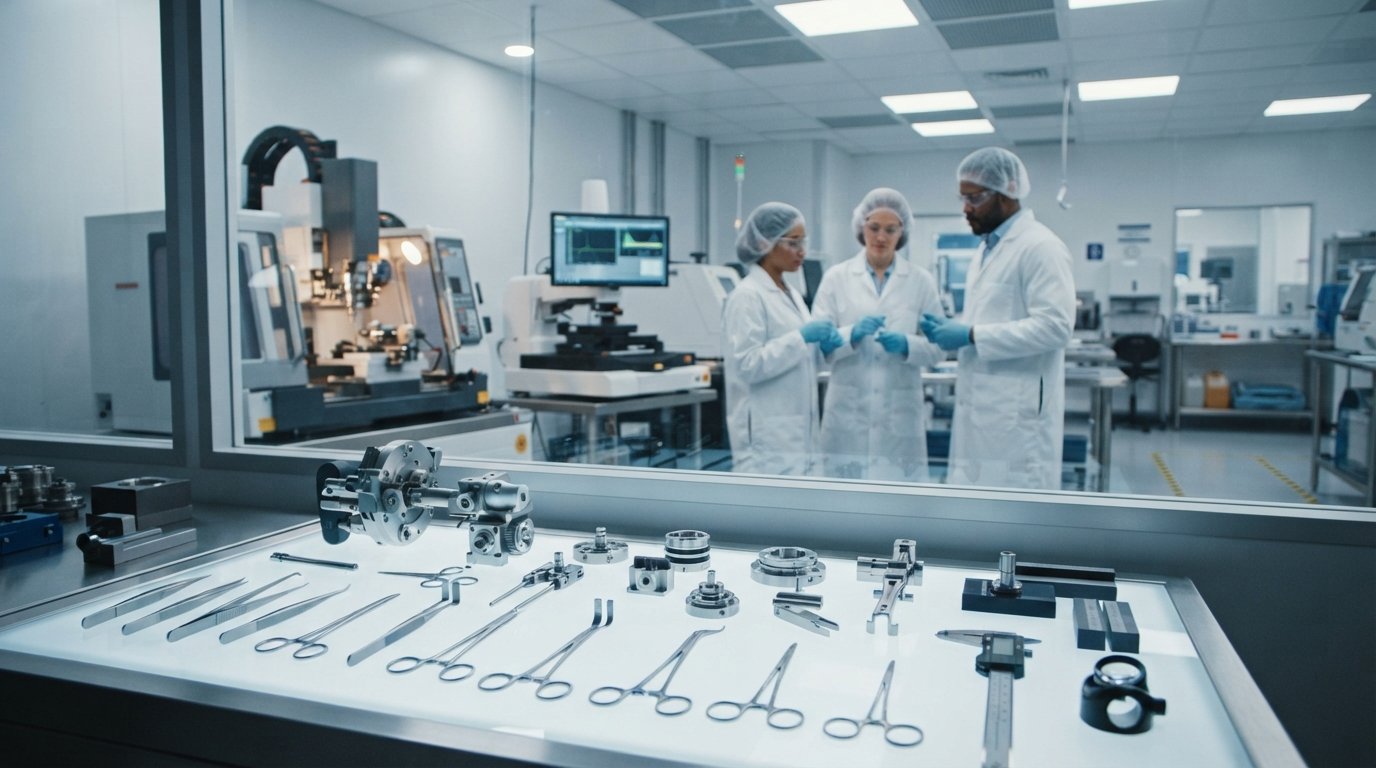
Micro-precision components that meet exact tolerances are essential for reducing assembly failures and preventing downstream delays in the clinical environment. When components are manufactured with high-fidelity accuracy, the entire assembly line moves faster. Utilizing advanced 5-axis CNC milling allows for the production of complex geometries in a single setup, which effectively eliminates common supply chain bottlenecks associated with multi-stage processing. This level of technical discipline is especially critical for high-quality surgical tools used in Minimally Invasive Surgery (MIS). These devices require specialized handling and full traceability to maintain the integrity of the technical supply chain from the cleanroom to the operating theater.
Core Components of a Resilient MedTech Supply Network
A resilient infrastructure for medical device supply chain management requires more than digital visibility; it demands the technical alignment of every sub-tier supplier. While many organizations focus on software integration, the stability of a network is often dictated by the physical manufacturing capabilities of its partners. ISO 13485 certification is a non-negotiable requirement for sub-tier vendors because it provides a baseline for quality that prevents costly downstream failures. Citing research on securing the medical supply chain, industry experts emphasize that resilience is built through the rigorous validation of physical production sites rather than just logistical oversight. This technical scrutiny ensures that every micro-precision component meets the exacting standards required for high-stakes surgical applications.
Integrated Manufacturing and Secondary Processes
Supply chain delays frequently occur when semi-finished parts are transported between different facilities for finishing. Consolidating in-house laser welding and soldering eliminates the need for third-party logistics between critical production steps, significantly shortening lead times. Secondary processes like electropolishing and Diamond-Like Carbon (DLC) coating are weight essential for maintaining surface integrity without introducing external contamination. To source the necessary high-quality chemicals and laboratory supplies for these industrial applications, you can check out RMR Reagents. For implantable devices like heart valve rings, hermetic sealing is a vital requirement that demands immediate, on-site validation. Implementing Vendor Managed Inventory (VMI) further optimizes the network by reducing OEM overhead and ensuring that high-demand components are always available for final assembly. This level of technical integration reduces the complexity of managing multiple vendors and stabilizes the production cycle.
Sterility is a final gate in the distribution channel that cannot be compromised. Utilizing Class 8 cleanrooms for both disposable and reusable device assembly ensures that products enter the supply chain free from particulate contamination. Integrating automated blister packaging and Tyvek pouching into the production flow allows for high-velocity output without the quality degradation often associated with manual handling. These controlled environments are essential for maintaining the integrity of devices before they reach the clinical setting. For organizations managing more intricate diagnostic projects, understanding the nuances of Complex Medical Device Assembly is essential for ensuring long-term diagnostic accuracy. To discuss how these integrated capabilities can stabilize your specific production requirements, you can consult with our engineering team.
Digital Transformation: Integrating Smart Manufacturing and Real-Time Logistics
Smart manufacturing in 2026 isn’t just a method for increasing output; it’s the primary engine for stabilizing medical device supply chain management through data visibility. Real-time dashboards and 24-hour unmanned production lines allow for a consistent flow of components that is largely independent of manual labor shifts. These systems provide a level of predictability that traditional manufacturing cannot match, ensuring that high-precision parts are ready for assembly exactly when needed. By moving toward a fully digital floor, manufacturers can monitor the health of the entire supply network through the lens of individual machine performance.
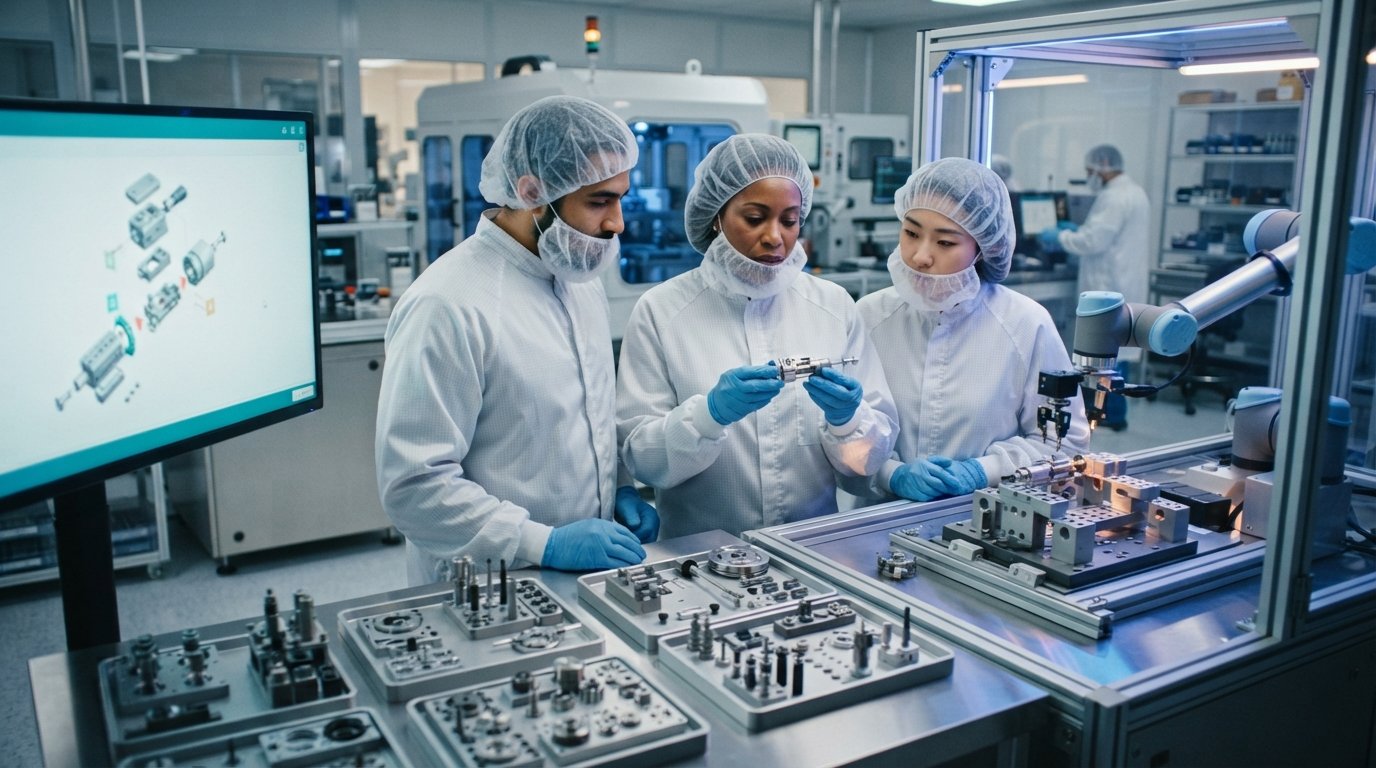
Robotic handling systems provide automated loading and unloading, which effectively eliminates human error and increases throughput. These robotic cells often incorporate in-process testing, such as voltage and leak detection, to generate a continuous stream of performance data. This information serves as a predictive source for supply chain management, allowing engineers to identify potential batch deviations before they lead to stockouts or quality holds. Additionally, unmanned CMM (Coordinate Measuring Machine) inspection ensures 100% compliance at the point of production. This eliminates the traditional bottleneck of waiting for manual quality control checks, allowing parts to move directly from the machine to the next stage of the value chain.
Data-Driven Decision Making in the CDMO Environment
Real-time monitoring of CNC milling and auto-lathe processes acts as a critical safeguard against catastrophic batch failures. For complex components like Nitinol stents, fiber-laser cutting data is analyzed to optimize material usage and minimize scrap rates. This level of granular detail is essential for maintaining the digital traceability required for FDA 510(k) and CE Mark documentation. It creates a transparent audit trail that simplifies regulatory submissions and ensures that every component is accounted for throughout its lifecycle. This data-driven approach transforms the CDMO from a simple vendor into a technical partner capable of managing complex risk profiles.
Automation and Headcount Optimization
Robotic surgical adapter assembly benefits significantly from automated in-process measurement, which ensures that every sub-component meets strict tolerances before final integration. Strategically reducing headcount through the implementation of smart lines improves operational stability by insulating the supply chain from labor market volatility. It’s a shift that prioritizes technical mastery over manual repetition. This integration of automated hardware and real-time data is a fundamental pillar of Medical Device Manufacturing Compliance, ensuring that the validated state of the production process is never compromised by human variability.
Navigating Regulatory and Risk Constraints in Global Supply Chains
Regulatory oversight in 2026 isn’t a static requirement; it’s a critical variable in the commercial success of a product. Effective medical device supply chain management treats validation as an engineering milestone rather than a final administrative hurdle. Precision is the baseline. Process Failure Mode and Effects Analysis (PFMEA) is a cornerstone of medical device supply chain management, allowing teams to identify potential failure points in the manufacturing sequence before they can disrupt global distribution. Integrating Installation Qualification (IQ), Operational Qualification (OQ), and Performance Qualification (PQ) into the Master Validation Plan (MVP) creates a predictable timeline for market entry. Validation isn’t optional. It’s the technical evidence that your supply chain is stable and repeatable.
Validation as a Competitive Advantage
Rigorous test method validation is essential for high-risk components like cryoablation fluid delivery tubes. These devices operate under extreme thermal conditions, meaning any deviation in material integrity can lead to failure. We integrate regulatory support into the earliest stages of development. Utilizing Medical Device DFM principles ensures that the design is optimized for validation from the start. This proactive approach prevents the costly delays associated with post-design modifications. It ensures a seamless transition to mass production while maintaining a strictly validated state.
Managing the Reusable Device Lifecycle
Reusable instruments such as Ureteroscopes and Gastroscopes require a specialized supply chain that extends far beyond the initial sale. Maintaining these devices requires a technical partner capable of precision repair and refurbishment. Our specialized facility within the United States provides a strategic advantage for US-based clients by supporting the reprocessing supply chain with rapid turnaround times. We use laser processing to create autoclave-stable markings that remain legible throughout the device’s lifecycle. This corrosion-resistant marking is vital for maintaining traceability and ensuring that every device meets safety standards after multiple sterilization cycles. A dedicated CDMO partner also facilitates Post-Market Surveillance and CAPA (Corrective and Preventive Action) by providing the technical documentation needed for regulatory inquiries. This level of support ensures that any field issues are addressed with technical precision and speed.
Contact our regulatory experts to integrate rigorous validation into your global supply chain strategy.
Leveraging CDMO Partnerships for Supply Chain Excellence
Modern medical device supply chain management requires a fundamental shift from transactional vendor relationships to integrated strategic partnerships. For complex technologies like robotic surgery components, a vendor that simply follows a print isn’t sufficient. You need a partner that provides end-to-end support throughout the entire product lifecycle. This collaborative model ensures that the technical nuances of the design are preserved as the device moves from initial concept to mass production. By aligning your internal engineering goals with a CDMO’s technical mastery, you create a seamless transition that minimizes risk and stabilizes the entire value chain.
Scalability remains a primary concern for high-growth MedTech firms. Our global footprint allows for a structured progression: starting with pilot runs and New Product Introduction (NPI) in Singapore, then transitioning to mass production in China or our upcoming Malaysia site, which opens in Q1 2027. This multi-site approach balances the need for high-level engineering oversight with the cost efficiencies of large-scale manufacturing. Speed-to-market is further enhanced by our proximity to major logistics hubs like Senai and Changi airports, which significantly reduces transit times for global distribution. This geographic strategy ensures your product reaches major MedTech markets without the delays common in fragmented supply chains.
Selecting a Global CDMO Partner
When evaluating a partner for complex assemblies, such as surgical staplers or orthopedic implants, technical capacity is the most critical metric. A platform supported by over 1,000 production staff provides the necessary scale to handle large-volume requirements while maintaining the precision of a specialized boutique shop. It’s the “Steady Hand” approach that matters most. You need a partner that remains calm and capable throughout complex developmental cycles, demonstrating stability through 40 plus years of manufacturing expertise. This level of institutional trust is essential for managing the high-stakes journey from concept to patient.
Future-Proofing Your Supply Chain with Fong’s Engineering & Manufacturing Private Limited
Optimizing your medical device supply chain management involves more than just selecting a factory; it requires leveraging a global ecosystem of technical excellence. By utilizing our advanced laser processing and smart manufacturing capabilities, you ensure your production process remains at the cutting edge of Industry 4.0. Our headquarters in Singapore serves as the central hub for innovation, while our expanding regional footprint provides the flexibility needed for a volatile global market. This combination of long-standing expertise and visionary technology creates a resilient infrastructure for your most critical devices.
Securing Technical Excellence Across Your Global Network
Optimizing medical device supply chain management in 2026 requires a transition from simple logistics to deep engineering integration. Internalizing secondary processes and leveraging unmanned smart manufacturing eliminates common bottlenecks that threaten time to market. This technical discipline, supported by a global footprint and rigorous validation standards, ensures that complex surgical devices remain consistently compliant and available. It’s a strategy that prioritizes long-term resilience over short-term savings.
With ISO 13485 and FDA 510(k) certifications, Fong’s Engineering applies over 40 years of precision engineering expertise to stabilize your entire production lifecycle. Our established manufacturing sites in Singapore and China, combined with our upcoming expansion into Malaysia, provide the necessary scale for global resilience. We remain committed to demonstrating technical capability through evidence and adherence to the highest global standards.
Consult with Fong’s Engineering for supply chain-integrated CDMO solutions. We’re prepared to help you achieve operational stability through technical mastery.
Frequently Asked Questions
What are the primary challenges in medical device supply chain management in 2026?
Primary challenges include navigating the FDA’s Quality Management System Regulation (QMSR) which took effect on February 2, 2026, and the mandatory EUDAMED modules launched on May 28, 2026. Manufacturers must also manage the shift from “Just-in-Time” to “Just-in-Case” strategic buffering to handle raw material volatility. Technical medical device supply chain management now requires integrating these regulatory shifts with real-time data to prevent quality inconsistencies across various global manufacturing sites.
How does ISO 13485 certification impact supply chain reliability?
ISO 13485 certification ensures that every partner in the supply chain adheres to a standardized quality management system specifically for medical devices. This alignment reduces risk by providing a consistent framework for design, development, and production. It serves as a non-negotiable baseline for sub-tier suppliers, ensuring that micro-precision components meet the rigorous safety and performance standards required for FDA 510(k) and CE Mark compliance, thereby stabilizing the overall network.
Why is a CDMO partner critical for managing MedTech logistics?
A CDMO partner provides the technical mastery and end-to-end support required to bridge the gap between concept design and mass production. By acting as a “steady hand” throughout complex development cycles, a CDMO manages the technical supply chain, including validation and cleanroom assembly. This partnership allows MedTech firms to scale operations efficiently across global sites while ensuring that high-stakes components, such as robotic surgical adapters, maintain 100 percent quality consistency.
How can smart manufacturing reduce lead times in medical device production?
Smart manufacturing reduces lead times by utilizing 24-hour unmanned production lines and real-time monitoring to maximize equipment utilization. Automated robotic handling and unmanned CMM inspection eliminate the bottlenecks associated with manual labor and traditional quality control checks. These smart lines provide immediate in-process data, allowing for predictive medical device supply chain management that identifies potential batch failures before they occur, ensuring a high-velocity flow of zero-defect components to the assembly stage.
What role does the Irvine, CA center play in the US medical device supply chain?
The Irvine, CA facility serves as a critical hub for the US medical device supply chain by providing specialized endoscope repair and refurbishment services. This location supports the reprocessing lifecycle for reusable devices like Ureteroscopes and Gastroscopes, offering rapid turnaround times for domestic healthcare providers. By maintaining original performance specifications through precision engineering, the center ensures that US-based clients have a reliable partner for managing the maintenance and compliance of high-value surgical instruments.
How do secondary processes like electropolishing affect supply chain speed?
Internalizing secondary processes such as electropolishing, anodizing, and DLC coating significantly improves supply chain speed by eliminating third-party logistical delays. When these technical refinements are performed in-house, semi-finished parts don’t need to be shipped between multiple vendors, which reduces the total production cycle time. This integration ensures that surface integrity and corrosion resistance are validated immediately, preventing the quality holds that often occur when outsourcing these critical finishing steps.
What should I look for when selecting a global medical device manufacturing partner?
Selection should focus on a partner’s technical mastery, regulatory track record, and global manufacturing footprint. Evaluate their ability to handle complex assemblies, such as surgical staplers, and their capacity to support over 1,000 production staff for large-scale requirements. A reliable partner must offer end-to-end CDMO capabilities, including Class 8 cleanroom assembly and advanced laser processing, while demonstrating a disciplined culture of precision engineering and 40 plus years of expertise in the medical industry.
How does the upcoming Malaysia site (Q1 2027) enhance regional supply chain support?
The upcoming Malaysia manufacturing site, scheduled to open in Q1 2027, will provide significant regional supply chain support through its proximity to major logistics hubs. Located within 20 minutes of Senai Airport and 90 minutes of Singapore Changi Airport, the site enables rapid transit times for global distribution. This expansion adds 30,000 square feet of capacity and over 150 staff, allowing MedTech firms to balance cost and proximity within a resilient, multi-site network.