

In the first half of 2026, the United States saw 313.1 million medical device units recalled, which represents a staggering 516.8 percent increase compared to the same period in 2025. For engineering leads and medical executives, these figures highlight the extreme stakes involved when precision falters. You’re likely familiar with the tension between accelerating speed-to-market and ensuring every micro-precision component survives rigorous validation. Achieving consistent quality control in medical device assembly isn’t just a procedural requirement; it’s the foundation of patient safety and institutional trust.
Managing the transition to the FDA’s new Quality Management System Regulation (QMSR) requires more than standard oversight. As a Global partner of choice in advancing patient care, we’ve developed this guide to detail how advanced quality control frameworks and smart manufacturing technologies ensure absolute precision and regulatory compliance. You’ll discover how automated inspection systems and ISO 13485:2016 integration create a zero-defect environment that shortens development cycles without compromising on safety or traceability.
Key Takeaways
- Understand how the harmonization of ISO 13485:2016 and FDA QMSR standards simplifies the pathway to global market access for complex medical devices.
- Explore the role of smart manufacturing technologies in achieving 24-hour unmanned in-process measurement and real-time quality monitoring.
- Identify the essential steps for maintaining quality control in medical device assembly, from pre-assembly supplier audits to the final validation of critical-to-quality parameters.
- Learn why a global CDMO partner with Class 8 cleanroom facilities and advanced laser marking is vital for ensuring long-term product traceability and reliability.
The Critical Role of Quality Control in Medical Device Assembly
Effective quality control in medical device assembly functions as a systematic architecture designed to ensure every finished product aligns with exact safety and performance specifications. In the high-stakes environment of medical technology, this process acts as the fundamental guarantor of patient safety and institutional brand integrity. While traditional manufacturing once relied on end-of-line inspections, the industry in 2026 has transitioned toward proactive process assurance. This shift embeds validation into every stage of the assembly cycle, transforming quality from a final gatekeeper into a continuous operational nervous system.
This rigorous approach is essential for complex instruments such as robotic surgical adapters and ultrasonic scalpel couplers. These devices operate within narrow performance windows where even a minor assembly variance can lead to failure during a procedure. By integrating advanced measurement and verification at the point of assembly, manufacturers maintain the technical mastery required to produce these sophisticated tools reliably. It’s a method that prioritizes prevention over correction. This same dedication to safety-critical engineering is essential for healthcare mobility solutions, such as the advanced patient transfer systems designed by RIHA Industries, where mechanical reliability is paramount for patient care.
Precision as a Non-Negotiable Standard
Micro-precision components often demand sub-micron accuracy during the assembly phase. When dealing with minimally invasive surgery (MIS) tools, the margin for error is effectively zero. A misalignment of a few microns in a coupler or hinge can impair the tactile feedback a surgeon relies on, potentially compromising clinical outcomes. Cultivating a “Quality First” culture ensures that every technician and automated system prioritizes these tolerances above all else. It requires a disciplined environment where precision isn’t just a goal; it’s a baseline requirement for every task performed.
The Cost of Quality vs. The Cost of Failure
The financial impact of a product recall is severe, often contributing to the estimated $38.9 billion to $53.7 billion global annual cost of quality for the medical technology sector. Adhering to the ISO 13485 standard provides a structured framework to mitigate these risks. Integrated quality control systems reduce long-term costs by significantly lowering scrap rates and preventing defective units from progressing through the supply chain. Beyond risk mitigation, robust QC protocols are essential for accelerating medical device speed to market. By identifying potential failure points early in the assembly process, engineers can streamline the validation phase and ensure a predictable path to commercialization.
Regulatory Frameworks: ISO 13485 and FDA Compliance
The regulatory landscape for quality control in medical device assembly underwent a significant transformation on February 2, 2026. The FDA’s Quality Management System Regulation (QMSR) now formally incorporates ISO 13485:2016, harmonizing U.S. requirements with global standards. This alignment, overseen by the International Organization for Standardization (ISO), simplifies the pathway for manufacturers seeking both FDA 510(k) clearance and CE Marking. It establishes a unified expectation for risk management and documentation throughout the assembly lifecycle.
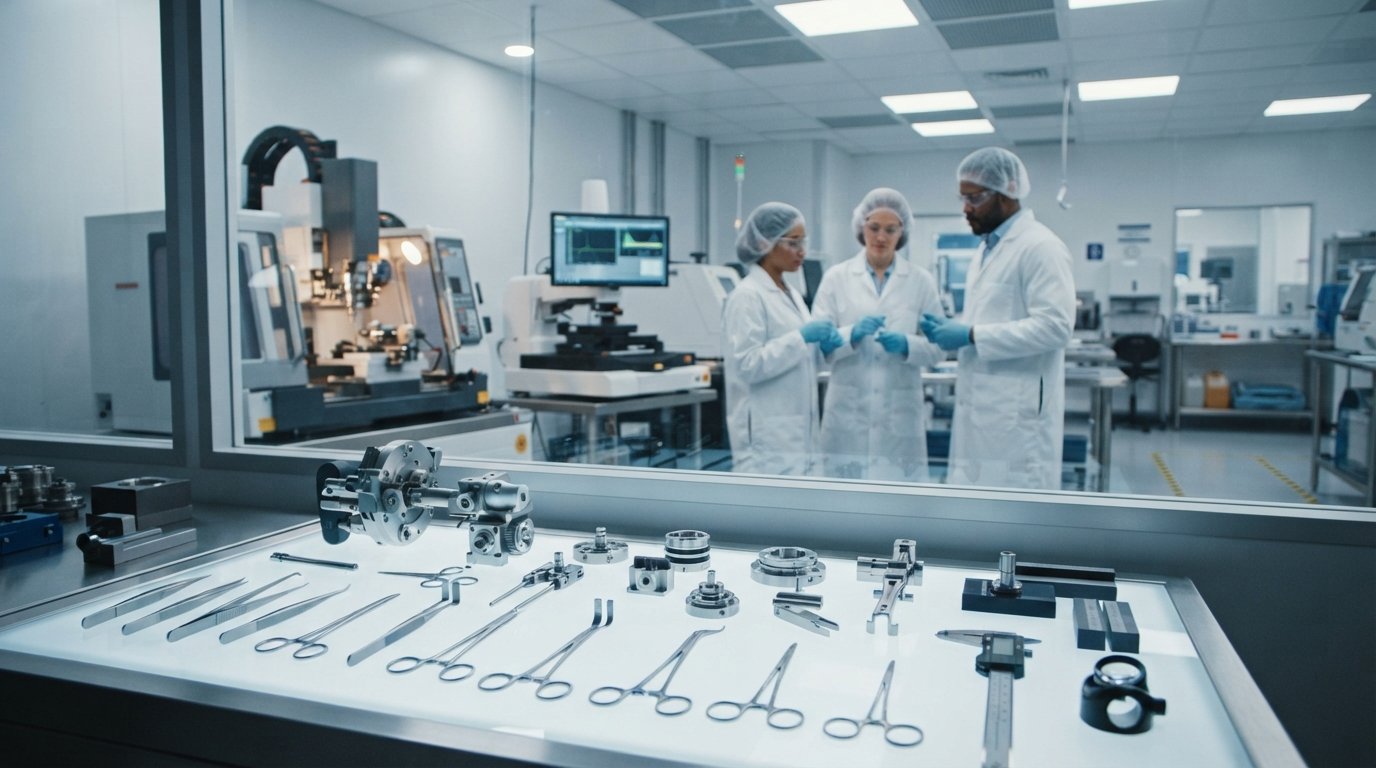
Maintaining a global manufacturing footprint requires a centralized Master Validation Plan (MVP). This document ensures that assembly processes remain consistent across different sites, such as our Singapore headquarters and the upcoming Malaysia facility. For sterile device assembly, operating within Class 8 (100k) cleanroom environments is a baseline requirement. These controlled environments mitigate the risk of particulate and microbial contamination, which is essential for ensuring the safety of invasive surgical instruments.
Validation Frameworks: IQ, OQ, and PQ
Validation is categorized into three critical phases: Installation Qualification (IQ), Operational Qualification (OQ), and Performance Qualification (PQ). While IQ confirms that equipment is installed correctly, OQ and PQ demonstrate that the assembly process produces consistent results under various operating conditions. For high-volume disposable devices, validation focuses on high-speed repeatability. Conversely, for reusable instruments, validation must account for the device’s ability to withstand repeated sterilization cycles without mechanical degradation. Utilizing Process Failure Mode and Effects Analysis (PFMEA) allows engineers to preemptively mitigate risks before they impact the production line.
Traceability and Laser Marking Standards
These high-speed validation standards are equally critical for specialized research delivery systems, such as the pre-filled pens provided by ReadyPep, where consistency and precision are paramount.
Full lifecycle tracking is achieved through Unique Device Identification (UDI) systems. To ensure these identifiers remain permanent, we employ ultrashort-pulse laser marking. Unlike traditional methods, this technology creates corrosion-resistant, autoclave-stable markers on sensitive components like heart valve rings and intervention guide wires. The result is a high-contrast identifier that remains legible after hundreds of sterilization cycles, ensuring absolute traceability from the assembly floor to the operating theater. If you’re looking to enhance your device’s traceability and compliance profile, you can consult with our engineering team to explore advanced marking solutions.
Smart Manufacturing: The Future of Automated QC
The integration of smart manufacturing technologies has transformed quality control in medical device assembly from a series of discrete checks into a continuous, data-driven operation. By utilizing real-time monitoring dashboards, engineers gain immediate visibility into every stage of the assembly line. This shift enables the transition to 24-hour unmanned in-process measurement using automated Coordinate Measuring Machines (CMM). These systems operate without interruption, providing high-cadence data that ensures every component remains within specified tolerances. It’s a level of oversight that manual inspection cannot replicate.
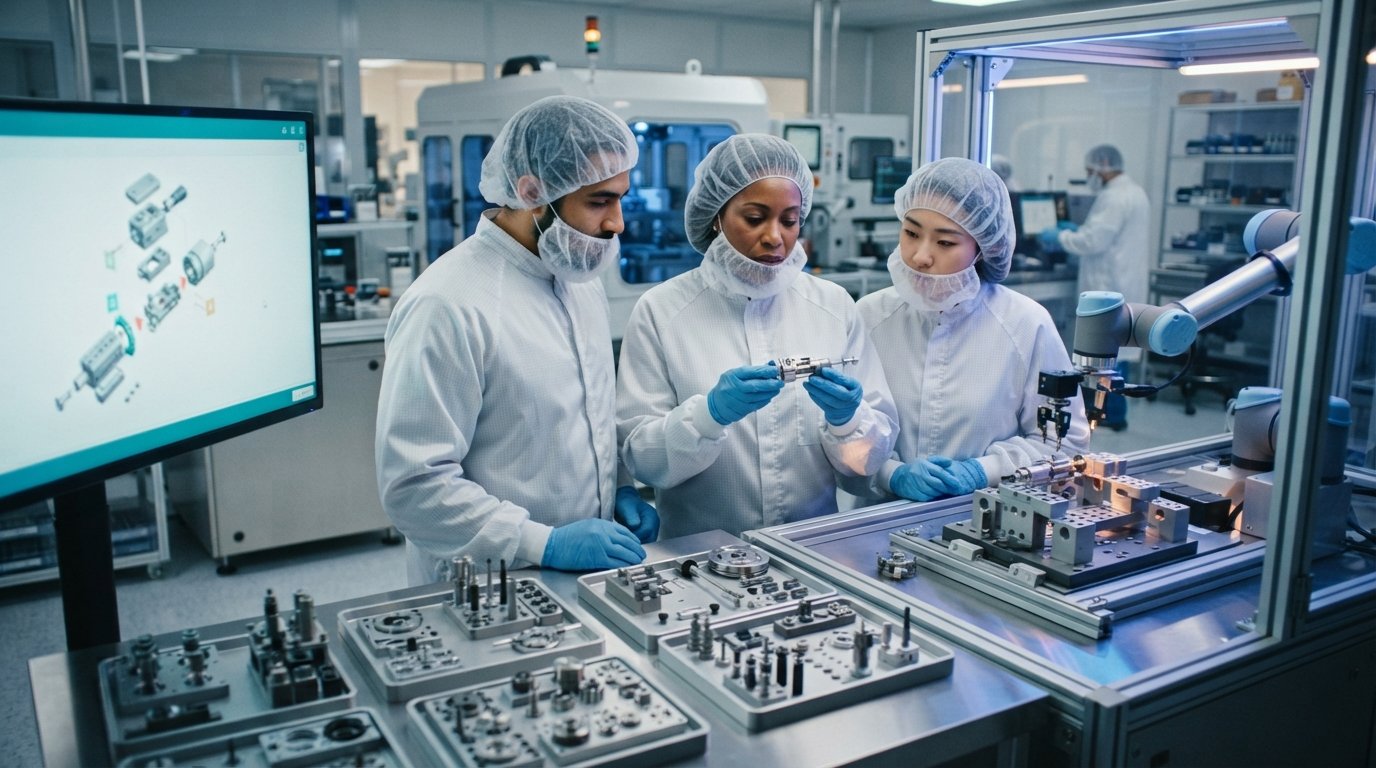
Robotic loading and unloading systems further enhance this environment by eliminating human-induced variability. In micro-precision assembly, even minor fluctuations in handling can introduce defects. Automation ensures a “steady hand” throughout the cycle, maintaining a consistent professional cadence. To ensure functional integrity, automated leak and voltage testing are integrated directly into the assembly flow. This allows for the immediate rejection of non-conforming units, preventing them from progressing further and ensuring that only validated products reach the packaging stage.
Real-Time Data and Predictive Quality
Our Class 8 cleanrooms utilize IoT sensors to monitor environmental conditions including temperature, humidity, and particulate levels. This data feeds into real-time dashboards that allow technicians to identify process drift before it results in a defect. By leveraging “Digital Twins,” we can simulate complex assembly sequences to validate the process before physical production begins. This predictive approach is a core capability of a Global partner of choice in advancing patient care, ensuring that manufacturing environments remain stable and controlled across all global sites, including our Singapore HQ and the upcoming Malaysia facility in Q1 2027.
Advanced Laser Processing and Inspection
Precision assembly for implantable sensors requires hermetic sealing that only 5-axis laser welding can provide. This technology ensures a robust, contamination-free bond that survives the internal environment of the human body. To maintain 100 percent inspection rates, in-line vision systems are deployed to scan micro-precision components for surface defects or dimensional inaccuracies at high speeds. This level of quality control in medical device assembly extends to the final stages of production. Automated blister packaging lines are paired with rigorous sterilization validation for EtO and Gamma processes, ensuring that the device’s lifecycle begins in a state of absolute sterile integrity.
Quality Control Checklist for Complex Device Assembly
A rigorous checklist provides the structural framework necessary to maintain quality control in medical device assembly. This document acts as a definitive protocol, ensuring that every technician and automated system adheres to the validated process. In an era where 313.1 million medical device units were recalled in the first half of 2026 alone, a meticulous checklist is the primary defense against systemic failure. It transforms abstract standards into actionable engineering steps.
- Pre-assembly: Conduct material verification to ensure all raw materials and micro-precision components align with the Medical Device File. This includes performing supplier quality audits and reviewing Certificates of Conformance (CoC) to prevent sub-standard materials from entering the Class 8 cleanroom.
- In-process: Monitor critical-to-quality (CTQ) parameters in real-time. This involves tracking specific metrics such as adhesive dispense volumes, ultrasonic welding energy, and fastener torque levels to identify variances before the device leaves the station.
- Post-assembly: Perform comprehensive functional testing and final visual inspections. Every device must demonstrate that it meets the performance requirements defined during the design phase.
- Documentation: Compile a complete Device History Record (DHR). This record provides the full traceability required for ISO 13485:2016 compliance, detailing every step of the assembly and inspection process for each serialized unit.
Testing Methodologies for Surgical Instruments
Complex surgical tools require specialized validation protocols to ensure clinical efficacy. For disposable surgical staplers, we perform functional validation to ensure consistent firing force and staple formation. Cryoablation fluid delivery tubes and suction irrigators undergo high-pressure leak testing to prevent intraoperative fluid escape. Additionally, force-to-actuate testing is conducted on robotic surgical adapters and MIS tools. This ensures the mechanical resistance remains within the precise range required for robotic control systems to function without error or haptic lag.
Refurbishment and Repair Validation
Quality standards must also extend to the restoration of existing medical assets. Our specialized protocols for endoscope repair and refurbishment focus on restoring devices to their original OEM performance specifications. This process involves a complete teardown, component replacement using micro-precision parts, and rigorous post-repair validation. We ensure that every refurbished device meets the same safety and performance criteria as a new unit, providing a reliable lifecycle extension for high-value surgical equipment. If you require a partner to manage the complexities of device validation and assembly, you can contact our engineering team today.
Partnering with a Global CDMO for Quality Excellence
Selecting a contract partner involves a rigorous assessment of their technical leadership and underlying quality culture. It’s essential to partner with an entity that views regulatory adherence as a baseline rather than an end goal. A global manufacturing footprint, encompassing sites in Singapore and China, provides the supply chain resilience necessary for today’s volatile market. This multi-site strategy ensures operational redundancy, maintaining quality control in medical device assembly even during regional disruptions. The strategic expansion with our new Malaysia site in Q1 2027 will further enhance our ability to provide localized support and scalable production capacities.
Fong’s Engineering serves as a full-service medical device contract manufacturer, offering a “steady hand” throughout complex developmental cycles. By consolidating assembly, testing, and validation under one roof, we eliminate the communication gaps that often lead to quality drift. This integrated approach ensures that every device, whether a high-precision reusable instrument or a high-volume disposable, meets the exact performance specifications required for clinical success.
Fong’s Engineering: A Legacy of Precision
Our history includes over 40 years of expertise in complex medical device assembly. We maintain a steadfast commitment to being the “Global partner of choice in advancing patient care”. This legacy is built on a culture of discipline and precision engineering, where every process is documented and every outcome is validated. From robotic surgical adapters to ultrasonic scalpel couplers, our team provides the technical evidence required to meet global standards like ISO 13485 and the new FDA QMSR requirements. We offer integrated CDMO services that bridge the critical gap between concept design and mass production.
Collaborative Quality Management
We function as a proactive extension of your internal quality team. Our engineers provide rapid prototyping services that incorporate design for manufacturability (DFM) from the earliest stages. This collaborative model identifies potential assembly risks before they reach the production floor, ensuring a smoother path through the validation phase. We help you balance speed-to-market with the rigorous documentation needed for a zero-defect assembly process. We invite you to reach out to our global team at Sam.lim@fongspl.com.sg to discuss how we can integrate your specific quality requirements into our smart manufacturing framework.
Advancing Patient Care through Technical Mastery
The evolution of medical manufacturing necessitates a transition from reactive inspection to an integrated, automated nervous system. We’ve explored how the harmonization of global standards and the adoption of smart manufacturing technologies create a foundation for zero-defect production. Maintaining rigorous quality control in medical device assembly is no longer just a compliance hurdle; it’s a strategic imperative that protects patient safety and ensures long-term commercial success. Every micron matters when the outcome involves a life-saving surgical procedure.
As a steady hand in the industry, Fong’s Engineering & Manufacturing Private Limited provides the technical evidence and disciplinary culture needed to navigate complex developmental cycles. Our operations are ISO 13485 certified, FDA registered, and CE marked, backed by a global manufacturing footprint that ensures supply chain resilience. We invite you to Partner with Fong’s for World-Class Medical Assembly and leverage our meticulous engineering frameworks to bring your next innovation to market. We look forward to collaborating with you to achieve absolute precision in every component.
Frequently Asked Questions
What is the difference between quality control and quality assurance in medical assembly?
Quality Assurance (QA) focuses on the systematic processes and frameworks designed to prevent defects before they occur, while Quality Control (QC) refers to the specific verification activities used to identify defects in the final product. In quality control in medical device assembly, QA establishes the Master Validation Plan and standard operating procedures. QC then executes the functional testing, visual inspections, and dimensional measurements to ensure every serialized unit meets the validated design specifications.
How does ISO 13485 certification impact the device assembly process?
ISO 13485 certification mandates a risk-based approach to every stage of the assembly lifecycle. It requires rigorous documentation, full component traceability, and established Corrective and Preventive Action (CAPA) protocols. Since the FDA’s 2026 shift to the Quality Management System Regulation (QMSR), this certification ensures that assembly processes are harmonized globally. This alignment reduces regulatory friction for manufacturers targeting both the United States and international markets, ensuring a consistent standard of precision engineering.
Why is cleanroom assembly necessary for non-implantable medical devices?
Operating within a Class 8 cleanroom is essential for non-implantable devices to prevent particulate contamination from interfering with delicate mechanical or electronic functions. For instruments like suction irrigators or cryoablation delivery tubes, microscopic debris can obstruct fluid pathways or compromise seal integrity. Maintaining a controlled environment ensures that the bioburden remains within safe limits, protecting the device’s functional reliability and the patient’s clinical outcome during minimally invasive surgical procedures.
What role does automated inspection play in reducing medical device time-to-market?
Automated inspection systems accelerate time-to-market by replacing time-consuming manual checks with 24-hour unmanned in-process measurement. Using automated CMM and in-line vision systems allows for 100 percent inspection of micro-precision components at production speeds. As a Global partner of choice in advancing patient care, we utilize these high-cadence data streams to identify non-conformances instantly, reducing scrap rates and ensuring a predictable, efficient path from the prototype phase to large-scale commercialization.
How do you ensure quality in the refurbishment of reusable endoscopes?
We ensure quality in endoscope refurbishment by following specialized protocols that restore the device to its original OEM performance specifications. The process includes a complete technical teardown, replacement of damaged channels with micro-precision components, and advanced laser marking for permanent traceability. Every refurbished unit undergoes rigorous post-repair validation, including leak testing and image quality assessment. This meticulous approach ensures that reusable instruments remain safe and effective for medical reuse throughout their extended lifecycle.
How does real-time monitoring improve the reliability of smart manufacturing lines?
Real-time monitoring utilizes IoT sensors and digital dashboards to provide immediate visibility into critical-to-quality (CTQ) parameters. This technology identifies process drift, such as fluctuations in adhesive dispense volume or fastener torque, before it results in a non-conforming product. By integrating these dashboards into smart manufacturing lines, engineers can maintain a stable and controlled environment. This proactive oversight ensures the high reliability required for complex devices like robotic surgical adapters and ultrasonic scalpel couplers.
Can a CDMO assist with FDA 510(k) and CE Mark regulatory submissions?
A full-service CDMO provides the essential technical evidence and documentation required for FDA 510(k) and CE Mark submissions. This includes compiling the Device History Record (DHR), process validation data, and comprehensive risk management files. By partnering with an experienced manufacturer, you gain access to established quality systems that are already ISO 13485 certified. This collaboration ensures that the quality control in medical device assembly aligns with current regulatory expectations, streamlining the path to global market access.